
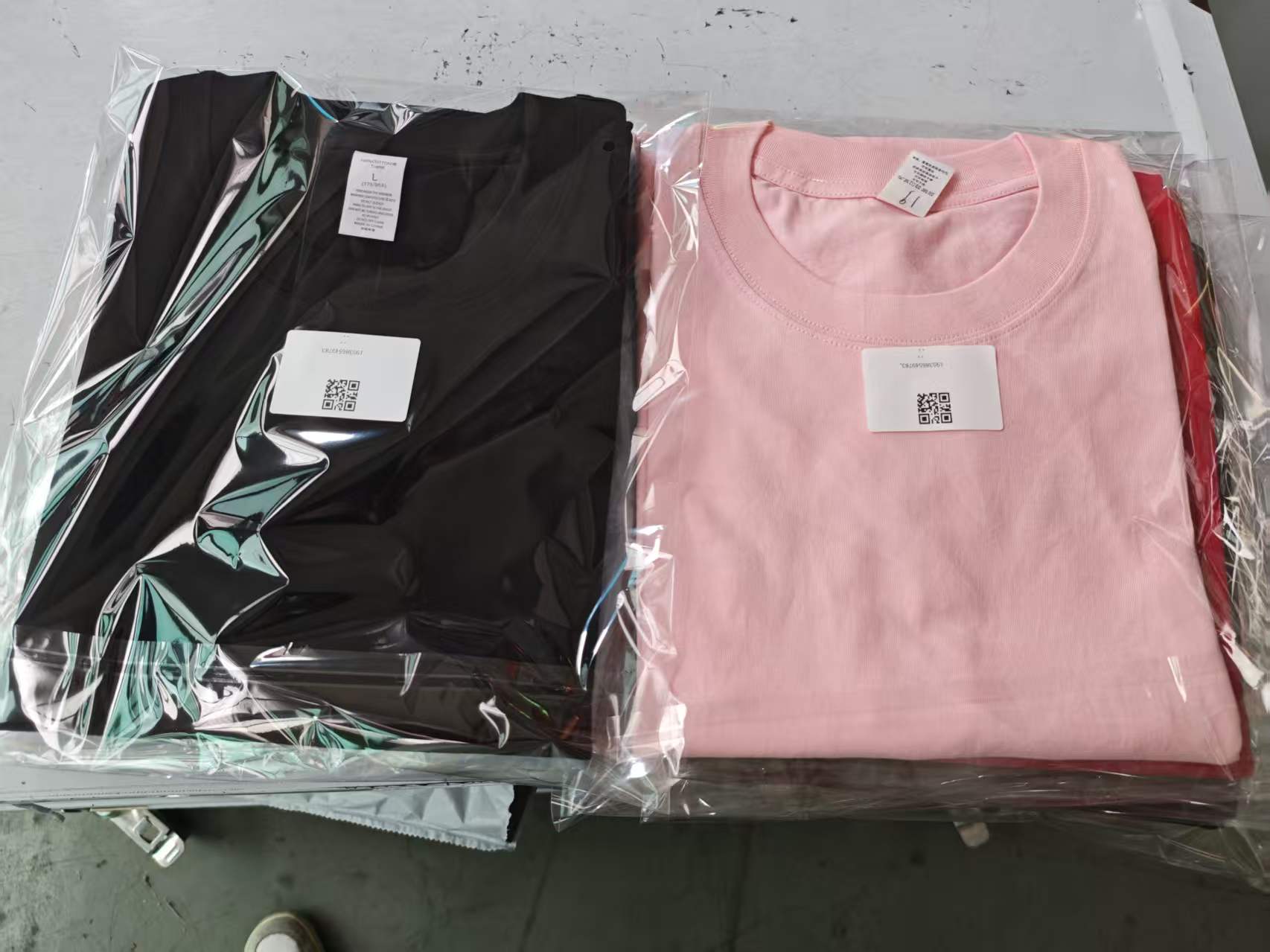
Every T-shirt that leaves your factory or print-on-demand shop carries a folded impression — literally. A neatly folded, consistently sized, professionally packaged tee tells the customer the brand cares about details before they even try it on. A wrinkled, lopsided one in a loose polybag says the opposite. If you are still relying on hand-folding at scale, a dedicated t-shirt folding machine can transform that first impression while cutting your back-end labor by 70% or more.
What Is a T-Shirt Folding Machine?
A t-shirt folding machine is a specialized garment folding system designed specifically for knitwear and lightweight woven tops. Unlike generic folding equipment that tries to accommodate every fabric type, a purpose-built t-shirt folder optimizes fold pressure, arm travel, and bag size for the dimensions and weight of standard T-shirts, polos, henleys, and similar single-layer garments.
UBL offers two primary models for T-shirt applications: the FC-152A for thin, single-layer garments requiring fast throughput, and the FC-252A as the heavier-duty option that handles larger sizes and thicker fabrics with a dual-flip folding mechanism. Both models integrate inline bagging so the folded T-shirt never leaves the machine until it is sealed inside a retail-ready pack.
The Fold Cycle in Detail
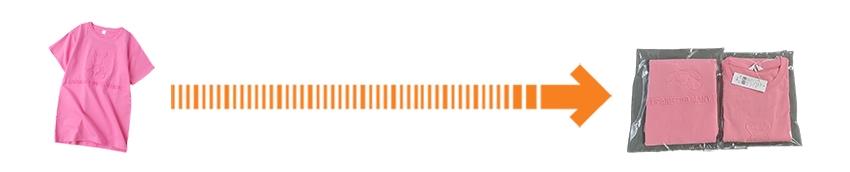
On a typical FC-Series t-shirt folding line, the operator places the T-shirt flat on the infeed area. The machine’s mechanical arms perform two sequential folds — lengthwise down the centerline, then crosswise at the hem — producing a compact, uniform rectangle. The folded piece immediately enters the bagging station where a pre-opened polybag is slipped over it and heat-sealed or closed with tear-tape. The entire cycle completes in under six seconds per piece at rated speed, which translates to approximately 600–700 pieces per hour depending on model and operator efficiency.
Why Manual T-Shirt Folding Fails at Scale
Hand-folding T-shirts works fine when you are packing 50 pieces a day. Once you cross into the thousands, three problems compound rapidly:
Inconsistent Fold Dimensions
No two workers fold exactly the same way. One folds tight, another leaves slack; one centers the graphic, another shifts it off-center by an inch. When those variations reach customers — especially in e-commerce and subscription box fulfillment — inconsistent presentation creates return requests and negative reviews. A t-shirt folding machine produces identical fold dimensions on every single piece, shift after shift.
Labor Cost Per Piece
A skilled hand-folder averages 5–10 T-shirts per minute on a good day. By mid-afternoon, fatigue drops that rate. At $15–20 per hour in most manufacturing regions, the fully-loaded cost per piece ranges from $0.03 to $0.06 just for folding — not counting bagging, labeling, or quality checks. An automated t-shirt folding machine brings that per-piece cost below $0.01 while running at 600+ pieces per hour continuously.
Peak Demand Bottlenecks
For print-on-demand shops and custom apparel brands, order volume spikes around product launches, holidays, and promotional campaigns. Hand-fold stations become the bottleneck that caps how many orders you can ship same-day. Hiring temporary workers during spikes introduces quality inconsistency and training overhead that often costs more than the extra output is worth. An automated line absorbs demand surges without adding headcount.
FC-152A vs. FC-252A: Which Model Fits Your T-Shirts?
The choice between these two models comes down to garment thickness, size range, and whether you need dual-flip capability for larger cuts.
| Specification | FC-152A | FC-252A |
|---|---|---|
| Best for | Thin, single-layer T-shirts and polos | Thicker tees, larger sizes, heavy cotton/poly blends |
| Folding mechanism | Single-fold with tear-tape seal finish | Dual-flip fold mechanism for tighter, more uniform results |
| Speed | ~600 pcs/h | ~600 pcs/h |
| Bagging integration | Inline bagging included | Inline bagging + optional inline labeling |
| Size flexibility | S through XL within same configuration | S through XXL+ with HMI adjustment (~10 min) |
| Ideal daily volume | 3,000–8,000 pcs/day | 5,000–15,000+ pcs/day |
Two Key Markets Where T-Shirt Folding Machines Deliver the Most Value
Print-on-Demand and Custom Apparel Shops
POD operations live or die by same-day ship capability. A customer orders a custom-designed T-shirt at noon, and they expect it in their mailbox within 48 hours. That means printing must finish, the shirt must be folded cleanly, bagged, labeled, and handed to the carrier — all in one shift. A t-shirt folding machine running at 600 pieces per hour turns what used to be a 4-person folding station into a 1-person monitoring role. The consistency of machine-folded shirts also reduces “damaged in transit” complaints because uniformly folded items fit snugly inside shipping cartons without shifting during handling.
Many POD facilities start with a semi-automatic SA-series station while daily volume stays under 3,000 pieces, then upgrade to a full FC-Series line once orders grow past that threshold. The transition is straightforward because both systems share the same bagging interface and consumable specifications.
Apparel Manufacturing Plants
For factories producing blank or branded T-shirts and polos in batches of thousands, the folding station sits between sewing/finishing and warehousing. It is almost always the slowest point in the entire production flow — a classic bottleneck that determines how fast finished goods can move to inventory. Replacing manual folding with an automated t-shirt folding machine removes that bottleneck entirely. Factories running 10,000+ pieces per day typically see full payback on equipment within 6–12 months purely from labor reduction, before accounting for quality improvement and reduced rework.
Integrating Bagging, Labeling, and Case Packing
A standalone folder saves time, but a complete folding-and-packaging line captures the real efficiency gain. Here is how UBL configures a typical high-volume T-shirt line:
Folding → Bagging
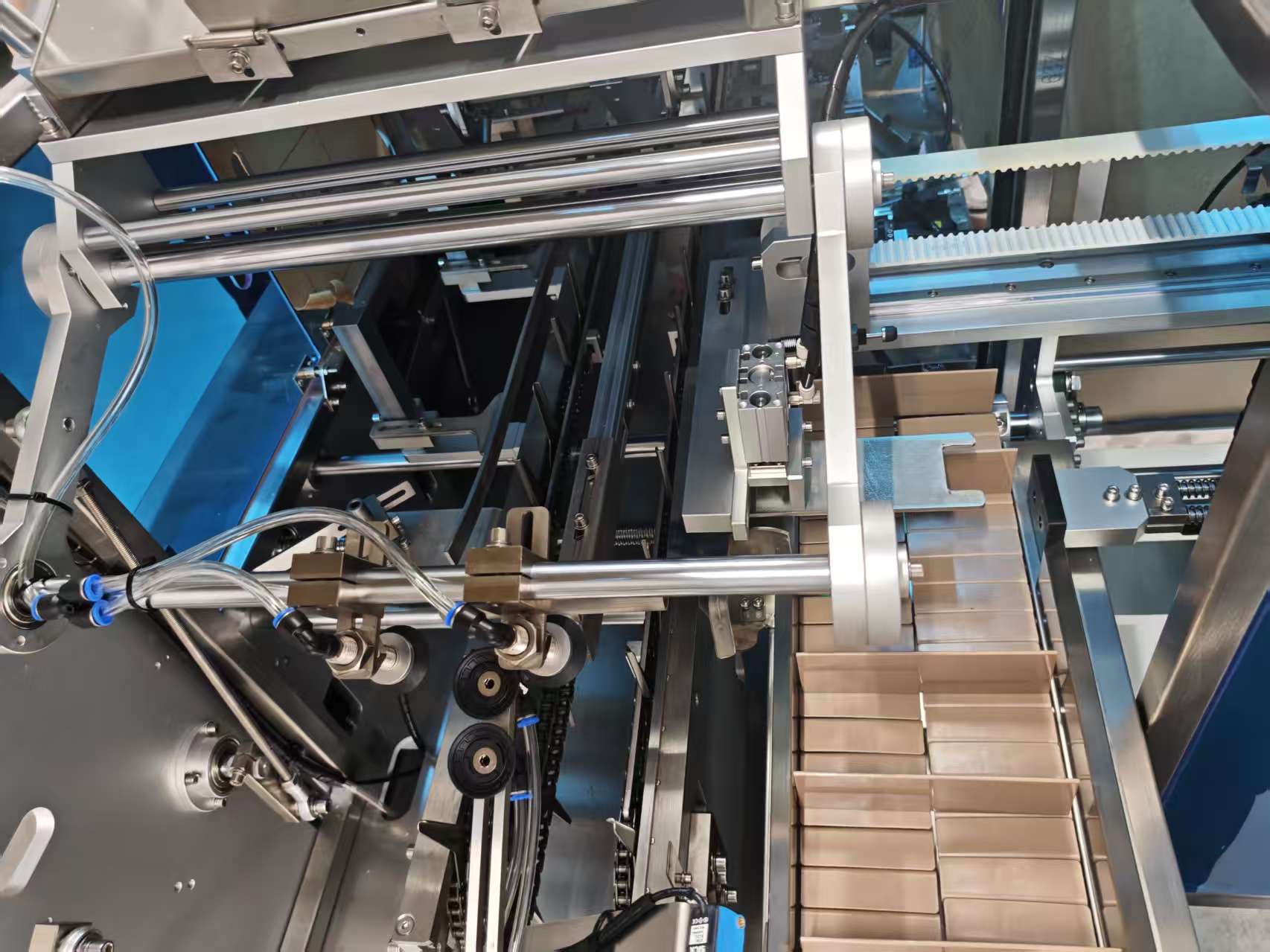
The folded T-shirt exits directly into the bagging chamber. The FC-Series uses a pre-opened polybag system — bags are opened mechanically and slipped over each folded piece, eliminating the fumbling step of hand-bagging. Seal options include heat sealing for tamper-evident packs and tear-tape closure for easy-open retail packaging.
Labeling
After sealing, an optional inline labeler applies size labels, SKU barcodes, or variable data directly onto each bag. For POD operations, this can include individual order information printed on-demand via a print-and-apply labeler. Labeling speeds of 40–150 labels per minute keep pace with the folding throughput without creating downstream bottlenecks. See our detailed guide to garment labeling machines for apparel lines.
Carton Packing and Shipping Prep
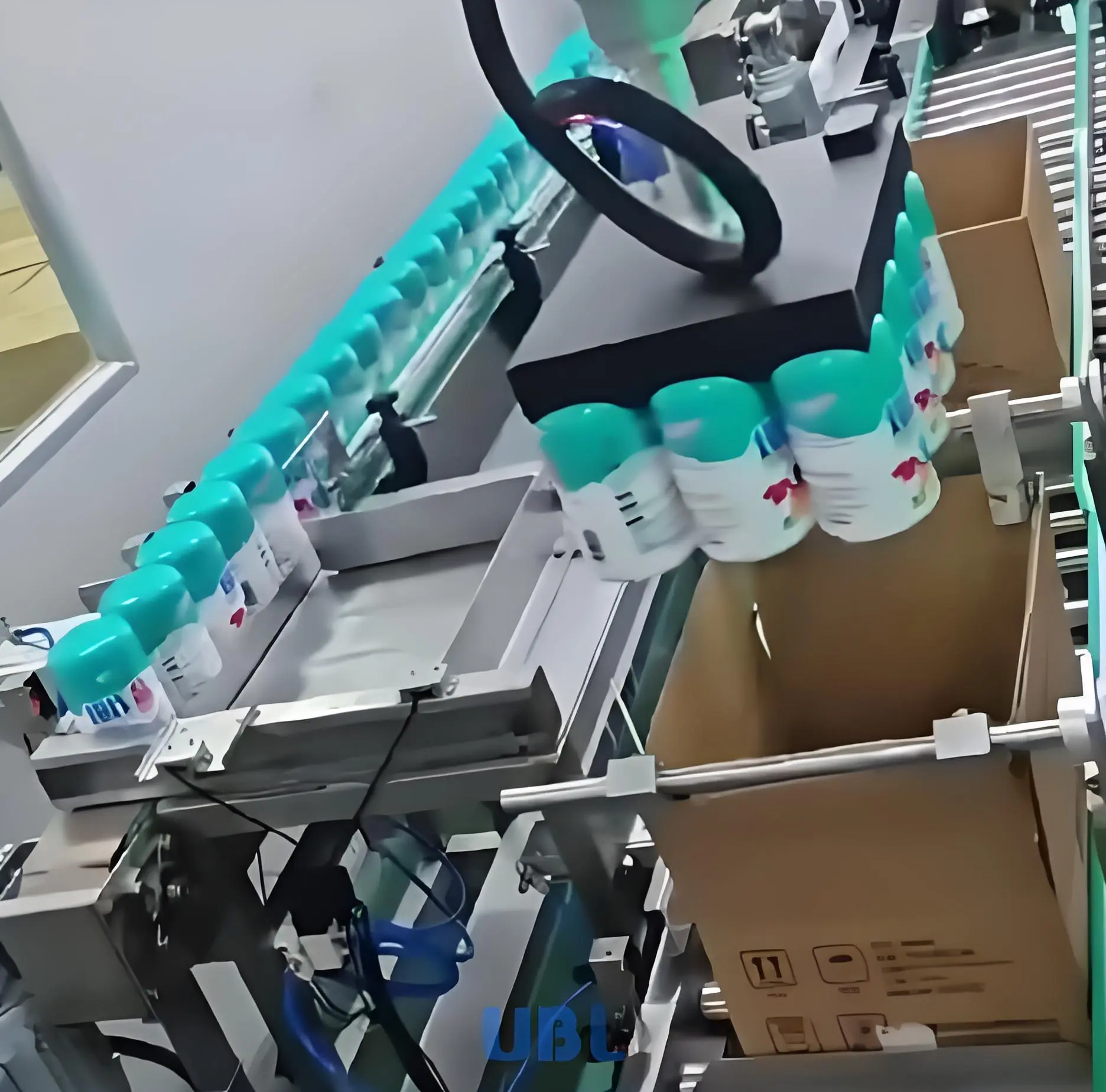
Finished bags accumulate on a take-away conveyor and are counted automatically into shipping cartons. For the highest-volume setups, UBL integrates automatic carton erectors and case sealers so the only human touchpoint remaining is loading filled cases onto pallets. This end-to-end automation is exactly what enabled a U.S.-based protective garment supplier to reduce its back-end team from over 30 workers to 10 — handling 14 million pieces annually across 7 machines with zero manual contact between folding and shipping.
Click here to watch the UBL garment folding machine in action.
Semi-Automatic Option for Smaller Shops
Not every operation needs a fully automatic line from day one. UBL’s SA-series semi-automatic folding stations let operators manually load and trigger the fold cycle, with the machine handling the actual fold motion and bag insertion. Throughput reaches approximately 700 pcs/h with a motivated operator — competitive with entry-level full-auto machines at a lower capital investment. This makes the SA series ideal for:
- Start-up POD businesses testing market demand before committing to full automation
- Mixed-SKU workshops where frequent changeovers make continuous auto-feed impractical
- Facilities with limited floor space that cannot accommodate a full inline layout
The general rule remains: once daily T-shirt folding volume crosses 3,000 pieces, a fully automatic FC-Series t-shirt folding machine becomes the more economical long-term choice.
Common Questions About T-Shirt Folding Machines
What fold size does the machine produce?
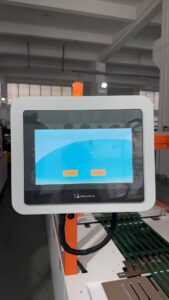
The FC-Series produces a compact rectangular fold suitable for standard retail polybags. Exact dimensions depend on the original garment size and the configured fold width, which is adjustable via the HMI touchscreen and manual mechanical setup. For custom fold-size requirements — such as specific retailer compliance standards — contact UBL with your target dimensions and we will confirm compatibility.
Can it handle printed T-shirts without smudging the design?
Yes. The folding mechanism applies controlled, even pressure along designated fold lines and does not rub or drag across the graphic surface. Screen-printed, DTG-printed, DTF-transferred, and sublimated designs all pass through without damage. If you have concerns about a particular ink or transfer type, UBL’s sample trial process lets you test actual products before purchase.
How do I switch between S, M, L, XL sizes?
Adjusting fold width for a different size takes roughly 10 minutes via the HMI touchscreen combined with manual adjustment of the folding arms. No tools are required, but the operator does need to physically reposition the arm stops to match the new dimension. For operations that run multiple sizes in the same shift, most facilities batch by size to minimize changeover frequency.
Is sample testing available?
Absolutely. Send your T-shirt samples to UBL and we run them through the appropriate machine, recording the full cycle from feed to sealed bag. You receive video documentation showing fold quality, bag fit, seal integrity, and overall appearance. Remote video demonstrations are also available if you prefer a live walkthrough before shipping samples.
Related Reading
- UBL Garment Folding Machine — Full Product Line Overview and Specifications
- Automatic Clothes Folding Packaging Machine: Full-Line Solutions for Garment Manufacturers
- Garment Folding Machine for E-Commerce: How POD Fulfillment Centers Cut Packing Labor
- Clothes Folding Machine Buyer’s Guide: Semi-Auto vs. Full Auto Compared Side by Side
Ready to Upgrade Your T-Shirt Folding Station?
Whether you run a small POD shop folding 500 shirts a day or a large-scale apparel plant pushing 15,000+, UBL has a t-shirt folding machine configuration matched to your volume, space, and budget. Sample trials are standard practice before any commitment, and installation includes hands-on operator training.
Contact us to discuss your T-shirt folding requirements or arrange a sample trial:
Email: Helen@huanlianauto.com


6 responses