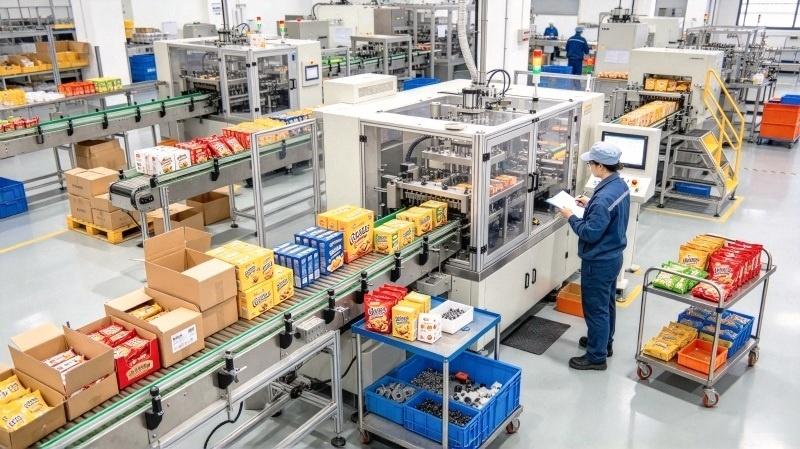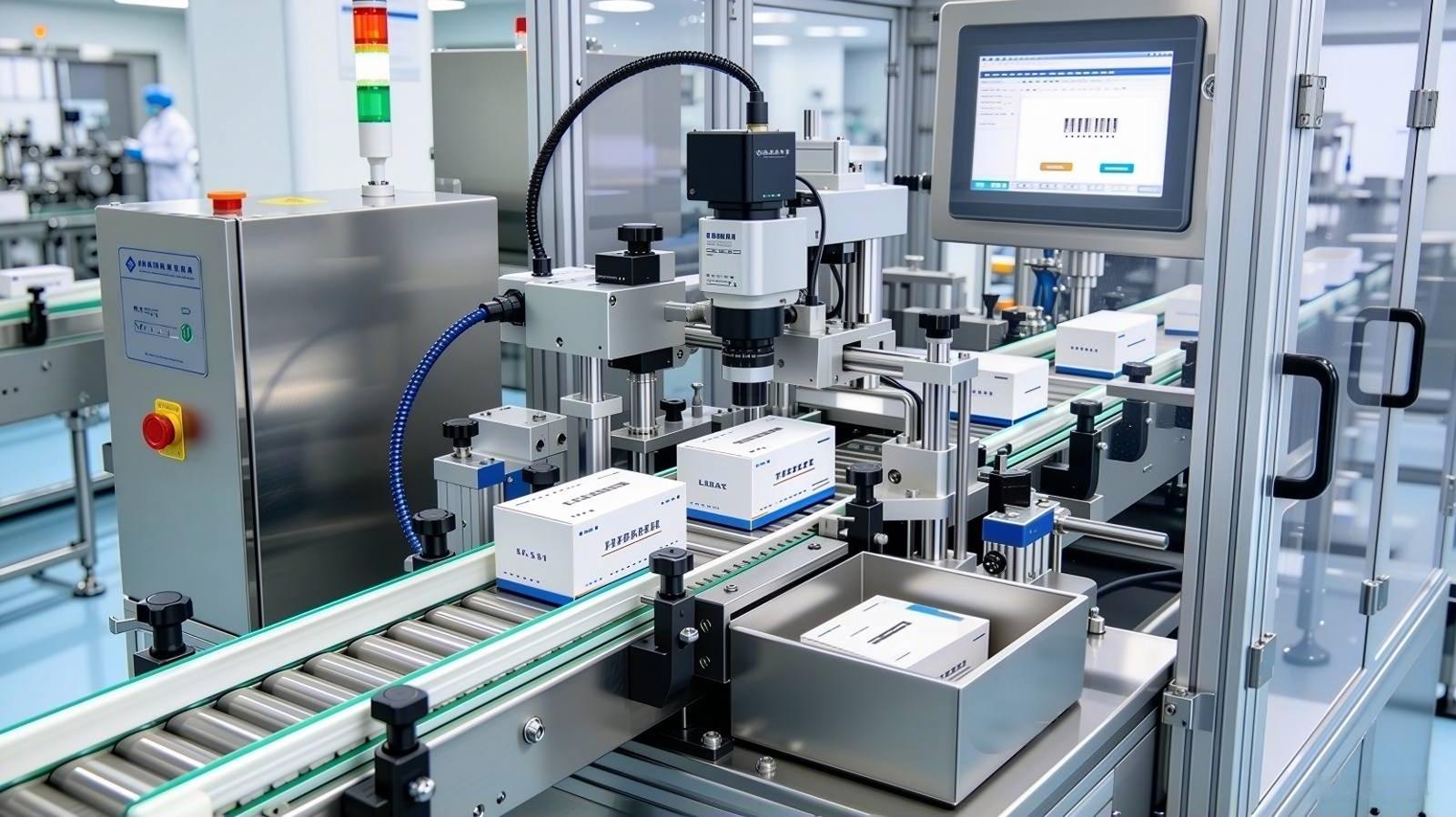
Most food manufacturers who invest in automated cartoning equipment measure success in labor reduction, throughput increase, or quality improvement. The manufacturer in this ice cream cartoning machine case study achieved all three simultaneously with one of the world’s largest retailers as the end customer: Walmart. The project involved a fully customized automated cartoning line for Walmart’s ice cream product range, operating at a speed of 42 cartons per minute and doubling the output of the previous manual packing line while maintaining the high hygiene standards required for frozen dairy products. What made this deployment notable was not just the speed increase but the integration of a robotic arm at the infeed stage, which added an extra layer of precision and consistency to the product grouping process before the cartoning machine took over.
This article documents the project in detail for operations and purchasing decision-makers at frozen dessert manufacturers who are evaluating similar automation for their ice cream, frozen yogurt, or novelty dessert packaging lines.
The Product and the Packaging Challenge
The product in this case is individually sealed cups of ice cream produced for Walmart’s retail shelves. Each cup of ice cream enters the secondary packaging line ready for its next step: being grouped into sets of four and loaded into a retail carton box. The box type is a tuck-end or glue-sealed carton format consistent with Walmart’s retail packaging specifications. The requirement was straightforward in concept but demanding in execution: the packaging line needed to handle high volumes of individual ice cream cups, group them accurately, load them into cartons without damaging the cups or the product seals, and close each carton with consistent quality that met Walmart’s retail presentation standards.
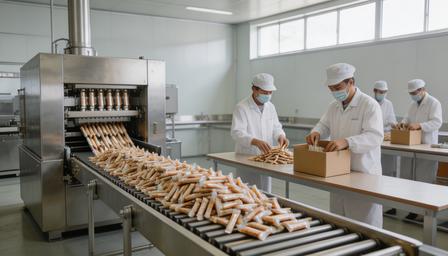
Manual packing was the baseline. The manual line operated at approximately 5,000 cups per hour. With four cups per carton, this translated to roughly 1,250 cartons per hour, or about 21 cartons per minute. The manual line required multiple workers positioned at the grouping station to count and arrange cups into sets of four, additional workers at the loading station to place the grouped cups into open cartons, and workers at the closing station to seal each carton. The manual process was functional at lower volumes, but as Walmart’s demand for the product increased, the manual line’s throughput ceiling became the constraint that limited the manufacturer’s ability to grow the business with the retailer.
The manual packaging process also introduced variability that was hard to control at the scale Walmart required. Workers grouping cups into sets of four occasionally miscounted, producing cartons with three or five cups that had to be opened and corrected at the downstream inspection point. Workers loading grouped cups into cartons sometimes misaligned the cups, causing the carton flaps to close unevenly. The manual closing station produced cartons whose seal quality varied across the shift, and the rework required to fix these issues consumed productive time that reduced the line’s effective throughput below its theoretical maximum.
The UBL Solution: Robotic Arm Integration with High-Speed Cartoning
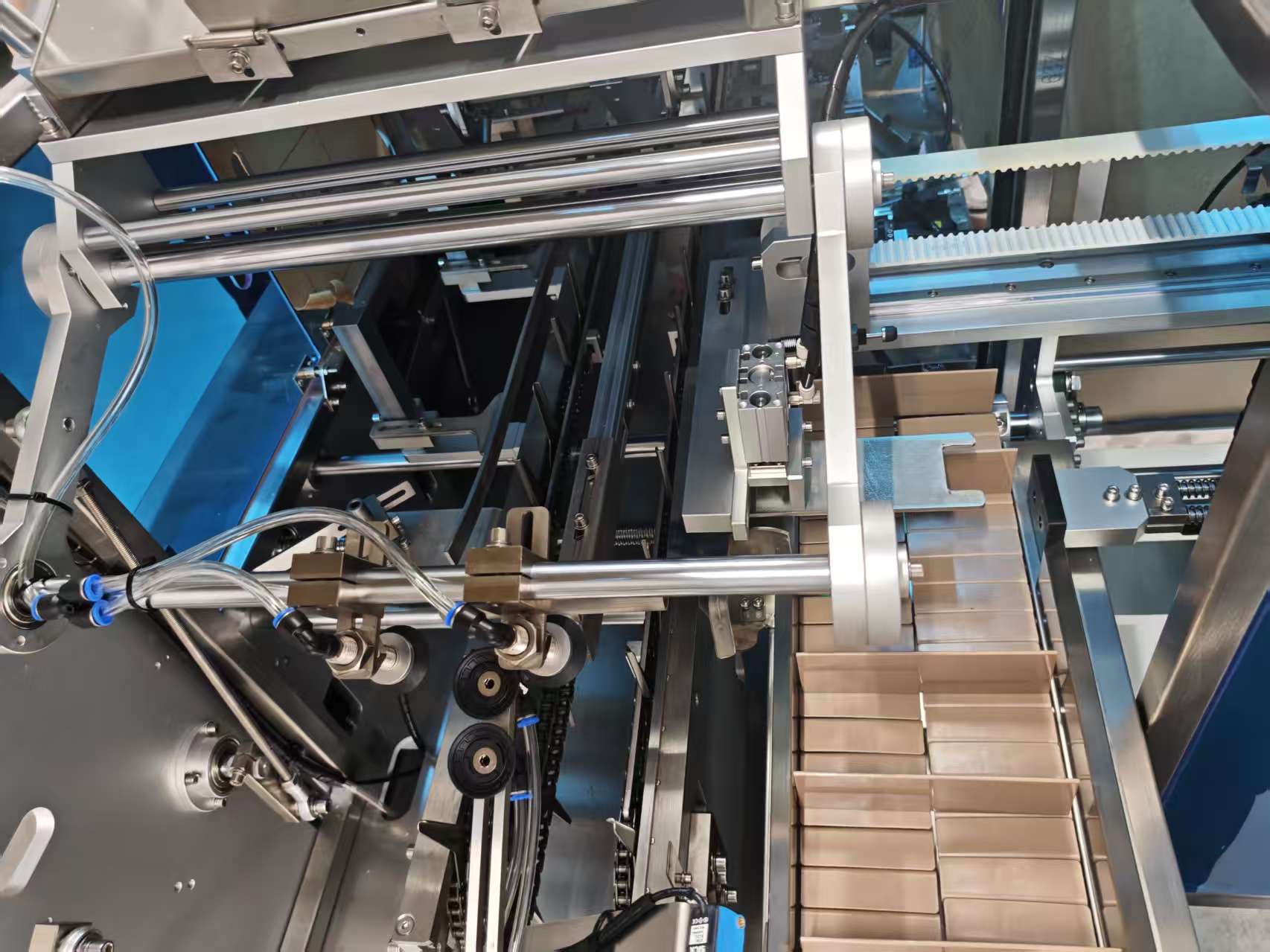
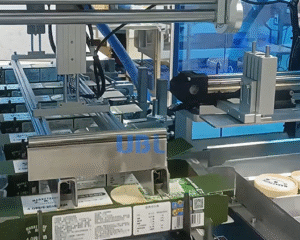
UBL designed and deployed a fully customized automated cartoning line for Walmart’s ice cream product range that addressed every limitation of the manual process. The system integrates three key technologies into a single continuous production sequence: a vision-guided robotic arm for product grouping, a servo-driven product infeed for cup transfer, and a high-speed ice cream cartoning machine for box erection, product loading, and carton closing.
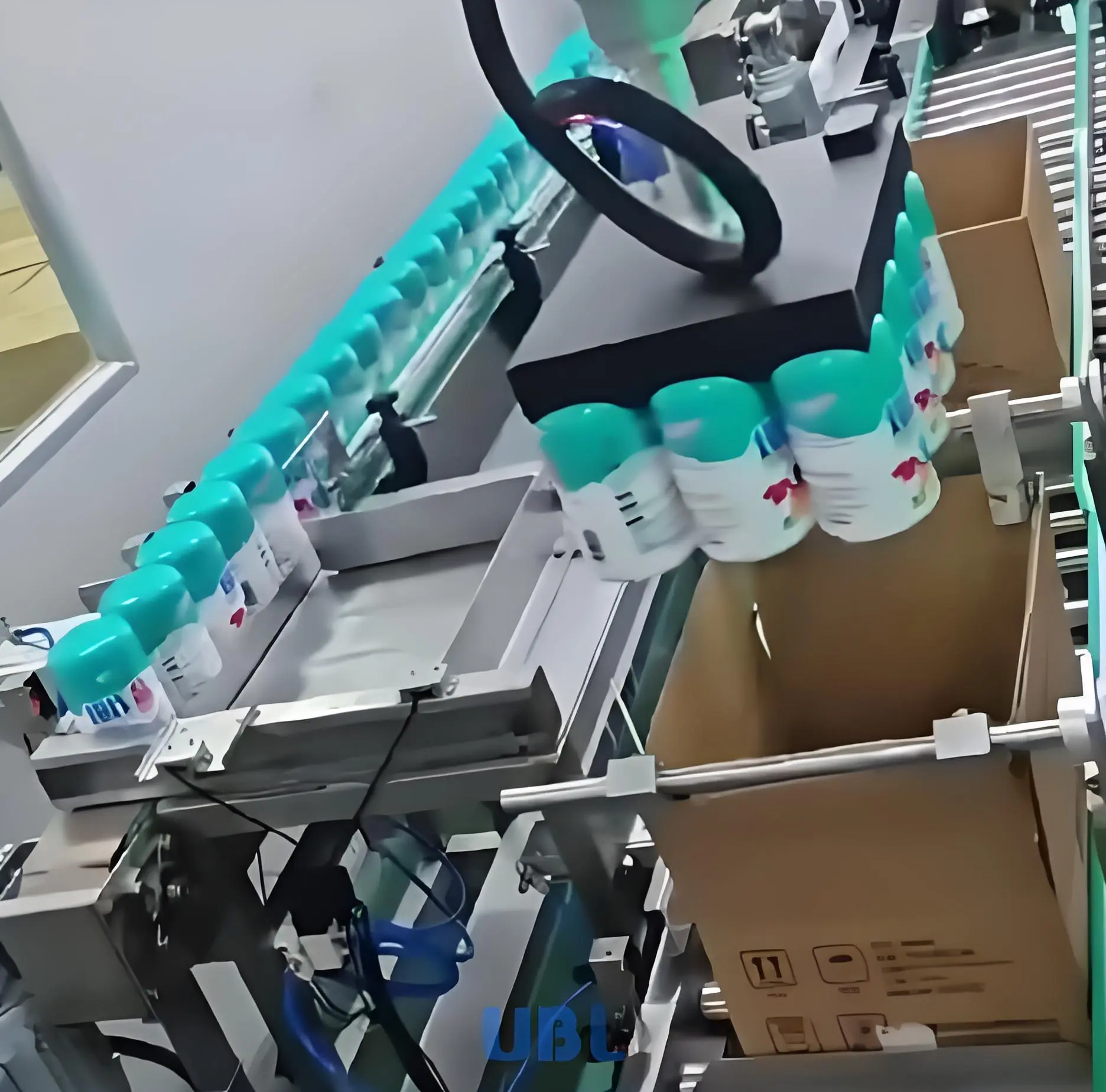
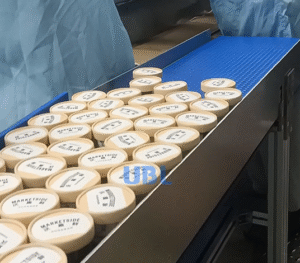
The sequence begins when individual ice cream cups arrive at the sorting station from the upstream filling and freezing line. A vision system identifies each cup’s position and orientation. The robotic arm, programmed with Walmart’s packaging specifications, picks the cups and groups them into precise sets of four at the cartoning machine’s infeed. The grouping is consistent on every cycle because the robotic arm uses the same pick-and-place path and placement coordinates regardless of how long the line has been running. There is no fatigue-related variation in the grouping accuracy.
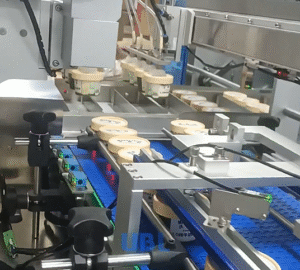
The grouped sets of four cups are then precisely placed onto the infeed conveyor of the ice cream cartoning machine. From this point, the machine takes over the remaining steps automatically. The cartoning machine picks a flat carton blank from the magazine, erects it into a formed box, and positions it at the loading station. The servo-driven pusher advances the grouped cups into the open box in a single smooth motion. The filled carton advances to the closing station, where the end flaps are sealed using the appropriate format for Walmart’s retail specifications. The sealed carton is discharged onto the outfeed conveyor for downstream case packing and distribution.
The entire sequence from cup arrival at the robotic arm infeed to sealed carton exit operates at 42 cartons per minute \u2014 double the output of the manual line. The robotic arm handles the product grouping task that previously required two to three manual workers. The cartoning machine handles the box erection, loading, and closing tasks that previously required three to four manual workers. The labor reduction is structural: the stations that required five to seven workers on the manual line now require one operator at the robotic arm monitoring station and one operator at the outfeed.
Results: Doubled Output, Zero Manual Product Contact
The most measurable result of the deployment is the throughput increase. The manual line operated at approximately 21 cartons per minute. The automated line operates at 42 cartons per minute. For a facility running two shifts producing ice cream cups for Walmart, this doubling of output represents a significant increase in the manufacturer’s ability to serve the Walmart channel without adding a second production line or expanding the facility footprint.
The labor reduction is equally significant. The manual line required five to seven workers per shift at the grouping, loading, and closing stations. The automated line requires two operators per shift: one monitoring the robotic arm infeed and one at the outfeed. Across two shifts, the labor saving is six to ten workers removed from the packaging line. Workers who previously performed the repetitive cup arrangement and carton loading tasks are redeployed to line monitoring, quality inspection, and equipment oversight roles that require less physical repetition and offer greater job satisfaction.
The hygiene improvement is a benefit that carries particular weight in the frozen dairy category. Ice cream products are subject to strict food safety requirements because dairy-based products can support microbial growth if handled improperly during packaging. The manual line required workers to touch the product area at the grouping and loading stations. The automated line eliminates direct human contact with the product cups from the moment they enter the robotic arm infeed until the sealed carton exits the cartoning machine. This reduction in manual contact points is a measurable improvement in food safety compliance.
The carton quality improvement is visible in the finished product. The manual line produced cartons whose appearance varied across the shift as workers fatigued. The automated line produces cartons whose closing quality is identical from the first carton of the shift to the last. For a retailer like Walmart, where retail shelf presentation is a documented performance metric, this consistency is a meaningful improvement in the product’s retail readiness.
Why This Deployment Is Repeatable for Other Frozen Dessert Manufacturers
The operational pattern that made this deployment successful for Walmart’s ice cream line applies broadly to other frozen dessert and novelty product manufacturers. The product \u2014 individually sealed cups of ice cream \u2014 arrives at the cartoning station in sealed primary packaging. The cartoning machine performs secondary packaging with zero direct food contact, eliminating any food-safety validation barrier. The carton format \u2014 a standard retail box for frozen dessert products \u2014 is a format that UBL’s ice cream cartoning machines handle natively. Any frozen dessert manufacturer whose product is in sealed cups, tubs, or containers before cartoning can deploy the same machine configuration.
The robotic arm integration adds a capability that is useful for any product that arrives at the cartoning station in individual units requiring grouping. The vision-guided robotic arm can be programmed for different group sizes and configurations, meaning the same machine configuration that groups four ice cream cups for a retail carton can be reprogrammed to group six cups for a family-size carton or two cups for a single-serve multi-pack. The changeover between group sizes is completed through the HMI without mechanical modification to the robotic arm or the cartoning machine.
For a broader perspective on how cartoning machines serve different frozen food categories, see the frozen food cartoning machine guide which covers the specific considerations for frozen product secondary packaging.
Technical Configuration for Ice Cream Cartoning
The UBL ice cream cartoning machine deployed in this project operates at 42 cartons per minute, with a peak capacity of 50 cartons per minute depending on the cup dimensions and carton format. The machine handles tuck-end, glue-seal, and snap-lock bottom carton formats. The blank magazine holds approximately 300 to 500 carton blanks depending on material thickness. The infeed conveyor is configured to match the robotic arm placement speed, with a buffer capacity that accommodates minor timing variations between the robotic arm cycle and the cartoning machine cycle.
The machine is built with stainless-steel construction throughout, meeting the hygiene requirements of frozen dairy production environments. The servo-driven pusher mechanism is programmed with an acceleration profile that prevents cup tip-over during the loading motion. The closing module is configured for the specific carton format specified by Walmart. For facilities that also use a carton folding machine upstream to pre-fold boxes before the cartoning stage, the folding machine and cartoning machine are synchronized to maintain consistent flow through the line.
ROI: Doubled Output, Reduced Labor, Faster Payback
The ROI calculation for this ice cream cartoning machine deployment starts with the throughput increase. The automated line produces twice the output of the manual line, meaning the manufacturer can serve twice the volume from the same facility footprint without adding a second shift. The labor saving of six to ten workers across two shifts at the applicable labor cost level for the facility’s region produces an annual saving that, combined with the throughput-driven revenue increase, delivers a payback period of approximately 10 to 14 months.
The indirect savings add measurable value. The elimination of manual product contact reduces the risk of hygiene-related issues. The consistent carton quality reduces the risk of retail buyer quality complaints. The robotic arm’s precise grouping eliminates the miscount issues that generated rework on the manual line. Combined, these indirect savings reduce the effective payback period below the direct labor-based estimate.
Common Questions About Ice Cream Cartoning Machines
Can the same machine handle different ice cream cup sizes?
Yes. The robotic arm gripper and the cartoning machine infeed are adjustable for different cup dimensions. The HMI stores the gripper position, pusher depth, and carton dimensions for each SKU. Changeover between cup sizes takes approximately 15 to 20 minutes.
How does the machine prevent cup tip-over during loading?
The servo-driven pusher uses an acceleration profile that matches the cup weight and center of gravity. The pusher speed is adjustable through the HMI, and the optimal profile is determined during the sample trial process.
Does the robotic arm require programming for each product change?
The robotic arm pick-and-place coordinates are stored in the HMI as part of each SKU’s recipe. When the operator selects a different SKU, the arm coordinates update automatically.
What happens if a cup is missing from the infeed?
The vision system detects missing cups before the robotic arm completes its pick cycle. If the correct count is not available, the arm skips that cycle and the machine continues to the next group, preventing incomplete cartons from being loaded.
Can the machine handle novelty shapes like cones and sticks?
Yes, with configuration. The robotic arm gripper and the infeed conveyor are configurable for novelty product shapes. UBL’s sample trial process verifies compatibility before purchase.
How to Start Your Ice Cream Cartoning Project
UBL supports sample trial runs before purchase. Send your ice cream cup samples, carton blanks, and production volume requirements to UBL’s facility. The engineering team configures a test cycle on the relevant ice cream cartoning machine configuration, including the robotic arm infeed if required, and provides video documentation of the output. The test is provided at no cost and does not require a purchase commitment.
Standard ice cream cartoning machine configurations are available for next-business-day dispatch after contract signing. Custom configurations for Walmart-specific carton formats or robotic arm integration for novelty product shapes are typically available within three months of design confirmation. Installation, commissioning, on-site operator training, and a one-year warranty are included in the purchase price.
To discuss your ice cream product format, carton specification, and output targets, contact the UBL team at helen@huanlianauto.com or visit ublpackaging.com.
Why Walmart Selected UBL for Ice Cream Cartoning Automation
Walmart’s supplier evaluation process for packaging equipment is rigorous. The equipment must meet the retailer’s food safety standards, deliver documented throughput improvements with measurable ROI, and integrate with the existing production line without requiring extensive facility modifications. UBL’s proposal met all three criteria. The ice cream cartoning machine met food safety standards with stainless-steel construction and zero product-contact surfaces. The documented test run demonstrated 42 cartons per minute throughput, doubling the manual line output. The layout plan confirmed that the machine fit the existing production floor space without requiring structural modifications to the facility.
The robotic arm integration was a specific factor in Walmart’s equipment approval. The vision-guided robotic arm provided a level of product handling consistency that manual grouping could not match, and the elimination of manual product contact at the grouping stage addressed a food safety requirement that manual lines could not satisfy. For manufacturers supplying Walmart’s retail channels, the documented reduction in manual product contact points is a meaningful improvement in food safety compliance documentation.
For a detailed comparison of cartoning machine options and cost structures, the cartoning machine cost guide provides a framework for understanding how speed, configuration, and integration requirements affect equipment pricing.
Summary: From Manual Grouping to Fully Automated Ice Cream Cartoning
The Walmart ice cream cartoning project demonstrates a deployment pattern that is repeatable across frozen dessert product categories. The product arrives at the cartoning station in sealed primary packaging, the carton format is a standard retail box, and the manufacturer needs to increase throughput without proportionally increasing labor cost. The combination of a vision-guided robotic arm for product grouping and a high-speed cartoning machine for box erection, loading, and sealing delivers a complete solution that addresses every limitation of the manual packaging line.
The results are measurable and unambiguous: throughput doubled from 21 to 42 cartons per minute, labor reduced from five to seven workers per shift to two operators per shift, manual product contact eliminated entirely, and carton quality made consistent across every production cycle. The deployment timeline from initial contact to production-line installation followed a standard sequence: product and carton specification review, sample trial with documented performance data, layout plan confirmation, equipment manufacturing, and on-site installation and commissioning. The same sequence is available to any frozen dessert manufacturer evaluating ice cream cartoning automation.