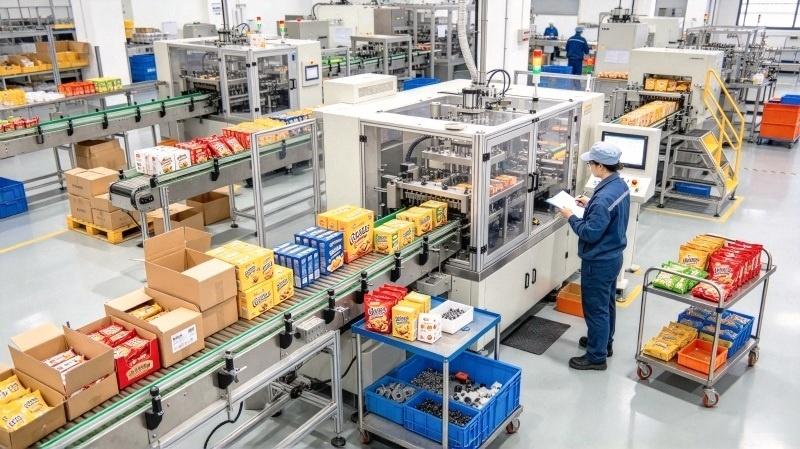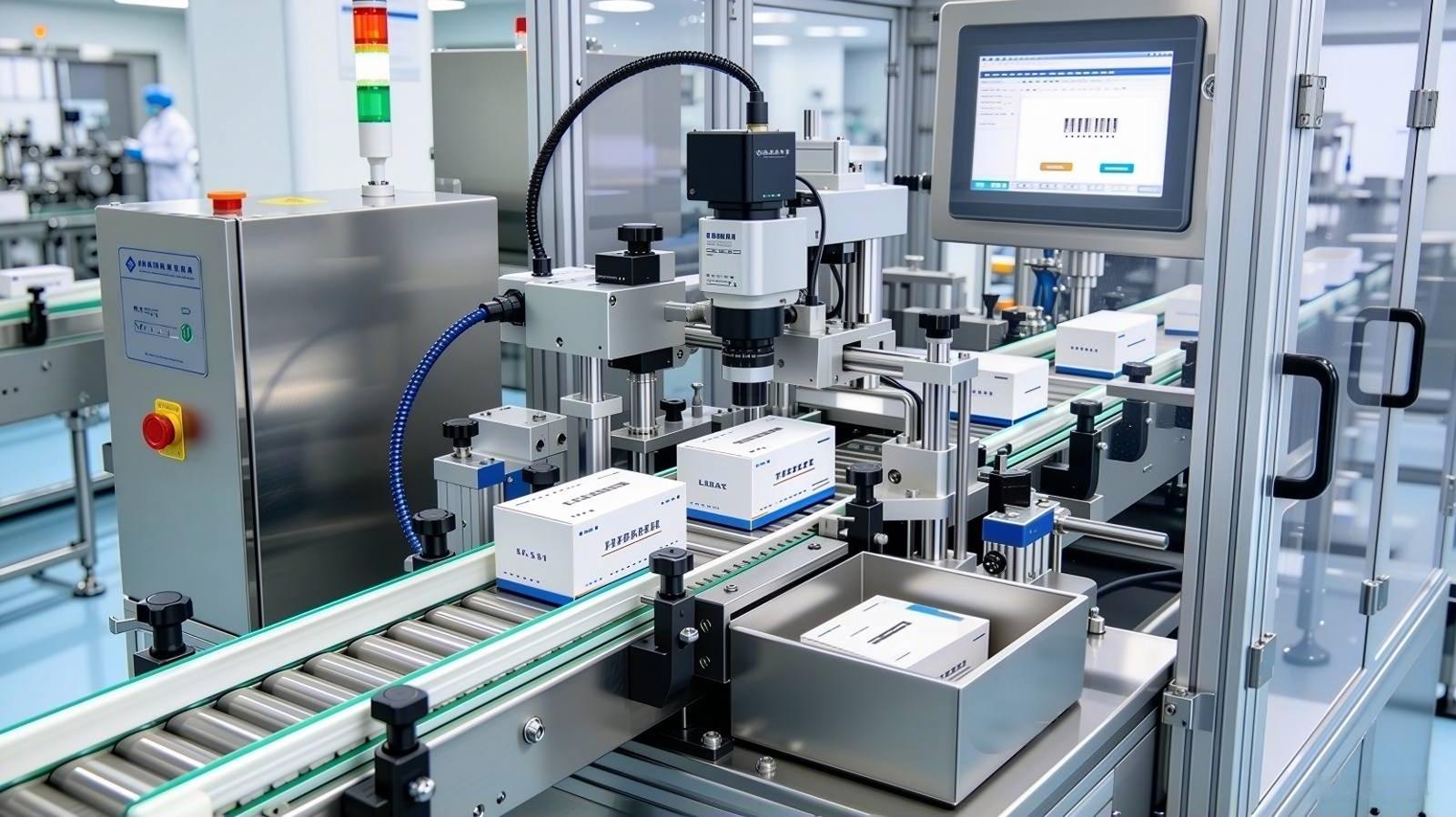
Most sauce and condiment manufacturers who invest in automated packaging equipment have a clear objective: reduce manual contact points, increase throughput, and maintain product integrity throughout the packaging process. The manufacturer in this sauce packaging line automation case study achieved all three objectives simultaneously with a project involving one of the best-known brands in the global food industry: Lao Gan Ma. UBL designed and deployed a fully automated packaging line that requires human intervention only for final quality inspection, minimizing manual contact and reducing hygiene risks across every station from bottle capping to finished goods palletizing.
This article documents the project for operations and purchasing decision-makers at sauce, condiment, and liquid food manufacturers evaluating full-line automation for their glass bottle or jar packaging operations.
The Product and the Packaging Challenge
The product in this case is Lao Gan Ma chili sauce packaged in glass jars and bottles for retail distribution. The packaging line needed to handle the full sequence from the capping station to the palletized finished goods: after each bottle is filled and capped at the upstream filling station, the bottles must be organized, labeled with brand stickers, sealed with protective film on the bottle mouth, picked and case packed into shipping cartons, inspected for completeness, and palletized for distribution.
The challenge was not any single step in this sequence. It was the integration of all steps into a single continuous line that minimized manual handling at every transfer point. In a conventional sauce packaging line, each station is operated independently by dedicated workers who handle the bottles and cartons between stations. This creates multiple human contact points that increase hygiene risk, introduce variability in label placement and case packing quality, and require floor space for the manual workstations and the accumulation areas between them. A sauce packaging line automation solution addresses these limitations by integrating every station into a single controlled flow.
The UBL Solution: Fully Automated Packaging Line
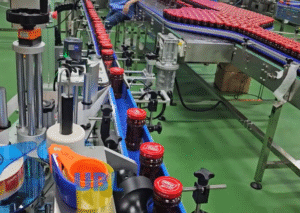
UBL designed a fully automated packaging line for Lao Gan Ma that integrates every station from bottle capping to finished goods palletizing into a single continuous flow. The line requires human intervention only at the final quality inspection stage, where a worker visually confirms that each case contains the correct number of bottles before the case is sealed and palletized.
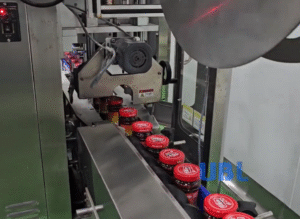
The sequence begins as the filled and capped bottles arrive from the upstream filling station. An automated organizing system arranges the bottles into the correct orientation and spacing for the downstream stations. The bottles pass through a labeling station that applies the brand sticker to each jar at a consistent position and orientation. The labeled bottles then pass through a bottle mouth sealing station that applies a protective film seal over the bottle opening, providing an additional layer of product protection and tamper evidence.
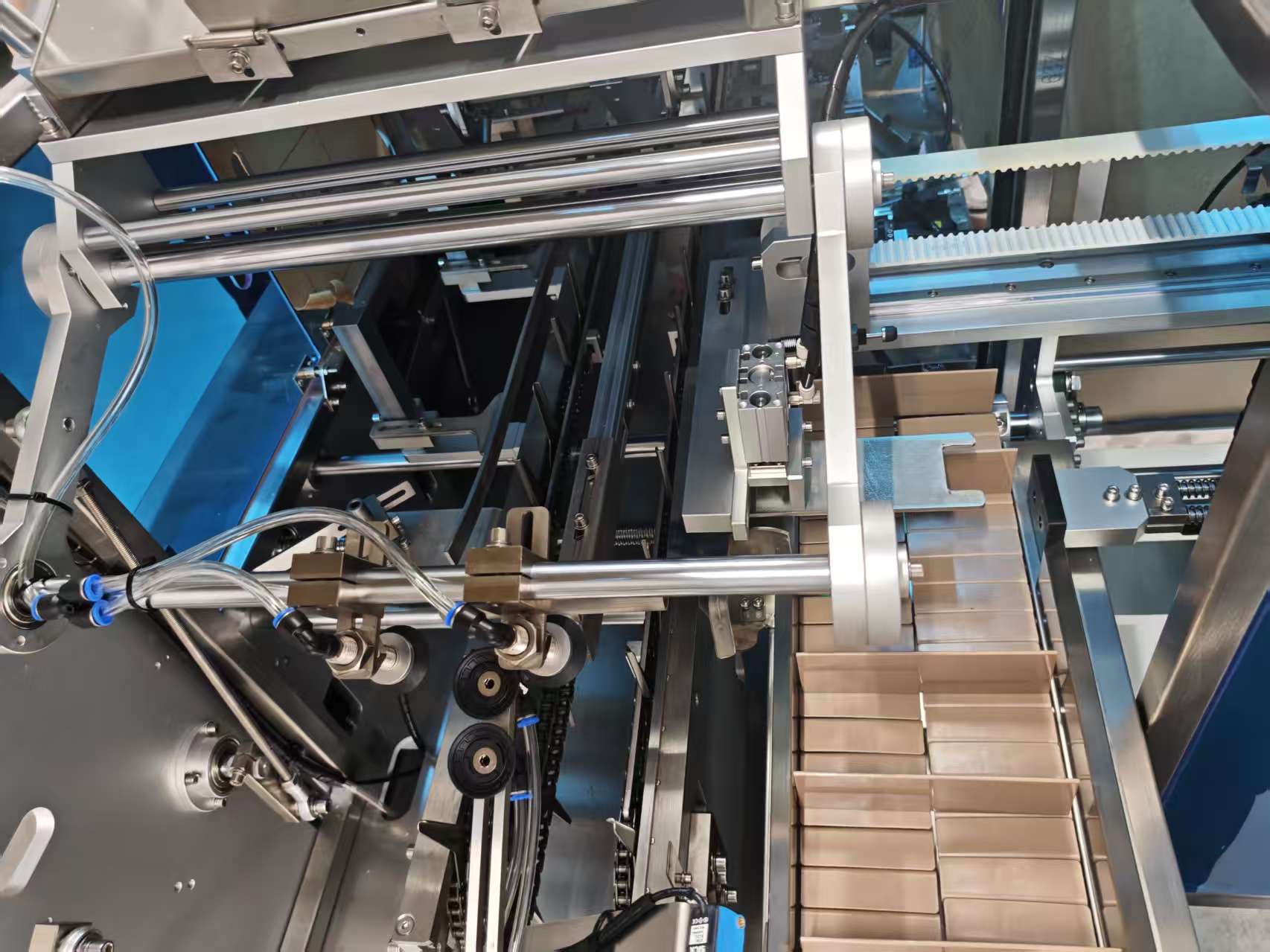
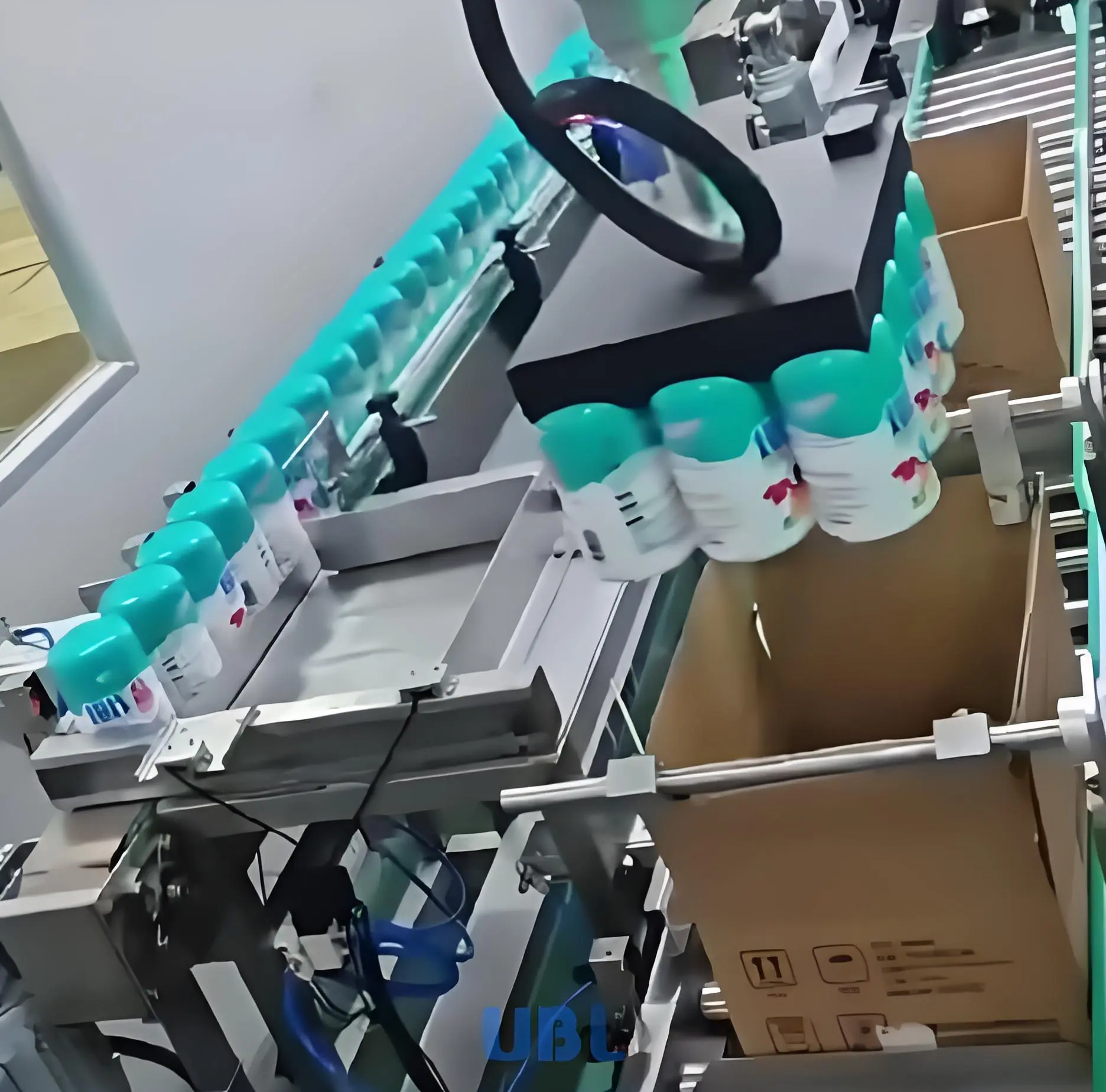
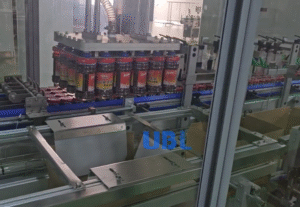
The sealed bottles advance to the picking and case packing station, where an automated system picks the correct number of bottles and places them into shipping cartons. The picking system is programmed to handle the specific bottle geometry and weight of Lao Gan Ma glass jars, with gripper force calibrated to prevent bottle breakage during the picking motion. The packed cases pass through a brief human quality inspection station where a worker visually confirms that each case contains the correct number of bottles and that the bottle seals and labels are properly applied. After inspection, the cases advance to the carton sealing station, where the case flaps are closed and sealed automatically. The sealed cases are then palletized by an automated palletizing system that stacks them in the correct configuration for shipping.
Every step from bottle organizing to case palletizing flows seamlessly with minimal manual handling. The only human intervention is at the quality inspection station. This configuration reduces hygiene risk by eliminating manual contact with bottles and cartons at every other station, improves packaging consistency by applying labels and seals mechanically, and increases throughput by keeping every station operating at the same line speed.
Click to view packaging line cases of UBL
Key Benefits of Sauce Packaging Line Automation
The most significant benefit of sauce packaging line automation is the reduction in human contact points. At each station where a conventional line would require a worker to handle a bottle, label, carton, or case, the automated line uses a mechanical or robotic system. This reduction in manual handling directly reduces hygiene risks in the food production environment and provides documented evidence of hygienic packaging practices for food safety audit compliance.
The second benefit is packaging consistency. The labeling station applies every sticker at the same position and orientation. The bottle mouth sealing machine applies each film seal with the same tension and placement accuracy. The picking system places each bottle in the case at the same position. The carton sealer closes each case with the same tape length and tension. The palletizer stacks each case at the same position on the pallet. This consistency across every station produces finished pallets whose appearance is uniform and predictable, reducing the risk of damage during transport and improving the presentation quality of the delivered product.
The third benefit is throughput. Because every station in the line operates at the same speed and is synchronized through the central control system, there is no accumulation of product between stations and no bottleneck created by a manual station that runs slower than the machines. The line achieves its rated throughput consistently across every shift, limited only by the speed of the upstream filling station.
Why This Applies to Other Sauce Manufacturers
The operational pattern that made this deployment successful for Lao Gan Ma applies to any sauce, condiment, or liquid food manufacturer operating a glass bottle or jar packaging line. The product is in sealed containers before reaching the packaging line, so the line handles sealed product units with zero direct food contact. The container format is handled by standard labeling, sealing, picking, and case-packing equipment configured to the specific container dimensions and weight.
The full-line sauce packaging line automation approach is particularly valuable for manufacturers supplying major retail chains. Packaging consistency, hygiene compliance, and documented quality control are documented requirements for retail suppliers. The automated line provides documented evidence at every station that the packaging process was controlled consistently across the production run. For guidance on matching the line components to the specific product category and volume requirements, see the food packaging cartoning machine selection guide.
Technical Configuration for Sauce Packaging Lines
The labeling station uses precision applicators that apply brand stickers at consistent position and orientation regardless of bottle surface texture. The bottle mouth sealing station applies a protective film seal that adheres to the glass surface around the bottle opening, creating a tamper-evident barrier. The picking system uses servo-driven grippers with adjustable force calibrated to prevent bottle breakage. The case-packing system can be configured for different case formats and bottle counts. The palletizing system stacks cases in a user-defined pattern and height.
The line is built with stainless-steel construction at all product-contact-adjacent surfaces, meeting food-grade hygiene requirements. The control system integrates every station into a single HMI. For a broader perspective on how integrated line configurations deliver ROI, the cartoning machine cost guide discusses equipment pricing and payback calculations.
ROI: Labor Reduction and Breakage Reduction
The ROI calculation for sauce packaging line automation starts with the labor reduction across every station. A conventional line operating with workers at the organizing, labeling, sealing, picking, packing, and palletizing stations requires eight to twelve workers per shift. The automated Lao Gan Ma line reduces this to two workers per shift: one at the quality inspection station and one monitoring the overall line. Across two shifts, this represents a saving of twelve to twenty workers.
Beyond direct labor, two indirect savings add significant value. Glass bottle breakage is reduced because automated handling applies consistent force without the variation of manual handling. Broken bottles create product waste, cleanup time, and production stoppages that are eliminated with automated handling. Label and carton defects are reduced because the mechanical application is consistent on every cycle.
Common Questions About Sauce Packaging Line Automation
Can the same line handle different bottle sizes?
Yes. The labeling station, bottle mouth sealer, and picking system are adjustable for different bottle dimensions. The HMI stores the settings for each SKU and recalls them automatically when the corresponding recipe is selected by the operator.
How does the line handle irregularly shaped bottles?
The bottle organizing system and grippers are custom-configured for the specific bottle geometry. The sample trial process verifies compatibility before purchase, and the gripper configuration is stored in the SKU recipe for automatic recall during changeover.
What happens if a bottle breaks during picking?
Sensors detect the breakage and stop the picking cycle. The broken bottle is removed manually and the line resumes. Breakage events on a properly configured line with calibrated gripper force are rare, typically occurring only when a damaged bottle enters the line from the upstream filling station.
Can the line integrate with existing filling and capping equipment?
Yes. UBL provides the conveyor interface between the existing filling line and the automated packaging line as part of the installation package. The interface design is reviewed during the pre-sale technical review to confirm compatibility.
How long does a full line changeover take?
Changeover for different bottle sizes within the same bottle type takes approximately 20 to 30 minutes. The labeling station, bottle mouth sealer, and picking gripper settings are updated automatically when the SKU is selected from the HMI menu.
How to Start Your Sauce Packaging Line Automation Project
UBL supports sample trial runs before purchase. Send your bottle samples, label specifications, carton blanks, and production volume requirements to UBL’s facility. The engineering team runs test cycles on the relevant machine configurations and provides video documentation of the output, including label placement accuracy, seal quality, picking consistency, and throughput data. The test is provided at no cost and does not require a purchase commitment.
Standard sauce packaging line configurations are available for next-business-day dispatch after contract signing. Custom configurations for non-standard bottle dimensions or specific line integration requirements are typically available within three months of design confirmation. Installation, commissioning, on-site operator training, and a one-year warranty covering parts and service are included in the purchase price for every machine in the line.
To discuss your sauce product format, bottle specification, and output targets, contact the UBL team at helen@huanlianauto.com or visit ublpackaging.com.