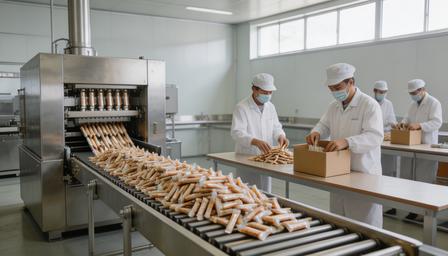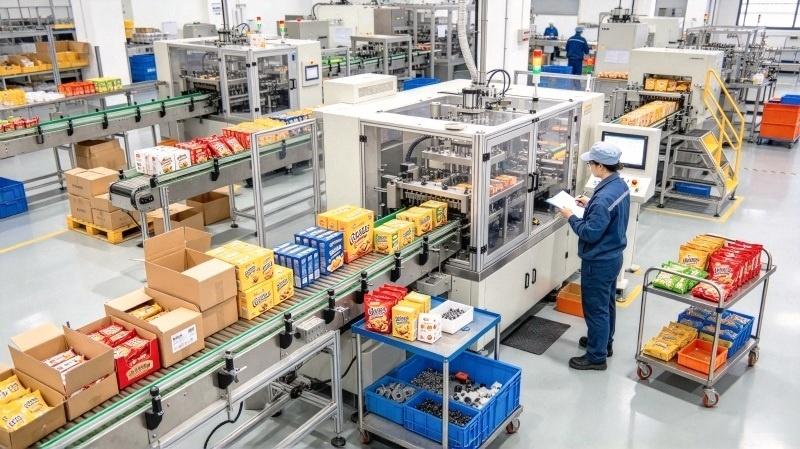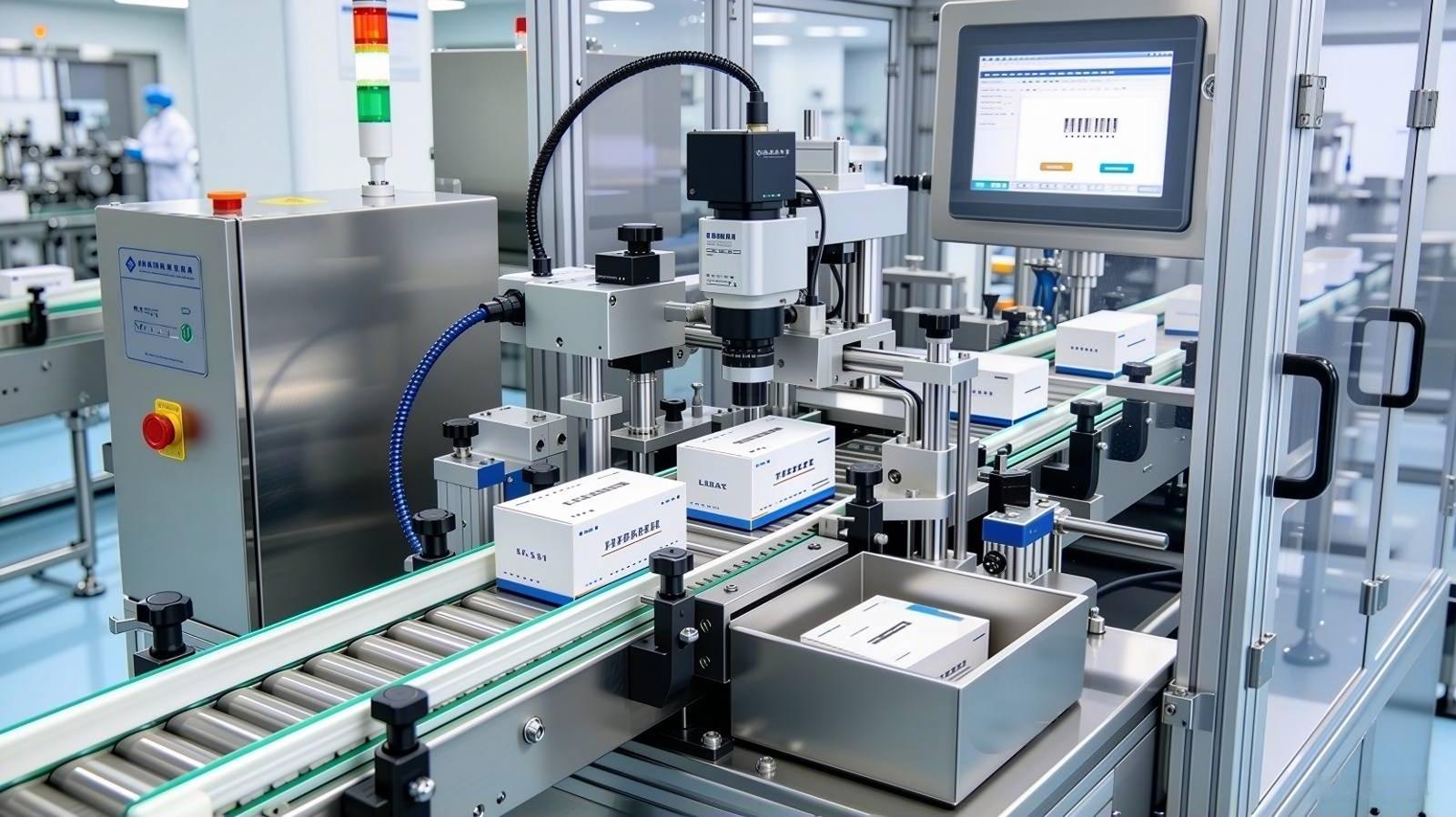
The decision to invest in a food carton folding machine typically arrives at the same moment across different food manufacturing facilities: a production manager realizes that the back-end packaging station has become the constraint that limits overall plant output, and that the manual folding of carton blanks is the specific task consuming the most labor hours. A frozen dumpling line running eight workers folding boxes and loading product, a bakery packaging station where five workers manually fold snap-lock bottom cartons for retail display, or a chocolate factory where the folding table is the point where output slows down every afternoon when worker fatigue sets in. Food manufacturers who have operated manual packaging stations long enough recognize this pattern, and they know that the gap between their primary production capacity and their packaging capacity only widens as sales volumes grow.
A food carton folding machine is the piece of equipment that bridges this gap. It takes flat carton blanks from a magazine and automatically forms them into finished boxes, ready for product loading, at speeds and consistency levels that manual folding teams cannot match. This article is for operations and purchasing decision-makers at food manufacturers who need to understand what a food carton folding machine actually does, which box types it handles, how to match it to their production requirements, and how it integrates with the downstream cartoning equipment that completes the secondary packaging sequence.
What a Food Carton Folding Machine Does
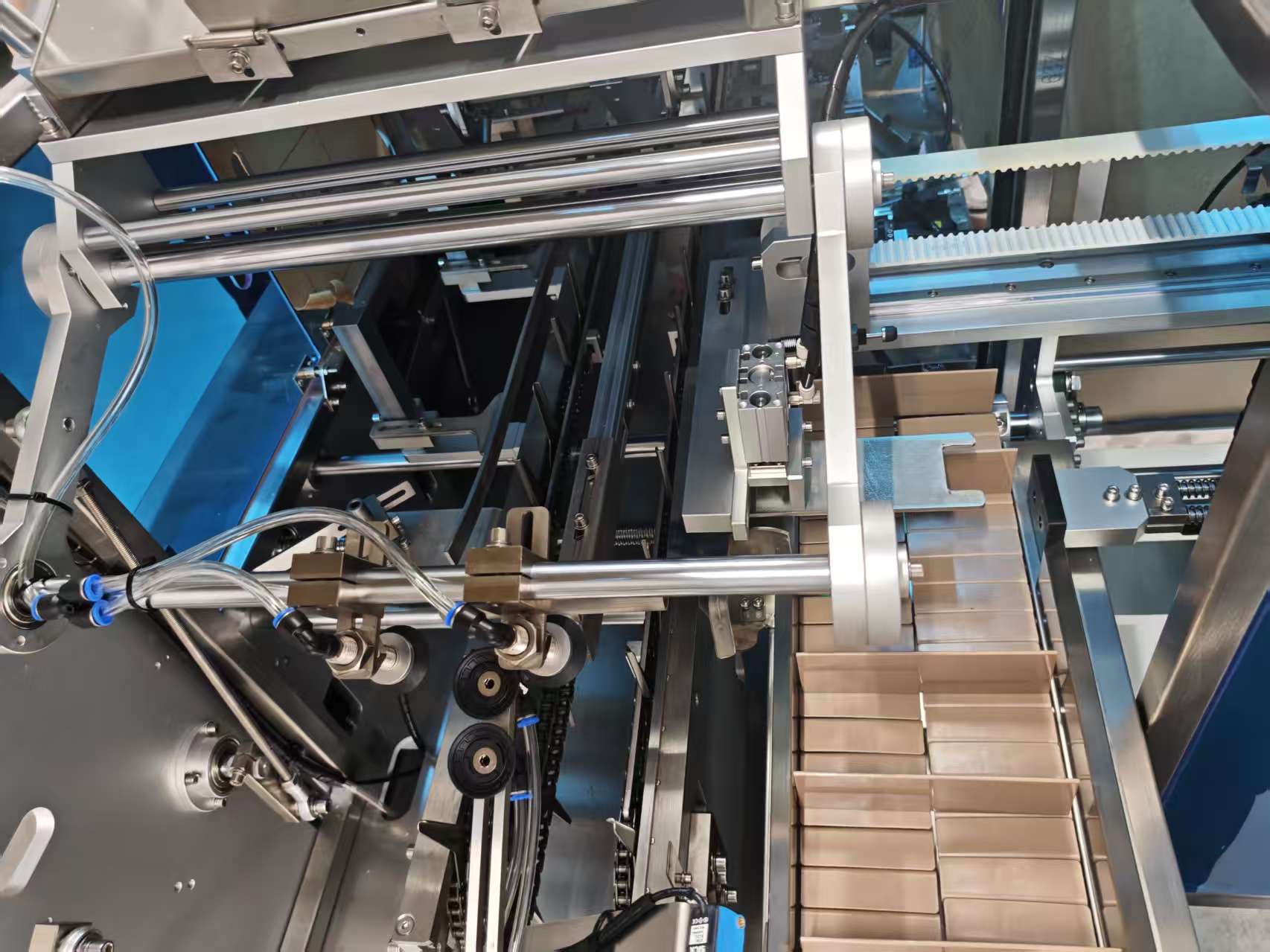
A food carton folding machine, also called a carton erector or box former, performs one task and performs it with high precision: it takes a flat carton blank from a magazine, erects it into a three-dimensional box by folding the bottom flaps and side panels into their correct positions, and discharges the formed box ready for product loading. The machine handles this sequence automatically, without operator intervention, at speeds ranging from 20 to 60 boxes per minute depending on the box type and machine configuration.
The distinction between a carton folding machine and a cartoning machine is important. The folding machine handles the box erection step only. The product loading and box closing steps are performed separately, either by manual workers or by a downstream cartoning machine. Some facilities use the folding machine to supply formed boxes to a manual loading station. Others connect the folding machine directly to a cartoning machine to create a fully automated secondary packaging line. The choice depends on the product type, the volume, and the facility layout.
Box Types a Food Carton Folding Machine Handles
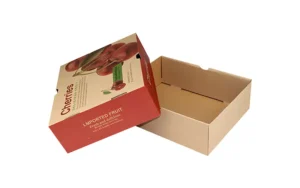
Food manufacturers use four primary carton formats for secondary packaging, and a food carton folding machine can be configured to handle any of them. The machine configuration differs for each format because the folding sequence and mechanical actions required to erect the box are specific to the box geometry.
Snap-Lock Bottom Boxes
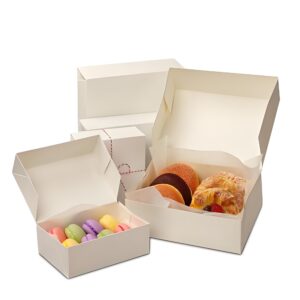
The snap-lock bottom box, also known as the crash-lock bottom or 1-2-3 bottom, is the most common format for food products that require a strong, self-locking base. The bottom flaps interlock mechanically when the blank is erected, creating a secure structure without requiring adhesive. A food carton folding machine configured for snap-lock bottom boxes uses mechanical fingers to engage the interlocking tabs as the blank is folded, producing a formed box whose base is locked and will not open under product weight. UBL snap-lock bottom carton folding machines operate at 40 to 60 boxes per minute, making them the fastest configuration in the category. This format is widely used in the food industry for frozen food cartons containing tray-packed dumplings or fish fillets, bakery cartons for cookies and pastries, and multi-pack confectionery boxes where the bottom must support significant product weight.
Tuck-End Boxes
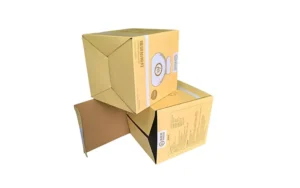
Tuck-end boxes, including Straight Tuck-End and Reverse Tuck-End formats, are the standard for retail food packaging across the bakery, snack, and confectionery segments. The bottom flaps tuck into the box body to form the base. A food carton folding machine handling tuck-end boxes uses a folding sequence that creases and positions the flaps before the tucking action. UBL tuck-end carton folding machines also operate at 40 to 60 boxes per minute. This format is used for cookie and biscuit cartons, chocolate bar retail boxes, energy bar cartons, and single-serve snack packs.

Glue-Sealed Cartons
Glue-sealed cartons use hot-melt adhesive to bond the bottom flaps, creating a sealed base that provides tamper evidence and structural integrity. A food carton folding machine configured for glue-seal operation includes a hot-melt adhesive applicator that applies the adhesive bead to the bottom flaps before the folding and pressing sequence. The folding speed is slightly lower than snap-lock or tuck-end configurations because the adhesive must be applied and the flaps must be held until the bond sets. This format is preferred for premium food products, export shipments, and products where the retail buyer specifies tamper-evident packaging.
Two-Piece Rigid Boxes
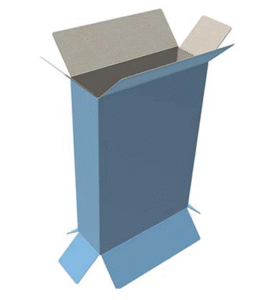
Two-piece rigid boxes, consisting of a separate base and lid, are used for premium food packaging applications where presentation quality is a primary consideration. A food carton folding machine handling two-piece boxes requires a different mechanical configuration because the base and lid are formed from separate blanks. UBL two-piece rigid box folding machines operate at 30 to 40 boxes per minute. This format is used for premium chocolate gift boxes, high-end bakery packaging, and gift-set confectionery products where the carton presentation carries brand value.
Matching the Food Carton Folding Machine to Your Production Requirements
Selecting the right food carton folding machine depends on three factors: the box type your product uses, the volume you need to produce per shift, and how the folding machine feeds into your downstream packaging process.
Box Type Compatibility
The box type is the primary determining factor because the folding mechanism is specific to the box geometry. A machine configured for snap-lock bottom boxes cannot handle tuck-end boxes without a module change, and a glue-seal machine requires a hot-melt adhesive system that is not present on a snap-lock or tuck-end machine. If your facility uses multiple box formats, UBL recommends configuring the machine for the format that covers the majority of your production volume. The tuck-end vs snap-lock bottom carton format guide provides a detailed comparison of these formats.
Volume and Speed Requirements
The machine speed must match your target output. For a food manufacturer producing 20,000 cartons per day across two shifts, a snap-lock bottom machine running at 50 boxes per minute delivers approximately 24,000 boxes across 8 productive hours, providing headroom for changeovers and minor stoppages. For smaller volumes, a lower-speed configuration or a semi-automatic machine may be more cost-effective. The cartoning machine cost guide discusses how speed and configuration affect equipment pricing and ROI calculations.
Integration with Downstream Cartoning
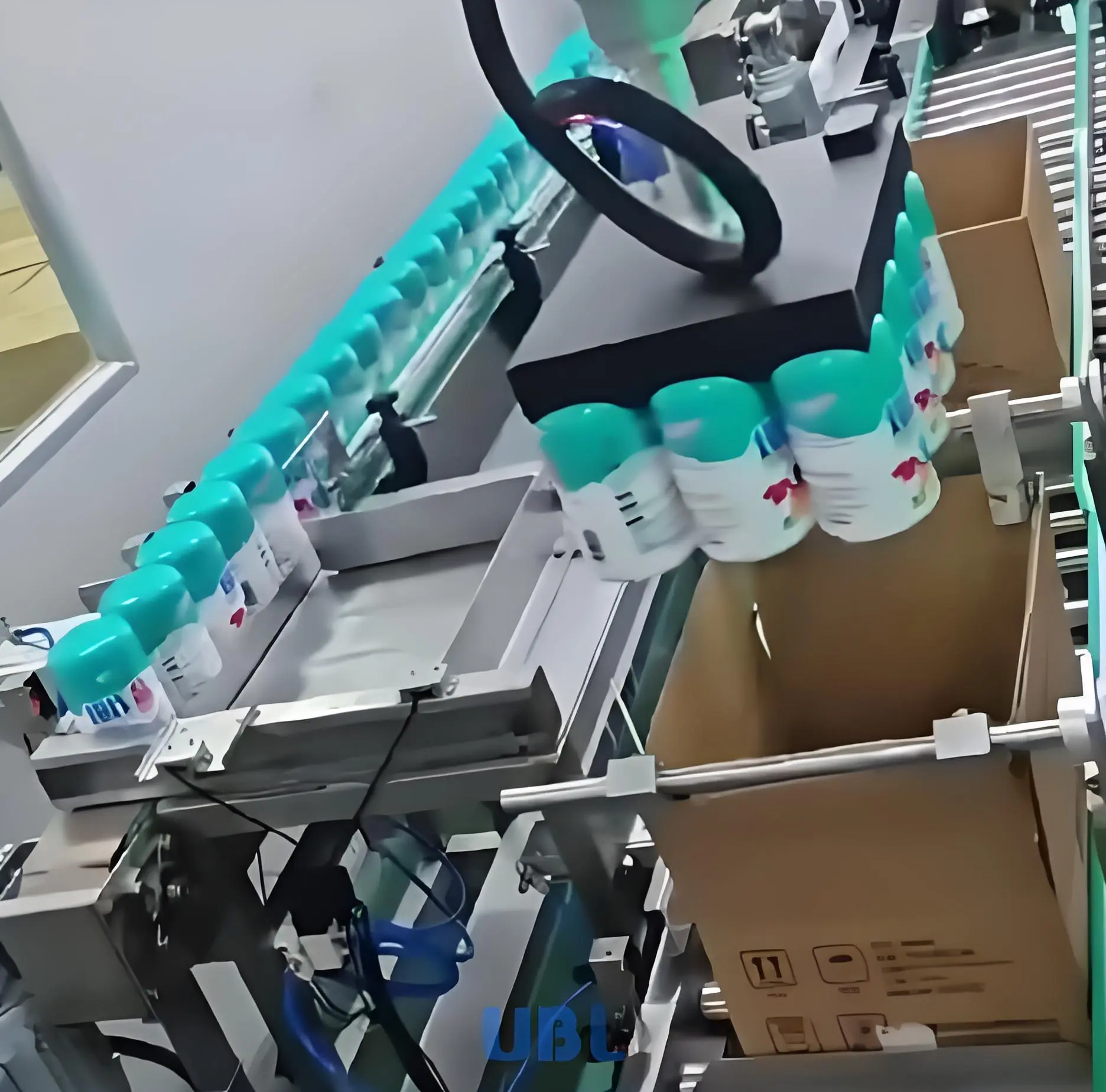
A food carton folding machine is most effective when it feeds directly into the downstream packaging process. In a line where the folding machine connects to a cartoning machine, the formed boxes are transferred automatically from the folding machine outfeed to the cartoning machine blank infeed, eliminating the need for manual box handling between the two machines. The folding machine speed must be matched to the cartoning machine speed to prevent the folding machine from producing boxes faster than the cartoner can use them. UBL’s team maps the upstream and downstream equipment speeds during the pre-sale technical review to ensure the line operates at a balanced throughput.
Food Industry Applications for Carton Folding Machines
Carton folding machines serve food manufacturers across multiple segments, each with specific requirements for box format, speed, and integration. Frozen food manufacturers producing dumplings, fish fillets, and prepared meals use snap-lock bottom boxes that require a folding machine operating at 40 to 60 boxes per minute, with the formed boxes feeding directly into a cartoning machine for product loading and sealing. The frozen food cartoning machine guide provides a detailed overview of how cartoning and folding machines work together in the frozen food segment.
Bakery and confectionery manufacturers producing cookies, cakes, and pastries use tuck-end boxes for retail packaging, with the folding machine supplying formed boxes to a manual loading station or an automated cartoner. The folding machine speed for tuck-end boxes is also 40 to 60 boxes per minute, matching the output requirements of most mid-size bakery lines. Glue-sealed cartons are used by food manufacturers whose retail buyers specify tamper-evident packaging, including producers of premium confectionery, infant formula, and nutritional supplements. Two-piece rigid boxes are used by manufacturers of premium gift products, where the presentation quality of the box is part of the product value proposition.
ROI: What a Food Carton Folding Machine Delivers
The most immediate impact of a food carton folding machine is the reduction in manual labor at the box-folding station. A manual folding station typically requires two to four workers to open flat blanks, fold the bottom flaps, and position the formed boxes for loading. The folding machine performs this work automatically at speeds of 40 to 60 boxes per minute, reducing the station to zero direct labor for the folding step. The workers who previously folded boxes can be redeployed to product loading, quality inspection, or other production tasks where their labor adds more value.
Beyond direct labor, the folding machine delivers two indirect benefits that compound over time. First, consistent box quality: a manually folded box varies in geometry across the shift because workers fatigue and their folding technique changes. A machine-folded box is identical on every cycle, which means the downstream carton-closing step receives consistently formed boxes and produces consistently sealed cartons. Second, predictable output: the machine delivers the same output at the end of the shift as at the beginning, making production planning and downstream capacity management more reliable.
The combination of direct labor savings, reduced downstream variation, and predictable output typically delivers a payback period of 10 to 16 months for food manufacturers operating two shifts. Facilities running three shifts or producing at high volumes can see payback in under 12 months.
Common Questions About Food Carton Folding Machines
Can a food carton folding machine handle multiple box sizes?
Yes. UBL folding machines are designed for format changeover in under ten minutes for dimension adjustments within the same box style. The operator adjusts the guide width using handwheels on the forming modules, with settings stored in the HMI for instant recall.
Does the folding machine require adhesive for snap-lock bottom boxes?
No. Snap-lock bottom boxes use interlocking mechanical tabs that require no adhesive. The folding machine engages these tabs during the forming sequence. For glue-seal boxes, a hot-melt adhesive system is integrated into the folding machine.
Can the folding machine feed directly into a cartoning machine?
Yes. UBL folding machines can be directly matched with UBL cartoning machines.
Our cartoners feature automatic carton picking and opening functions, while folding machines connect to the downstream station for manual product loading.
Many factories opt for this semi-automatic mixed production line combining manual labor and automation. Some manufacturers also choose standalone folder units when their special product specifications cannot be fully compatible with automatic cartoning equipment.
What happens if a blank is misaligned during feeding?
UBL folding machines include blank sensors that detect misfeeds and stop the cycle before the misaligned blank enters the forming station. The operator clears the misfeed and restarts the cycle. These events are rare when carton blanks are within specification.
How long does changeover between box sizes take?
Changeover for dimension adjustments within the same box type takes under ten minutes. The operator adjusts guide widths using handwheels and recalls the stored parameters from the HMI.
How to Start
UBL supports sample trial runs before purchase. Send your carton blank samples and product specifications to UBL’s facility. The engineering team runs a test cycle on the relevant carton folding machine configuration and provides video documentation of the output, including folding quality, cycle speed, and any format adjustments required. The trial is provided at no cost and does not require a purchase commitment. You are also welcome to visit UBL’s facility in person to observe the test run.
Standard food carton folding machine configurations are available for next-business-day dispatch after contract signing. Custom configurations for non-standard carton dimensions or specific integration requirements are typically available within three months of design confirmation. Installation and commissioning are included in the purchase price. On-site operator training takes approximately two hours, and most operators are running the machine independently within two to three production shifts after training.
To discuss your carton format, box dimensions, and output requirements, contact the UBL team at helen@huanlianauto.com or visit ublpackaging.com.
Quality Consistency in Food Packaging
Carton quality consistency is a metric that matters across every stage of the food packaging line. A carton whose bottom flaps are not fully seated during folding will present problems at every subsequent station: the loading station cannot position the product correctly, the closing station cannot seal the carton properly, and the finished carton may fail during distribution. Manual folding produces variation because the physical force applied to each blank depends on the worker’s hand strength, technique, and fatigue level. A food carton folding machine applies the same mechanical force to every blank on every cycle, producing formed boxes whose geometry is identical across the entire production shift.
For food manufacturers operating under third-party food safety audit frameworks, the consistency of the packaging process is a documented metric. A folding machine that produces consistent box geometry on every cycle provides documented evidence that the packaging step is under control. Manual folding processes, by contrast, must rely on operator training and periodic inspection to maintain quality, and the documentation burden for manual processes is significantly higher.
Integrating Carton Folding with Cartoning Machines
The most efficient configuration for a food packaging line is a folding machine feeding directly into a cartoning machine. The folding machine erects each box and transfers it to the cartoning machine blank infeed via a conveyor connection. The cartoning machine then loads the product into the formed box and closes the carton. This configuration eliminates the need for manual handling of formed boxes between the two machines and reduces the floor space required for the packaging line.
In this configuration, the folding machine and cartoning machine must be synchronized to maintain consistent flow. If the folding machine produces boxes faster than the cartoning machine can use them, the infeed accumulates formed boxes until the cartoner catches up. If the folding machine produces boxes slower than the cartoner needs them, the cartoner experiences idle time. UBL matches the speeds of the two machines during the pre-sale technical review, configuring the folding machine speed to match the cartoning machine input requirement. The standard target is a folding machine speed that is 10 to 15 percent above the cartoning machine speed, ensuring the cartoner never waits for a box.
Collaboration with Product and Package Design Teams
Food manufacturers developing new products or redesigning existing packaging should consider the folding machine requirements during the package design phase. Carton blank geometry, paperboard thickness, crease depth, and flap dimensions all affect how the blank feeds and forms in the folding machine. Involving the folding machine manufacturer in the package design review ensures that the final carton design is compatible with automated folding before production begins.
UBL’s engineering team reviews carton blank specifications during the pre-purchase process and can recommend adjustments to blank geometry that improve forming reliability without affecting the visual appearance or functional performance of the finished box. These recommendations are based on experience with hundreds of carton formats across multiple food categories and are provided at no cost during the sample trial process.
Summary: Why a Dedicated Folding Machine Matters
The food carton folding machine is often the most overlooked component of a secondary packaging line. Manufacturers focus on the cartoning machine because it is the piece of equipment that loads and seals the product. But the folding machine is the step that determines whether the downstream processes run smoothly. A consistently formed box from the folding machine enables the cartoning machine to operate at full speed with minimal jams and misfeeds. An inconsistently formed box creates downstream problems that cost productive time and reduce output quality.
For food manufacturers who are evaluating automated packaging for the first time, the folding machine is the logical first investment. It is mechanically simpler, less expensive, and easier to integrate than a full cartoning system. Once the folding machine is running and producing consistently formed boxes, the addition of a cartoning machine to automate the loading and closing steps is a straightforward upgrade.
Food Industry Case Examples
A frozen dumpling manufacturer in Northeast China was running six workers at the folding station, folding snap-lock bottom cartons for retail frozen dumpling boxes. Each worker folded approximately 400 boxes per shift, and the manual folding process produced a 3 percent defect rate from incompletely locked bottom flaps that had to be reworked at the loading station. After installing a UBL snap-lock bottom food carton folding machine at 50 boxes per minute, the folding station required zero workers. The loading station operators no longer encountered misfolded boxes, and the downstream cartoning machine received consistently formed cartons that closed without jams.
A cookie manufacturer in Southeast Asia producing 15,000 tuck-end cartons per day across two shifts was running four workers at the folding station. The folding workers were the highest-turnover positions in the facility because the repetitive hand motion caused fatigue and strain over extended shifts. After installing a UBL tuck-end food carton folding machine, the folding station was automated. The four workers were redeployed to quality inspection and line support roles, where turnover was lower and job satisfaction was higher. The folding machine has been running for 18 months with no unplanned downtime.
A premium chocolate manufacturer in Europe producing two-piece rigid gift boxes for seasonal retail programs was folding boxes by hand using a dedicated team of eight workers during peak production periods. The manual folding process was inconsistent because the rigid box material required precise crease alignment that was difficult to maintain across a team of workers with varying experience levels. After installing a UBL two-piece rigid box food carton folding machine, the folding quality became consistent across all production runs. The machine operates at 35 boxes per minute, matching the required output for the seasonal production schedule, and the eight workers were reassigned to product packing and presentation tasks that required human judgment.
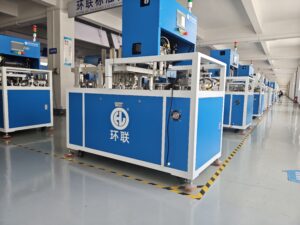
Click to view on-site footage of carton folding machine clients
Machine Configuration Options
Food carton folding machines are available in several configurations to match different production environments. The standard configuration is a fully automatic machine with a motorized blank magazine, servo-driven forming mechanism, and conveyor outfeed. This configuration handles continuous production at 40 to 60 boxes per minute with minimal operator attention. The operator reloads the blank magazine approximately every 20 to 30 minutes, depending on the blank thickness and magazine capacity.
For facilities with limited floor space or lower volume requirements, UBL offers a compact configuration with a smaller magazine and reduced footprint. The compact machine operates at 20 to 35 boxes per minute and requires more frequent magazine reloading but occupies approximately 30 percent less floor space. For facilities that need maximum flexibility, the modular configuration allows the folding machine to be reconfigured between box types in under 30 minutes by swapping the forming module.
The blank magazine itself is configurable for different blank capacities and loading orientations. Standard magazines hold approximately 200 to 500 blanks depending on thickness. High-capacity magazines extend this to 1,000 blanks for facilities that want to extend the interval between magazine reloads. The magazine loading height is specified during the pre-sale technical review to match the ergonomic requirements of the facility operators.
Conclusion: The Foundation of Automated Secondary Packaging
The food carton folding machine is the foundation of any automated secondary packaging line. No matter how fast the cartoning machine runs or how accurate the labeling system is, the quality of the finished package depends on the quality of the formed box that enters the line at the first step. A folding machine that produces consistently formed boxes at 40 to 60 boxes per minute enables the downstream equipment to operate at full efficiency. A manual folding station that produces variable quality boxes creates problems at every downstream station, reducing overall line efficiency and increasing the defect rate.
For food manufacturers evaluating automation for the first time, the folding machine is the logical starting point. It is the simplest automated packaging machine to install and operate, the most cost-effective in terms of labor savings per dollar invested, and the machine that has the greatest impact on the quality of the downstream processes. Once the folding machine is producing consistently formed boxes, the addition of a cartoning machine, labeling system, and case packer are incremental upgrades that build on the stable foundation the folding machine provides.
Quality Control and Inspection
Food carton folding machines include sensors that verify each box is correctly formed before it is discharged. A snap-lock bottom machine checks that the interlocking tabs are fully engaged. A tuck-end machine verifies that the bottom flaps are in their correct positions. If a box is not correctly formed, the machine stops and alerts the operator, preventing defective boxes from reaching the downstream packaging line. This automated quality control is a significant advantage over manual folding, where incorrectly folded boxes are typically not detected until they cause a jam at the loading station or produce a visibly defective finished carton.
UBL folding machines include optional vision inspection systems that verify carton blank presence, print registration, and dimensional accuracy before the blank enters the forming station. These systems are recommended for food manufacturers producing high-value retail packaging where carton appearance is part of the product presentation. The vision system provides documented quality data that can be included in production reports and quality audits.
Expanded Application Examples by Food Category
In the frozen food category, tray-packed products such as dumplings, fish fillets, and frozen entrees typically use snap-lock bottom cartons that require a folding machine operating at 40 to 60 boxes per minute. The folding machine feeds directly into a cartoning machine that loads the tray and seals the carton. In the bakery category, cookies and pastries use tuck-end cartons that require the same folding speed range. In the confectionery category, chocolate bars and candy boxes use a mix of tuck-end and snap-lock formats depending on the product weight and retail channel requirements.
Each food category has specific carton dimensions and material requirements that the folding machine accommodates through adjustable guide rails and programmable folding parameters. The machine can handle paperboard weights ranging from 250 to 600 grams per square meter, covering the range used by most food manufacturers for secondary packaging. The blank magazine adjusts to accommodate blank dimensions from 50 by 50 millimeters up to 600 by 800 millimeters, depending on the machine model.
How to Start Your Carton Folding Automation Project
The first step is to send your carton blank samples to UBL for a folding test. UBL’s team runs your blanks on the appropriate machine configuration and provides video documentation of the folding quality, cycle speed, and any format adjustments required. The test is provided at no cost and includes a written report with folding speed data, defect rate observations, and recommendations for machine configuration. Standard machines ship next business day after contract signing. Custom configurations ship within three months. Installation, commissioning, operator training, and a one-year warranty are included in the purchase price.
To discuss your carton format, box dimensions, and production requirements, contact the UBL team at helen@huanlianauto.com or visit ublpackaging.com.