
The moment a frozen food production manager realizes they need a frozen food cartoning machine is often the same moment across different facilities: it is a Tuesday morning in peak season, the downstream cold store is filling up faster than the packaging line can seal cartons, and the packaging station has six workers folding boxes by hand in a refrigerated environment where every minute of labor costs more than it does at room temperature. Frozen food secondary packaging is different from ambient food packaging, and the difference shows up first in the labor line. This article is for operations and purchasing decision-makers at frozen food manufacturers who need to understand what a frozen food cartoning machine actually does, how to match it to their product type, and what to confirm before buying.
Frozen Food Market Growth and the Automation Imperative
The global frozen food market has grown steadily over the past decade, driven by changing consumer lifestyles, the expansion of cold-chain logistics in developing markets, and the increasing retail penetration of frozen prepared meals. According to the Food and Agriculture Organization of the United Nations, the global volume of frozen food production has increased by approximately 35 percent since 2015, with the fastest growth concentrated in the Asia-Pacific region. This expansion puts direct pressure on the secondary packaging stage of frozen food manufacturing. As throughput increases, the manual packaging station — already the most labor-intensive point in a frozen food line — becomes the constraint that limits overall plant output.
A secondary packaging solution for the food industry must address the specific demands of cold-chain production: temperature-controlled environments that limit human work duration, condensation and frost that affect carton integrity, and the need for consistent output across long production shifts. The frozen food cartoning machine is designed to operate within these constraints, delivering consistent mechanical performance regardless of the ambient conditions in the cold room. Understanding the market context helps explain why investment in frozen food cartoning automation is accelerating: as volumes grow and labor markets tighten, the manual alternative becomes structurally unsustainable.
For a broader perspective on how cartoning machines serve different food categories, see the UBL cartoning machine product series which covers tuck-end, glue-seal, and snap-lock bottom configurations.
What a Frozen Food Cartoning Machine Does
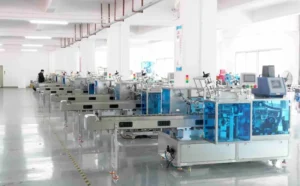
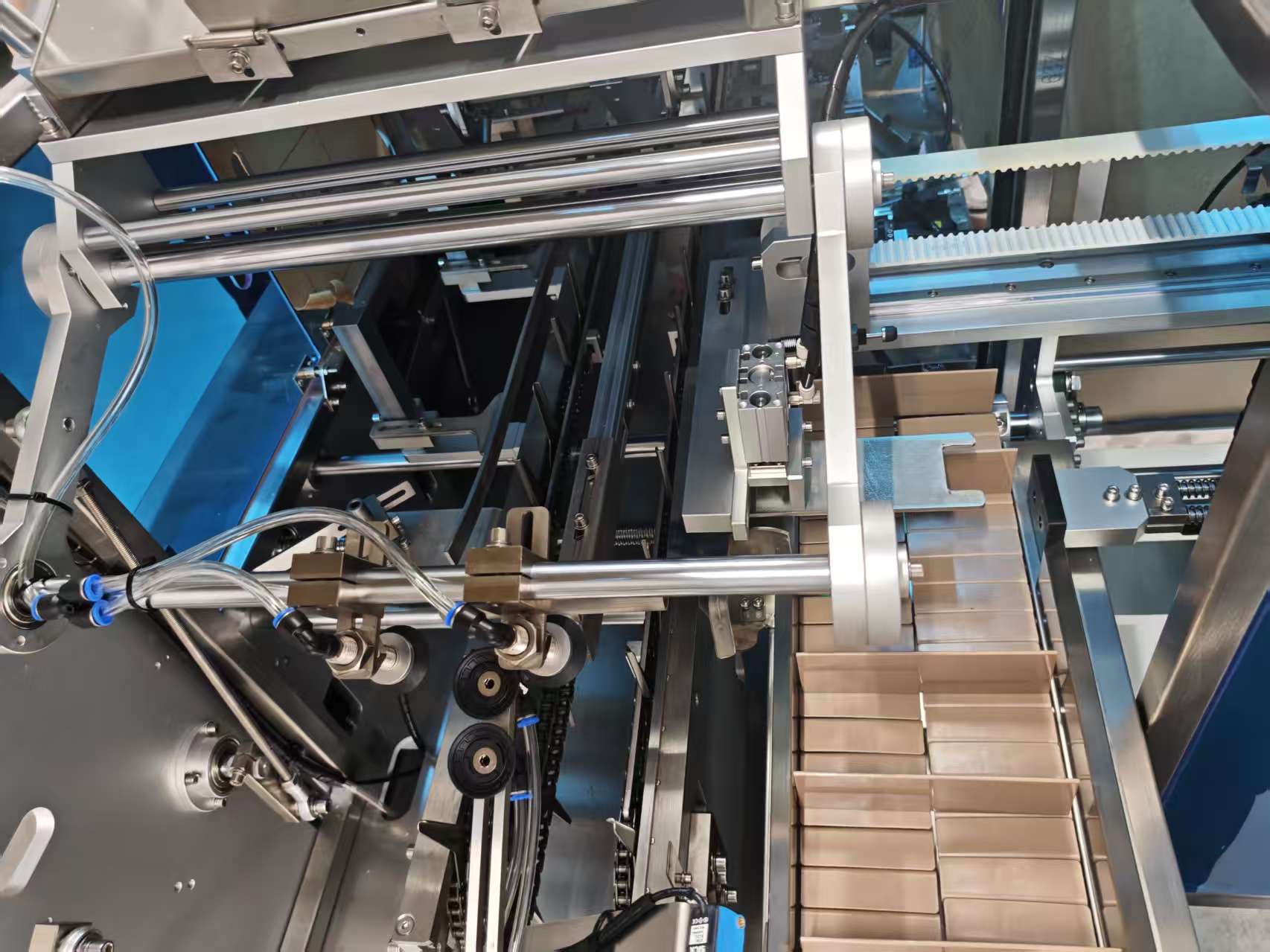
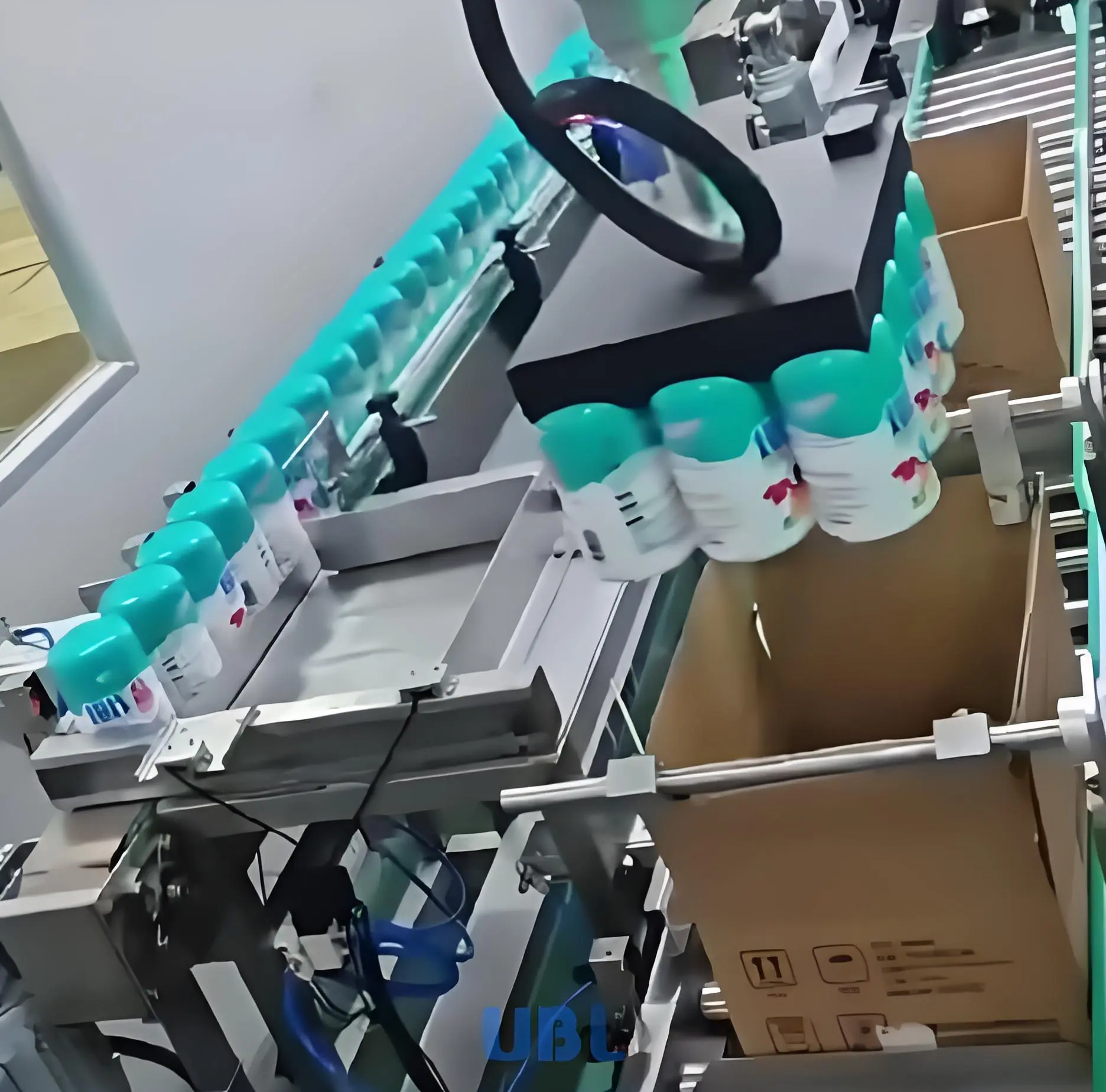
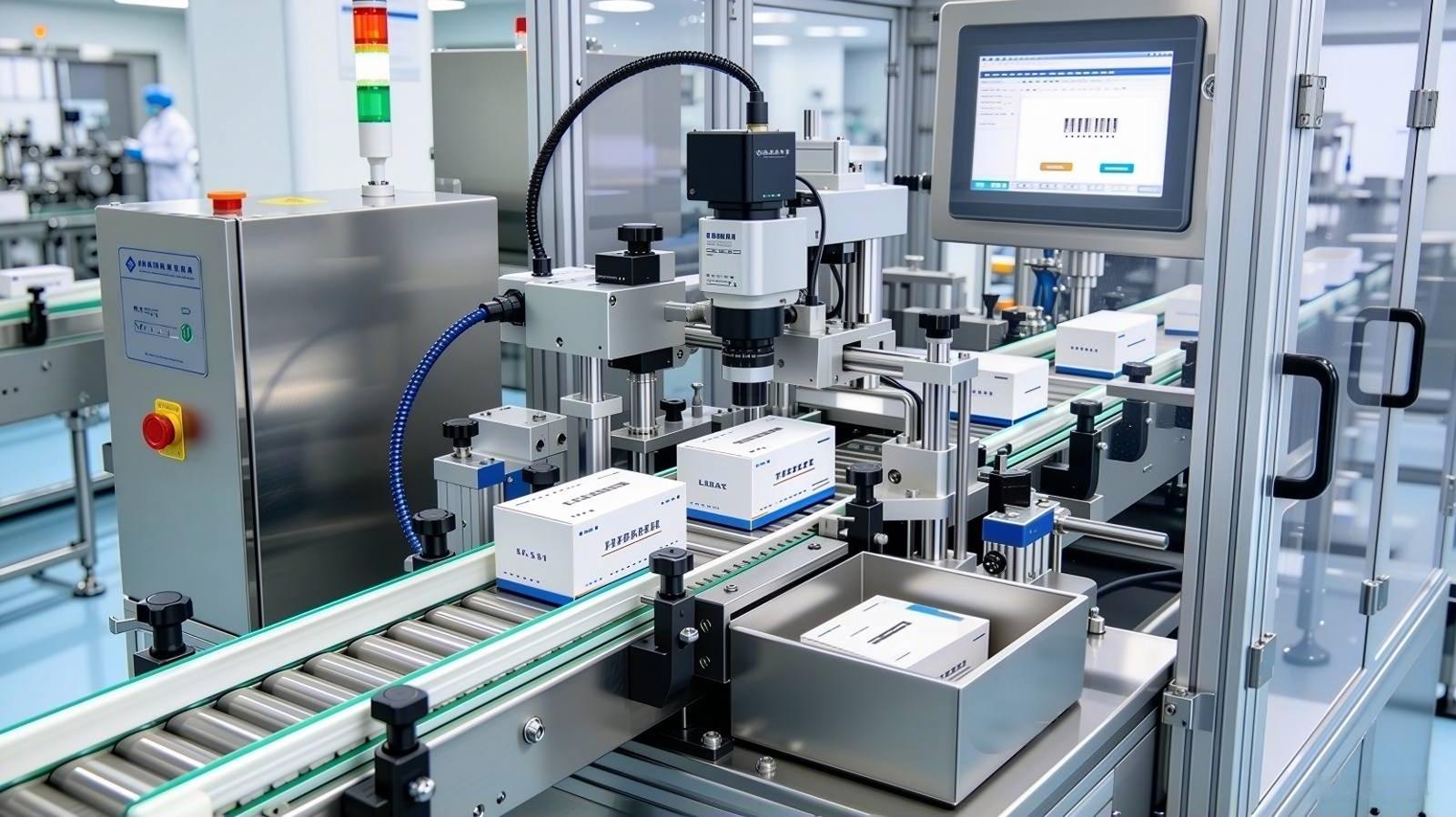
Regardless of the frozen product type — whether individually wrapped fish fillets, tray-packed dumplings, or sealed pouches of frozen vegetables — a frozen food cartoning machine performs the same three core functions automatically. First, it erects a flat carton blank into a formed box using a combination of vacuum pick-and-place and mechanical folding. Second, it loads the product into the open box through a servo-driven pusher mechanism that positions the product correctly relative to the carton’s internal geometry. Third, it closes the carton — tucking end flaps, applying hot-melt adhesive, or engaging a snap-lock bottom depending on the box style — and transfers the sealed unit to the outfeed conveyor for the downstream cold-chain or case-packing stage.
These three steps replace the work of four to six manual workers at a cold-room packaging station. The operator’s only remaining role is to place the product tray or sealed pouch onto the machine’s infeed channel. From that point forward, the machine handles everything through to the sealed carton exit. The cake cartoning machine deployment guide provides a practical example of how this automated sequence is configured for a specific food product.
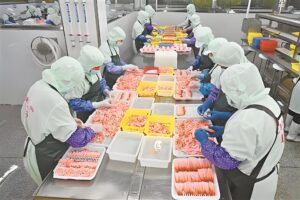
In a refrigerated environment — where workers wear cold-weather gear, rotate out of the cold room on scheduled breaks, and are harder to recruit and retain than their ambient-temperature counterparts — the labor savings from a frozen food cartoning machine are not just a line item on a spreadsheet. They are an operational necessity. The machine does not need thermal gloves, does not rotate out of the cold room after forty-five minutes, and does not produce fewer cartons in the third hour of a shift than in the first. For facilities that produce year-round, the elimination of cold-room staffing churn alone can justify the investment.
Why Frozen Food Secondary Packaging Is Not Ambient Packaging
Frozen food secondary packaging faces constraints that ambient-temperature food packaging does not. The first is temperature. A cold room operating at minus eighteen to minus twenty-two degrees Celsius imposes a practical limit on how long a worker can perform manual cartoning tasks before fatigue degrades speed and accuracy. Studies of cold-environment manual work show that fine-motor accuracy — the kind required to fold a tuck-end flap precisely or align a carton blank in the forming jig — declines measurably after thirty minutes of continuous exposure in a sub-zero environment. The result is the same pattern across frozen food facilities: high defect rates in the second half of each shift, with cartons that are incompletely closed, flaps that are misaligned, and product that must be reworked or discarded.
The second constraint is moisture. Frozen product entering the secondary packaging station carries condensation or frost, especially when the product has moved through a temperature gradient from the freezer to the packaging room. A manual worker handling wet or frost-covered carton blanks produces inconsistent fold quality because the paperboard absorbs moisture and loses rigidity. A frozen food cartoning machine applies consistent mechanical force to every blank regardless of surface condition, producing identical fold geometry on every carton cycle. The machine’s stainless-steel construction — standard on all UBL cartoning machines — resists the condensation and frost accumulation common in cold-room environments, eliminating the corrosion risk that standard painted-frame machines would face under the same conditions.
The third constraint is throughput stability in a cold-chain environment. Manual packaging lines in frozen food facilities experience predictable slowdowns: at shift change, during the post-break warmup period when workers return to the cold room, and whenever a temporary worker is placed on the folding station. A frozen food cartoning machine delivers the same output at 10:00 AM, 2:00 PM, and 5:30 PM — because cycle time is determined by mechanical timing, not human endurance. The result is a packaging line whose weekly output is predictable to within a narrow tolerance, making production planning and cold-store capacity management more reliable.
Matching the Frozen Food Cartoning Machine to Your Product Type
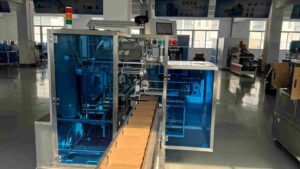
Frozen products fall into distinct infeed categories, and each category maps to a specific machine configuration. Understanding your product’s infeed format is the single most important step in selecting the right frozen food cartoning machine. The five most common configurations cover the majority of frozen food applications.
Frozen Dumplings, Gyoza, and Pot Stickers in Preformed Trays
Frozen dumplings and similar filled dough products are typically arranged in a fixed-count array inside a thermoformed tray before reaching the cartoning station. The tray geometry is consistent, the count per box is fixed at twelve or twenty-four pieces, and the infeed dimension does not vary between cycles. For this product type, a standard end-load frozen food cartoning machine with a tray pusher configuration is the correct match. The operator or upstream conveyor delivers the tray to the infeed channel; the pusher advances the tray into the open carton; the machine closes both end flaps and transfers the sealed box to the outfeed. The labor reduction is immediate: the tray presentation step requires one operator instead of the three or four previously required to fold boxes and load trays by hand.
Individually Wrapped Fish Fillets and Seafood Portions
Frozen fish fillets and individually quick-frozen seafood portions typically arrive at the cartoning station sealed in a plastic vacuum bag or film-wrapped tray. The product is uniform in dimension but not always consistent in its arrival orientation — individual fillets may shift slightly inside the primary packaging during freezer transport. For this product category, a lane-based accumulation conveyor can be integrated at the infeed of the frozen food cartoning machine to automatically group the correct count of units per box, arrange them in consistent alignment, and insert them as a group. This eliminates the manual counting and pre-loading step that otherwise consumes two workers per shift on a frozen seafood packaging line.
Frozen Prepared Meals in Compartment Trays
Frozen ready meals — compartment trays containing a protein, a starch, and a vegetable component — are among the most dimensionally variable products in the frozen food category. The tray itself is rigid and sealed, but its footprint may be irregular, and the carton must fit closely around the tray to prevent movement during transport. For this product type, the frozen food cartoning machine must be configured with a dedicated tray-insertion guide matched to the tray’s specific outer dimensions. UBL supports sample-tray testing before purchase: send your sealed meal tray and your preferred carton blank to UBL’s facility, and the engineering team will run a test cycle on the relevant machine configuration and provide video documentation of the output, including insertion alignment, carton closing quality, and cycle speed. This free testing service is available to any food manufacturer evaluating a UBL cartoning solution.
IQF Vegetables and Fruits in Flexible Pouches
IQF vegetables and frozen fruits in flexible pouches reach the cartoning station with consistent package dimensions, but the product settles during transport, creating variation in pouch thickness and fill level. A frozen food cartoning machine handling IQF pouches requires an adjustable infeed channel that accommodates the pouch thickness range. UBL’s standard cartoning machines include an infeed guide adjustment that can be set to match the pouch specification without requiring a changeover tool. For manufacturers producing multiple pouch sizes on the same line, the recipe-based quick-changeover function stores the infeed dimensions for each SKU and recalls them at the touch of a button.
Frozen Pizza, Flat Bread, and Ready-to-Bake Products
Frozen pizzas and flat bread products present a distinct packaging challenge: the product is wide, flat, and fragile, requiring careful handling to prevent cracking or breaking during the cartoning sequence. These products are typically individually wrapped in film before reaching the frozen food cartoning machine. The machine uses a flat-product infeed conveyor that supports the full width of the pizza or flat bread, transferring it into the carton with a horizontal pushing motion that does not bend or tilt the product. The carton format is typically a shallow tuck-end or glue-seal box whose internal height matches the product thickness. For high-volume frozen pizza lines producing thousands of units per day, a single UBL cartoning machine configured at 30 to 50 cartons per minute can replace a manual station that would otherwise require five to seven workers across two shifts.
Choosing the Right Carton Format for Frozen Food
The carton format chosen for frozen food secondary packaging affects both the machine configuration and the retail shelf performance of the packaged product. The three most common carton formats for frozen food are tuck-end, glue-seal, and snap-lock bottom. Each format has specific strengths and tradeoffs, and the choice depends on the product’s distribution channel, cold-chain requirements, and retail presentation standards. For a detailed comparison of carton formats, see the tuck-end vs snap-lock bottom carton format guide.
Tuck-End Boxes for Retail Frozen Food
The tuck-end box is the standard format for retail frozen food packaging in the dumpling, seafood, and prepared-meal segments. It is the format that most frozen food manufacturers already use, and it is the box style that UBL’s standard frozen food cartoning machines handle natively. The machine erects the flat blank, forms the box, loads the sealed product, and tucks both end flaps in a continuous mechanical cycle — no adhesive, no tape required. The tradeoff is that tuck-end closure provides a lower tamper-resistance level than glue-sealed formats, which is acceptable for most frozen food categories but may not satisfy premium retail channel requirements that specify tamper-evident packaging for brand protection reasons.
Glue-Seal Boxes for Cold-Chain Integrity
Frozen product moving through long cold-chain distribution networks — export shipments, multi-warehouse logistics, or e-commerce fulfillment where the package may be handled by multiple carriers and temperature zones — benefits from the structural integrity of a glue-sealed carton. The machine applies a hot-melt adhesive bead to the flap before closing, creating a bond that will not pop open under vibration, stacking pressure, or temperature cycling. UBL’s glue-seal cartoning configuration supports speeds of 1,500 to 2,400 cartons per hour and uses international-brand hot-melt applicators for precision and reliability. Frozen food manufacturers switching from tuck-end to glue-seal for a specific retail channel should confirm that their chosen frozen food cartoning machine supports hot-melt integration — UBL’s standard machines can be specified with the glue-seal module at the time of order.
Snap-Lock Bottom Boxes for Heavy or Multi-Component Products
Frozen products with significant bottom-load requirements — multi-tray family-sized meal kits, glass jars of frozen sauce, or canned goods packed in retail cartons — benefit from a snap-lock bottom box. The base is mechanically locked before the product is inserted, preventing the bottom from opening under product weight during cold-chain transport and retail stacking. A frozen food cartoning machine handling snap-lock bottom formats requires a dedicated bottom-forming module in addition to the top-close function. The machine sequence is different: bottom formed first, product inserted through the top opening, top flap closed last.
Speed and Line Integration for Frozen Food Lines
The operating speed of a frozen food cartoning machine must match the upstream feed rate from the primary packaging or freezing line. Running the machine faster than the upstream feed produces idle cycles without increasing output. A useful planning formula: divide your target daily carton output by your net productive hours per shift — typically six to seven hours after accounting for changeovers, breaks, and minor stoppages — then divide by the number of production shifts. That number is your required sustained cartons-per-minute throughput. For most frozen food manufacturers producing five days per week on two shifts, a machine configured at 30 to 50 cartons per minute covers current demand and provides headroom for growth of approximately 15 to 25 percent.
The cold-room layout imposes additional constraints. The machine’s infeed must receive product from the freezer exit or primary packaging conveyor, and its outfeed must deliver sealed cartons to the downstream labeling, metal-detection, or case-packing station. Before specifying a frozen food cartoning machine, map the physical space between the upstream exit point and the downstream entry point, note the belt height and transfer elevation at each interface, and confirm that the machine’s infeed and outfeed conveyor heights are compatible with the existing cold-room layout. UBL’s installation team handles this mapping as part of the pre-sale technical review and provides an AB layout plan for facilities where cold-room space is constrained.
Changeover time matters more on a frozen food line than on an ambient line, because every minute of downtime in a refrigerated environment costs both labor and energy. UBL’s frozen food cartoning machines are designed for format changeover in under ten minutes for dimension adjustments within the same box style — the operator adjusts the guide width using handwheels on the forming and closing modules, with settings stored in the HMI for instant recall. For more on changeover time considerations, see the cartoning machine cost guide which discusses how changeover frequency affects total cost of ownership.
Where the packaging line includes a carton folding machine upstream of the cartoning station, the two machines must be synchronized to maintain consistent carton flow. UBL’s carton folding machines handle snap-lock bottom boxes at 40 to 60 boxes per minute, tuck-end and tongue-style boxes at 40 to 60 boxes per minute, and two-piece rigid boxes at 30 to 40 boxes per minute. They are designed to feed directly into the cartoning machine’s blank magazine without intermediate manual handling.
Cold-Chain Distribution and Carton Integrity During Transport
A sealed frozen food carton may travel through multiple temperature zones before reaching the end consumer: from the manufacturer’s cold store at minus twenty-two degrees, to a refrigerated truck at minus eighteen degrees, through a distribution center cold room, and onto a retail shelf in a freezer cabinet. Each temperature transition places mechanical stress on the carton structure. Flaps expand and contract at different rates than the box body. Condensation forms on the carton surface during brief exposure to warmer ambient air at loading docks. A manually closed tuck-end carton is vulnerable to these stresses because the closing force varies from box to box. A carton that was closed with insufficient tuck depth at the packaging station may pop open during the first temperature cycle, spilling product inside the outer case and causing a retail rejection.
A frozen food cartoning machine eliminates this variability by applying the same closing force and tuck depth to every carton in every production cycle. The result is a sealed carton whose structural integrity is consistent from the first box of the shift to the last, regardless of temperature transitions. For products requiring the highest level of cold-chain integrity — particularly export shipments that may transit through multiple climates — the glue-seal carton configuration provides an additional margin of safety, with a hot-melt adhesive bond maintained through temperature cycling.
ROI: What a Frozen Food Cartoning Machine Delivers in a Cold-Chain Environment
The most immediate financial impact of deploying a frozen food cartoning machine is the reduction of direct headcount at the cold-room packaging station. A frozen food facility paying a wage premium for cold-room work — typically fifteen to thirty percent above ambient-line wages in most manufacturing markets — saves more per worker removed than an ambient-temperature line would. A station that previously required five workers for box folding, product loading, and flap closing becomes a one-operator station. Across two shifts, that is eight fewer cold-room packaging positions on the payroll. At a conservative annual cost of ,000 to ,000 per cold-room worker including benefits, the annual labor saving from reducing a two-shift station by eight workers falls in the range of ,000 to ,000.
One UBL customer — a processed meat and sausage manufacturer — experienced this directly. The factory had been packaging individually sealed sausages into cartons using a manual station with six workers. After installing a UBL cartoning machine, the station reduced to one infeed operator per shift. Five workers were redeployed to other production areas, and the floor space previously occupied by the manual folding and loading operation was repurposed for product storage — solving a secondary capacity constraint the operations team had not fully anticipated. For a similar example from a frozen fruit processor, see the automatic cartoning machine case study which documents an eight-to-two worker reduction on a frozen durian packaging line.
Beyond direct labor, the cold-room environment amplifies the indirect benefits of automation. Absenteeism in cold-environment roles is typically higher than in ambient roles, and the training cost for replacement workers includes familiarization with cold-room protocols and PPE requirements. A frozen food cartoning machine removes those variables from the packaging station entirely. The combination of direct labor savings, reduced rework from consistent mechanical folding, and independence from cold-room staffing constraints typically delivers a payback period of ten to sixteen months for most frozen food manufacturers — and shorter in facilities running three shifts or operating in high-labor-cost markets.
Risk and Reward: What to Check Before Selecting a Frozen Food Cartoning Machine
Three factors deserve attention before committing to a purchase. Understanding these risks during the evaluation phase prevents the most common deployment issues that arise after installation.
Carton Blank Quality
A frozen food cartoning machine feeds flat blanks from a magazine and forms them into boxes through precise mechanical movements. If the carton blanks are poorly cut, inconsistently creased, or have variable dimensions due to supplier quality issues, the machine’s performance will reflect those input tolerances. UBL’s pre-purchase sample trial — in which the customer sends carton blanks and product samples to UBL’s facility for a live test run — verifies that the existing blanks feed and form reliably on the machine before any purchase commitment is made.
Downstream Cold-Chain Bottleneck Risk
When a frozen food cartoning machine increases output from the packaging station, the downstream processes — labeling, metal detection, case packing, palletizing — may become the new bottleneck if they were sized for the manual line’s lower throughput. This is a line-balancing consideration that should be addressed during the planning phase. UBL’s team identifies the post-cartoning constraint during the pre-purchase technical review. The goal is sustainable line speed, not maximum machine speed.
Maintenance in a Cold-Room Environment
UBL’s frozen food cartoning machines are built with stainless-steel construction that resists the condensation and frost accumulation common in cold-room environments. Routine maintenance follows the standard schedule for any industrial cartoning machine and is covered in the two-hour operator training session provided at installation. For a complete maintenance overview, see the cartoning machine maintenance schedule.
Common Questions About Frozen Food Cartoning Machines
What types of frozen food can a cartoning machine handle?
UBL’s frozen food cartoning machines handle a wide range of frozen products, including individually wrapped fish fillets and seafood, tray-packed dumplings, compartment-tray prepared meals, IQF vegetables and fruits in flexible pouches, flat-pack frozen pizzas and flat breads, and individually quick-frozen meat portions. The common requirement across all these products is sealed primary packaging so that the machine performs secondary packaging with zero direct food contact.
How does it handle frost and condensation?
The machine’s stainless-steel frame and components are selected for corrosion resistance in humid cold-room environments. Infeed guides are positioned to allow condensation to drain. The blank magazine is shielded from direct exposure to the product infeed area to minimize moisture transfer. These design features are standard on all UBL cartoning machines and do not require additional options for cold-room operation.
Can the machine handle both tuck-end and glue-seal cartons?
A single UBL frozen food cartoning machine is configured for one closing format at the time of manufacture. The closing modules are not field-swappable. For facilities requiring both formats, configure the machine for the format covering the majority of your volume. For format comparison, see the carton format guide.
What is the typical payback period?
For most frozen food manufacturers on two shifts, the payback period falls in the range of ten to sixteen months. Facilities running three shifts or in high-labor-cost regions can see payback in under twelve months. UBL provides a documented ROI calculation specific to each client’s labor cost structure before purchase. See the cartoning machine cost guide for the general ROI framework.
Does the machine require changes to my existing carton design?
In the standard deployment case, your existing carton design does not need to change. The frozen food cartoning machine is configured to your carton’s dimensions, box style, and product format. UBL’s free sample trial verifies format compatibility before purchase.
How long does installation and training take?
Installation and commissioning are included in the purchase price and typically completed within one to two days. Operator training takes approximately two hours. Most operators run the machine independently within two to three production shifts after training. A one-year warranty covers parts and service.
When comparing a frozen food cartoning machine to the cost of running a manual packaging station in a cold-room environment, the economic case becomes clear even before accounting for quality improvements. Cold-room labor is not only more expensive but harder to find. In many frozen food manufacturing markets, the pool of workers willing to perform repetitive manual tasks in sub-zero temperatures is shrinking, and the wage premium is rising accordingly. Automation of the secondary packaging stage addresses both the cost problem and the availability problem simultaneously.
How to Start
UBL supports sample trial runs before purchase. Send your frozen product sample, your sealed primary package, and your preferred carton blank to UBL’s facility. The engineering team runs a test cycle on the relevant frozen food cartoning machine configuration and provides video documentation of the output, including carton closing quality, cycle speed, insertion consistency, and any format adjustments required. The test run is provided at no cost and gives the buyer a concrete visual reference for what their cold-room line will look like after installation. You are also welcome to visit UBL’s facility in person to observe the test run and discuss your requirements directly with the engineering team.
Standard machine configurations are available for next-business-day dispatch after contract signing. Custom configurations for non-standard carton dimensions or specific cold-room layout requirements are typically available within three months of design confirmation. The purchase price includes installation, commissioning, on-site operator training, and a one-year warranty covering parts and service.
To discuss your frozen product format, carton specification, cold-room layout, and output targets, contact the UBL team at helen@huanlianauto.com or visit ublpackaging.com.


One Response