
For many food manufacturers, the moment they realize a cake cartoning machine is no longer optional is not when they read a brochure — it is when they look at the month-end report and realize that output climbed 20% while profit stayed flat. More orders. More workers. Higher payroll. The same margin. That pattern, repeated quarter after quarter, is the signal that the packaging line has become the business’s growth ceiling — and that manual box filling is the specific constraint sitting at the center of it.
This article explains how automatic cake cartoning machines address the core pain points of food manufacturers in the bakery and confectionery segment: rising labor costs, inconsistent packaging quality, hygiene risk at the product contact stage, and the inability to scale output without proportionally scaling headcount.

Why Food Manufacturers Hit a Labor Wall at the Packaging Stage
The Hiring Problem Nobody Budgets For
A food packaging station running three to five workers looks manageable on paper. In practice, each of those positions carries costs that extend beyond the wage line: recruitment time, onboarding, mandatory food safety training, compliance documentation, and the soft productivity drag of workers who are still learning the box format and the closing technique. In most food manufacturing markets, the fully loaded cost of a packaging worker — including statutory benefits, insurance, training, and turnover replacement — is 1.4 to 1.8 times the nominal wage. When that number is multiplied across a station with four workers on two shifts, the true annual cost of running a manual cartoning station becomes visible — and it is almost always higher than the cost of the machine that replaces it.
New Workers Introduce Quality and Brand Risk
Manual packaging stations in food manufacturing have a tolerance problem. Experienced workers know the correct insertion depth, the right closing pressure for tuck-end flaps, and how to spot a misaligned carton before it reaches the outfeed belt. New workers do not. Improperly closed tuck-end boxes — flaps that pop open on the shelf, corners that look crushed, transparent window panels that are scratched during insertion — are not abstract defects. They are the exact things that cause retail buyers to raise quality complaints and that consumers photograph and post. For a food brand selling through supermarkets or online retail channels, a handful of packaging complaints from a single production batch can reset relationships that took years to build.
Output Goes Up, Margin Does Not
When order volume increases, a factory running a manual packaging station has one lever: add workers. That lever is expensive, slow, and subject to diminishing returns. Temporary workers hired to cover peak periods cost more per head than permanent staff and produce less. Full-time headcount additions require months of search and onboarding time that is incompatible with a three-week spike in customer orders. The result is a business that grows revenue but cannot grow profit — because every incremental unit of output requires an incremental unit of labor that erodes the margin on that unit. This dynamic, left unaddressed, compounds over time and eventually makes the business structurally unprofitable at scale.

How a Cake Cartoning Machine Changes the Economics
The Full Packaging Cycle, Automated
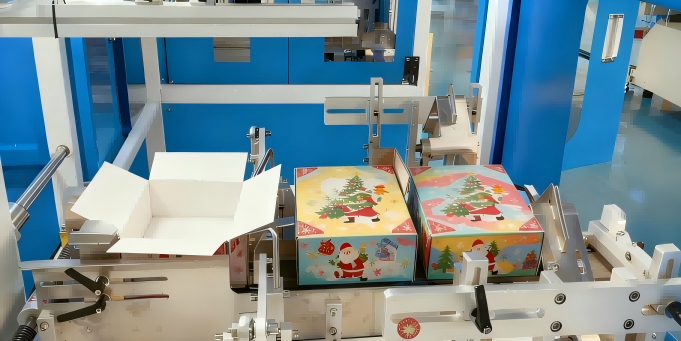
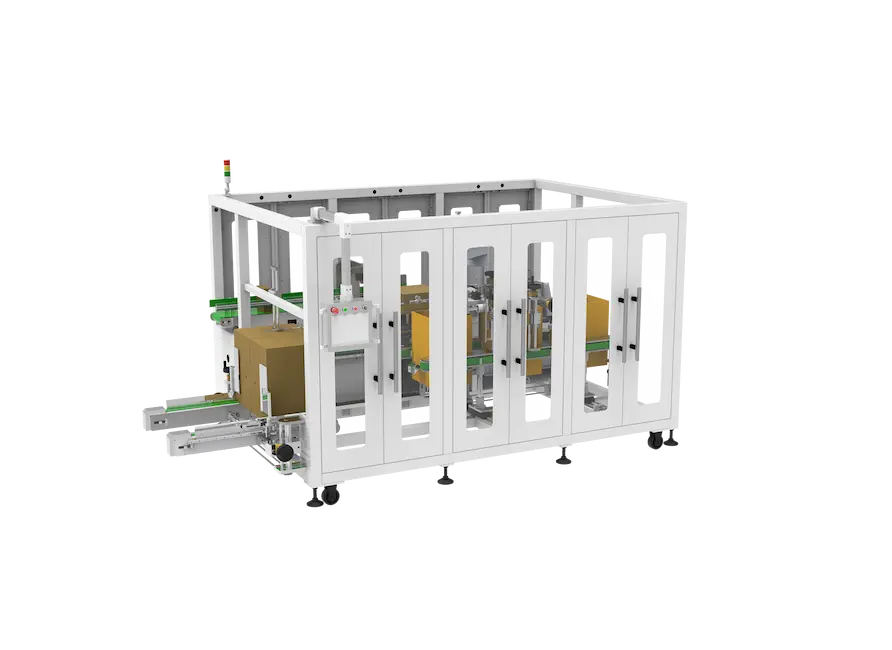
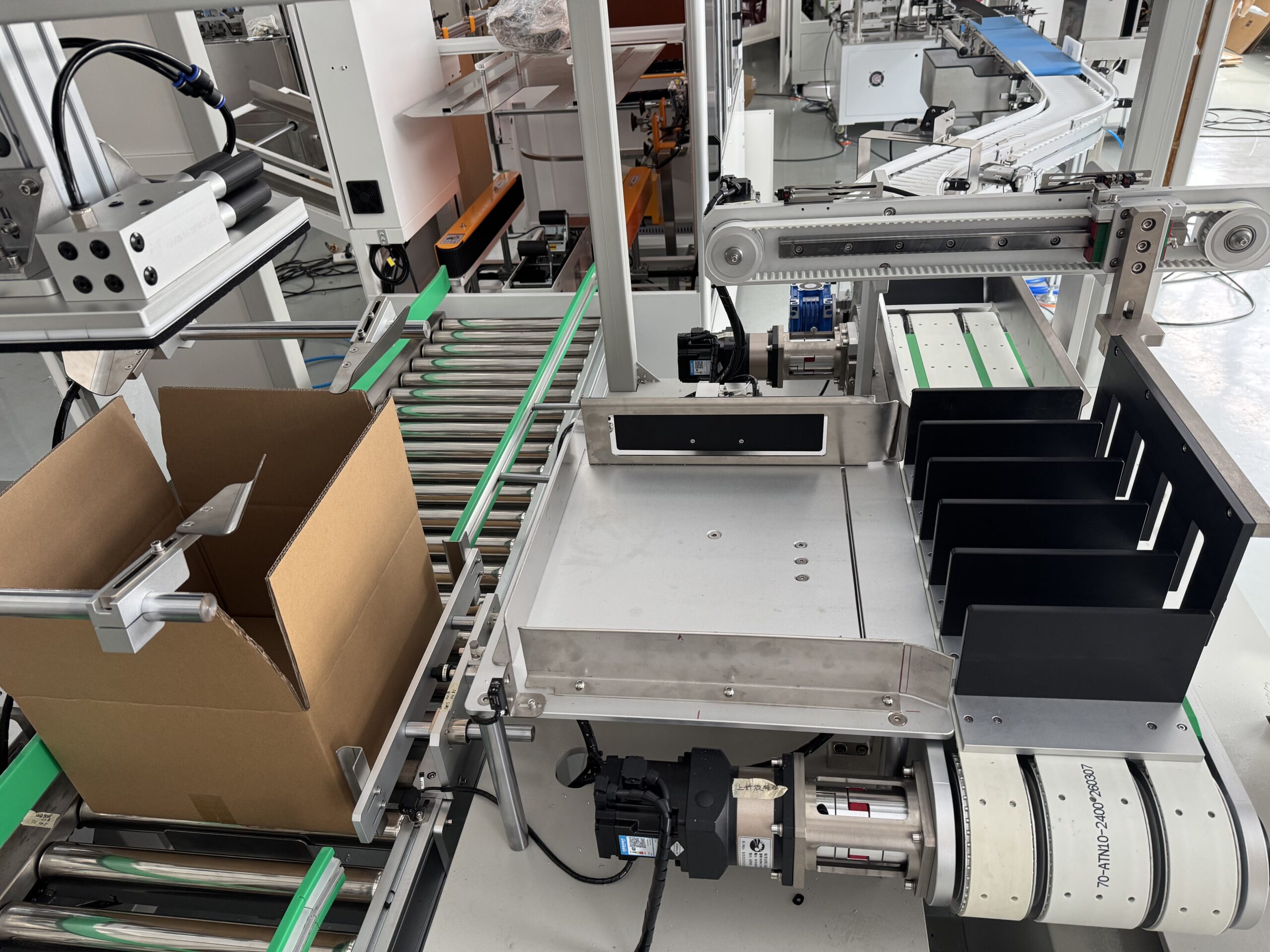
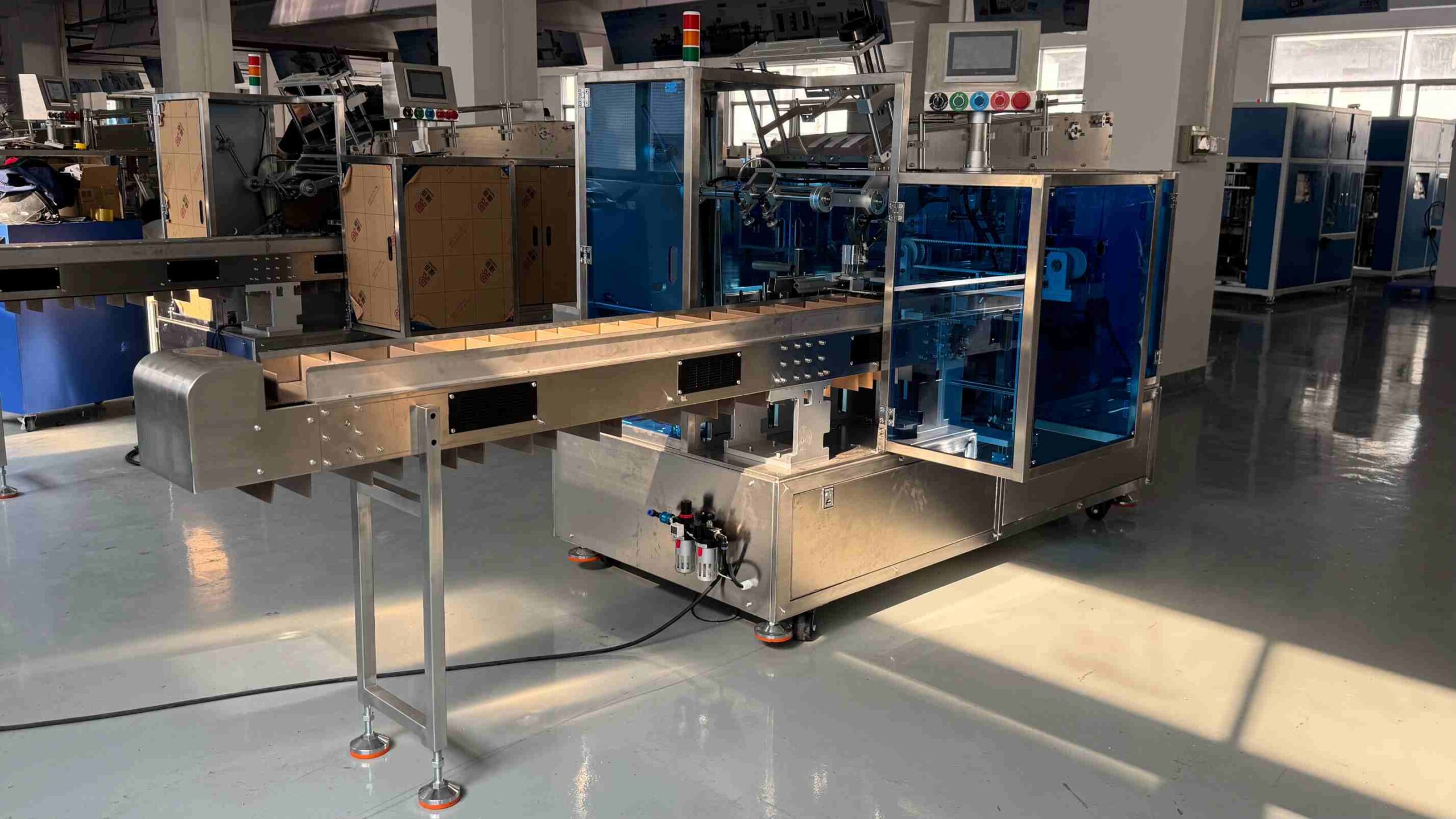
A UBL automatic cake cartoning machine handles the complete secondary packaging sequence in a continuous mechanical cycle: carton blank erection, infeed-side flap opening, product insertion via pusher mechanism, tuck-end flap closing, and sealed carton transfer to the outfeed conveyor. The only human touch point in this sequence is the product infeed — one operator placing the product or product tray into the machine’s loading channel at the correct orientation. Everything between the blank magazine and the sealed carton exit is handled by the machine.
For a food manufacturer that was previously running four workers at the cartoning station — one erecting boxes, two loading product, one closing flaps — this configuration reduces the station to a single operator. The labor saving is immediate and permanent from the first production shift. More importantly, the machine’s output is not affected by break schedules, shift transitions, fatigue accumulation, or the difference between an experienced worker and someone in their second week on the line.
Hygiene and Product Contact Risk
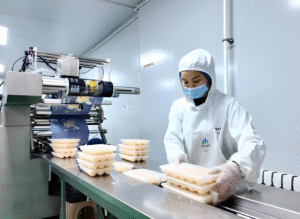
At a manual packaging station for food products, every worker who handles boxes, adjusts product placement, or closes flaps is a potential point of contamination. This risk is managed through gloves, hairnets, and hygiene protocols — all of which add compliance cost and none of which eliminate the risk entirely. A cake cartoning machine removes human hands from the box-opening, product-inserting, and flap-closing steps. The only human contact in the automated sequence is at the infeed, where individually wrapped product enters the machine’s loading channel. For food manufacturers operating under HACCP or third-party food safety audit frameworks, reducing manual contact points in the secondary packaging stage is a compliance improvement as well as an operational one.
Consistent Tuck-End Closing Across Every Carton
Tuck-end carton closing requires consistent mechanical force applied at the correct angle to both end flaps simultaneously. Manual workers achieve this through repetition and muscle memory — which means their consistency degrades over the course of a shift as fatigue accumulates, and varies between workers based on hand strength and technique. A cake cartoning machine applies the same closing force and geometry to every carton in every cycle, regardless of shift duration. The result is a shelf-ready carton that looks identical from the first box of the shift to the last — square corners, fully seated flaps, undistorted window panels.
Real Case: A Bakery Scaling Without Adding Headcount
A manufacturer producing frozen retail bakery items — individually wrapped Swiss roll cake slices, eight pieces per retail tuck-end carton — was running a manual cartoning station with three to four workers. As retail buyer volumes increased and the operator added a second production shift, the station required six to eight packaging workers across both shifts to maintain throughput. After installing two UBL automatic cake cartoning machines, the station reduced its direct labor from six to eight workers across two shifts to two — one infeed operator per machine, per shift. The machines operate at 50 to 700 cartons per minute, which exceeded the manual line’s sustained average of 18 to 22 cartons per minute while eliminating the peak-period slowdown caused by temporary worker unfamiliarity with the tuck-end closing technique.
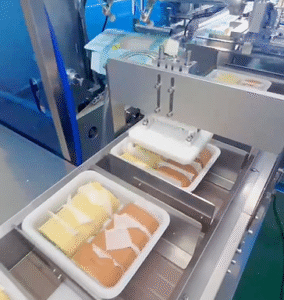
The configuration was straightforward: the upstream tray line fed individually wrapped slices onto a belt leading to each machine’s infeed. The operator loaded each tray at the infeed position. The machine handled box erection, product insertion, and flap sealing. The sealed retail cartons exited onto a connecting conveyor directly to the downstream cold-chain packaging stage. The existing carton design — a tuck-end box with a transparent window panel — required no modification. The line went live within two days of installation, including operator training and speed calibration.
Click to see the customer site.
ROI Calculation: Why Food Manufacturers Recover Cost Faster
Why Stable Orders Accelerate Payback
Food manufacturers who supply retail or food service channels typically operate under purchase orders or supply agreements with predictable volume commitments. This production stability is what makes cake cartoning machine ROI calculations reliable: there is no uncertainty about whether the machine will run enough cycles to justify the investment. A factory producing five days per week on two shifts, running a machine at 25 cartons per minute for six productive hours per shift, generates roughly 900,000 cartons per month through a single machine — a volume no manual station can match at the same labor cost.
When the annual savings from reducing a four-person manual station to a one-person automated station are compared against the machine’s purchase price, the payback period for most food manufacturing operations in current labor cost environments falls in the range of ten to fourteen months. In markets with higher labor costs or where the line runs more than two shifts, the payback can be shorter. UBL’s team provides a documented ROI calculation specific to each client’s labor cost structure, shift pattern, and target output volume before purchase.
What Stays the Same After Automation
One concern food manufacturers commonly raise before committing to a cake cartoning machine is whether automation requires changing the product format, the carton specification, or the downstream packaging flow. In the standard deployment case, none of these change. The machine is configured to the existing carton dimensions and the existing product format. The downstream conveyor connection is a straightforward mechanical integration that typically takes less than a day to complete. The operating team learns the machine’s HMI and infeed procedure in a two-hour training session — most operators are running the machine independently within two to three days. The transition from manual to automated is a machine installation and a crew reduction, not a production redesign.
What to Check Before Selecting a Cake Cartoning Machine
Carton Format and Box Style
Tuck-end cartoners handle standard tuck-end (double tuck end) carton formats — both end flaps inserted and locked. This is the most common box style for retail food packaging in the bakery and confectionery segment. If your current carton uses a different closing style — snap-lock bottom, glue seal, or hinged lid — a different cartoner configuration is required. UBL’s team reviews the carton specification and product format before recommending a machine model. Sending a carton sample and a product sample for a trial run at UBL’s facility before purchase is the standard process for confirming fit.
Line Speed and Upstream Feed Compatibility
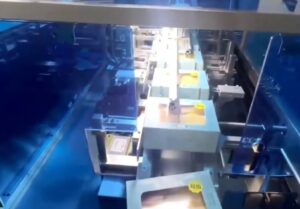
The machine’s operating speed must be matched to the upstream feed rate — either from a tray line, a conveyor, or a manual infeed operator. Running the machine faster than the upstream feed allows introduces idle cycles and does not improve output. Running it slower than the upstream feed creates a bottleneck. UBL’s team maps the client’s existing line layout and upstream output rate to configure the cartoner at the appropriate speed before installation. This matching process is part of the standard pre-sale technical review.
Hygiene Classification and Washdown Requirements
Food manufacturers operating under specific hygiene classifications — particularly those producing fresh or refrigerated products — may require machine surfaces that are compatible with periodic cleaning or washdown procedures. UBL’s cake cartoning machines are built with food-contact-adjacent surfaces in stainless steel where the product format and customer requirements call for it. If your facility operates under a specific food safety standard that defines equipment material requirements, this should be confirmed with the UBL team during the product review stage.
How to Start
UBL supports sample trials before purchase. Send your product sample and carton blank to UBL’s facility, and the engineering team will run a test cycle on the machine and provide video documentation of the output, including carton closing quality, cycle speed, and any format adjustments required. Standard tuck-end cartoner configurations are available for next-business-day dispatch after contract signing. Custom configurations for non-standard carton dimensions or specific hygiene requirements typically ship within three months after design confirmation.
To discuss your product format, carton specification, line speed requirements, and ROI calculation, contact the UBL packaging team at helen@huanlianauto.com or visit ublpackaging.com.


2 responses