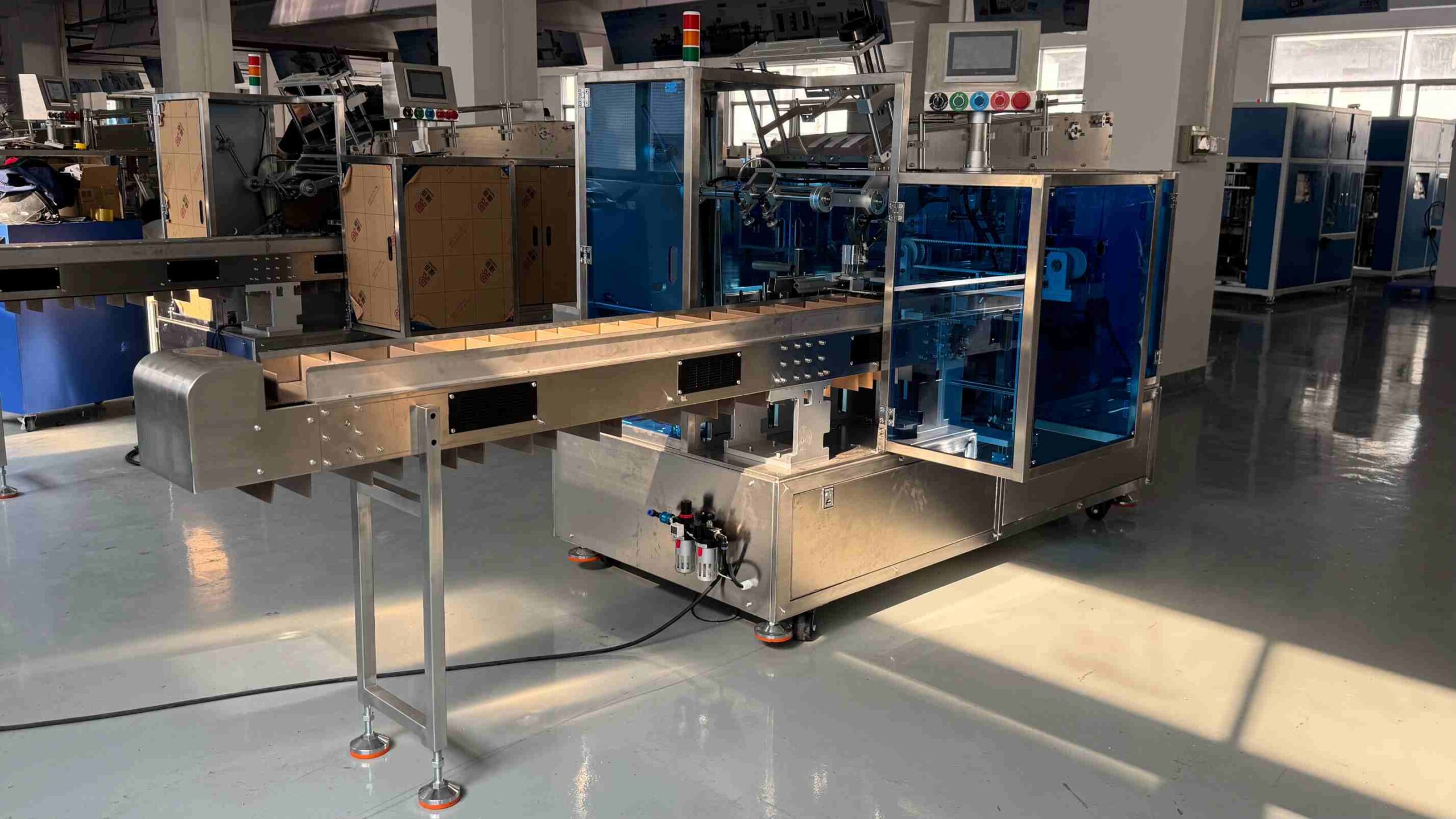
The end of a food packaging line is where the product becomes shipment-ready. A cartoning machine may seal the retail carton, but the sealed carton still needs to be packed into a shipping case, the case needs to be sealed, and the sealed cases need to be palletized. These end-of-line packaging steps — case packing, case sealing, and palletizing — are often the most labor-intensive part of a food packaging line because they require the most physical handling. A worker lifting cases onto a pallet for eight hours is performing work that a machine can do faster, more consistently, and without the injury risk that accompanies repetitive heavy lifting. End-of-line packaging automation addresses these steps by replacing manual case packing and palletizing with mechanical systems that operate at the same speed as the upstream folding and cartoning equipment.
This article is for operations and purchasing decision-makers at food manufacturers who have automated their folding and cartoning stations and need to complete the line with automated case packing and palletizing.
What End-of-Line Packaging Automation Includes
End-of-line packaging automation covers three stations that handle the product after it leaves the cartoning machine. The case-packing station takes sealed cartons from the cartoning machine outfeed and packs them into shipping cases. The case-sealing station closes and seals the shipping case flaps. The palletizing station stacks the sealed cases onto a pallet in a stable configuration for transport and storage. Each station can be automated independently.
For a food manufacturer who has already automated the folding and cartoning stages, adding end-of-line automation completes the line and eliminates the manual handling bottleneck. The UBL cartoning machine product series covers the upstream equipment.
Case Packing: Manual vs. Automated
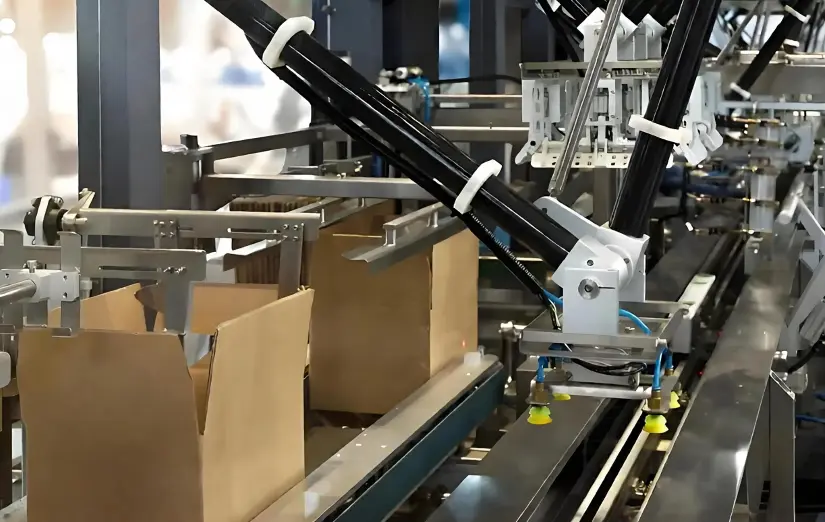
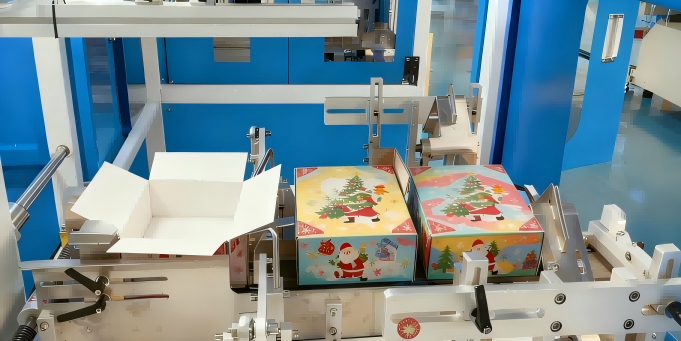
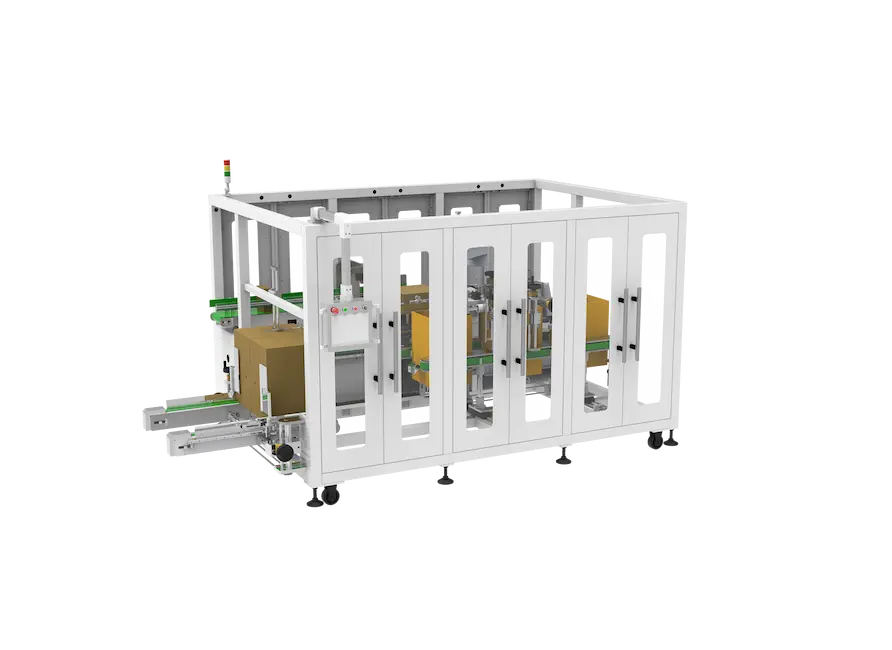
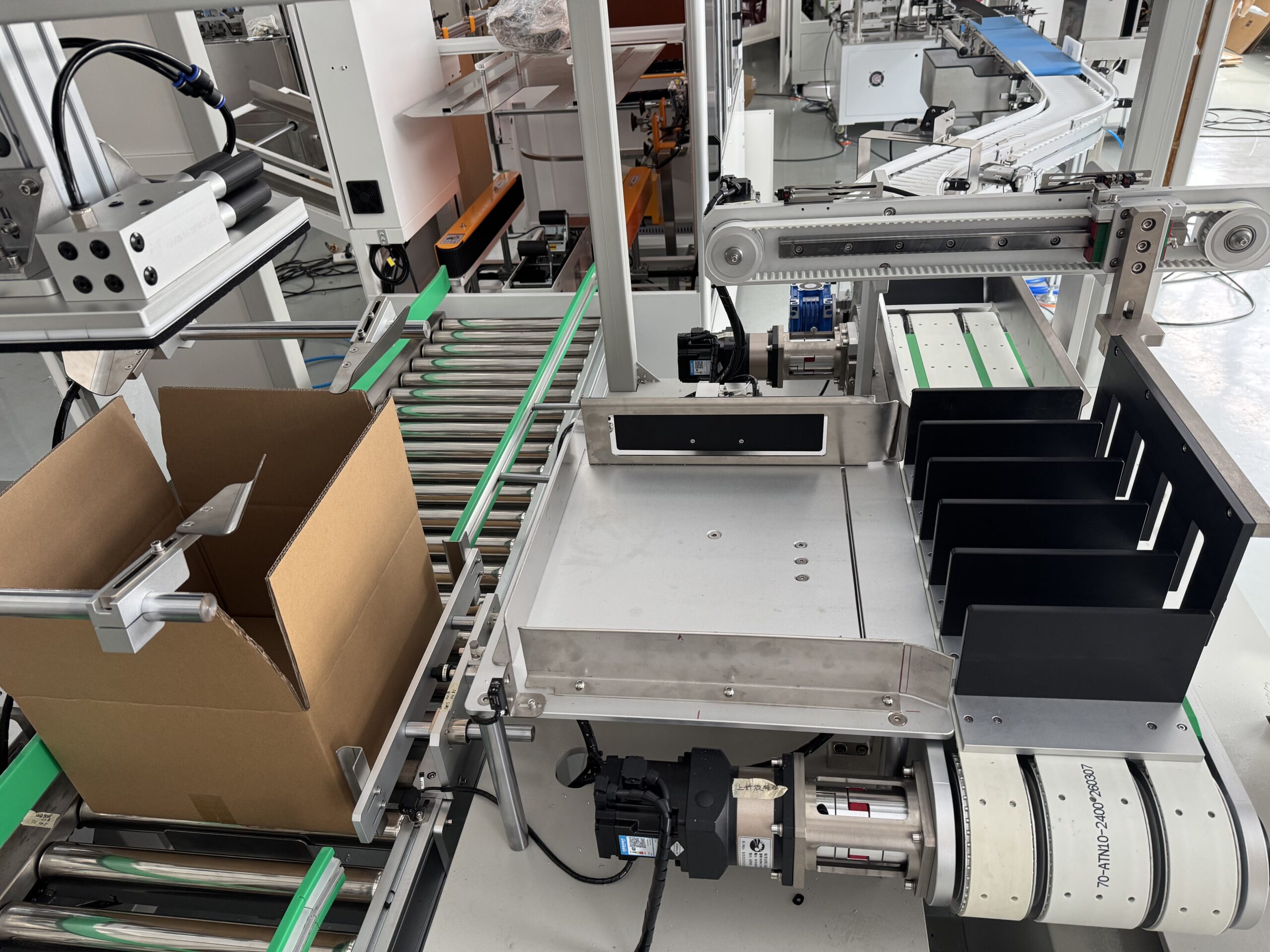
Case packing is where sealed retail cartons are placed into shipping cases. At a manual station, a worker takes each sealed carton from the outfeed conveyor and arranges it in a shipping case. At volumes exceeding 10 to 15 cartons per minute, the manual station becomes a bottleneck. An automated case packer groups cartons into the correct pattern and places them into the case using a mechanical pusher or robotic arm, operating at the same speed as the upstream cartoning machine.
Case Sealing and Palletizing
After the case is packed, the case sealer closes and seals the flaps with consistent tension on every case. Automated case sealers operate at 10 to 30 cases per minute. The palletizer then stacks sealed cases in a programmed pattern, operating at the same speed. For food manufacturers completing a line with a carton folding machine, an automated palletizer at the end creates a fully integrated line from flat blank to palletized product.
According to the Occupational Safety and Health Administration (OSHA), manual material handling is one of the leading causes of workplace injuries in manufacturing environments. Automated palletizing eliminates this injury risk entirely by replacing manual lifting with mechanical handling at every stage of the process.
ROI of End-of-Line Automation
A manual case-packing station requires two to three workers per shift. A manual palletizing station requires one to two workers per shift. Automation reduces this to one operator monitoring both stations. The food packaging cartoning machine selection guide provides a framework for total line ROI.
How to Start
UBL supports sample trial runs. Send your sealed carton samples and case specifications for a free test run. Standard equipment ships next business day. Custom configurations within three months. Installation, training, and warranty included.
Contact UBL at helen@huanlianauto.com or visit ublpackaging.com.
Case Packing Configurations for Different Food Products
End-of-line packaging automation must accommodate different case formats and packing patterns depending on the product category. Frozen food cartons are typically packed in corrugated cases with specific stacking patterns that maximize case stability in the cold store. Bakery and snack cartons are packed in display-ready cases that open to form a retail shelf tray. Sauce and condiment bottles in cartons are packed in cases with internal dividers that prevent bottle-to-bottle contact during transport. Each configuration requires the case packer to be programmed with the correct packing pattern and the palletizer to be programmed with the correct stacking pattern for the case dimensions and weight.
UBL case packers accept case pattern definitions through the HMI, allowing the operator to select the correct pattern for each SKU during changeover. The case packer gripper or pusher mechanism is configurable for different carton dimensions without requiring a tool change. The changeover between case patterns takes approximately 10 to 15 minutes, and the HMI stores up to 50 case pattern recipes.
Why End-of-Line Automation Is Often Overlooked
Food manufacturers who invest in folding and cartoning automation often stop at the cartoning machine outfeed, treating the case-packing and palletizing stages as manual operations that can be handled by workers. At lower volumes, this is a reasonable approach. The case-packing station requires two to three workers per shift. The palletizing station requires one to two workers per shift. When the folding and cartoning stations are automated and the line volume increases, the manual case-packing and palletizing stations become the new bottleneck. The workers cannot keep pace with the cartoning machine output, and the line throughput is limited by the slowest manual station.
The overlooked cost of manual case packing and palletizing extends beyond the direct labor. Manual palletizing produces stacks whose stability varies with the worker technique and attention. An unstable pallet load can tip over during warehouse handling, causing product damage and cleanup time. Manual case sealing produces variable seal quality, with some cases arriving at the destination with flaps that have come open during transport. End-of-line packaging automation addresses both of these issues by producing consistent case seals and stable pallet loads on every cycle.
Integrating End-of-Line Equipment with Existing Lines
The integration of end-of-line equipment with existing folding and cartoning machines requires matching speeds at each transfer point. The cartoning machine outfeed discharges sealed cartons at a consistent rate. The case packer must accept cartons at the same rate. The case sealer must accept filled cases at the same rate. The palletizer must accept sealed cases at the same rate. If any station operates at a different speed, the line accumulates product at the interface and the faster station must stop periodically to allow the slower station to catch up.
UBL matches the speeds of all end-of-line stations to the upstream cartoning machine speed during the pre-sale technical review. The case packer speed is configured to match the cartoning machine output, with a buffer conveyor between the two stations that absorbs minor speed variations. The case sealer and palletizer speeds are configured to match the case packer output. The result is a line in which every station operates at the same sustained speed, producing consistent throughput across every shift. For the design method behind that balance, our end-of-line design deep dive covers buffer sizing and speed matching in detail.
Common Questions About End-of-Line Automation
Can I add case packing and palletizing to an existing line?
Yes. UBL provides the conveyor interface and control integration to connect new end-of-line equipment to existing folding and cartoning machines.
What floor space does end-of-line equipment require?
A case packer requires 10 to 15 square meters. A palletizer requires 15 to 25 square meters. UBL provides a layout plan during the pre-sale review.
How many operators are needed for an automated end-of-line?
One operator per shift to monitor both the case packer and palletizer from the line HMI. The operator also handles magazine reloads and pallet changes.
Can the palletizer handle different pallet sizes?
Yes. The palletizer accepts standard pallet sizes within the machine specification range. The pallet size is selected from the HMI during changeover.
How long does installation take?
Installation and commissioning for end-of-line equipment typically takes two to five days depending on the configuration.
How to Start Your End-of-Line Automation Project
UBL supports sample trial runs before purchase. Send your sealed carton samples, shipping case specifications, and pallet dimensions to UBL facility. The engineering team configures test cycles on the relevant case packer, case sealer, and palletizer configurations and provides video documentation of the output, including packing consistency, seal quality, and stacking stability. The test is provided at no cost and does not require a purchase commitment.
Standard end-of-line equipment configurations are available for next-business-day dispatch after contract signing. Custom configurations for non-standard case formats or specific palletizing patterns are typically available within three months of design confirmation. Installation, commissioning, on-site operator training, and a one-year warranty covering parts and service are included in the purchase price.
To discuss your end-of-line packaging automation requirements, case format, and output targets, contact the UBL team at helen@huanlianauto.com or visit ublpackaging.com.