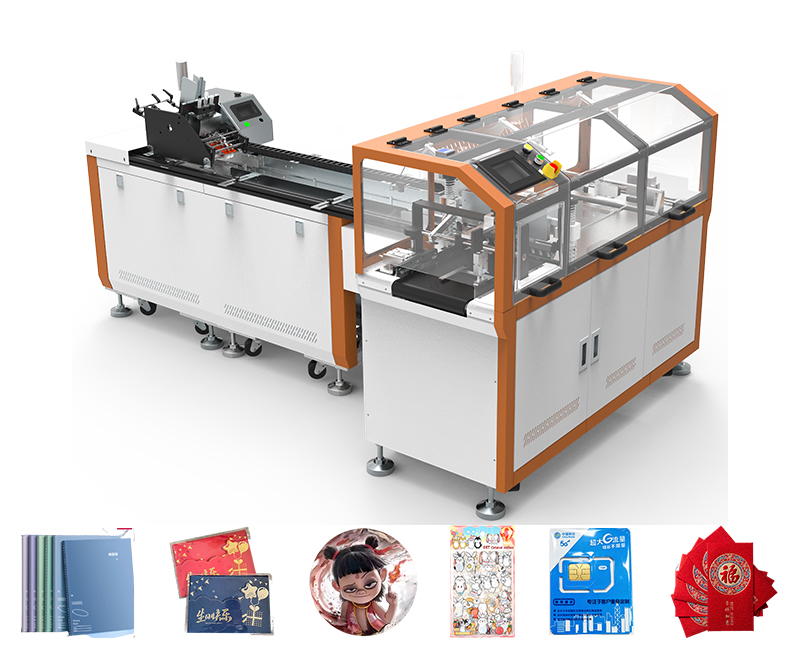
Quick answer: A card bagging machine forms a bag from roll film, singulates a flat card off a stack, pushes it in, then closes and seals the bag in one continuous pass, with one operator supervising. It is built for thin, flat, rigid-ish products: postcards, greeting cards, trading cards, finished blister cards, red envelopes, manuals, folders, certificates. Most flat card work lands somewhere in the 20 to 50 packs per minute band, and real output depends on your product size, your film and how the run is set up.
Bagging a card sounds like the simplest job in the building. A flat rectangle into a flat sleeve. Then you watch four people do it by hand for a full shift and the arithmetic starts to hurt.
The case for automating it is not really about the bag. It is about the stack standing in front of the bag, and what happens to that stack when the product changes, the season changes, or the air changes. That is where this article stays: what a card bagging machine does, which products it takes, where film and seal decisions bite, and what to pin down before you sign.
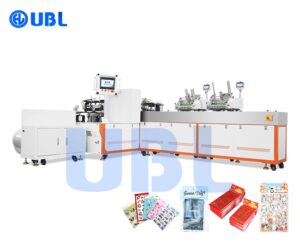
What a card bagging machine does in one pass
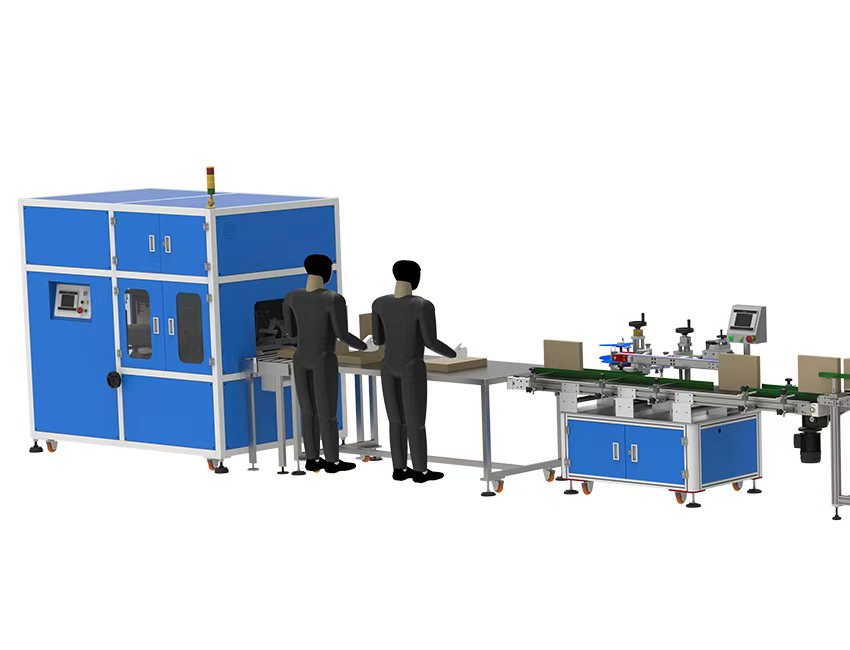
The sequence is short enough to say in one breath, and it starts with film coming off a roll. The machine forms that film into a bag, then an automatic card issuing mechanism lifts one card off the stack and feeds it. A pusher slides the card in, the jaws close and seal, and the whole thing starts again.
One operator supervises. That is the design intent, and it is the number that matters when you are costing the job against a table of four.
Because feed, form, fill and seal happen in a single pass, nothing waits between steps and nothing needs a tray of half finished work sitting on a bench. A card bagging machine replaces what is usually a four-person bench and the handling between those steps, not just the sealing.
Want to see that sequence run against your own product? Our roll-fed bagging machine handles cards, envelopes, manuals and folders on one platform, and our engineers will confirm the format range from your samples.
The product is the hard part, not the bag
Here is the thesis worth holding onto. Bags are cheap and forgiving. Products are not. Almost every bagging headache blamed on the machine turns out to be the thing going into it. A card bagging machine is only ever as consistent as the stack standing in front of it.
What fits: the typical size window
A card bagging machine is quoted against a window rather than a single size. A typical specification range runs L 145-300 mm by W 100-210 mm by H 5-20 mm, with a bag window of roughly L 206-370 mm by W 120-230 mm. Treat those as typical specification ranges, not guarantees. Your real window depends on the film, the seal type and how the machine is configured.
That covers most of the flat world:
- Postcards and greeting cards
- Red envelopes
- Trading card packs
- Thin instruction manuals
- Folders and certificates of honor
- Thermal paper, picture albums, slim notebooks

What the 5 to 20 mm thickness window rules out
Thickness is the constraint people underestimate. Twenty millimetres is a decent stack of cards, not a boxed game and not a hardback. If your product sits outside the window, a card bagging machine will not take it, and no amount of adjustment changes that.
The thin end is just as awkward, in a quieter way. Around five millimetres you are handling a single card, and single cards have almost no stiffness. They curl at the feed and arrive at the bag mouth bent, and a bent card makes a wrinkled bag.
So the window is not only a limit. It is a statement about what the machine is for: flat products. Anything that behaves like a block belongs on other equipment, and pretending otherwise is how demos go badly.
Two lots of the same card can feed differently
A greeting card printer ran the same job twice a year and had one of them go badly. Same artwork, same dimensions, same film. The difference was the stock. The second lot came from another mill, with the coated face on the opposite side, and that one change altered how the top card separated from the stack. The machine started doubling. Nothing about the machine had changed. The stack had.
This is why samples beat drawings. Send cards from every lot you might run rather than one tidy set from the first supplier you found.
The winter static trap
Static is seasonal, and it catches people who go straight for the tooling. In a heated plant with dry winter air, cards cling together. Two peel off as one, or the top card lifts before the feeder asks for it.
The tell is timing. A job that feeds clean in August and doubles in January is usually telling you about the air, not the feeder. Humidity near the infeed, or an ioniser where the stack sits, is often a cheaper fix than any mechanical change.
Film, and what a good seal looks like
There is no fixed film requirement on a card bagging machine, which is a feature rather than a gap. The film is chosen per product, and that choice decides how the pack looks, how it seals, and whether it survives the mail.
Common choices are polyethylene and OPP or CPP laminates, each trading clarity against stiffness against seal behaviour. What you are really buying is three things. The film has to lie flat through the former. The jaws have to seal it at a speed you can live with. And the finished pack has to look tight rather than baggy.
Seal quality is where cheap setups show themselves. A seal that is barely holding opens in a mail bag. A seal that is overdone puckers the film and looks poor on a retail peg. Both come from the same two settings, jaw temperature and dwell, and both have to be dialled against the film you actually bought rather than the one named on the quote. Get them wrong on a card bagging machine and every single pack is wrong.
Bagging blister cards without scuffing the foil
Blister cards are the awkward relatives in this family. They are flat, so they fit the window, but the face carries a formed cavity and a foil lidding that marks if you look at it wrong.
Two things decide whether it works. The film has to be softer than the lidding, or it will abrade the foil every time the pack flexes in transit. And the feed should take the card by its edges rather than dragging anything across the cavity.
If your blister cards arrive already packed and you simply need them bagged, a card bagging machine handles that as a routine job. If they are loose and scuffing is a real rejection risk, say so before the quote, because it changes both the feed and the film.
Scanning a barcode through film
Retail packs usually have to scan. Print that reads perfectly on a card can still fail through film, because gloss and haze cut contrast, and a wrinkle sitting across the code kills it outright.
If the pack has to scan at a till, test the real thing. Bag it, then scan it, under lighting close to what it will be sold under. The GS1 barcode specifications are the reference your retail customer will hold you to, and finding a readability problem on your bench is far cheaper than finding it in their receiving bay.
Bag width against product width
Sizing is the most common specification mistake, and it runs both ways.
Too tight and the card will not enter cleanly. The pusher fights the film, corners catch, and you get a pile of wrinkled rejects at the bag mouth. Too loose and the card rattles inside, which reads as cheap on a shelf and lets the product rotate away from the printed face.
The bag window for this class, typically L 206-370 mm by W 120-230 mm against that product window, leaves clearance on all four sides. That clearance is working space the pusher needs, not slack you should design out.
Width comes from the former and length from the feed, and both re-dial when the product changes. This is where quick release format parts earn their keep. Changeover on a card bagging machine is mostly re-dialling bag width and length and swapping the magazine to suit the new card, and the parts are designed to come off without a spanner.
Why a card bagging machine beats boxes for flat cards
A card does not need a carton. It needs a cover. And a card bagging machine puts a film cover on a flat product for less than a carton costs, which is most of the argument.
Cost is the obvious one. Film costs less per pack than a carton, and it weighs less, which shows up in every shipment you send.
Mailability is the one that catches people out. A bagged card inside an envelope or a mailer keeps a letter profile pack. Put the same card in a carton and you may have pushed it into a bigger size and a different rate band with your carrier.
Visibility is the one that actually sells. A shopper sees the card through the film. In a carton they see your printing instead, so you are paying artwork to do a job the product would do for free.
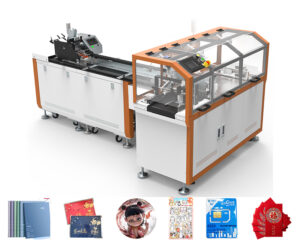
Where a card bagging machine sits in the line
Bagging sits in the middle of something, and both ends need planning.
Upstream of the card bagging machine, cards usually arrive off a printer, a die cutter or a folding operation, in stacks. The question is whether those stacks are square and consistent enough to go straight into a magazine. If they arrive skewed, or banded so the top sheets curl, someone restacks by hand, which is the labour you were trying to remove.
Downstream, the bagged card has to go somewhere. Into envelopes for direct mail, into mailers for e-commerce, or into master cartons for retail distribution. Each of those wants a different output: a loose stream, a counted bundle, or a stack at a fixed orientation.
Decide which one before delivery. Set up to discharge a neat shingled stream, a card bagging machine is a different build from one that collates counted bundles, and both are options you have to order rather than retrofits you can add later.
The labour math, and why the season hurts
Manual bagging is the default because it looks cheap. The hourly rate is low and there is no capital request to defend.
Then the season arrives. Greeting card and red envelope work spikes hard and predictably. Holiday drops compress a year of volume into weeks. E-commerce peaks do the same thing in a different month. A line of four becomes a line of twelve, staffed by people who have never run it, working slower than the four did.
Temp labour is slower per unit and more variable per unit. A card bagging machine does not get slower in December, and it does not need a fortnight of training to hit rate. Hand work, on the other hand, seals inconsistently, which shows up as leakers and as packs that get reworked. Film waste climbs alongside it, because a hand operation cuts longer than it needs to.
The manual packing economics behind that are worth running with your own figures, and the comparison is hand packing against machine packing generally: your volume, your peak headcount, your reject rate, and what an agency charges you in the worst month. Most card and print operations find the payback sits in the peak rather than the average month, and that is the number to take to whoever signs the order.
Ready to put a number on it? Send your product samples, monthly volumes and peak headcount, and we will size an automatic bagging machine against the shift you actually run.
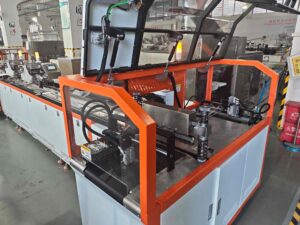
Checks worth specifying on a card bagging machine
Three checks are worth specifying before you sign, if your packs need them. Not every build carries all three, so ask which are actually fitted rather than assuming.
- Bag present. A card that goes through with no bag formed comes out bare, and a bare card is scrap.
- Correct count. This only bites once a pack holds more than one card, so confirm the feeder can count to your pack size before you commit to a multipack job. A nine where ten should be is a complaint waiting to happen, and your customer finds it, not you.
- Seal integrity. This is the check that gets skipped, which is odd, because it matters most in the mail. A bag can be present, correctly filled, and still open in transit. If your packs go through the mail, this is the one that protects you. Catching a weak seal is also a timing question rather than a settings question, which is the thinking behind why sealed packs are rested before packing.
Then there is the reject itself, if you need one. Ask for a positive reject that actively diverts the pack and confirms it left the stream, rather than a passive one that lets a bad pack drift down the conveyor and hopes someone notices.
Get the reject logic in writing, then watch it catch a real defect at the factory rather than a staged one. A reject station set up on a clean gap will often miss a genuine double feed.
Specifying a card bagging machine for your formats
Put numbers against every claim before you buy, and get them into the paperwork rather than an email thread.
Ask for these in writing:
- Product samples from every lot, with thickness, coating and which face is coated.
- The product window you need, not just today’s card: L, W and H, including your thickest and thinnest.
- Bag window and film type, with seal settings stated for that film.
- Feed type, and how a single thin card is handled without curling.
- Count and collation: single card, multi pack, or counted bundle, and which of those the feeder can actually do.
- Discharge format: shingled stream, counted stack, or loose into a case, confirmed as fitted rather than assumed.
- Changeover: which format parts, and how long the re-dial takes on your two most common sizes.
- Floor space and utilities. Machines of this class run several metres end to end, so confirm door width and floor loading with your own team before it ships, and get the weight and footprint in writing for your configuration.
- After sales: spare parts lead time, commissioning, remote support, and who answers at your voltage and in your time zone.
Then run the card bagging machine before you pay for it. Speed on a quote is a ceiling. Net output on your card, with your film, is the number that matters. An acceptance test on your own product, timed by your own operator, is the cheapest insurance in the whole project.
Two things to hold a supplier to on quality. Ask for material and electrical documentation you can actually use, and ask how the machine is built and documented rather than whether it is certified. Frameworks such as ISO 9001:2015 describe a supplier’s quality system, and PMMI, the Association for Packaging and Processing Technologies is the reference point for packaging equipment practice. Neither certifies a machine. What they give you is a standard to hold the supplier’s build and paperwork against.
The part that decides the project
Cards are easy to bag badly and easy to under specify. A card bagging machine is not the puzzle. The stack in front of it is: how square it arrives, how consistent the stock is, whether the coated face runs the same way on both lots, and how dry the room gets in February.
Get the samples right and the rest follows. Size the bag with clearance for the pusher, choose the film for the seal you need rather than the price you like, and decide what the output should look like now, because that decision is expensive after installation.
Then the season stops being a staffing problem and becomes a scheduling one.
Ready to see it run on your cards? Send samples from your two most awkward products plus your peak volume, and our engineers will come back with a roll-fed bagging machine configuration, the bag window it covers, and the changeover range you can expect.