A vacuum gauge at minus 0.08 MPa tells you the pump finished its cycle. It says nothing about whether the bag will still be tight in the morning. Those are two different facts, and vacuum leak testing packaging exists because the gap between them is where moisture, returns and quiet brand damage collect.
The routine is plain. Once a spool leaves the sealer it does not go into a carton. It rests, usually a full shift, often overnight, in a staging area with a start time written on it. Only when the hold is over and the bag has been rechecked does it move on. A seal that failed slowly has had time to show its hand; a bag that held has earned its place on the pallet. On every spool line we build out of Dongguan, that pause sits between the sealer and the carton, and it is the cheapest quality step on the floor.
A pulled vacuum is not a sealed bag
Anyone who has run a chamber sealer knows the moment. The cycle ends, the lid lifts, and the bag comes out flat and hard around the spool. It looks finished. It is not. A pulled vacuum is a photograph of one instant; a sealed bag is a promise about the next few weeks, and only time can test a promise.
Three things decide whether that promise holds.
- The seal itself. Heat sealing fuses two layers of film at a set temperature, pressure and dwell. When any one of the three drifts, the bond is thinner than it appears. It can be strong enough to survive the trip to the carton and weak enough to open a channel by morning.
- The seal path. Dust, filament fines, a smear of oil from a spool edge or a single wrinkle across the bar can leave a hairline gap inside what looks like a solid seam. The gap may hold for hours before air works its way back in.
- The film. A pinhole from a sharp flange, a crease folded under the bar, or a thin spot in the laminate can leak with no visible damage at all.
None of that shows up at the discharge. The failure is slow, and it is invisible at the exact moment you would most like to see it. This is why the discipline is time-based and not pump-based. Pulling air out is the easy half; proving it stays out is the half that protects the product. Put another way, at its core vacuum leak testing packaging measures patience, not pressure. The sealing cycle itself, the temperatures, the film choice, the mechanics of drawing a vacuum around a spool, is a separate subject, and our guide to filament vacuum sealing stays on that side of the seal.
If you are planning a spool line and want the hold built into the layout from the start rather than bolted on later, that is a conversation worth having early. Tell us your product and your throughput, and we will show you where the staging step fits.
Why vacuum leak testing packaging needs a hold before packing
A hold is not a delay for its own sake. It is a test with a pass and a fail, and it only works when it is given enough time to mean something. Viewed that way, the discipline is less a machine function than a scheduling decision.
What actually makes a bag leak
Leaks are rarely caused by a broken sealer. They come from four places, and most are small enough to walk past. Knowing where a leak starts is the first half of vacuum leak testing packaging.
- Heat seal parameters drifting. Too cool, too little pressure, or too short a dwell leaves a partial bond. Reported settings for common laminates sit in a band of temperatures and dwell times that shifts with the film supplier, so treat any figure you are handed as a benchmark and confirm it on your own film.
- Contamination trapped in the seam. Dust from the spool or the room, filament fines, oil, or a fingerprint can keep two layers from fusing across their whole width.
- Wrinkles and folds. A single crease trapped under the bar creates a channel running the length of the seam.
- Film damage and handling stress. A pinhole from the spool edge, abrasion during transfer, or a bag stacked and pulled before the seam cools can open a leak no sensor sees at the time.
What the hold actually catches
Vacuum leak testing packaging earns its keep here, in the hours after sealing. A bag with a slow leak behaves in a predictable way over time. It may be firm at hour one and soft by hour eight. A wrinkle that looked cosmetic at sealing becomes a visible channel as the vacuum relaxes. Moisture that slipped through a hairline gap begins to fog the inside of the film. The hold turns a hidden defect into an observable one, before the bag is buried in a carton where nobody will look again.
For a 3D filament brand, the timing is the whole point. A leaking spool does not fail at the plant. It fails on a customer’s printer weeks later, as a brittle strand, a failed print or a jammed extruder. By then the cause is a continent away and the only evidence left is a complaint.
Consider what happens when spools leave a humid factory bound for an even wetter climate. One filament brand shipping into those markets builds its sealing and cartoning around a hold, and the reason is not the sealer but the destination. Spools packed and shipped the same day can arrive with soft filament and fogged bag interiors when a seal is marginal, while the same product rested and rechecked leaves the plant clean. The hold is not caution for its own sake. It is a refusal to ship a defect nobody can see.
A leaking bag never gets a carton
Every hold has one non-negotiable rule, and it is the rule that gives vacuum leak testing packaging its teeth. A bag that fails the recheck does not go into a carton. It goes to a repack or quarantine area. If the product is sound, it is resealed in a fresh bag and re-enters the queue; if the film was contaminated or the spool is compromised, it is scrapped. Either way the principle is identical. You do not hide a leak behind cardboard and hope the customer never opens it, because on a premium product the customer always does.
For filament this is a brand-level rule, not a plant preference. Wet filament is one of the few packaging faults a user can feel in their hands within minutes, and it erodes trust faster than almost any other defect. Sealing a spool is a promise; a carton is a commitment. Putting a leaking bag inside it turns a private cost into a public one.
Running vacuum leak testing packaging on the floor
Vacuum leak testing packaging only works when the check is defined. “Keep an eye on the bags” produces nothing but disagreement. A workable procedure names who checks, how, when and what happens to a failure.
Visual, press and the negative pressure hold
The three checks below are the backbone of any vacuum leak testing packaging routine, and none of them needs special equipment.
- Visual. Look at the bag body, not just the seam. A sound vacuum bag is tight and smooth, with the film drawn down over the product. Watch for loss of vacuum, softness, deepened wrinkles, fogging inside the film, or a bubble at a seal edge.
- Press. Press the bag gently. A tight bag resists and springs back; a leaking bag yields under the finger and stays deflated.
- Negative pressure hold. For high-value product, keep sealed sample bags under observation or hold them in a controlled chamber and watch for the internal pressure to rise over a set interval. A more direct field test is to submerge a suspect bag and watch the seam for a stream of bubbles.
Methods like these map to standards such as ASTM F1929 for detecting seal leaks by dye penetration and ASTM F88 for seal strength. Read them as frameworks and vocabulary, not as a universal pass mark. Neither standard hands you an acceptable number for your own bag, and any figure quoted as the right vacuum level or seal strength is a reported benchmark rather than a guarantee. Fix your numbers on your film, product and machine, then confirm them during factory acceptance testing (FAT) before writing them into the SOP.
Sampling or full inspection
The choice follows risk, not habit.
- Full recheck suits high-value, low-volume or high-risk product. Every bag, every time.
- Statistical sampling suits high-volume lines where the seal process is stable and monitored.
- New setups always get a heavier sample rate for the first hour after a changeover, a film reel change or a maintenance stop.
In vacuum leak testing packaging, the dangerous bag is never the average bag. It is the bag sealed in the ten minutes after something changed, so sampling should lean into those windows, not away from them.
Humidity indicators and desiccant
For moisture-sensitive product, a humidity indicator card or a colour-changing desiccant inside the bag turns an unseen problem into a visible colour. A card that has shifted by the end of the hold means the bag leaked, or the product was already wet when it went in. That second possibility is worth keeping in view, because sometimes the fault is not in the bag at all. It is upstream moisture that was never dried out, and our notes on filament moisture-proof packaging cover that half of the problem.
Hold duration and staging
Most spool lines we see run the hold for one shift, and plenty run it overnight, giving the bag twelve to twenty hours to prove itself. Duration is the part of vacuum leak testing packaging that most plants judge by feel, and reported hold times vary widely with product, film and risk tolerance. They are ranges rather than rules, so settle yours with a trial and confirm it at FAT. What matters is that the hold lasts long enough for a slow leak to show.
Then plan the staging area as flow rather than storage. First-in, first-out lanes so the oldest spools leave first. The seal time written on every bag so nobody guesses. Space sized to one shift of throughput, not to whatever corner happens to be empty. A hold with a start and an end behaves; a hold that becomes a pile does not.
Automatic detection and the manual hold
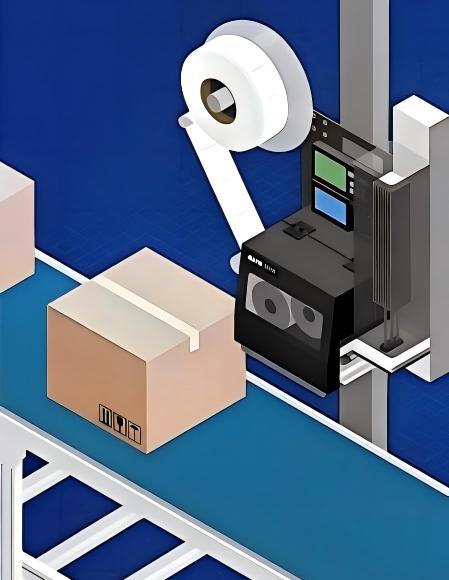
Some plants add automatic inspection, and where volume justifies it, that money is well spent. A vision system checks seal width. A checkweigher flags a bag that has lost the mass of its vacuum, while an in-line sensor tracks vacuum decay in the chamber. Pinhole detection, on the lines that need it, catches holes no eye can see. Every one of these earns its place in vacuum leak testing packaging, because each catches a defect a person would miss at line speed.
It still does not replace the hold. An automatic sensor judges the bag seconds after sealing, and a slow leak has not had time to declare itself yet. Automation widens the net; it does not stop the clock. The strongest vacuum leak testing packaging setups use both: the machine rejects gross faults, and the hold catches the marginal bags that pass the sensor and fail overnight. One is fast, one is patient, and quality needs both.
This is the same reasoning behind asking why manual packing follows the hold. A person placed at the right step backs up a machine that cannot see everything, and the person is there by design rather than because no machine was available.
Where the product is regulated, the paperwork shifts with it. A written hold with a log and a named checker fits the process-control expectations of a quality system such as ISO 9001:2015. If the line ever runs a medical or sterile-barrier product, the bar rises toward frameworks like ISO 11607. Treat each as a frame to build inside, not a certificate the hold can hand you.
The minus 0.08 MPa mistake
The most common error in vacuum leak testing packaging is treating the vacuum level as the verdict. A deep vacuum proves the pump removed air at the moment of sealing. It proves nothing about the morning. A bag can reach minus 0.08 MPa and lose it overnight, and a bag with a lower, perfectly serviceable vacuum can hold for a month. Pressure at the sealer answers one question; the hold answers the one that protects the customer.
A handful of related mistakes show up again and again.
- Cutting the hold when the line falls behind. It is the first step dropped under pressure and the first one missed when the returns arrive.
- Checking only at sealing. Then trusting the bag until it reaches the carton.
- Assuming a strong seam is a sound seam. Seal strength and seal integrity are related, but they are not the same test.
- Ignoring the product going in. A dry-looking spool can carry enough surface moisture to fog a bag that sealed perfectly.
- No record. A hold without a log is a rumour. Seal time, parameters, who checked and what failed all belong on the sheet.
One plant cut its overnight hold to a few hours to make a shipping deadline during peak season. Nothing looked different at the sealer. Two weeks on, the returns began, from one distributor first and then from a whole region. The reel-change window in the middle of that shift was the culprit, and the hold had caught it silently every previous night. The savings from the short cut came back as freight, replacement product and a difficult call with a distributor. The hold went back in. It has not been shortened since.
Where the hold sits on the line
The hold is a station, not an afterthought, and vacuum leak testing packaging needs real floor space with a real start and finish.
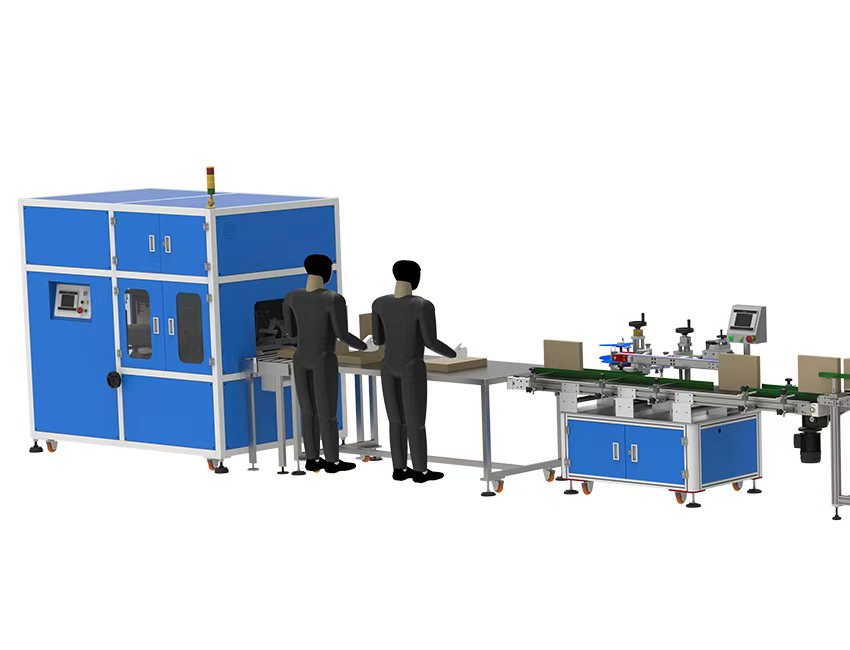
On a filament line the sequence is straightforward. Spools are dried, dosed with desiccant, sealed at the vacuum bagging station, and moved into the hold. They leave the hold only after recheck, and only then does the cartoner take them. Our walkthrough of the filament packing line stations shows where each step sits and how the hold interrupts what would otherwise look like a straight conveyor. The interruption is deliberate. It is the one place on the line where the product waits long enough for its packaging to prove itself.
Put the hold where the bags can be seen, not tucked behind the cartoner, and give it light, a labelled lane and a clock. If you are weighing where quality control belongs on a spool or pouch line, send us your flow and your throughput. We build these lines, and we will tell you where the hold earns its footprint.
What to take from the hold
The whole practice rests on one idea that is easy to lose under shipping pressure. A vacuum seal is not an event. It is a condition that has to hold over time, and the only way to test time is to use it. Pull a vacuum and you have done half the job. Rest the bag, check it again, and refuse to carton the ones that fail, and you have done the half that protects the brand.
Build a written hold, with a duration, a fixed recheck, a staging lane and a disposal rule. Pair it with automatic inspection so the fast defects are caught fast, and keep the patient human check for the slow ones. Treat the vacuum level as one input, not the verdict. And hold the line when the schedule pushes, because the hold is cheapest when it is boring and most valuable when somebody wants to skip it.
Do that, and a leaking spool stops being a customer problem and goes back to being a packing problem, which is where it always belonged.
[Send us a spool and a bag. We will seal it, hold it, and show you what the recheck finds, then lay out the station on your line.]