Automatic cartoning is faster in almost every measurable way, and most lines should automate the carton. Not all of them, though, and the exceptions are not sentimental. Some of the most careful packaging operations put product into the box by hand on purpose, because a machine that pushes a rigid piece into a carton with a fixed stroke can crush a vacuum-sealed pouch or shift a fragile item in ways no sensor catches. Manual vs automatic cartoning, then, is less a speed contest than a risk decision: you are choosing where you want defects to surface.
Here is the uncomfortable part. A bruised pouch or a badly seated product does not announce itself at the discharge end of a cartoner. It rides the pallet, clears the warehouse, ships, and opens in a customer’s hands. That is the moment the defect becomes visible, and it is the worst possible moment, because the fix now costs a refund, a replacement, and some trust.
We build cartoning machines and carton erectors, so we have every commercial reason to tell you to automate. We also see the lines that deliberately keep a hand in the process, and we understand why they do it. What follows is not a case for automation or against it. It is a way to decide which of the two your product is actually asking for.
Automatic cartoning is almost always faster. Three cases still beat it.
Run the numbers and the machine usually wins. Reported industry ranges put hand cartoning at roughly 5 to 15 cartons per minute, semi-automatic machines at 20 to 40, and intermittent automatic cartoners at 40 to 100. Those are benchmarks, not promises, and your own floor will move them. The shape of the gap is real, though, and it widens with volume. A machine also removes the fatigue curve that quietly cuts a hand-packing crew’s afternoon output by a quarter or more.
Then there are the cases where the arithmetic points the other way:
- The product is soft, vacuum-sealed, or easily marked, and a pusher stroke can damage it invisibly.
- The unit value is high enough that a single customer complaint costs more than the labor saved.
- Inspection at the point of cartoning is the last realistic chance to catch a defect, and a machine has no eyes.
None of the three is about speed. Each is about what happens after the carton is closed, which is where a line’s real cost lives.
When people first frame manual vs automatic cartoning as a straight efficiency question, this is the part that settles it. The machine wins the efficiency argument outright. It loses only when the product makes efficiency the wrong thing to optimize.
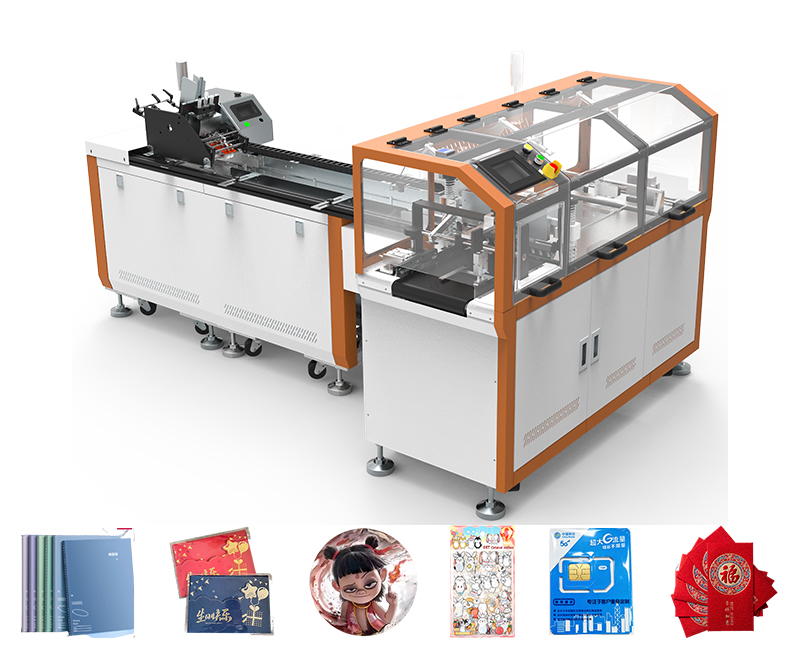
Curious how a machine changes the math for your own product? The automatic cartoning machine we build handles rigid and semi-rigid packs well. The only question is whether yours is one of them.
Why some lines carton by hand on purpose
Three situations push a line toward the hand instead of the machine, and each one is about the product rather than the pace. Together, they are the clearest reasons a manual vs automatic cartoning decision can land on the side you did not expect.
A fixed pusher can damage a vacuum bag in ways no sensor catches
At one 3D filament plant, spools are dried, bagged, vacuum-sealed, and then rested before they go anywhere near a box. The spool is hard plastic. The sealed pouch around it is not. Run that pouch through a cartoner’s pusher stroke and the machine does exactly what it was set to do: it applies force at the same point, at the same angle, every cycle. On a rigid box, that is consistency. On a soft, vacuum-tight bag, it becomes a series of small compressions that stress the seal or leave a crease along the film.
The damage rarely looks like damage. A stressed seal can hold for weeks and then let go. A crease in the film can look cosmetic and turn out to be a channel that slowly admits moisture. Because there is nothing to see on the outside of a sealed bag, an automated line can pass a hundred of these without a single alarm. That is the case for keeping a hand at the carton, and it is the reason those spools are rested and checked before packing in the first place. The reasoning behind that pause is worth its own discussion, which we cover under the pre-packing leak hold.
The hand is the last sensory gate before the carton closes
An operator picking up a sealed pouch learns things a sensor does not. The bag feels slack or tight. The seal edge is smooth, or it has a rough lip where the film creased. The pouch is uniformly flat, or it has a soft spot that suggests air crept back in. None of that is measurable by a photoelectric sensor, and none of it shows up in a reject report.
Reported rejection rates tell the same story from the other direction. Hand packing is often cited at 2 to 5 percent rework or rejection, while automation is credited with under 0.5 percent. Read those figures carefully. A machine produces fewer defects of the kind it can detect, such as a missing carton or a jam, but it cannot feel a soft seal. For a product whose failure mode is invisible to sensors, a machine’s low defect rate can be measuring the wrong thing.
When unit value is high, a complaint costs more than a worker
Set labor cost against complaint cost, and the trade can flip. If a carton holds a low-value item and a customer complaint costs the price of a replacement, speed wins easily. If a carton holds a high-value spool, a lab sample, or a device with a serial number, the arithmetic changes. One return, one support call, one replacement shipment, and the labor you saved on that unit is gone several times over. Reported ranges for unplanned line losses and customer returns vary far too widely to quote as a rule, so the honest move is to price your own complaint and compare it against your own fully loaded hourly labor rate.
A framework for manual vs automatic cartoning decisions
The choice is not binary, and the useful question is not “manual or machine.” It is where along the line the hand earns its place. A workable manual vs automatic cartoning framework sorts your product on three questions, in the order that matters most.
Product behavior: soft, hard, vacuum-sealed, or easily marked
Start with how the product reacts to force. A rigid, uniform carton that resists handling is a good candidate for a machine. A soft pouch, a vacuum-sealed bag, a glossy printed surface, or a product that shifts when pressed is a candidate for a hand, at least at the loading step. Draw a line between products that a fixed force damages and products that ignore it, because that line decides more than any throughput number.
Volume and the true cost of a hand
Volume sets the ceiling on what a hand can do, but the cost of that hand is not just the wage. It includes shift structure, overtime, supervision, training, error correction, and the retraining cost that arrives whenever turnover does. A manual cartoning line for small items is often described as needing four to eight workers, while an automatic unit typically needs one operator. When you compare, compare the fully loaded figure on both sides, and remember that a machine’s labor saving only materializes if the volume is actually there to feed it.
Quality risk: what a defect costs once the customer holds it
This is the dimension most buyers underweight. Ask what a defective carton does downstream. If the defect is cosmetic and cheap to make right, automate freely. If the defect is a breached seal, a missing insert, or a damaged high-value item, the cost of letting one reach a customer can outweigh years of labor saved. ISO 9001:2015 asks you to control these calls through defined processes and first-article approval rather than habit, and a manual step with a written check is easier to defend in an audit than a machine step nobody watches.
Not sure which way your product leans? Send a sample and a week of output data, and we will map manual, semi-automatic, and fully automatic options against your real defect risk.
Short runs and changing SKUs: where manual vs automatic cartoning flips
Automatic cartoning is built around repetition. A machine earns its keep by running the same carton, at the same speed, for hours. Feed it a different size every few hundred units and the calculus inverts, because now you are paying for changeover labor as well as machine time. Reported industry ranges put changeover on a semi-automatic cartoner at roughly 15 minutes and on a higher-speed unit at 20 to 30 minutes or more, and that time is not free when the run is short.
A plant that ships prototypes, seasonal gifts, or limited editions often finds that a hand station handles the same work with no tooling change at all. The operator reaches for a different box and keeps moving. In a manual vs automatic cartoning comparison run across a year of short, mixed orders, the hand can win, not because it is faster per unit, but because it never stops to reset.
That is not a permanent answer. Once run lengths grow and the SKUs settle, the balance tips back toward the machine. The point worth holding onto is that “we run short, varied batches” is a legitimate reason to keep the hand, not a failure to automate properly.
Hybrid lines: erect and label by machine, close the carton by hand
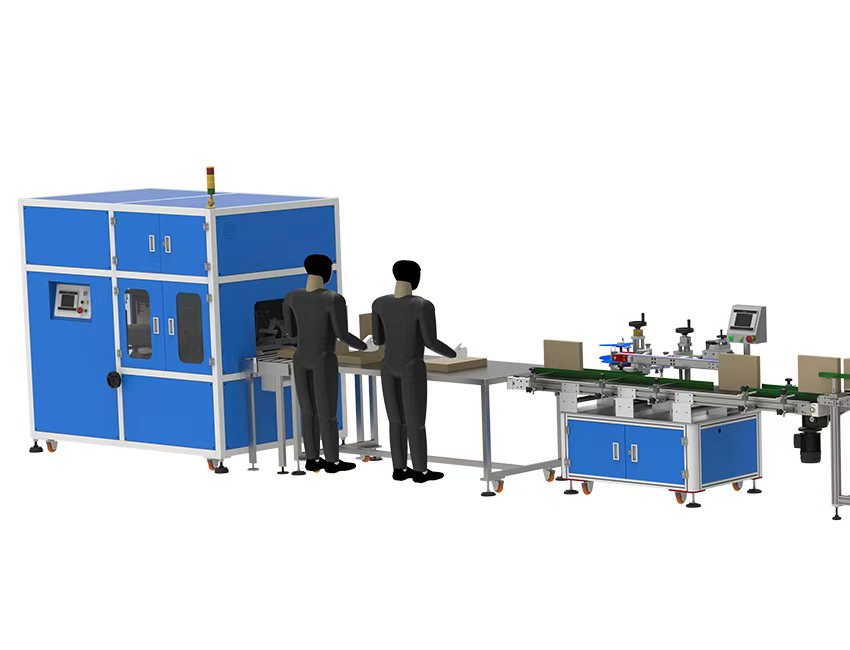
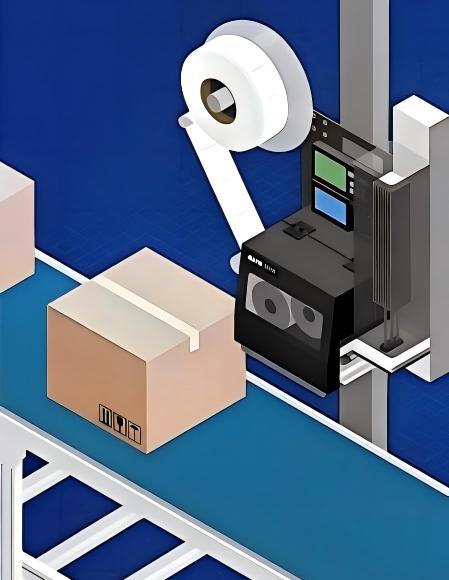
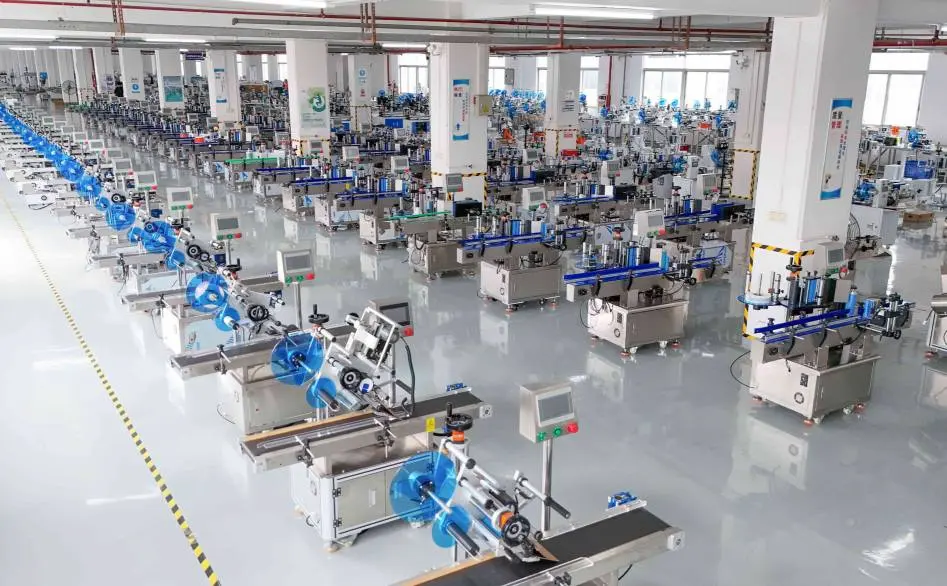
The most common answer is not all or nothing. Take the fast, repeatable steps by machine and keep the hand where judgment matters. A carton erector for delicate packs can form the box to a consistent shape, an inline labeler can apply the code or certificate, and an operator can place the sealed product and close the carton where a pusher would do harm. This split captures most of the automation benefit without exposing the product to the one action it cannot survive.
The pattern is common enough to have its own place in line design, and it does not require a full line. In most manual vs automatic cartoning debates, the useful answer turns out to be this split rather than a winner-takes-all choice. You can see how it fits together when only two machines are involved, which is the setup behind the manual packing station on a small line.
Designing a manual cartoning station so it is not the bottleneck
If you keep a hand in the process, the hand becomes a station, and a bad station becomes your constraint. Build it on purpose.
- Put everything within one reach. Product in on the left, cartons and inserts within arm’s length, sealed output out on the right. Reaching and twisting is where the time disappears.
- Present the empty carton already erected. If an operator has to fold a box before loading it, you have built a slow machine and called it a station.
- Give the operator a standard check they run on every unit, not every batch, and write it down.
- Track the station’s rate separately from the rest of the line. A station that looks fine in the line average can still be the reason the line misses its number.
- Set the station’s pace below the machine’s, and staff for the slow shift. A station sized to a good day fails on a bad one.
A well-designed station has a rhythm, and once it has a rhythm it can hold it. A station that is really just a table and hope is where hand packing earns its bad reputation.
When hand cartoning is simply the wrong answer
Everything above has a limit, and it is worth naming the point where the hand stops making sense.
The manual vs automatic cartoning choice stops paying its way in a few familiar places. The clearest case is a robust product: if a pusher stroke cannot hurt it, you are paying a wage to do what a machine does faster and more consistently. Volume tells a similar story, because once a station cannot keep up, a second and third shift of packers will cost more than the machine and still miss the target. Where the defect you are guarding against can be measured, a sensor will catch it more reliably than any operator. And an undocumented hand step is not really a control. It is a variable you cannot repeat.
If you have reached that point, the conversation shifts away from manual vs automatic cartoning and toward which machine fits your carton. The honest place to start is a short list of cartoning machine buying questions you should be able to answer before anyone quotes you.
Where the hand belongs
Automatic cartoning is the right default. It is faster, steadier, and easier to audit, and most lines should run a machine at the loading step. But “most” is not “all.” Manual vs automatic cartoning is not really a contest between people and machinery. It is a question of where a defect first becomes visible, and that answer is a property of your product, not your budget. The exception is a product that a fixed push can damage invisibly, and when that product carries a high value, a hand is not a slower way to do the job. It is a cheaper way to avoid a complaint.
The decision is smaller than it feels. Name your product’s failure mode. If it is a jam, automate. If it is a seal that looks fine and is not, keep a hand there, and give that hand a proper station, a written check, and a pace it can hold. That is the whole of manual vs automatic cartoning in one line: match the method to the failure you most need to prevent.
Whatever you choose, the standard behind it is the same: a process you can control, inspect, and improve. Guidelines such as ANSI/PMMI B155.1-2023 for packaging machinery safety and, where food contact is involved, FDA 21 CFR 175.105 for adhesives used in food packaging, exist to keep that process accountable rather than improvised.
Ready to test it on your own product? Send us a sample carton and a sealed unit, tell us your weekly output, and we will show you where a machine pays off and where a hand still earns its keep.