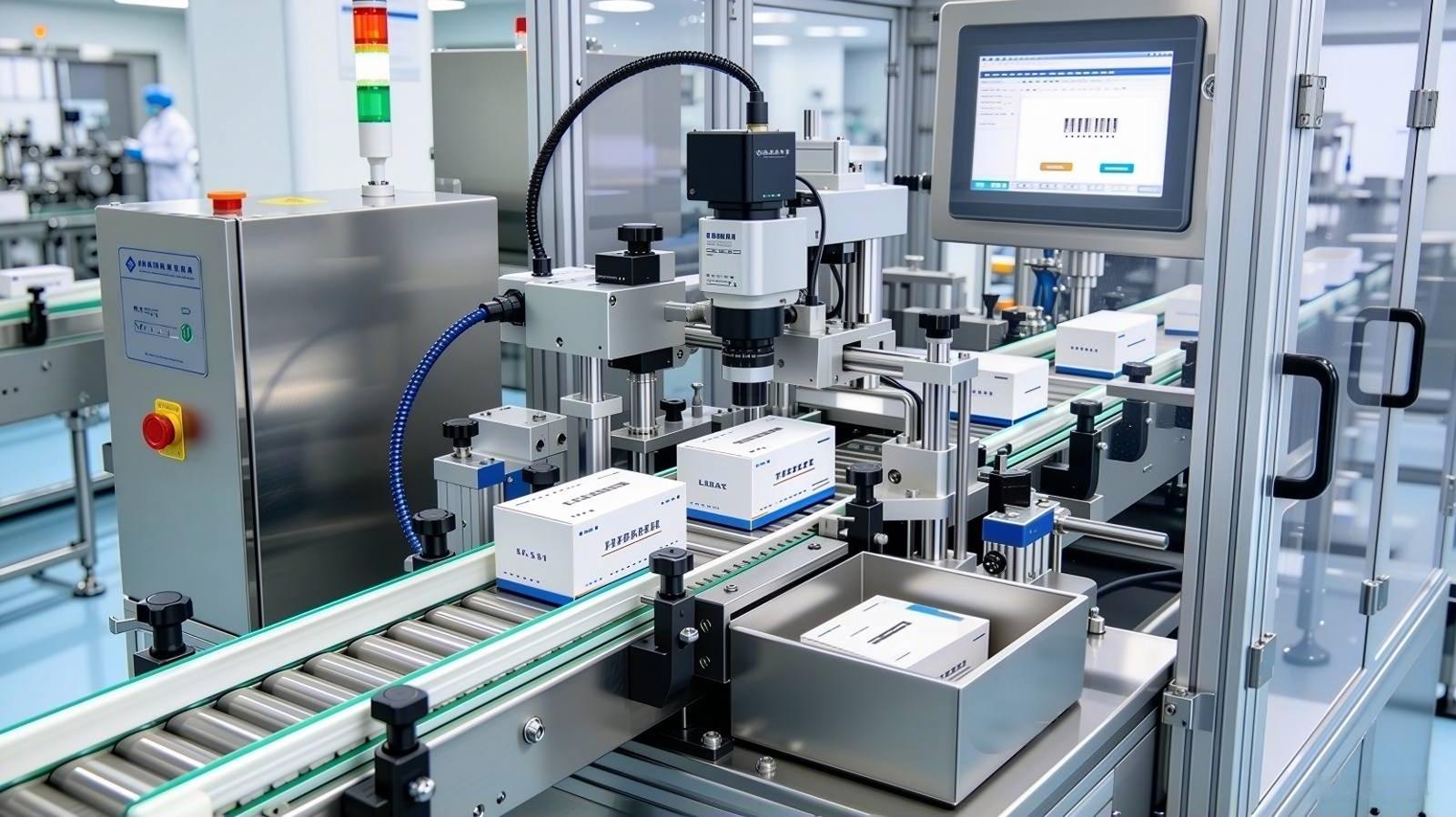
Most 3D printing filament failures aren’t caused by bad material—they’re caused by moisture that got in before the spool reached the printer. Filament vacuum sealing is the packaging-side answer to that problem: remove the air, close the path for humidity, and deliver filament to the customer in the same condition it left the production line.
This article explains why moisture is the primary quality threat to 3D printing filament, what vacuum sealing does to stop it, and what manufacturers need to know when building vacuum sealing into their packaging process.
Why Moisture Is the Primary Threat to Filament Quality
3D printing filaments—PLA, ABS, PETG, TPU, Nylon, and most engineering-grade materials—are hygroscopic. They absorb moisture from the surrounding air. The absorption rate varies by material, but the damage mechanism is consistent:
- Water molecules bond with polymer chains in the filament
- During printing, the absorbed moisture flash-vaporizes as it passes through the hot end
- The steam creates micro-bubbles inside the extruded material
The visible and measurable results of printing with moisture-compromised filament:
| Symptom | Cause | Impact |
|---|---|---|
| Popping or crackling sounds during printing | Steam bursts from absorbed moisture | Surface pitting, layer inconsistency |
| Stringing and oozing | Moisture lowers melt viscosity | Poor dimensional accuracy, surface quality |
| Brittle filament that snaps during feeding | Hydrolysis degrades polymer chains | Print interruption, material waste |
| Bubbles or rough surface texture on prints | Steam pockets trapped in extrudate | Structural weakness in functional parts |
| Under-extrusion and clogs | Steam pressure disrupts flow rate | Failed prints, nozzle blockage |
Nylon and TPU are particularly sensitive—significant print quality degradation can occur after just a few hours of open-air exposure in a humid environment. PLA is more tolerant but not immune; long storage periods without proper packaging will compromise even the most stable materials.
From a manufacturer’s perspective, filament that arrives at the customer moisture-damaged is a warranty and reputation problem, regardless of how well the material was produced. The packaging line is the last line of defense.
See how UBL helps vacuum-seal 3D printing filament packaging
What Vacuum Sealing Does—and What It Doesn’t
What It Does
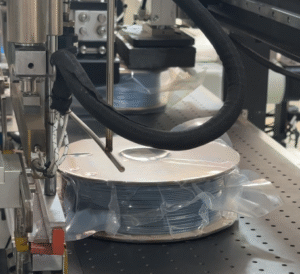
Vacuum sealing removes the air—and the moisture it carries—from inside the package before it’s sealed. Once the bag is sealed under vacuum, there is no air exchange with the outside environment. The filament inside remains at whatever humidity level it had when it entered the bag.
This is the critical distinction: vacuum sealing preserves the filament’s current condition. It does not dry filament that is already wet. If the spool enters the bagging station at acceptable moisture content, vacuum sealing locks that condition in place for the duration of shipping and storage.
The Role of Desiccant
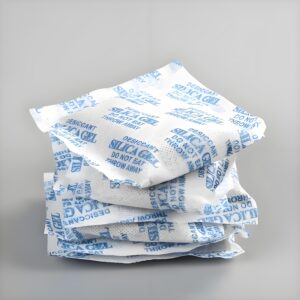
Vacuum sealing removes bulk air and moisture. A desiccant sachet inside the package handles residual moisture—trace humidity that remains in the package after vacuum draw-down, or any minor ingress that occurs over long storage periods.
The two components work together: vacuum sealing does the heavy lifting on moisture exclusion; the desiccant manages the margin. For most filament packaging applications, silica gel sachets are standard. For materials with extremely low moisture tolerance (Nylon, PA, certain engineering grades), molecular sieve desiccants with higher absorption capacity may be specified.
UBL’s packaging lines support both manual desiccant insertion and automatic dispensing—a dedicated dispenser drops the sachet into the bag automatically before sealing, eliminating a manual step from the operator’s workflow. Details: filament vacuum packaging machine guide.
What It Doesn’t Do
Vacuum sealing cannot compensate for upstream process problems:
- Filament produced in a high-humidity environment and not dried before packaging will be sealed in a moisture-compromised state
- Long dwell time between extrusion and packaging (open-air storage of spools before bagging) allows moisture uptake before the spool reaches the vacuum station
- Bag material with inadequate moisture vapor transmission rate (MVTR) will allow slow moisture ingress over extended storage periods regardless of the initial vacuum level
Effective moisture control is a system—production environment, pre-packaging dwell time, bag material selection, vacuum specification, and desiccant type all contribute to the final result.
Vacuum Levels: What the Numbers Mean
Vacuum level is measured in negative pressure relative to atmospheric. Common reference points for filament packaging:
| Vacuum Level | Air Removed | Typical Application |
|---|---|---|
| -0.06 MPa | ~60% | Light-duty packaging, short storage |
| -0.08 MPa | ~80% | Standard filament packaging (UBL specification) |
| -0.09 MPa | ~90% | High-sensitivity materials, extended storage |
| -0.095 MPa+ | 95%+ | Specialty industrial packaging |
UBL’s filament vacuum packaging machines operate at -0.08 MPa—the standard specification for commercial filament packaging. This level removes approximately 80% of the air from the package, reducing available moisture to a level that prevents meaningful uptake during normal shipping and storage timelines.
Higher vacuum levels are achievable but require longer cycle times per package, which reduces line throughput. For most filament applications, -0.08 MPa combined with a desiccant sachet provides the right balance between protection and production efficiency.
Bag Material and Vacuum Sealing Performance
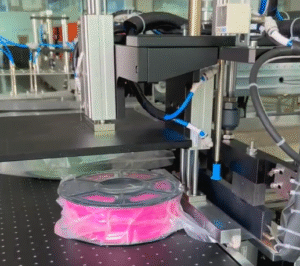
The vacuum level achieved at sealing is only one part of the equation. The bag material determines how well that vacuum is maintained over time. Key material properties for filament packaging:
Moisture Vapor Transmission Rate (MVTR)
MVTR measures how much moisture passes through the bag material per unit area per day. Lower MVTR = better barrier. For long-distance shipping or extended storage, low-MVTR materials are essential.
Common Bag Materials for Filament Packaging
- PE composite film — Cost-effective, adequate moisture barrier for standard transit and short to medium storage periods
- High-temperature PE — Better seal integrity at higher sealing temperatures; suited to applications where seal strength is critical
- BOPP film — High optical clarity for retail display; good moisture resistance, commonly used for consumer-facing SKUs where product visibility matters
Material selection interacts with your sealing temperature settings and the vacuum draw-down cycle. UBL configures the vacuum sealing station to match the bag material specified for your product. If your bag supplier changes materials, the sealing parameters need to be reviewed.
Integrating Vacuum Sealing into the Packaging Line
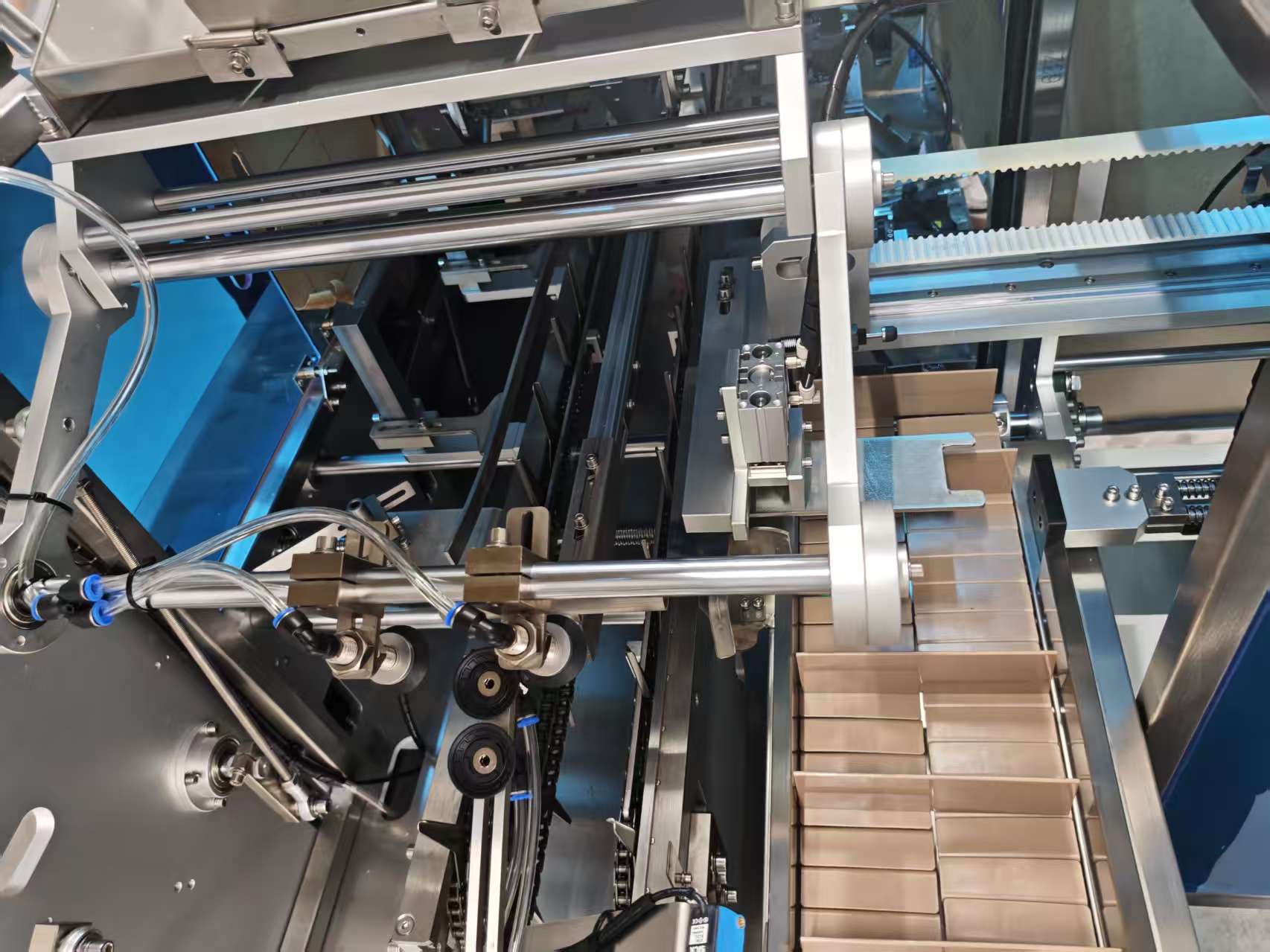
Vacuum sealing doesn’t operate in isolation—it’s one station in a continuous process. The typical station sequence around the vacuum sealing step:
- Bagging station — Spool is inserted into the bag. See: filament bagging machine
- Desiccant insertion — Sachet is dispensed into the bag (automatic or manual)
- Vacuum draw-down — Air is evacuated to -0.08 MPa
- Heat sealing — Bag is sealed under vacuum. The machine seals immediately after draw-down, before air can re-enter
- Labeling — The sealed spool moves to the label applicator station
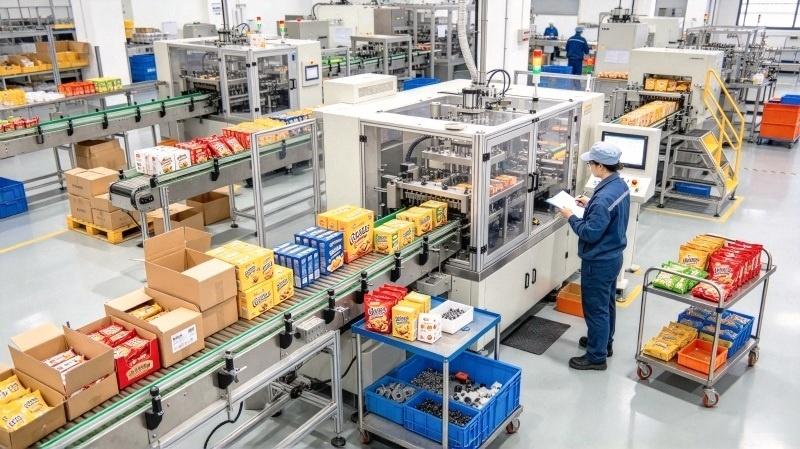
On a fully integrated line, all five steps run continuously without manual transfer between stations. On a semi-automatic configuration, the operator manages the infeed and may handle desiccant insertion manually, while the machine handles vacuum draw-down and sealing.
For the full line architecture and how each station connects: 3D printing filament packaging line overview.
Practical Checklist: Evaluating Your Current Moisture Control
If you’re assessing whether your current packaging process is adequate, work through these questions:
- What is the dwell time between extrusion and bagging? — Spools sitting in open air absorb moisture before they’re sealed. Minimize this interval, especially for sensitive materials.
- What vacuum level does your current process achieve? — If you’re using a standalone vacuum machine, verify the actual draw-down level, not just the machine’s rated specification.
- What is the MVTR of your current bag material? — Ask your bag supplier for the specification. If they can’t provide it, consider switching suppliers.
- Are you including a desiccant? — Vacuum without desiccant is adequate for short transit; add a sachet for products going into distribution or long-term storage.
- What is your seal consistency? — Manual sealing produces variable results. A machine-sealed package has a defined seal width and temperature—measurable and repeatable.
Summary
Filament vacuum sealing is the packaging step that determines whether the filament you produced reaches the customer in usable condition. The physics is straightforward: remove the air, close the humidity path, maintain the barrier through shipping and storage. The engineering challenge is doing that at production speed, consistently, across every package on the line.
UBL’s vacuum sealing stations are designed to integrate into a complete filament packaging solution—handling draw-down, sealing, and discharge in a continuous cycle that connects to the bagging station upstream and the labeling station downstream.
To evaluate whether your current vacuum sealing setup is adequate—or to spec a new line—contact UBL: helen@huanlianauto.com | ublpackaging.com