
The vacuum sealing station is where 3D printing filament packaging transitions from physical handling to quality preservation. A spool vacuum packaging machine removes the air—and the moisture it carries—from inside the bag before sealing, locking the filament into the condition it had when it left the production line. For manufacturers shipping to distributors, retailers, or end users in humid climates, this station is non-negotiable.
This guide covers how spool vacuum packaging machines work, the specifications that determine protection level, throughput configurations for different volume targets, and how the vacuum station integrates into a complete filament packaging solution.
What a Spool Vacuum Packaging Machine Does
The vacuum station handles three operations in sequence:
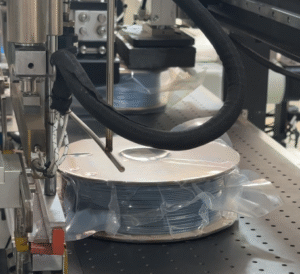
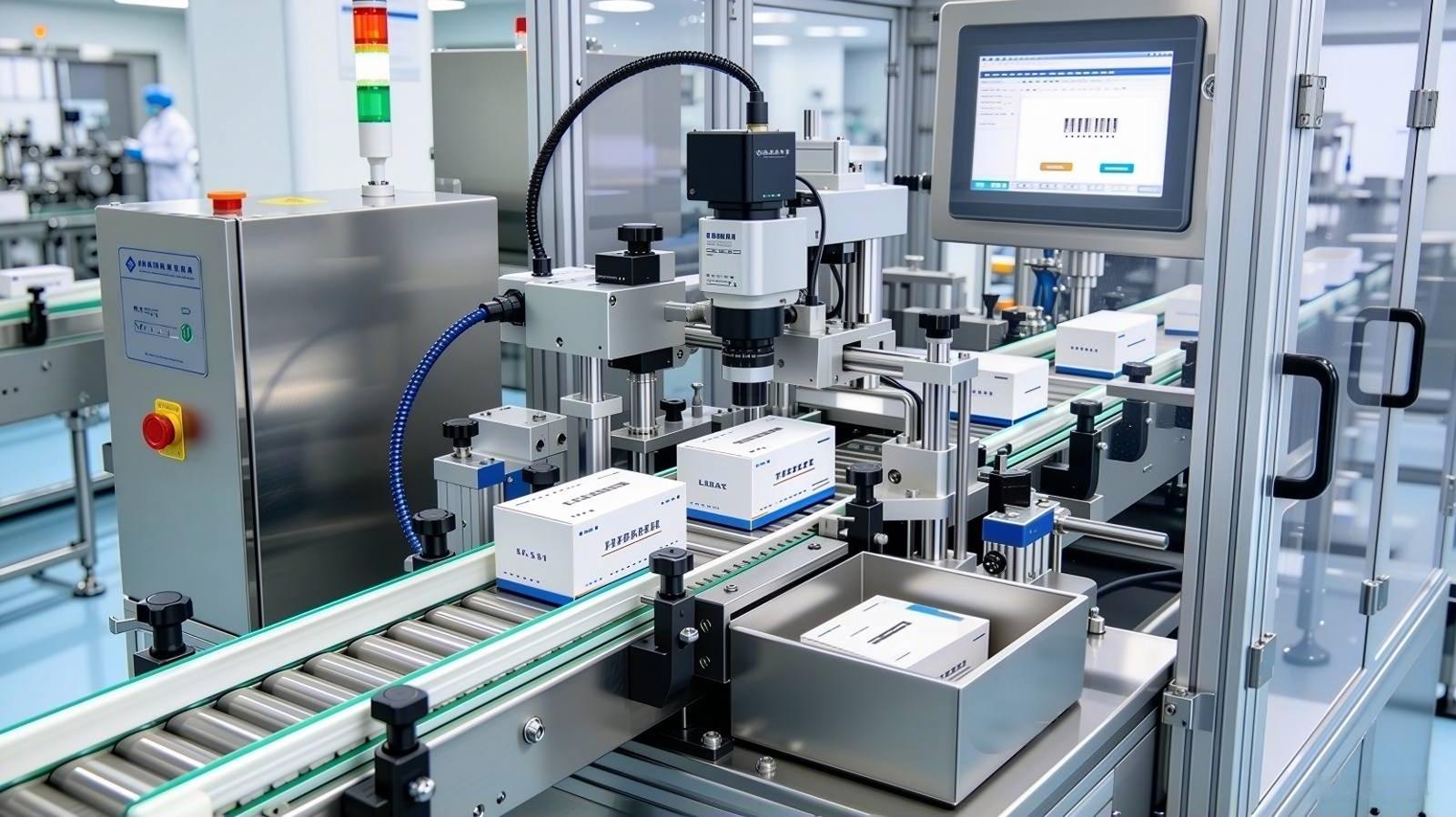
- Bag positioning — The sealed bag containing the spool enters the vacuum chamber. The chamber closes around the bag mouth, creating an isolated environment
- Vacuum draw-down — Air is evacuated from the chamber and the bag interior. UBL machines draw down to -0.08 MPa, removing approximately 80% of the air volume
- Heat sealing under vacuum — While the vacuum is maintained, the bag mouth is heat-sealed. The seal is formed before air can re-enter, preserving the vacuum state inside the package
The result is a sealed spool with minimal residual air and moisture—sufficient to prevent meaningful humidity uptake during normal shipping, distribution, and storage timelines.
For the science behind why this matters and what moisture does to filament: filament vacuum sealing guide.
Key Specifications and What They Mean
Vacuum Level: -0.08 MPa
UBL’s standard specification for filament vacuum packaging is -0.08 MPa. This is the balance point between protection and throughput:
- Removes ~80% of air volume—sufficient to prevent moisture-related print failures
- Achievable in a practical cycle time for production line speeds
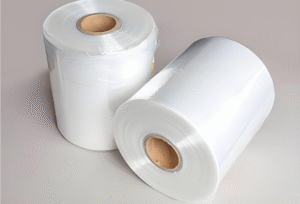
- Compatible with standard PE composite and BOPP bag materials
Higher vacuum levels (-0.09 MPa and above) are technically achievable but require longer cycle times per package. For most commercial filament applications, -0.08 MPa combined with a desiccant sachet provides adequate protection without compromising line throughput.
Seal Quality
The seal formed under vacuum is the critical barrier. UBL machines use heat-sealing bars with temperature control matched to the bag material:
- PE composite film — Standard sealing temperature for cost-effective moisture barrier
- High-temperature PE — Higher sealing temperature for stronger seal integrity on thicker materials
- BOPP film — Optimized temperature for high-clarity retail packaging
Seal width and dwell time are adjustable to accommodate different bag thicknesses and material specifications.
Compatible Spool Dimensions
The vacuum chamber and sealing mechanism must accommodate the range of spool sizes you produce. UBL’s reference compatibility range:
| Dimension | Compatible Range |
|---|---|
| Length (L) | 250 – 350 mm |
| Width (W) | 110 – 220 mm |
| Height / Gusset (H) | 40 – 90 mm |
These are reference values for standard filament spool formats. Machines are specified to match your actual product dimensions. Contact UBL with your spool specifications for a confirmed compatibility assessment.
Throughput Configurations: Single and Dual-Channel
Not every operation needs the same throughput from the vacuum station. UBL offers two configuration approaches:
Single-Channel Configuration
The standard configuration processes one spool per vacuum cycle. The bag enters the chamber, vacuum is drawn, the seal is formed, and the chamber opens for discharge. This configuration is suited to:
- Operations running under 20,000 spools per day
- Semi-automatic lines where operator pace sets the overall speed
- Applications where floor space is constrained
Dual-Channel Configuration
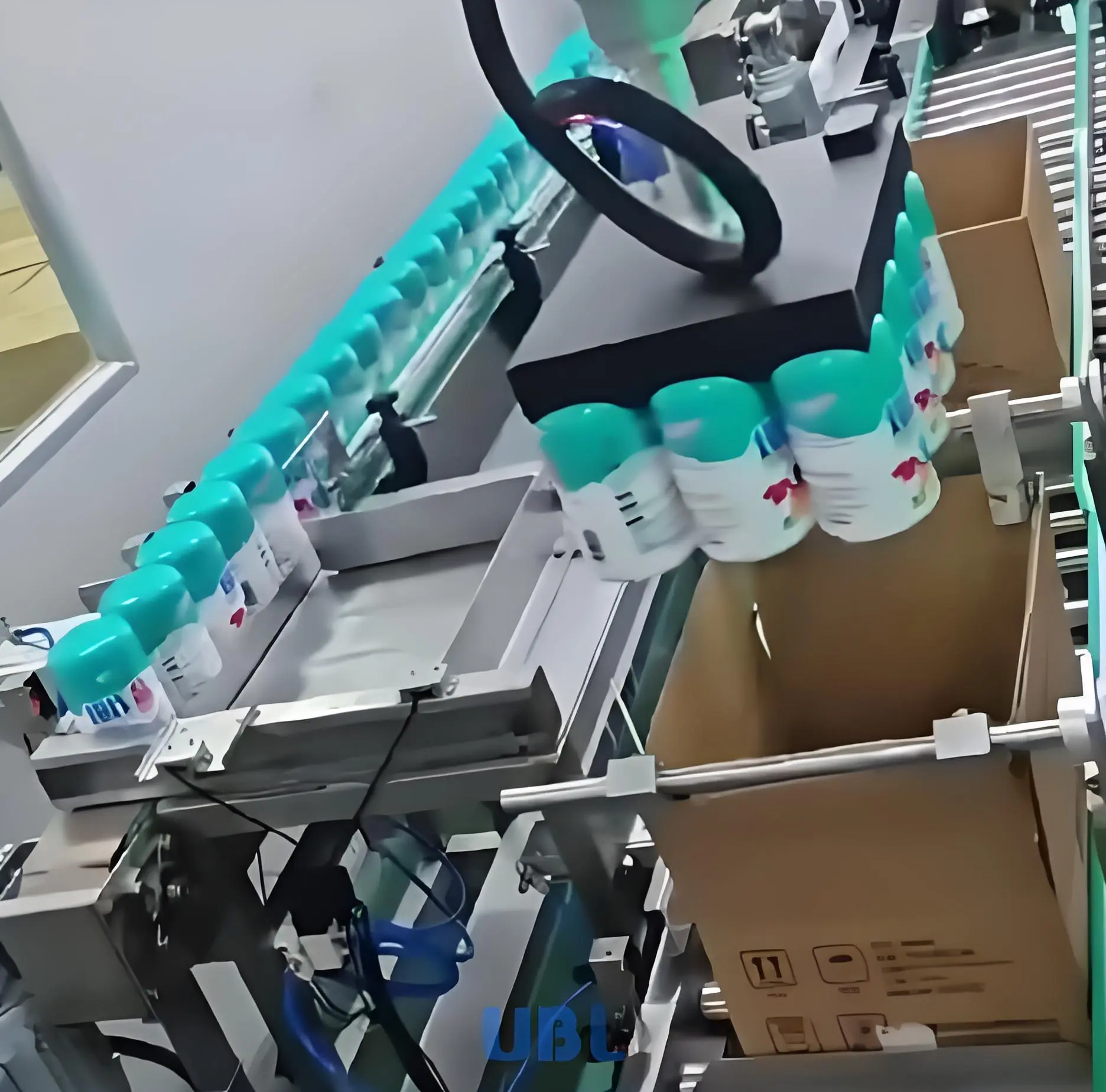
For higher-volume operations, UBL offers a dual-channel parallel configuration. This design adds a second product feed position and a second vacuum module, allowing two spools to be processed simultaneously:
- Two spools enter the vacuum stations in parallel
- Both chambers draw vacuum simultaneously
- Both bags are sealed under vacuum at the same time
- Both sealed spools discharge together
The dual-channel configuration approximately doubles throughput compared to the single-channel setup, without requiring a second machine or additional floor space. This is the configuration of choice for:
- Operations targeting 50,000+ spools per day
- Fully automatic lines where the vacuum station would otherwise become the bottleneck
- Applications where line speed must match high-speed upstream extrusion output
The choice between single and dual-channel is made during the specification phase based on your daily volume target and the overall line architecture. UBL’s modular design means the configuration can be matched to your requirements without over-specifying equipment you don’t need.
Click to view UBL dual-channel configured bagging and vacuum packaging cases
Integration with the Complete Packaging Line
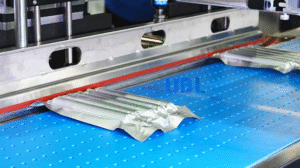
The vacuum packaging machine is one station in a continuous process. The typical station sequence:
- Bagging station — Spool is inserted into the bag by the filament bagging machine
- Desiccant insertion — Silica gel or molecular sieve sachet is dispensed into the bag (automatic or manual)
- Vacuum sealing station — Bag is evacuated to -0.08 MPa and heat-sealed (this article)
- Labeling station — Batch number, material spec, and QR code are applied
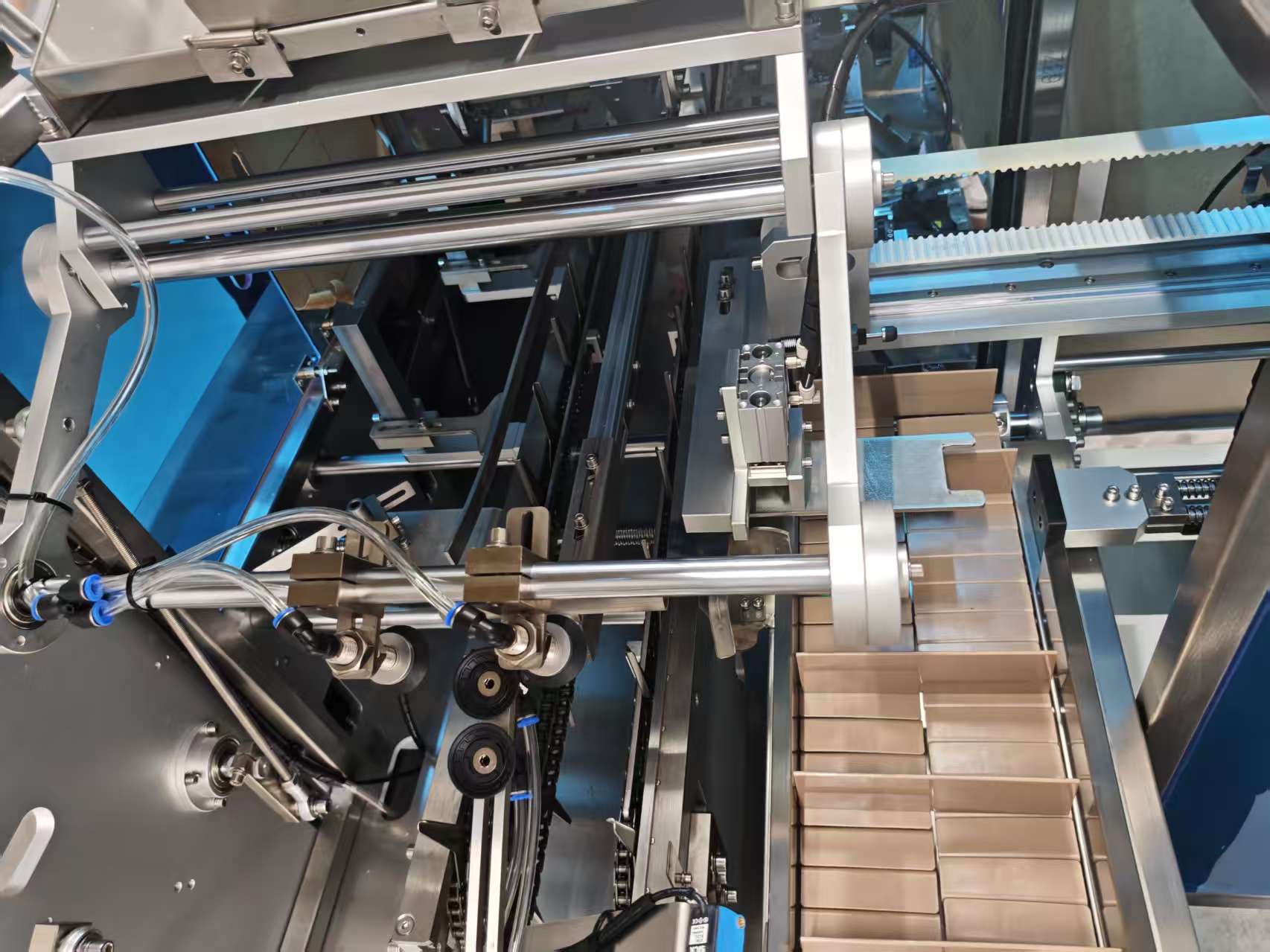
- Cartoning station — Sealed, labeled spools are packed into shipping cartons
On a fully integrated line, all stations run continuously without manual transfer. The vacuum station’s cycle time is matched to the upstream and downstream stations to prevent queuing or idle time. Because UBL machines are modular, the vacuum station can be added to an existing semi-automatic line as a later upgrade without replacing the entire system.
For the full line architecture: 3D printing filament packaging line overview.
When to Specify a Spool Vacuum Packaging Machine
Not every filament packaging operation needs vacuum sealing. The decision depends on your product, your market, and your quality commitments:
| Factor | Vacuum Sealing Recommended | Vacuum Sealing Optional |
|---|---|---|
| Material type | Nylon, TPU, PA, moisture-sensitive engineering grades | PLA, ABS (short distribution channels) |
| Distribution channel | Retail, distributor, export, long storage periods | Direct-to-printer, rapid turnover |
| Climate exposure | High-humidity regions, ocean shipping | Controlled climate, local delivery |
| Quality positioning | Premium brand, professional/enterprise market | Value brand, hobbyist market |
If your filament is going into retail packaging, crossing climate zones, or targeting professional users who expect consistent print quality, vacuum sealing is the standard of care. Skipping it exposes you to warranty claims and reputation damage that outweigh the equipment cost.
Questions to Ask Before Specifying
- What is your daily volume target? — Determines whether single-channel or dual-channel configuration is appropriate
- What are your spool dimensions? — Chamber and sealing bar sizing depends on actual product size
- What bag material are you using? — Sealing temperature and dwell time are calibrated to the material
- Is this a new line or an upgrade to an existing line? — Integration requirements differ for greenfield vs. retrofit installations
- What is the target cycle time per package? — The vacuum station must match the pace of upstream and downstream equipment
UBL supports pre-sale sample testing—send us your spools and bag samples, and we’ll run them through the machine to confirm vacuum level, seal quality, and cycle time before you commit to a specification.
Summary
A spool vacuum packaging machine is the quality assurance station in a filament packaging line. At -0.08 MPa with proper heat sealing, it removes the moisture risk that causes print failures and customer complaints. With single-channel and dual-channel configurations available, the machine can be matched to your volume target without over-investment.
The vacuum station integrates cleanly into a complete filament packaging solution—connecting to the bagging station upstream and the labeling station downstream in a continuous, operator-efficient process.
To evaluate whether vacuum sealing is right for your product line, or to spec a machine for your volume target: helen@huanlianauto.com | ublpackaging.com


5 responses
This deep dive into how vacuum packaging preserves filament quality really highlights the importance of maintaining material integrity throughout the supply chain. It’s great to see manufacturers investing in solutions that protect products from humidity and contamination, especially for industries where precision matters. The focus on preserving filament condition from production to delivery is a smart approach that can significantly reduce waste and improve end-user satisfaction.
This highlights an issue a lot of people overlook with 3D printing filament—moisture damage often happens after production, during storage and shipping. I like that you focused on the packaging stage as part of quality control, because even well-manufactured filament can underperform if it absorbs moisture before reaching the customer. It would be interesting to hear how manufacturers balance vacuum sealing speed with maintaining consistent seal quality at higher production volumes.
The distinction you drew between the vacuum sealing station transitioning from physical handling to quality preservation really highlights why moisture control is so critical for filament longevity in humid climates. It’s a crucial step that ensures the material properties remain consistent from the production line all the way to the end user’s printer, preventing the common issues caused by absorbed water.
This is a crucial point, as removing moisture during the vacuum sealing phase is often the difference between a successful print and one plagued by bubbles or weak layer adhesion. It makes sense that manufacturers investing in high-grade vacuum stations can ensure their filament maintains that pristine production quality all the way through to humid climates or end-user shelves.
Great breakdown of how -0.08 MPa vacuum paired with desiccant packs keeps filament dry during long shipping cycles. The dual-channel throughput numbers and PE/BOPP sealing temperature ranges are very useful benchmarks for our line. We have been testing Gemini Omni to render clear product visualization clips around similar packaging configurations, and the rendering quality has been surprisingly faithful to the mechanical details. Looking forward to more case studies like this from UBL.