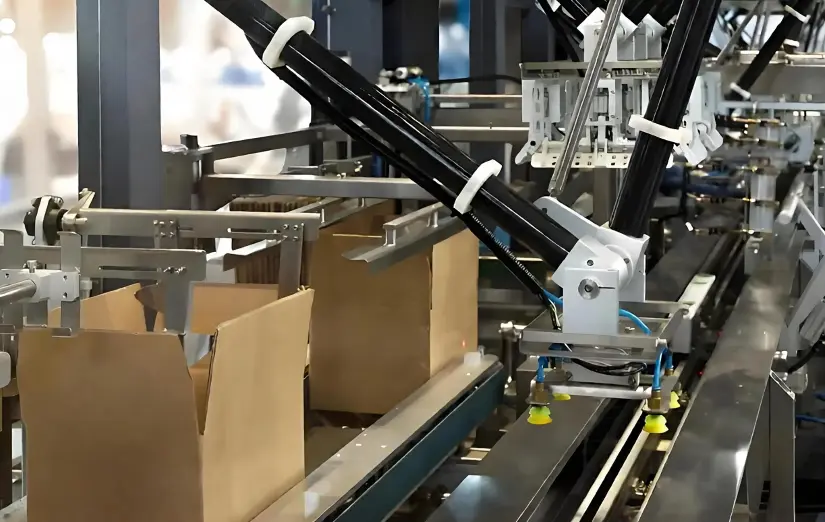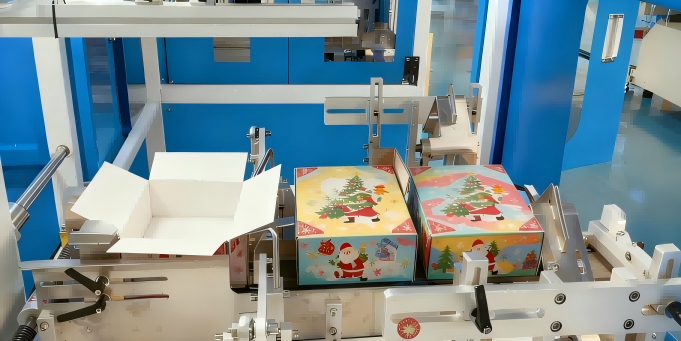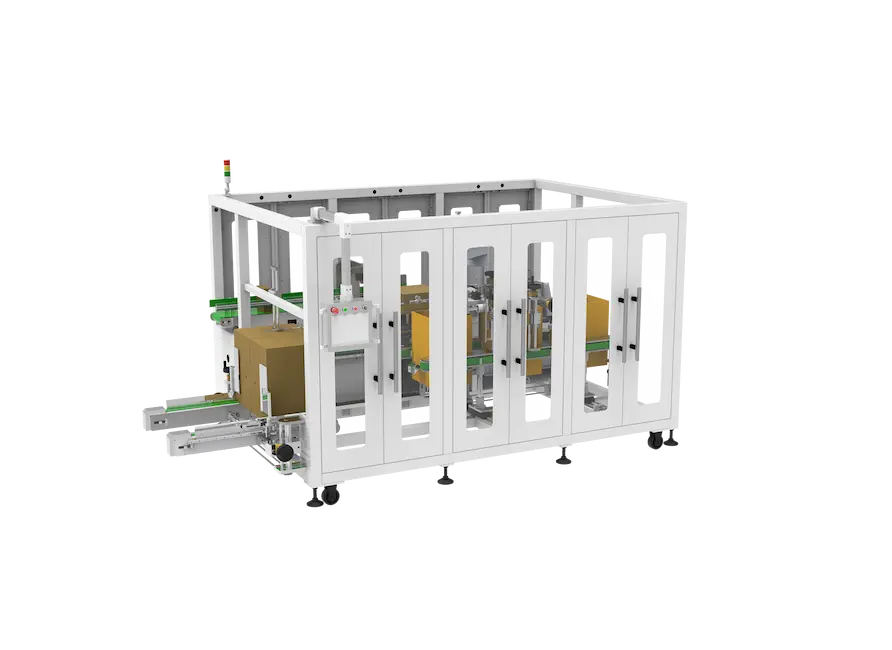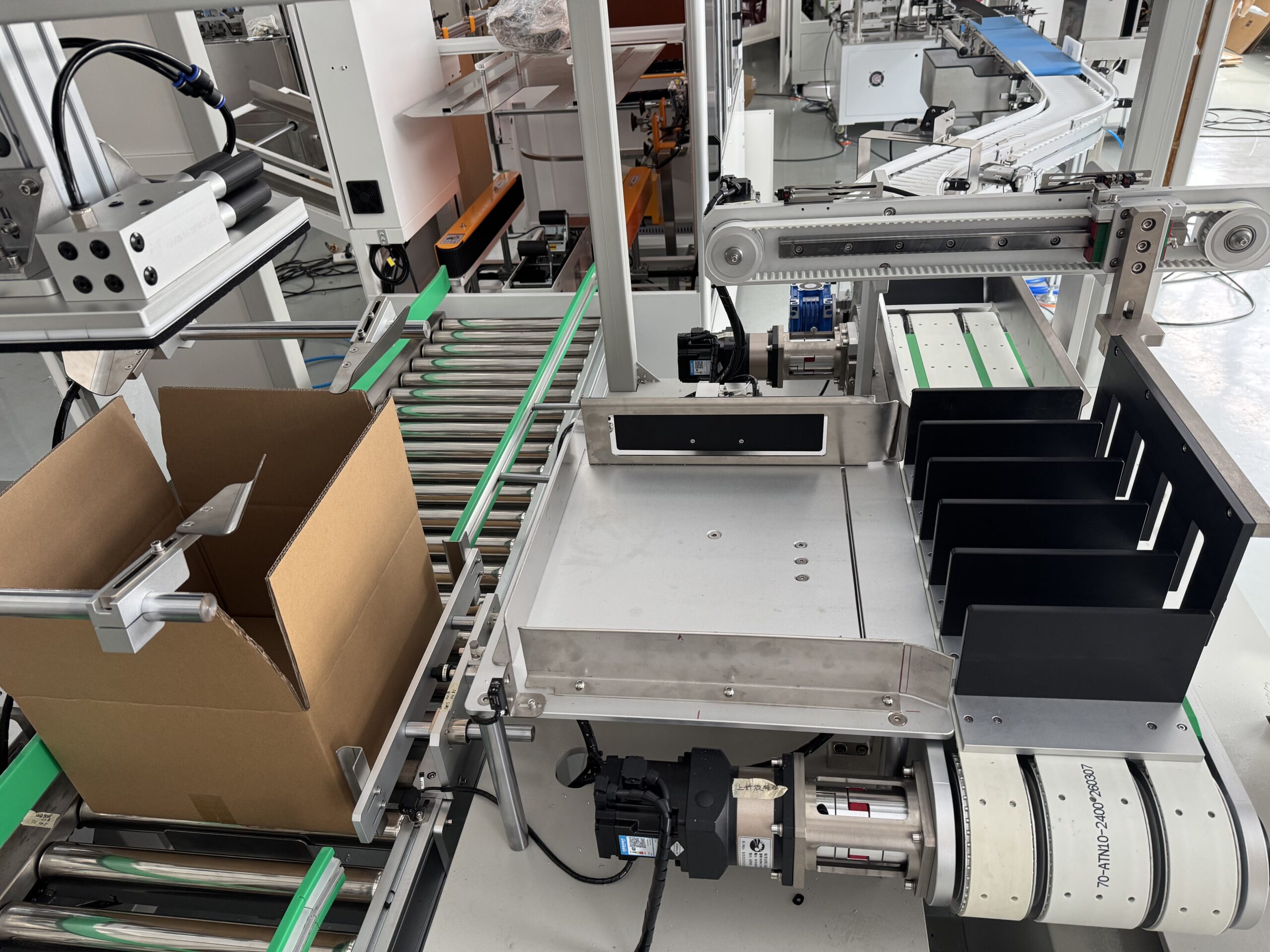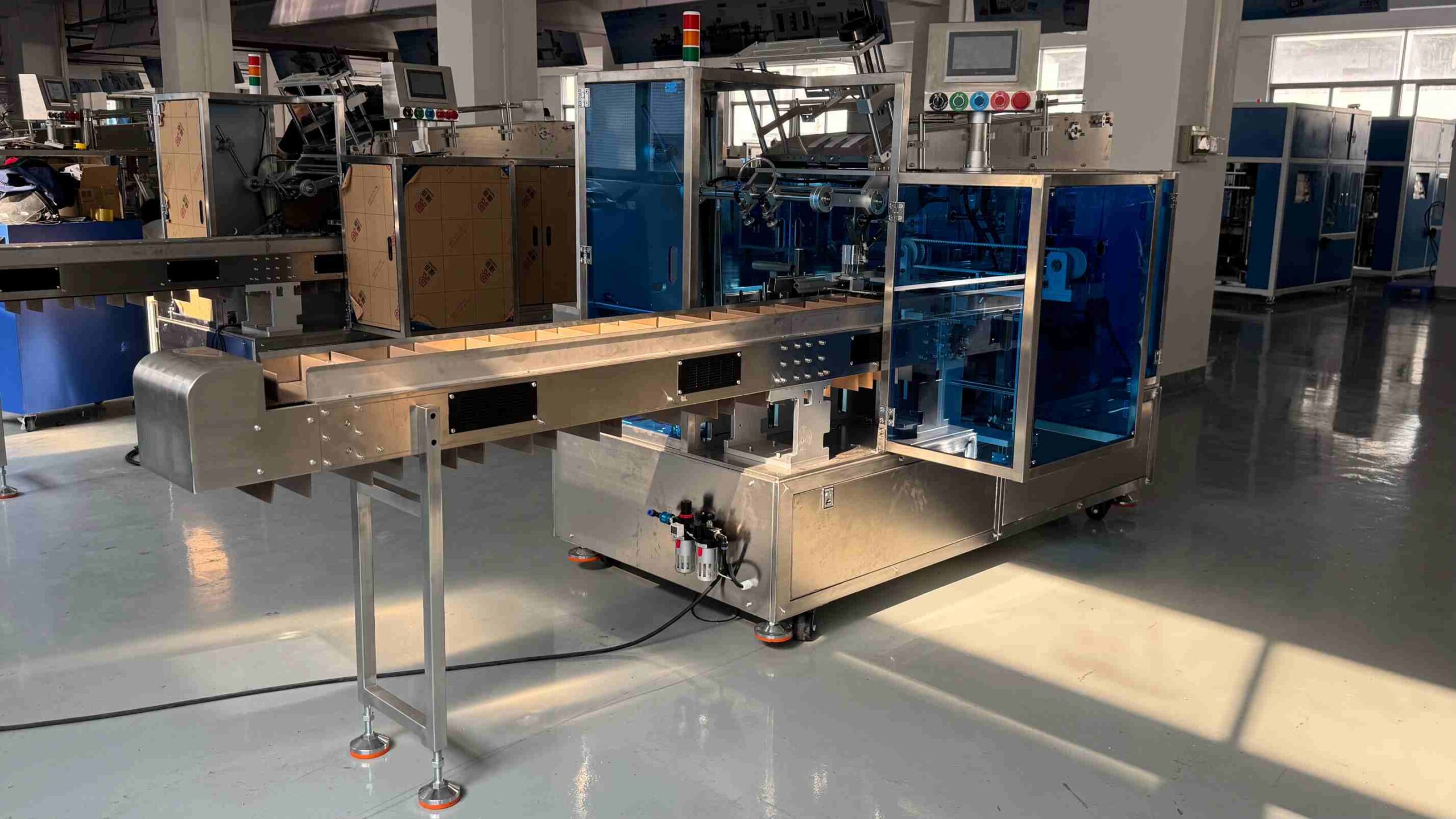
A case packing machine is the station that bridges the gap between the cartoning machine outfeed and the palletized, shipment-ready product. In a food manufacturing line, the case packing machine takes sealed retail cartons from the cartoning machine, groups them into the correct pattern and count for the shipping case, and loads them into the case. The filled case is then sealed and palletized. Without a case packing machine, these steps are performed by manual workers, and the manual case-packing station becomes the bottleneck that limits overall line throughput.
This article is for operations and purchasing decision-makers at food manufacturers who need to understand what a case packing machine does, how to select the right configuration, and how to integrate it with upstream cartoning and downstream palletizing equipment.
What a Case Packing Machine Does
A case packing machine receives sealed retail cartons from the cartoning machine outfeed and packs them into shipping cases automatically. It receives cartons, orients them, groups them into the correct pattern, loads them into the case, and discharges the filled case to the case sealer. The machine must match the speed of the upstream cartoning machine. UBL case packers are configured during the pre-sale technical review with a buffer conveyor between the two machines. The UBL cartoning machine product series covers the upstream equipment.
Why Food Manufacturers Need It
Food manufacturers who automate folding and cartoning often discover the manual case-packing station becomes the new bottleneck. It requires two to three workers per shift. At speeds over 10 to 15 cartons per minute, a single worker cannot keep pace. A case packing machine eliminates this by packing at the same speed as the cartoner with consistent fill patterns. The food packaging cartoning machine selection guide provides total line throughput calculations. Before a demand surge, our peak-season throughput planning checklist covers how to get the line ready.
Types of Case Packing Machines
Horizontal loading uses a mechanical pusher for regular cartons. Vertical loading uses a robotic pick-and-place for irregular cartons or specific orientations. Drop loading allows lightweight cartons to fall by gravity. UBL provides conveyor interfaces and control integration for all three methods. For facilities using a carton folding machine upstream, the case packer integrates into the full line.
Applications by Food Category
In frozen food, simple column stacks maximize cold store stability. In snack and bakery, display-ready case orientation is required. In beverage and liquid food, gentler handling prevents bottle damage. In sauce and condiment, precise case positioning aligns internal dividers. According to the Packaging Machinery Manufacturers Institute (PMMI), case packing automation is one of the fastest-growing segments in secondary packaging.
ROI of Case Packing Automation
A manual station requires two to three workers per shift. An automated case packer requires zero direct labor. Saving two to three workers per shift across two shifts saves four to six workers, or ,000 to ,000 per year. Payback is 12 to 18 months. The end-of-line packaging guide covers the complete sequence.
Common Questions
Can it handle multiple carton sizes?
Yes. Adjustable infeed guides and HMI-stored SKU recipes make changeover quick.
How does it integrate with existing cartoners?
UBL provides the conveyor interface matching the cartoning machine speed and discharge height.
What case formats are supported?
Standard corrugated, display-ready, and half-slotted cases. Specified during technical review.
What floor space is needed?
10 to 15 square meters depending on configuration. Layout plan provided during review.
How to Start
UBL supports sample trial runs. Send your sealed carton samples and case specifications for a free test run with video documentation. Standard machines ship next business day. Custom configurations within three months. Installation, training, and warranty included.
Contact UBL at helen@huanlianauto.com or visit ublpackaging.com.