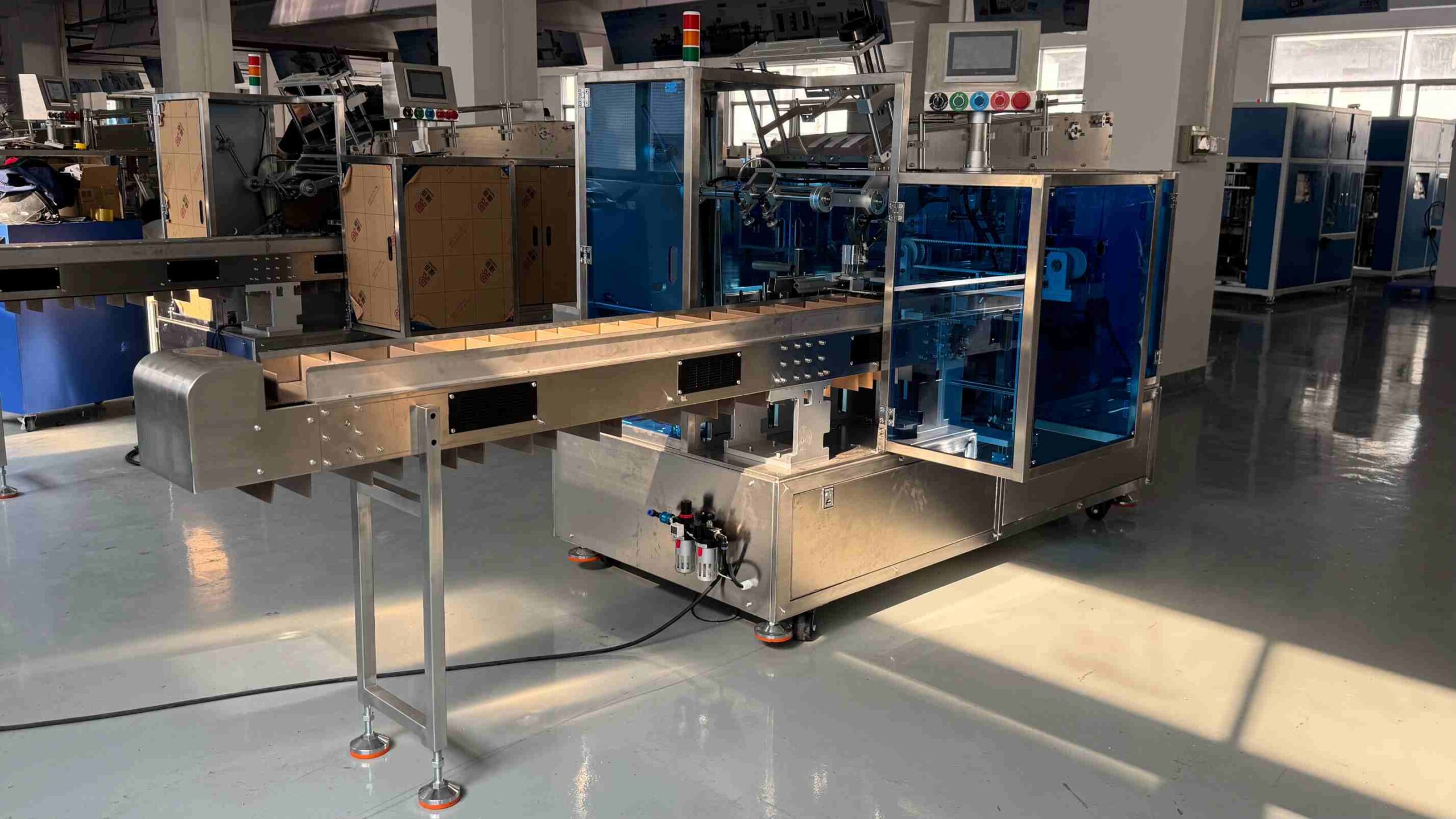
Two weeks before last Christmas, a food co-packer outside Guadalajara took a retail order that doubled its normal weekly volume. On paper, nothing looked wrong. On the floor it collapsed in one afternoon. The cartoner kept pace, but the case packer downstream could not, sealed cases piled up in front of the sealer, and by the second shift the line had stopped three times for parts nobody had in stock. The order shipped late. The brand never came back.
That demand is not hypothetical. NRF’s winter holiday sales forecasts track a November–December shopping season that keeps growing on a trillion-dollar base, which is exactly why the surge lands on your line whether or not you plan for it.
Nothing about that failure was a surprise in hindsight. The bottleneck was visible in September. The worn gripper belt had been “ordered next month” since August. Two temp workers arrived on a Monday and were handed a machine none of them had ever touched.
That gap is what this checklist closes. Peak season packaging line preparation is less about heroics in December and more about six weeks of unglamorous decisions before it. Measure peak demand against your line’s real rate. Service the machines that fail most. Stock the parts that break. Train the people who will run them. And order new capacity before the lead-time clock runs out.

Peak season packaging line preparation starts with demand math
Before you touch a wrench, do the arithmetic behind your holiday packaging capacity planning: where will the peak actually hurt? Most plants skip this and assume they can run harder in November. Take three numbers:
- Peak daily output. Not the annual average, but the cartons and cases the plant must ship on its busiest day.
- Available production hours. Peak shifts multiplied by usable hours per shift, minus planned changeovers and clean-downs.
- Your line’s real sustained rate. The rate the line holds over a full shift, not the nameplate figure on the brochure.
Divide peak output by available hours and you get the rate the line must deliver. Then compare that against each station’s effective throughput. Every line has one station with the lowest effective throughput, and that station sets your ceiling. This is the logic behind case packing throughput planning: plan against the slowest stage, not the fastest.
The trap is trusting the rated number. Cartoning machines commonly run 30 to 120 cartons/min intermittently and 200 cartons/min and up in continuous motion, but those are equipment-maker ratings at ideal format and board quality. Jams, misfeeds and glue warm-up eat into all of it, so plan with a rate you have measured yourself at peak pace, on your worst carton board.
Peak math check: Send us your peak daily output, shift pattern and current line rate, and our engineers will tell you which stage becomes the bottleneck first.
If the math shows your line cannot reach the target, you have three levers: add hours, add people, or add equipment. The first two buy maybe 15 to 25 percent. The third changes the ceiling entirely, and it comes with a clock.
The preventive maintenance pass: what to check in September
Preventive maintenance before peak is a bet that the machine will not fail on the day you can least afford it, and that bet is won with a written schedule. These are the high-frequency failure points by machine, based on how these stations typically behave under sustained peak load. For the wider sequence at the case end of the line, see our comparison of case packer and case sealer maintenance.
Where peak failures concentrate
| Machine | Most common peak failure | What to inspect | Interval before peak |
|---|---|---|---|
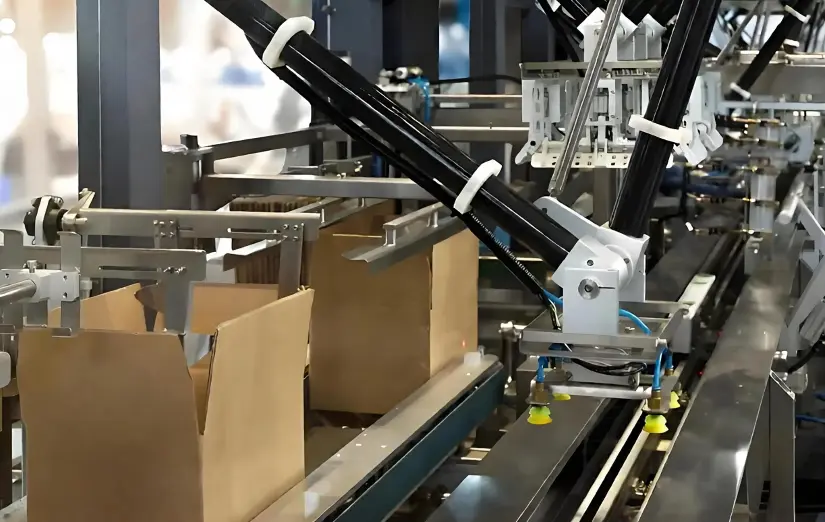
| Cartoner | Blanks fail to open; double-sheet feed from humid board | Suction cups, vacuum pressure, magazine rails, glue temperature | Weekly |
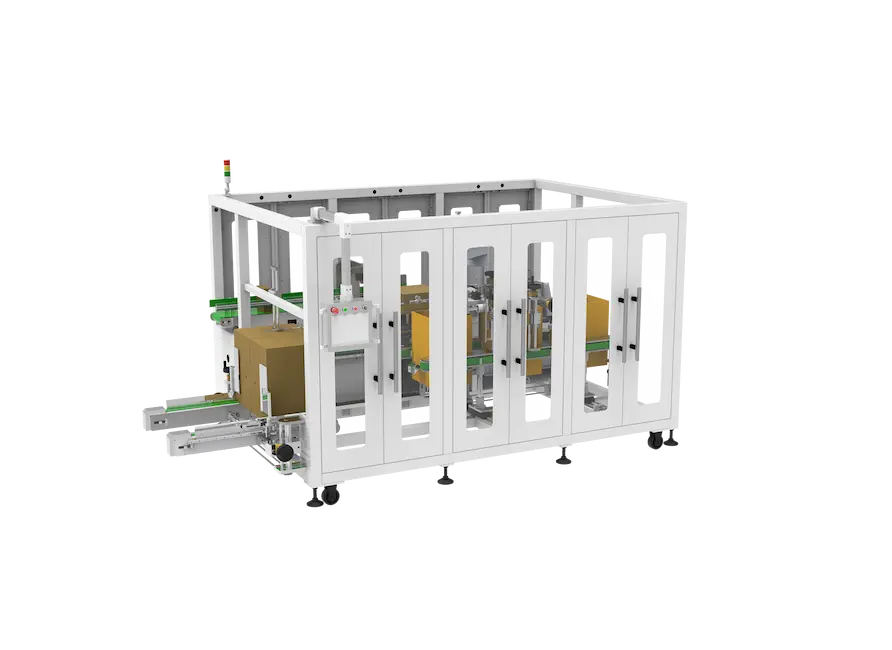
| Case packer | Product jams at collation; mis-timed pusher | Grippers, timing, guide rails, presence sensors | Weekly |
| Case sealer | Tape or glue failure; flaps not folded square | Tape head, heater, drive belts, flap ploughs | Weekly |
| Conveyor & accumulation | Blocked transfers; sensors drifting out of alignment | Belt tension, photo-eyes, guide alignment | Weekly |
The two highest-frequency causes
Two items deserve extra attention. First, carton stock: board stored in an unconditioned warehouse absorbs humidity, and damp board is the single biggest cause of suction-cup misfeeds. Move the next four to six weeks of board into a conditioned area and let it stabilise. Second, hot-melt systems: glue temperature drift produces weak seals that look fine at the machine and fail in transit, so verify setpoints rather than assume they hold.
Run the pass now, not in the last week of November. A part found in September is a scheduled replacement; the same part discovered mid-peak is a lost shift. If your machines include older units, the revised ANSI/PMMI B155.1 packaging machinery safety standard puts clearer responsibility on users to bring legacy equipment up to current safety practice, which is one more reason to service it before the rush. For how these stages hand off before palletising and dispatch, see the breakdown of end-of-line packaging stages.
Spare parts and consumables: stock these before October
Every maintenance team has a story about the twenty-dollar part that stopped a sixty-thousand-dollar line. Peak season is when that story gets told most often, because international shipping on a single bearing does not care about your order book. Lead times, not unit prices, drive this list:
- Carton-opening suction cups. The first thing to fail on a cartoner running non-stop.
- Drive belts and gripper belts. They wear progressively and fail suddenly, usually at peak load.
- Hot-melt heater cartridges, nozzles and hoses. Consumable, failure-prone, and the longest replacement window.
- Cutting blades for any film, tape or bag station, and photo-eye sensors, since one dead sensor can stop a station.
- A spare sealed vacuum pump or service kit, plus pneumatic fittings.
- A full set of change parts for your two most common formats, staged and labelled so a changeover never waits on a missing part.
Match the depth of your shelf to the depth of the season. A plant running two shifts through December should hold at least one spare of every part that has failed twice in the past year.
This is also where supplier support becomes real capacity. UBL provides remote diagnostics with a four-hour response window on standard issues, and for major problems an engineer travels to site. Remote support resolves most jams and sensor faults without waiting on a shipment. Ask any supplier, including us, what their guaranteed response window is before peak, because “sometime next week” is not a service commitment, and get that window in writing before you order.
Temporary operators: why the HMI decides your peak
Peak season always means more hands. The question is whether those hands can produce within a week or a month, and the answer is decided by the machine, not the hiring plan. That pressure is structural: PMMI’s State of the Industry on packaging labor and maintenance reports hiring and retention as persistent hurdles and slow adoption of predictive maintenance, so plants lean on temporary labor and disciplined preventive routines at exactly the moment they can least afford to be short of either.
A control panel a new operator cannot read is not an interface; it is a training project. UBL builds a bilingual (Chinese and English) HMI designed so a new operator learns the basic run-and-monitor routine in about 30 minutes. After roughly two hours of structured training, a temporary worker typically reaches independent operation within two to three days. That timeline matters because peak hiring usually happens days, not weeks, before the surge.
A machine whose interface lives in one language and one engineer’s head forces every shift to keep that engineer present; when the engineer is sick in week 48, the line stops. A machine anyone can learn in an afternoon spreads that knowledge across the whole shift. Three steps make the difference:
- Write a one-page start-of-shift SOP for each machine, in the languages your workers read.
- Assign one experienced operator as the peak trainer, and run the training before the surge.
- Run a live drill. Have a temp operator clear a simulated jam with the machine stopped. Jam clearing is the most common peak intervention, and UBL designs for a typical fix in about ten minutes by checking for a foreign object, a size misalignment or a humidity problem.
Buffers absorb the peak so downstream does not
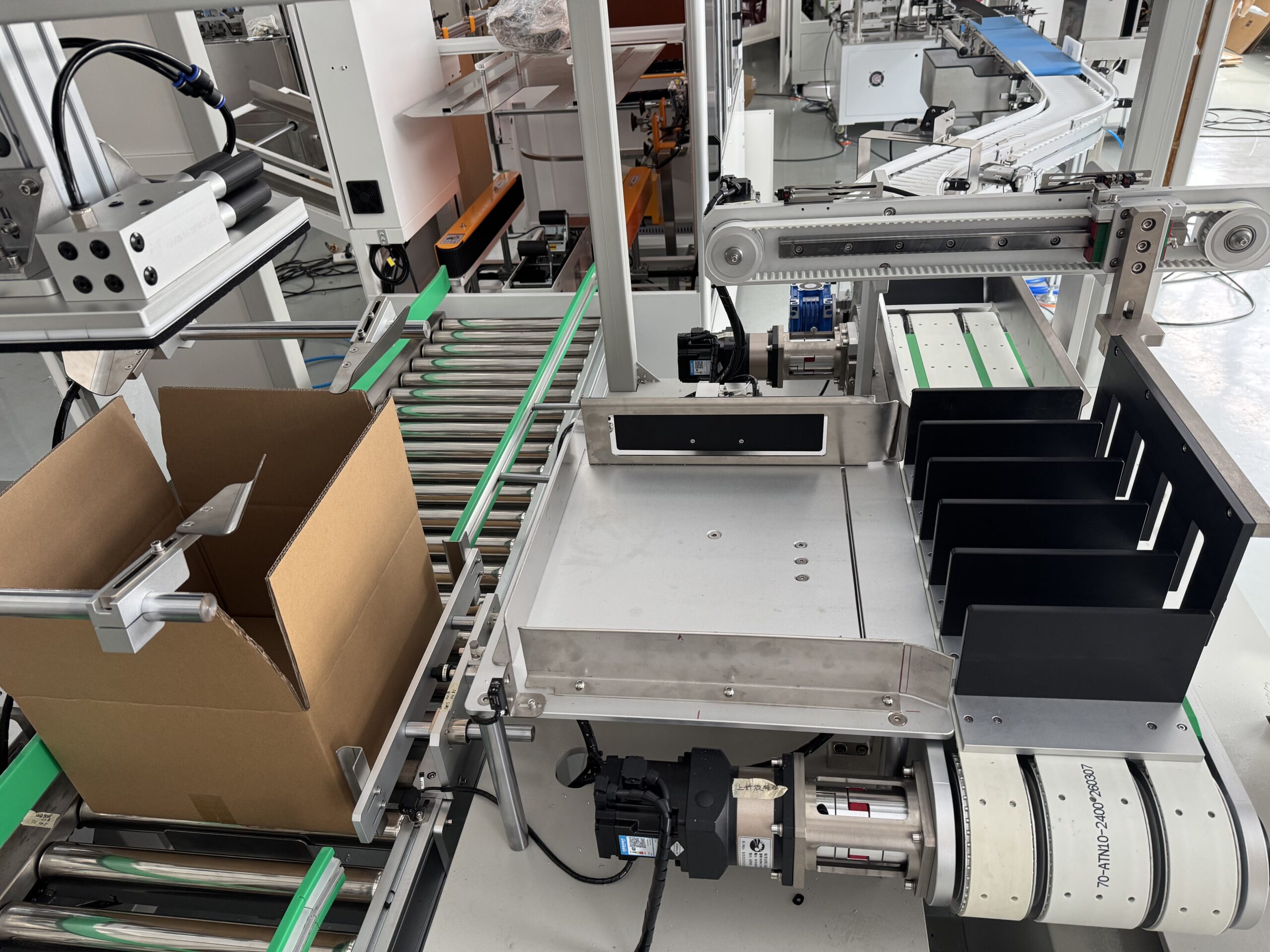
Between every two stages there is a handoff, and at peak every handoff is a place where a two-minute stop becomes a twenty-minute stoppage. The fix is a buffer: an accumulation section that holds product so a short downstream stop does not immediately starve the machine feeding it. If the case packer stops for three minutes with no buffer, the cartoner stops too, and restarting it costs more than the original stop. With even a minute or two of upstream output in the buffer, the cartoner keeps running through the interruption.
Buffer size is not a guess. It is a function of the downstream equipment’s typical stop duration multiplied by the upstream rate: enough to ride out the stops you actually experience. The two most valuable buffer positions on a cartoning-to-case-packing line are usually before the case packer and before the sealer.
A 2024 snack plant in southern Vietnam learned this the hard way. Its line ran with no accumulation between a cartoner and a case packer, and every short packer stop triggered a full-line stop. A modest accumulation section between the two stages let the cartoner keep running through stops of one to two minutes, and the line’s effective output rose without any change to the machines themselves. (Synthesized composite scenario, not a specific UBL customer.)
Sizing that buffer well means treating capacity as a time value rather than a length of conveyor, which is the same sizing buffers as a time calculation our end-of-line guide walks through. Calculate it from your own downstream stop profile before you specify any new station.

The lead-time countdown: why this month is the decision window
Machines do not arrive on demand. A standard cartoning, case packing or sealing machine can ship next day from stock. A custom line, configured to your product, format and footprint, runs about three months from order to delivery, before on-site commissioning. That build usually ends up as a turnkey project integration, so the delivery clock starts at the order, not at the crate.
Put those numbers against the calendar. It is mid-September; three months from now is mid-December, the middle of the peak, not the start. A custom line ordered today is a January install: not a reason to panic, but a reason to decide now whether you solve this Q4 with hours and people, or with equipment that lands next quarter and prevents the same scramble next year.
| Decision | Lead time | Lands in time for this Q4? |
|---|---|---|
| Add shifts and overtime | Immediate | Yes |
| Hire and train temporary operators | Days to two weeks | Yes, if the HMI supports it |
| Add buffer / accumulation to an existing line | Weeks | Yes, if ordered this month |
| Standard machine from stock | Next day | Yes |
| Custom-configured line | About 3 months | No, plan for Q1 |
For this Q4, the levers are maintenance, spares, buffers and people. For next Q4, the lever is equipment, and the order has to go in around now. Treat the two as separate decisions and you stop treating peak as an annual emergency.
Preparation checklist for the peak window
Pull the whole preparation onto a single page your plant manager can own. Six weeks out, it looks like this:
The six-week countdown
- Weeks 6–5: finish the demand math, identify the bottleneck station, and confirm which format consumes the most changeover time.
- Weeks 4–3: complete the preventive maintenance pass, and order every spare with a lead time over two weeks.
- Weeks 3–2: stage change parts and consumables, write the shift SOPs, and run the jam-clearing drill.
- Weeks 1–0: run a full-speed trial at peak pace, confirm buffer behaviour, and lock the escalation path for a mid-peak breakdown.
If you are weighing maintenance and people against real capacity for next season, our engineers map the right sequence from your peak output, shift pattern and current bottleneck. Explore cartoning and case-packing lines built for peak demand →
FAQ
How far in advance should I start preparing a packaging line for Q4?
Six weeks out is the practical minimum, which puts the start in mid-September. That window covers the demand math, a preventive maintenance pass, spare-parts ordering, and operator training. Below four weeks, there is no time left to fix a bottleneck you discover.
What breaks most often on a line during peak season?
Most often: carton suction cups that lose vacuum and misfeed, worn drive and gripper belts, hot-melt heater cartridges and nozzles, and optical sensors that drift out of alignment. Damp carton board is the top root cause of cartoner misfeeds, so condition your board first.
How many spare parts should I keep on the shelf for peak?
Hold at least one spare of every part that has failed twice in the past year, plus a staged set of change parts for your two most common formats. For parts with overseas lead times over two weeks, stock two, so no single low-cost part can stop the line.
How long does it take to train temporary workers to run a cartoner?
With a bilingual interface, a new operator learns the basic run-and-monitor routine in about 30 minutes, and after two hours of structured training reaches independent operation within two to three days. A one-page SOP per machine and a jam-clearing drill cut that further.
When should I add equipment instead of adding people?
Add people when the shortage is hours and the bottleneck station still has spare capacity. Add equipment when the bottleneck station itself is the ceiling, because more operators cannot raise output there. Custom equipment takes about three months, so decide the quarter you intend to install.