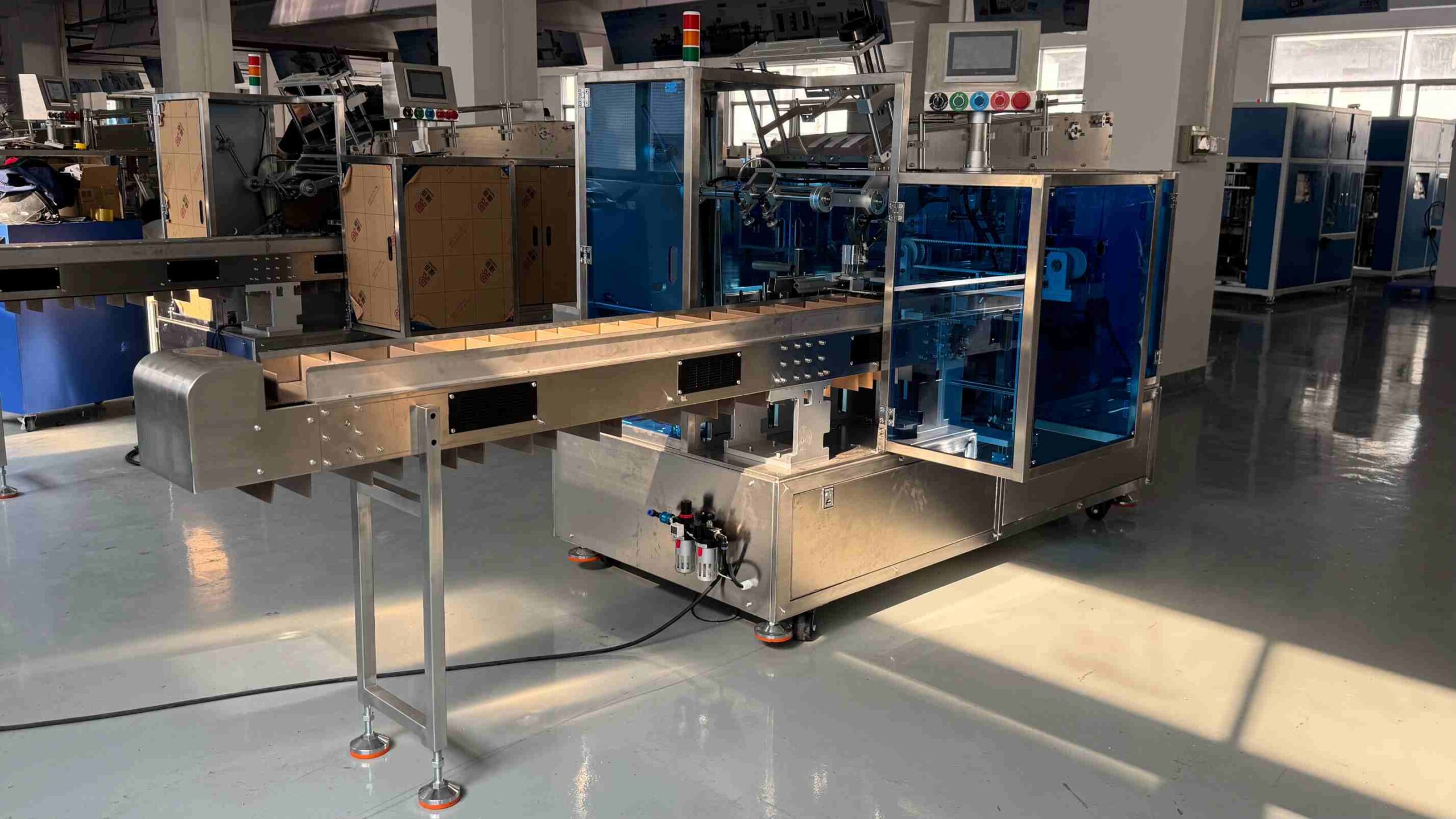
Quick answer: A case erector machine forms the empty box, a case packer fills it, and a case sealer closes it. Automate whichever step is your real bottleneck. Fix sealing first below ~500 boxes/day, add an erector at ~500–2,000/day, and automate packing above ~2,000 boxes/day.
If you are deciding whether to buy a case erector machine, a case packer, or a case sealer, stop shopping and start counting. The three machines do three consecutive jobs: one forms the empty box, one loads the product, one closes the top. The machine that belongs first in your budget is the one that removes your most expensive bottleneck. For plants running under ~500 boxes a day, that is usually the sealer. Above ~2,000 boxes a day, it is almost always the manual packing step between the two.
Why does the order matter? The hidden cost of end-of-line labor is not in the wage line. It is in the repetitive bending, the cardboard-edge cuts, and the strained backs, and in the simple math that a person erecting boxes by hand produces a fraction of what even an entry-level automatic case erector can do. Most buyers do not start with the bottleneck. They start with the most impressive machine on the catalog page, and they pay for that mistake twice: once in the invoice, once on the line where boxes still queue up waiting for human hands.
Here is a scene we have seen often. Dana Reyes runs a beverage co-packing line in Ohio that fills single-serve bottles for three regional brands. Last year her plant approved a new case packer because the CFO was told it would “remove the packing crew.”
It did, sort of. On one side of that packer, a worker still folded and taped boxes by hand to feed it. On the other, another worker sealed the finished cases with a tape gun. The machine ran at the speed of the two humans around it, an expensive centerpiece for a line whose real bottleneck never moved.
That is the trap this guide helps you avoid. By the end you will be able to name which of the three steps, erecting, packing, or sealing, costs your line the most; to map it against daily-volume thresholds that show where an automatic case erector or a case packer starts to pay back; and to walk into any supplier conversation with the right questions. We keep the machine-principle explainers light here and focus on decision order and money. For the application detail, our food-industry case packing guide covers it.
Key takeaways
– Erector, packer, and sealer are three sequential steps (form, fill, close), and the one to automate first is your actual bottleneck, not the most impressive machine.
– Manual box forming is the hidden cost center: roughly 3–6 cases per minute per operator sustained, against 10–30+ cases/min for a typical automatic case erector (equipment-maker ranges).
– Rule of thumb from industry buying guides: below ~500 boxes/day a sealer or manual flow usually wins; ~500–2,000/day favors an automatic case erector; above ~2,000/day, automated loading (ideally an integrated case packer) is where the ROI lives.
– An integrated erector-plus-packer machine beats three separate units on footprint, single-point responsibility, and verified counts, but trades away staged investment and station-level redundancy.
– Ask about changeover time, corrugated-board tolerance, glue-vs-tape, and who owns integration risk before you sign anything.
Why “Which machine comes first?” is the question most buyers get wrong
Ask ten factory managers to name their end-of-line automation priority and most will name a machine they have already fallen in love with. Ask them to point at the queue of boxes waiting on the floor and you get a different answer. The cartons tell the story more reliably. Wherever cartons pile up is your bottleneck: at the forming station where blanks become open boxes, at the loading station where product meets box, or at the sealing station where the filled case becomes shippable.
The common mistake is buying the middle step first. A case packer is the most capital-intensive and the most visually impressive of the three, so it gets approved first, then starves exactly as Dana’s did, because the human steps on either side cannot feed it. The pattern repeats in plant after plant: the packer is ordered while boxes are still folded by hand on either side.
There is a second, quieter reason the order matters: injury risk. Manual case forming means repetitive bending, twisting, and lifting. OSHA’s ergonomics guidance lists lifting, bending, and repetitive motion among the known risk factors for work-related musculoskeletal disorders, which are among the most frequently reported causes of lost work time. An automatic case erector removes the most physically repetitive task on many lines, not just the slowest one. When you model ROI, the avoided strain and turnover is real money, even if it is harder to put on a spreadsheet than a wage.
The disciplined sequence is to automate from cheapest to most complex: seal first (lowest entry cost, fastest payback), erect second when forming becomes the bottleneck, and buy the packer when volume on both sides is already machine-paced. That is the honest framework. In the next sections we show where your volume sits against it, and when an integrated case packer is the smarter shortcut past all three steps.
Case erector machine vs case packer vs case sealer: what each one does
These three get confused because they sit back-to-back on the same conveyor, and some machines bundle more than one job. So let’s separate them.
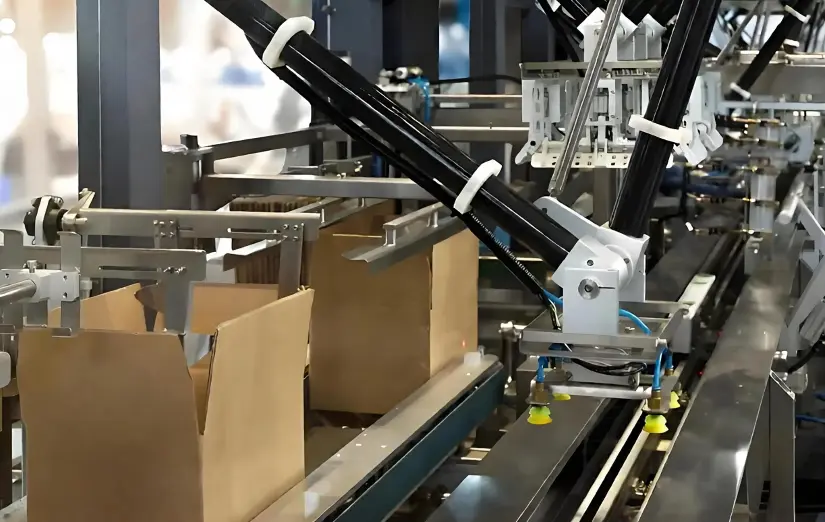
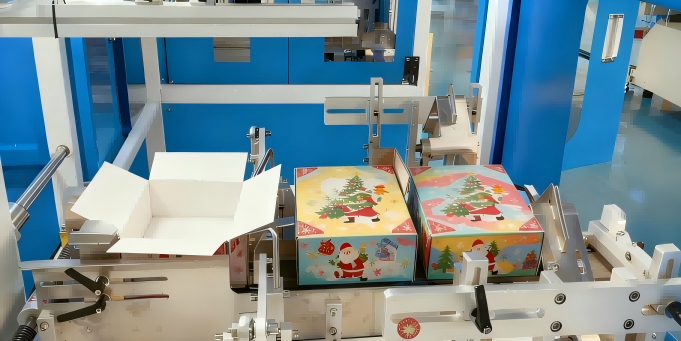
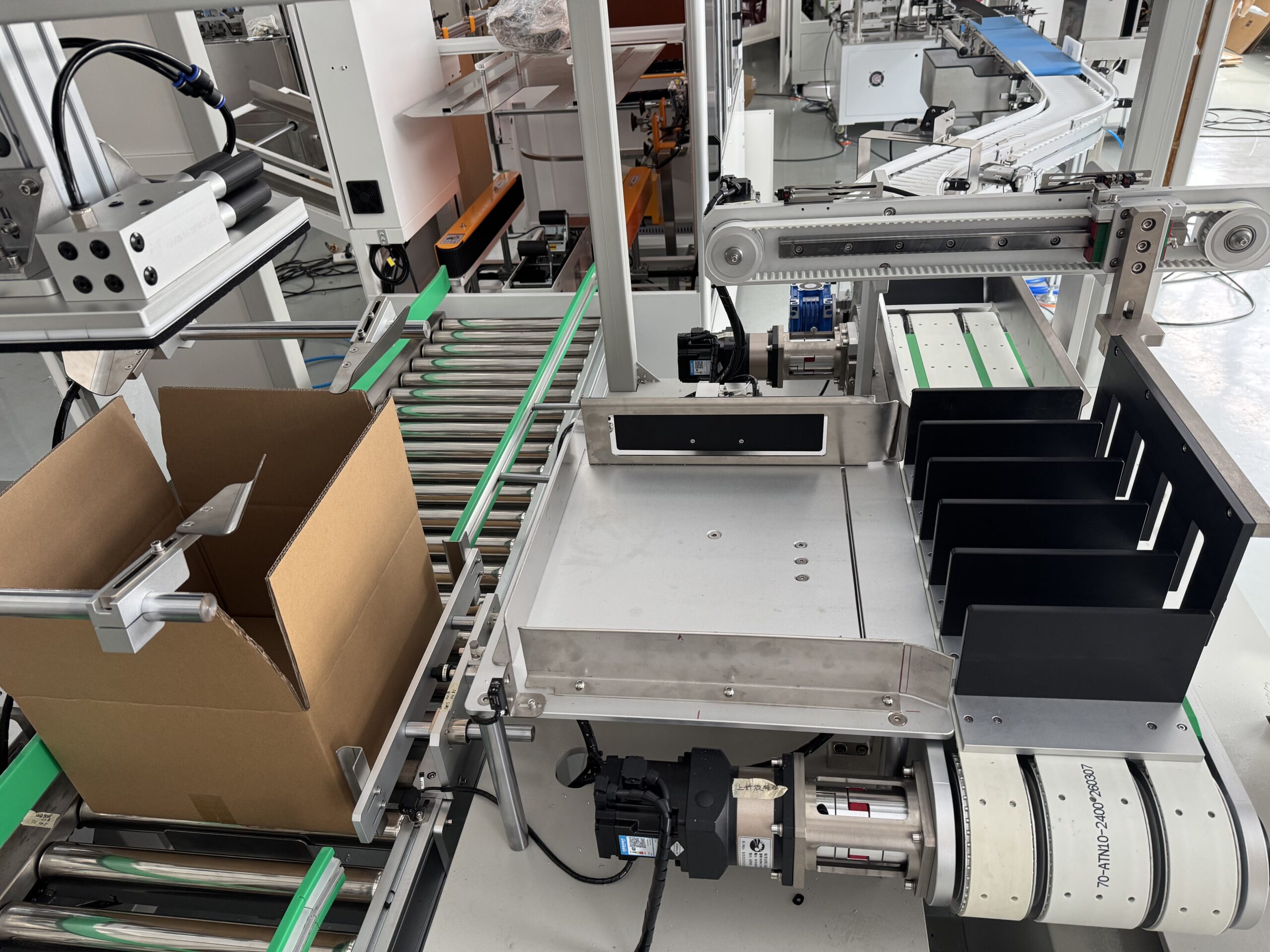
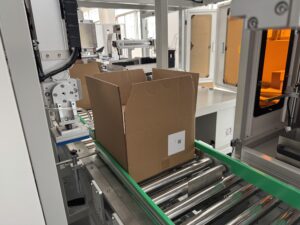
A case erector machine takes a flat corrugated blank from a magazine, opens it with suction, squares the box, folds the bottom flaps, and seals the base with tape or hot-melt glue. What exits is a rigid, empty, open-top box ready for product. Standalone erectors mostly feed manual packing stations, taking over the slowest, most awkward task while people still do the loading. If you are searching for an “automatic case erector,” this is the class: blanks in one end, formed cases out the other, nobody bending over cardboard.
A case packer loads product into that open box. Loading technology splits into three families: top-load (product drops or is placed in from above), side-load (a pusher or robotic arm inserts product horizontally, popular for stable collations such as bottles and cans), and robotic (pick-and-place for irregular or fragile items). In fully automatic form, a case packer can also integrate erecting and sealing into one frame, which is the “integrated case packer” we weigh up later. Separately, we compare top-load and side-load case packers; the loading axis matters once you know the order.
A case sealer does the last job: it folds the top flaps of the filled case and secures them with tape or hot-melt glue so the box exits dispatch-ready. Sealers are mechanically the simplest of the three, which is why they are the cheapest and the most common first automation purchase.
| Factor | Case erector | Case packer | Case sealer |
|---|---|---|---|
| Job on the line | Forms empty case from flat blank, seals bottom | Loads product into the open case | Closes and seals the filled case top |
| Typical speed (equipment-maker ranges) | 10–30 cases/min; continuous models higher | 5–30 cases/min, product-dependent (robotic ~20–40 drops/min) | 15–40 cases/min |
| Replaces | The forming worker (bending, folding, taping) | The packing crew (usually the largest headcount) | The tape-gun operator |
| Buy first when | Box forming is the bottleneck or a dedicated role | Packing labor is the constraint at consistent volume | Taping is the bottleneck (most common, lowest entry cost) |
| Relative new-equipment price | Entry-level to mid industrial | Mid to high industrial (most capital-intensive per function) | Entry-level to mid industrial |
Speed figures are typical ranges reported by equipment makers; your actual number depends on case size, board quality, and product handling. The headline is simple: the erector and sealer are the lower-cost bookend steps, while the packer is the most capital-intensive and the most labor-saving.
The bottleneck test: three questions that find your slowest step
Before you price a single machine, spend twenty minutes on the line and answer three questions. The answers tell you which step to automate first more reliably than any brochure.
- Where do boxes queue up? Walk the line mid-shift and look for the pile-up. Cartons waiting in front of a station mean that station is slower than the one feeding it. Boxes stacking up before the forming station point to an erector-shaped problem; empty boxes waiting while packers scramble point to a packer-shaped problem; filled cases queuing for the tape gun point to a sealer-shaped problem.
- How many boxes move per day at peak? Count a full peak shift, not the average. Daily volume is the most reliable predictor of which automation tier pays back, and the next section builds the full framework on it. For a quick read: below roughly 500 boxes/day, machine capital is hard to justify on forming alone; above roughly 2,000 boxes/day, you are probably paying overtime or running multiple manual shifts, and automation gets aggressive.
- How many people touch each box, and for how long? Track one case from blank to sealed pallet and log operator seconds at each touchpoint. Most plants are surprised to find a box is handled by two or three people for a combined minute of labor. The step with the most operator-seconds per box, not the one that looks most strenuous, is usually your real cost.
The same trap shows up at the opposite end of the scale. Marek runs a 3PL e-commerce warehouse outside Leipzig that ships about 480 medium cartons a day. For two years one operator spent most of each shift opening flats, folding bottoms, and holding boxes open while packers loaded them. The line stalled at 2–4 boxes a minute, supervisors kept pulling in a second person at peak, and the operator logged recurring wrist and shoulder strain. When Marek added a semi-automatic erector at the head of the packing station, forming labor dropped by roughly half, rework from poorly squared bottoms fell from a few percent to under 1%, and the machine cleared its cost in about a year. That is the exception to the “under 500 boxes/day” rule in the ROI table below: when forming itself blocks the line, an erector earns its keep. (Synthesized composite scenario, not a UBL customer.)
The ROI decision framework: match the machine to your daily volume
End-of-line automation is rarely a one-shot buy; it is a sequence. The framework below (a rule of thumb, not a precise engineering law) helps you decide both which machine and how automated to go at each volume band. Re-run the math with your own labor cost before committing.
| Daily volume (rule of thumb) | Where the money leaks | First buy | Second buy | Full target configuration |
|---|---|---|---|---|
| Under ~500 boxes/day | Taping quality and ergonomics; low machine payback | Seal first (or stay manual): semi-automatic case sealer (or keep manual forming) | Automatic erector only if forming blocks the line | Manual/semi-auto flow is usually fine; keep capital low |
| ~500–2,000 boxes/day | A dedicated forming worker; inconsistent squareness | Erect first: automatic case erector machine | Case sealer if not already present | Erector + manual loading + sealer (staged automation) |
| Above ~2,000 boxes/day | The manual packing crew, overtime, and count errors | Automate packing: case packer | Integrated erector-and-packer if floor space is tight | Fully automatic erector → packer → sealer line |
Run the labor math yourself. A trained operator erects boxes at a sustained ~3–6 cases per minute. A mid-range automatic case erector runs 10–30 cases per minute, a 3–5x gap with no operator at the machine during normal running.
At an all-in burdened rate of $20–25 per hour in the U.S. (not base wage; 2026) or €25–30 in Western Europe, a line forming 1,200 boxes a day spends four-plus operator-hours a day on forming alone before loading and sealing. Remove the dedicated forming role on each of two shifts and you save roughly 3,000–4,500 labor hours a year. That is why equipment makers commonly quote erector paybacks of 12–24 months at medium volume, and faster still when overtime or seasonal surges are in play.
Above 2,000 boxes/day, the argument changes. The dominant cost is no longer forming: it is the packing crew, count accuracy, and the overtime that appears the moment order flow spikes. This is the tier where a full case packer stops being a luxury and becomes the highest-ROI purchase on the line, because it replaces the largest headcount group rather than one worker. If that is where you sit, read the integrated-machine section next, because it changes the buying decision again.
If your daily volume already sits in that top band, model the payback against integrated erector-and-packer configurations: send your daily output, headcount, and labor rate to our engineers and we will map which machine sequence pays back first on your floor.
Integrated case packer vs. three separate machines
Once volume justifies automating erecting and loading (and usually sealing too), you face an architectural choice: three separate machines in series, or one integrated case packer that erects, loads, and seals within a single frame.
Three separate machines (erector + packer + sealer linked by conveyors) give you staged investment and station-level redundancy. If the sealer faults, you can buffer between stations and keep loading; if budget covers only one machine this year, you phase the rest later. The price is floor space, extra conveyor transfers, three control systems, and three sets of integration interfaces to reconcile.
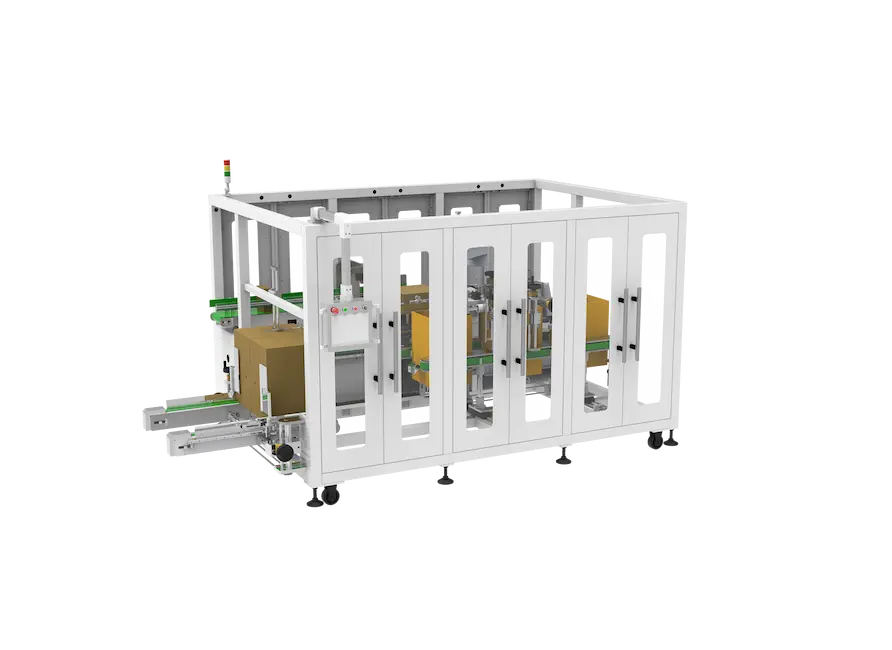
One integrated case packer collapses all three functions into one machine and one controls architecture. The wins are concrete: the smallest footprint per function, one supplier responsible for the whole result, and machine-verified counts that close the “did we put the right number in the box” question that manual lines cannot answer. The trade-offs are real too: a higher single upfront number, and a larger failure surface. If the integrated unit stops, the whole station stops unless you design a fallback.
When does the integrated machine win? The honest answer: when your case sizes are relatively stable, your floor space is tight, and your volume is already above the full-automation threshold. That profile fits many food, beverage, and FMCG lines running consistent corrugated formats. It is also where a single, well-built unit from one machinery maker beats a line assembled from several vendors, because multi-vendor lines fail at the interfaces: speed matching, conveyor heights, and accumulation buffers. If one supplier owns those interfaces, integration problems have a clear owner.
For plants at this stage (and anyone already running automated cartoning upstream), the natural next read is our analysis of end-of-line integration and palletizing, which covers how the case-packing stage hands off to palletizing and warehouse systems.
Six questions to ask any supplier before you buy
Whichever machine survives your volume analysis, the vendor conversation is where decisions get made or undone. Put these six questions to every supplier, including us:
- What is your real changeover time between my case sizes? Brochures quote the easy case. Ask for tool-less changeover between your two most different SKUs, in minutes, and who performs it. On a continuous machine, HMI-driven changeover in the ~10-minute range is common today; anything needing wrenches for every SKU switch will quietly kill your flexibility.
- How much corrugated-board variation can you tolerate? Recycled and inconsistent board is the top cause of erector jams. Ask what board quality the machine is specified for, and what happens on a bad batch: jams cost more than the board you saved.
- Glue or tape on the bottom seal, and what does it cost per case? Both are legitimate, with different consumable costs, curing times, and jam profiles. Ask what it ships with, whether it can run both, and get the per-case consumable number, not just the machine price.
- How do you integrate with my existing line? Conveyor heights, speed matching with your upstream filler, accumulation buffering, PLC communication. If you buy separate machines from different vendors, ask who owns the integration risk; that is where multi-vendor lines die.
- What is the sustained speed, not the peak? Any machine can hit a brochure number for ninety seconds. Ask what it holds across an eight-hour shift on your real board quality, and what first-pass yield the maker will commit to in writing.
- What happens when it stops? Spare-parts lead time, remote diagnostics, service response, operator training. A machine from a factory that cannot answer quickly will keep your maintenance team busy.
Which one first? A final decision path
Here is the whole framework as a sequence you can act on this week:
- Find your bottleneck with the three-question test: where do boxes queue up, what is your peak daily volume, and how many operator-seconds does each box consume?
- Match the tier. Under ~500 boxes/day, resist the big machine and fix sealing or keep manual flow. At ~500–2,000/day, an automatic case erector machine is the usual first buy. Above ~2,000/day, automated loading is where the money is.
- Choose the architecture. Separate machines if you need staged investment and station-level redundancy; an integrated case packer if your formats are stable, your floor space is tight, and your volume already justifies full automation.
- Ask the six supplier questions before any purchase order.
The through-line is simple: automate the bottleneck, not the brochure. Dana’s plant in Ohio eventually re-sequenced its line, automating forming first and then sealing. Only then did the case packer it had already bought run at its designed speed. The machine was never wrong; the order was.
If you are sizing an end-of-line upgrade and want to check which machine belongs first on your line, or whether an integrated erector-and-packer skips two of the three steps entirely, our engineers work from your daily volume, case sizes, and current bottleneck to map the right sequence. Explore our automated cartoning and case packing line →
End-of-line automation does not have to be all-or-nothing, and it does not have to start with the most expensive machine. Start where the boxes pile up, prove the payback at one station, and build from there. By the time your volume crosses the full-automation threshold, you will know exactly what your line needs, and you will have spent the money in the right order.