
“Which garment folding machine do I need?” — that question sounds simple until you realize a T-shirt brand, a hotel linen supplier, a protective garment manufacturer, and a direct-to-consumer e-commerce operation all give different answers. The right machine is not just the one that folds fast; it is the one that folds the right garment, in the right format, at the right throughput level, with the right downstream integration. This guide maps every garment folding machine configuration in UBL’s product line to the scenario it is built for — so you can move from “I need a folding machine” to “I need this specific model” in one read.
What a Garment Folding Machine Actually Does
A garment folding machine takes a flat garment — a T-shirt, polo, coverall, towel, or duvet — and executes a repeatable fold sequence to produce a compact, uniformly dimensioned piece ready for the next step in your packaging process. Depending on the model and configuration, that next step could be:
- Dropping into a polybag for retail or e-commerce dispatch (FC-series)
- Accumulating onto a stack for bulk carton packing (FW-201C)
- Entering a vacuum compression cycle for volume reduction (FC-332C)
- Being conveyed to a labeling station for shipping label application (FC-252A with labeling module)
- Exiting as a cleanly folded piece for manual insertion into retail packaging (SA semi-auto)
The folding mechanism itself — the fold arms, timing, and plate geometry — is calibrated to garment type and target fold dimensions. Switching between garment types or sizes within a compatible range takes roughly 10 minutes of manual adjustment on the HMI. Switching between fundamentally different garment categories (e.g., a lightweight T-shirt line vs. a heavy duvet line) requires different machine models.
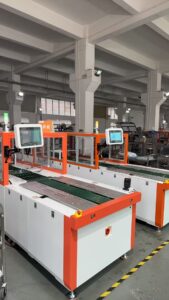
UBL’s Full Garment Folding Machine Line at a Glance
| Model | Type | Speed | Output Format | Best For |
|---|---|---|---|---|
| FC-152A | Full-auto | 500–600 pcs/h | Folded + bagged + sealed | Apparel factories, POD/print-on-demand, mid-volume e-commerce (3,000–6,000 pcs/day) |
| FC-252A | Full-auto | 600–700 pcs/h | Folded + bagged + sealed + labeled | High-volume factories, oversized garments, e-commerce fulfillment with dual labeling |
| FC-332C | Full-auto | ~600 pcs/h | Folded + stacked (1–5 pcs) + bagged + vacuum-sealed | Protective garments, cleanroom suits, medical disposables, export with volume compression |
| FW-201C | Full-auto | 500–700 pcs/h | Folded + stacked (no bagging) | Bulk apparel, retail shelf prep, carton-packed wholesale distribution |
| FZ-252A | Full-auto | 600–700 pcs/h | Folded + form-fill-sealed bag (bag made on machine) | Operations without pre-made bag supply, lower per-bag cost via film roll |
| BZ-832B | Full-auto | 400–600 pcs/h | Folded + bagged (towels, blankets, linens) | Hotel linen suppliers, towel manufacturers, home textile brands |
| BW-801 | Full-auto | ~180 pcs/h | Folded + bagged (oversized duvets, comforters) | Duvet and comforter manufacturers, bedding brands with large-format products |
| SA Semi-Auto | Semi-auto | ~400 pcs/h (with operator) | Folded (operator places garment, machine executes fold) | Small factories, budget-constrained buyers, space-limited operations, under 3,000 pcs/day |
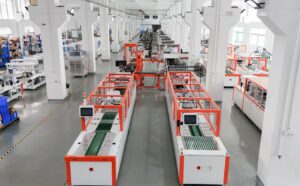
Selection by Industry
Click to watch UBL garment folding and packaging machine case videos for various industries.
Apparel Manufacturing — T-Shirts, Polos, Casual Wear
Standard apparel factories producing T-shirts, polo shirts, and lightweight casual garments by the tens of thousands per month are the core use case for the FC-152A and FC-252A. The output — a folded garment sealed in a polybag — is the standard retail presentation format for the global apparel supply chain. Both models handle the fold-to-bag sequence automatically at 500–700 pieces per hour; the FC-252A adds integrated labeling for factories that apply product labels, size stickers, or hang-tag inserts in line. The daily threshold for full-auto justification is approximately 3,000 pieces per day; below that, semi-auto units or a single SA station typically deliver a better return on the investment.
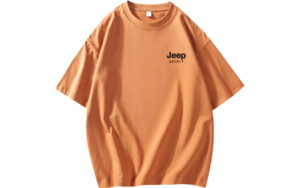
Print-on-Demand (POD) and T-Shirt Printing
POD operations face a specific challenge: every piece is unique (different design, different size, sometimes different garment style), but the packaging process needs to be fast, consistent, and scalable. For POD shops running 500–6,000 pieces per day, the FC-152A handles the fold-bag-seal sequence while a connected labeling station applies order-specific product information. Fold quality matters disproportionately for POD because the garment represents the customer’s first physical interaction with the brand — a machine-folded piece with clean edges and precise alignment presents better than anything a fatigued operator produces at the end of a shift. A POD shop printing 6,000 custom T-shirts per day cut from 7 people to 3 with one FC-152A unit — the remaining operators handle infeed, output collection, and quality checks rather than folding.
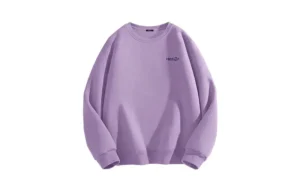
Hotel and Hospitality Linen Suppliers
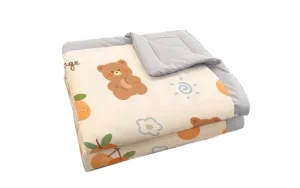
Hotel properties and their linen supply chains need towels, bath linens, and bed linens folded to a specific presentation standard — the kind of precise, consistent fold that goes on the bathroom shelf or bedside table in a way a guest notices. Hand-folding large towel orders at volume is slow and inconsistent; a BZ-832B handles towels and blankets at 400–600 pieces per hour with a fold geometry that can be configured to match the specific presentation standard. Oversized duvets and comforters that exceed the BZ-832B’s size range use the BW-801, which handles large-format bedding at approximately 180 pieces per hour.
Protective Garment Manufacturers
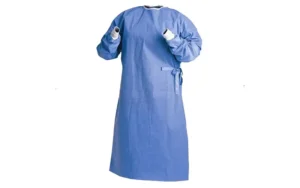
Disposable coveralls, isolation gowns, and surgical drapes share a requirement that regular apparel does not: the packaging must maintain hygiene integrity from the factory floor to the point of use, with minimal human contact between the fold and the sealed unit. The FC-332C addresses this with a gripper-stacking mechanism that accumulates folded garments (1–5 pieces per pack, HMI-configurable) and transfers the completed stack directly into a vacuum bag for compression sealing — zero manual handling between infeed and finished sealed pack. The zero-contact workflow is a compliance feature in regulated environments, not just an efficiency metric.
E-Commerce Fulfillment Operations
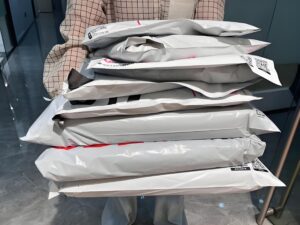
E-commerce garment packaging has a unique requirement that traditional wholesale does not: every unit exits the line as an individually labeled, courier-ready package with both a product information label and a shipping label carrying the recipient’s address and tracking barcode. The FC-252A with dual labeling modules handles this complete sequence — fold, bag, seal, label product info, overbag, label shipping — at 600–700 pieces per hour. Peak-season throughput requirements that overwhelm manual packing teams are the most common trigger for e-commerce buyers to move to automation.
Small Factories and Budget-Constrained Operations
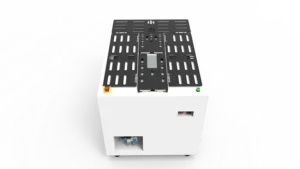
Not every operation is ready for a full-auto line. Space constraints (a factory floor that cannot accommodate a full-length automated line), capital limitations, or daily volumes below 3,000 pieces are all valid reasons to start with semi-auto. UBL’s SA semi-auto series uses a single-station format where an operator places the garment and the machine executes the fold automatically — achieving approximately 400 pieces per hour per station with one operator, versus 5–10 per minute by hand. Two SA units running simultaneously have delivered a 30% increase in monthly output for small operations without reducing headcount, simply by eliminating the variation and fatigue that degrade manual folding rates. When volume grows, SA stations can be replaced or supplemented with full-auto units — the transition does not require discarding the semi-auto investment.
Three Questions That Determine Your Model
1. What is your daily output volume?
Below 3,000 pieces per day — semi-auto (SA series). 3,000–6,000 — FC-152A. Above 6,000, or if you run extended shifts during peak periods — FC-252A or a multi-station configuration. Volume is the single most important variable in the selection because it determines whether the machine’s hourly output matches your shift-hour requirements and whether the ROI timeline is realistic.
2. What format does your garment need to leave the line in?
Folded + individually bagged for retail or e-commerce: FC-152A or FC-252A. Folded + stacked in bulk without bagging: FW-201C. Folded + stacked + vacuum-compressed into multi-piece sealed packs: FC-332C. Folded + bagged with the bag made from film roll rather than pre-made bags: FZ-252A. Folded towels or blankets: BZ-832B. Folded oversized duvets: BW-801.
3. Does your packaging include labeling?
If the garment needs a product information label (SKU, size, care instructions) applied in line, the FC-252A with labeling module handles this at 40–150 labels per minute with a 5–10 minute label-roll changeover. If you need dual labeling — product info label on the polybag and a courier shipping label on the outer pouch for e-commerce dispatch — the FC-252A supports both stations in one continuous line. If labeling is handled offline or at a separate station, the FC-152A without the labeling module is sufficient.
When to Choose Semi-Auto Over Full-Auto
Full-auto is not always the right answer, and buyers who invest in full-auto without sufficient volume or floor space often find themselves running a machine that is idle more than it runs. Semi-auto makes sense in four scenarios:
- Daily volume under 3,000 pieces — the ROI timeline on a full-auto line stretches too long at low volumes
- Floor space under 20 square meters — a full-auto line requires a continuous layout that a cramped factory floor cannot accommodate
- Budget not yet at full-auto level — SA units allow productivity gains now while accumulating toward the next investment
- Product mix with frequent changeovers — very high SKU variety with small batches per SKU can make semi-auto more practical than configuring a full-auto line for constant short runs
For operations that fall between semi-auto and full-auto by volume, UBL also offers a customized upgrade configuration — a semi-auto unit enhanced with additional automation for folding, bagging, and sealing — that bridges the gap at approximately 400 pieces per hour without the footprint or cost of a full-auto line.
Common Questions About Garment Folding Machine Selection
Can one machine handle multiple garment types?
Within a compatible dimension range, yes. Adjusting for different garment sizes (e.g., switching from a medium T-shirt run to a large T-shirt run) takes approximately 10 minutes of manual adjustment via hand-crank settings on the machine’s width and depth controls — no tools required. Switching between fundamentally different garment categories (e.g., from T-shirts to heavy blankets) requires a different machine model, as the fold mechanism geometry and handling speed differ substantially.
What is a realistic payback period for a full-auto garment folding machine?
Payback depends on your current labor cost per folded piece versus the machine’s daily amortization. At 6,000 pieces per day with a typical labor cost saving of 4–5 workers, most buyers at mid-to-high volume operations see a payback period of 12–24 months. The e-commerce scenario often sees faster payback because the machine eliminates not just labor cost but also peak-season overtime premiums and error-rate losses (returns, reshipping) that add up quickly during high-demand periods.
How long does installation and training take?
Installation and calibration are included in the purchase. Standard machines can ship the day after contract signing; custom configurations typically take around three months including site planning, machine configuration, and delivery. Operator training takes approximately 30 minutes to cover basic operation — most operators are comfortable running the machine independently within 2–3 days. For common issues (paper jam equivalent, minor misalignment), UBL provides remote video support with a 4-hour response guarantee; for major mechanical issues, a field engineer can be dispatched on-site.
Is a sample trial available before purchase?
Yes. Send your actual garments to UBL and we run the full packaging cycle on the machine configuration you are considering — folding, bagging, sealing, labeling, or vacuum compression depending on the model. The trial is recorded on video so you can review the fold quality, pack presentation, and throughput before placing an order.
Related Reading
- UBL Garment Folding Machine — Full Product Line Overview
- Clothes Folding Machine Buyer’s Guide: Choosing Between Semi-Auto and Full Auto for Your Factory
- T-Shirt Folding Machine: Automating T-Shirt and Polo Folding for High-Volume Production
- Garment Folding Machine for E-Commerce: Automating Peak-Season Fulfillment from Fold to Shipping Label
Find the Right Garment Folding Machine for Your Operation
Whether you are selecting your first machine or expanding an existing line, UBL’s team works through your product type, daily volume, floor layout, and downstream packaging format to propose the specific configuration that fits — not a catalog listing, but a concrete recommendation with a sample trial to back it up.
Contact us to discuss your requirements:
Email: Helen@huanlianauto.com
Website: ublpackaging.com


3 responses