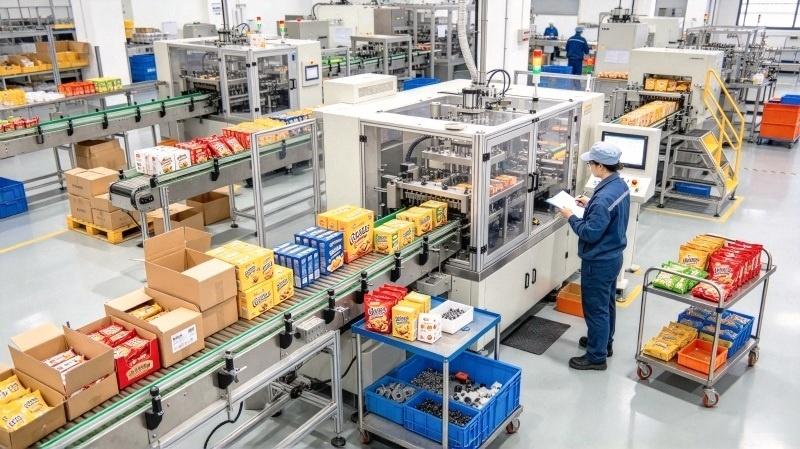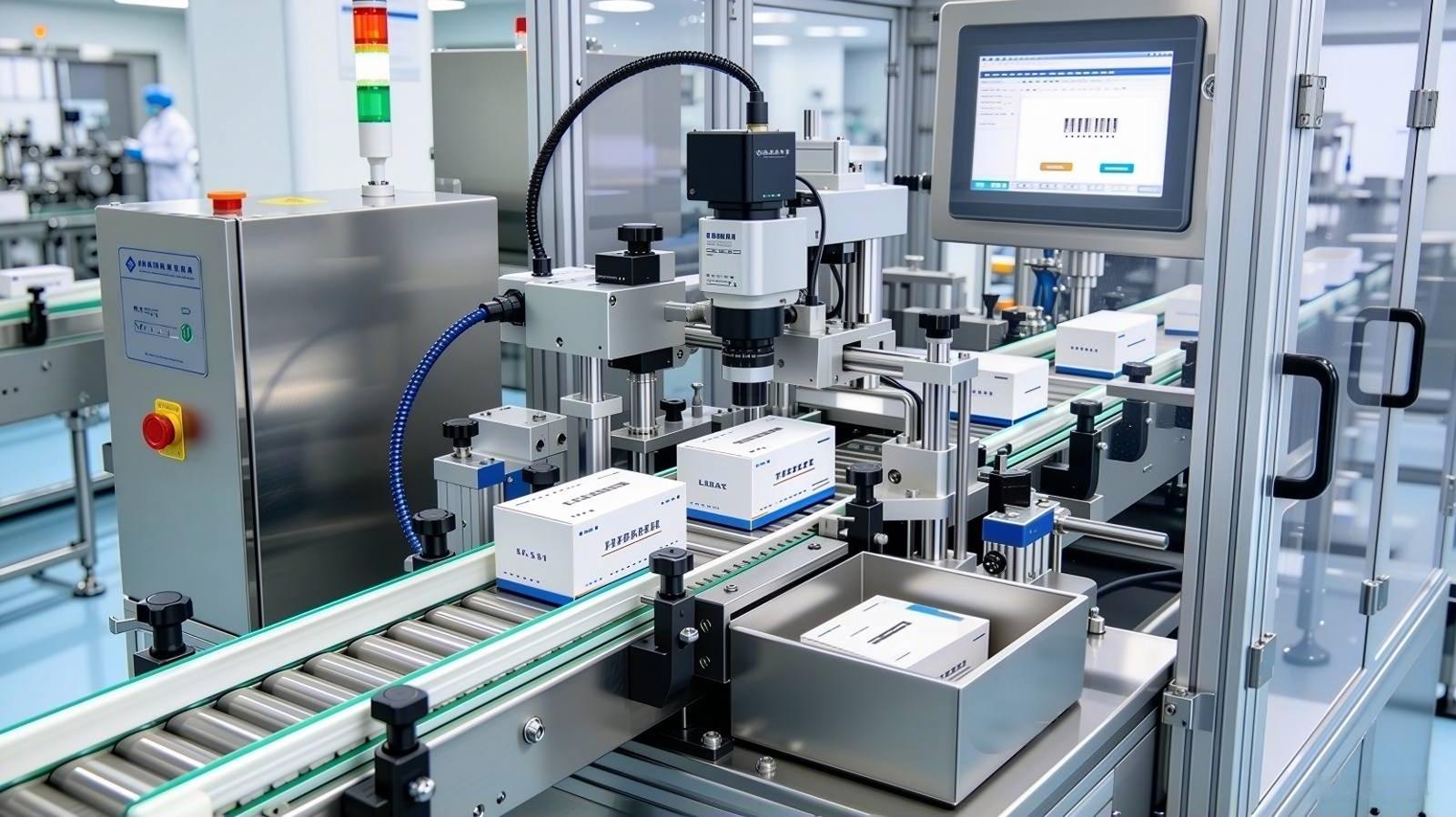
Towels, blankets, and hotel linens share a problem that garment manufacturers rarely face: they are large, heavy, and unforgiving when folded inconsistently. A bath towel folded to slightly different dimensions across a batch looks wrong on a shelf and fails to stack evenly in a storage trolley. For hotel linen suppliers delivering to properties that expect every stack to look identical, and for textile manufacturers shipping folded product to retailers, a dedicated blanket folding machine eliminates the variability and fatigue that define hand-folding at scale.
What Is a Blanket Folding Machine?
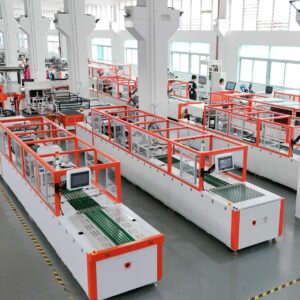
A blanket folding machine is a textile folding system designed for oversized, heavier fabrics — towels, bath sheets, hand towels, blankets, fleece throws, and bed linen — that require wider fold arms, stronger clamping pressure, and longer infeed conveyors than a standard garment folder. Unlike clothing folders optimized for lightweight knitwear, a blanket folding machine handles the additional weight and surface area of home textile products while delivering consistent fold geometry across every piece.
UBL offers two configurations for this category:
BZ-832B — Towels, Blankets, and Bath Linen
The BZ-832B is UBL’s primary model for hospitality-grade folding. It handles bath towels, hand towels, face cloths, fleece blankets, and flat bed sheets at 400–600 pieces per hour. The machine performs a multi-fold sequence appropriate to each product type and integrates optional inline bagging for products that need to be sealed before delivery or retail display. This is the recommended model for hotel linen contractors, laundry services, and textile manufacturers shipping folded linen to hospitality clients.
BW-801 — Oversized Blankets and Duvets
For particularly large or bulky items — thick blankets, duvets, comforters, and oversized throws — the BW-801 handles dimensions and weights that exceed the BZ-832B’s operating range. Throughput is lower at approximately 180 pieces per hour, reflecting the time required to process larger surface areas and heavier fabric weights through the fold cycle. The BW-801 is the right choice when the priority is consistent fold quality on high-value or oversized product rather than maximum output volume.
Why Linen Folding Is Different from Garment Folding
Hotel and hospitality linens face a set of requirements that clothing does not. Understanding these differences explains why a dedicated blanket folding machine is necessary rather than adapting a standard garment folder.
Dimensional Uniformity for Stacking and Storage
A hotel’s linen room operates on precise stack dimensions. Shelving is built to specific towel widths; trolleys are loaded to specific pile heights. If towels arrive folded to varying dimensions — some 10 cm wide, some 12 cm — the entire stacking system breaks down. Housekeeping spends time refolding before stock can be properly stored, which is a labor cost the hotel absorbs invisibly. A blanket folding machine set to a fixed fold dimension eliminates that variation entirely: every towel that comes off the line is identical.
Presentation Quality for Retail and Hospitality Display
Folded towels and blankets on retail shelves must present a flat, crease-consistent face — the front edge that the customer sees. Hand-folding produces the leading edge reliably only when a skilled worker takes care to align it each time, which slows throughput and still produces visible inconsistencies across a large batch. Automated folding produces the same presentation on every piece, which matters for premium linen brands and hotel suppliers that are judged on how their product looks before it is ever used.
Worker Fatigue on Heavy Materials
Folding a wet or freshly dried bath sheet by hand is physical work. A large bath towel can weigh 600–900 grams when dry and significantly more when damp. Workers folding hundreds of these per shift experience arm and back fatigue that slows output and increases error rates as the shift progresses. A blanket folding machine removes the physical lifting and folding motion entirely — the operator feeds pieces onto the infeed conveyor and the machine handles the rest.
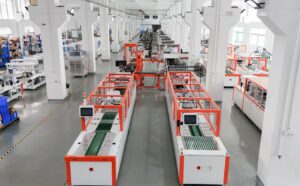
Who Uses Blanket Folding Machines?
Hotel Linen Suppliers and Laundry Contractors
Businesses that supply, launder, and re-deliver linen to hotels, resorts, and serviced apartments operate on tight turnaround schedules. A batch of towels that arrives at a laundry facility in the morning must be washed, dried, folded, and delivered by evening for the next-day room turnover. A blanket folding machine running at 400–600 pieces per hour allows a two-person folding operation to handle volumes that would otherwise require five or six hand-folders — and delivers every towel to the property in the consistent folded format that room attendants expect.
Textile Manufacturers Shipping to Retail
Towel and blanket manufacturers supplying retail chains and e-commerce platforms need folded, bagged, and labeled product ready for shelf placement or fulfillment center processing. Manual folding at these volumes — typically tens of thousands of pieces per production run — is impractical. The BZ-832B’s optional inline bagging integration allows manufacturers to fold, bag, and seal in a single pass, producing retail-ready units at speed without manual handling between steps.
Corporate and Institutional Linen Programs
Hospitals, gyms, spas, and corporate facilities that manage large linen inventories face the same uniformity challenge as hotels. Clean, consistently folded linen projects professionalism and facilitates inventory management. Automated folding is increasingly standard in the linen management programs of mid-to-large institutions where folding is a daily, high-volume activity.
BZ-832B vs. BW-801: Choosing the Right Model
| Factor | BZ-832B | BW-801 |
|---|---|---|
| Primary products | Bath towels, hand towels, blankets, flat sheets | Thick blankets, duvets, comforters, oversized throws |
| Speed | 400–600 pcs/h | ~180 pcs/h |
| Bagging integration | Optional inline bagging available | Fold-only; bagging handled downstream |
| Fabric weight range | Standard to medium-heavy linen | Heavy and oversized textile products |
| Best fit | Hotel linen contractors, towel manufacturers, spa suppliers | Bedding manufacturers, comforter producers, oversized textile brands |
Integrating a Blanket Folding Machine into Your Linen Operation
A blanket folding machine works best as part of a sequenced workflow. In most linen operations, the machine slots into the line after drying and before storage or packing:
After Tumble Drying
Towels and blankets exit the dryer warm and pliable — the optimal state for folding. Loading them directly onto the BZ-832B’s infeed conveyor while still warm produces cleaner, flatter folds than folding cold or damp material. Operators feeding the machine from dryer carts is the standard workflow in laundry facilities.
Optional Inline Bagging
For retail-bound or hospitality-packaged product, the BZ-832B supports downstream bagging integration. Folded towels or blankets transfer directly to a bagging station where they are inserted into pre-made polybags and sealed — eliminating the manual bag-and-seal step that follows folding in most current operations.
Labeling for Retail Compliance
Retailers and e-commerce platforms typically require barcode labels, care instruction stickers, or brand tags on each packed unit. An inline labeling station positioned after the bagging station applies these automatically at 40–150 labels per minute — matching the BZ-832B’s output rate without creating downstream congestion.
Click here to watch the UBL garment folding machine in action.
Common Questions About Blanket Folding Machines
Can the BZ-832B handle both towels and blankets on the same line?
Yes, with adjustment. Towels and lightweight blankets of similar dimensions can often be processed in the same configuration. Switching between product types that differ significantly in size or weight requires an HMI parameter adjustment and potentially manual repositioning of the fold arms — approximately 10 minutes. Most facilities batch by product type to keep changeovers infrequent.
What about terry cloth and waffle-weave towels specifically?
Both fabric structures process well on the BZ-832B. Terry cloth’s looped pile can occasionally catch if fed misaligned, so operator attention to straight feed positioning is important for the first few minutes until the operator develops the feel for the machine’s preferred feeding angle. A sample trial before purchase confirms compatibility with your specific towel weight and weave.
Is sample testing available for blankets and towels?
Yes. Ship samples of your product — whether bath towels, blankets, or mixed linen — and UBL runs the full folding cycle on video. You see the fold result, stacking quality, and any fabric-specific considerations before committing to an order.
Related Reading
- UBL Folding Machine — Full Product Line Including BZ-832B and BW-801 Specifications
- Automatic Clothes Folding Packaging Machine: Full-Line Solutions for Garment Manufacturers
- Folding and Bagging Machine for Garments: Why Integrated Folding-to-Bagging Beats Two Separate Steps
- Garment Folding Machine Selection Guide: Matching Model to Industry and Volume
Ready to Automate Your Towel and Blanket Folding?
Whether you supply linen to hotels, manufacture towels for retail, or manage a high-volume laundry operation, UBL’s blanket folding machines can be configured to your product dimensions, daily volume, and downstream packing requirements. Sample trials are standard, and installation includes setup and operator training.
Contact us to discuss your linen folding requirements:
Email: Helen@huanlianauto.com
Website: ublpackaging.com