Buying a garment folding machine is not the same as buying a commodity input. The machine will run in your factory every day for years; the supplier you choose becomes a long-term operational partner whether you intended that or not. When the machine jams at 11 PM before a shipment cutoff, the relevant question is not which supplier had the lowest quote — it is which supplier picks up the phone and resolves the issue before your morning shift starts. Evaluating a garment folding machine manufacturer correctly means looking past the specification sheet at the factors that determine whether the machine keeps running, and whether you have support when it does not.
Six Things to Evaluate Before Choosing a Supplier
1. Is the Manufacturer Also the Factory?
The garment folding machine market includes both original equipment manufacturers (factories that design and build their own machines) and trading companies that resell machines built by others. This distinction matters for several reasons. A trading company cannot modify a machine’s specifications, does not have the engineering team to troubleshoot a non-standard issue, and depends on the actual manufacturer for parts — adding a layer of delay and markup to every after-sales interaction. A factory-direct manufacturer controls the design, the tooling, the spare parts inventory, and the technical support. When you ask for a custom fold sequence or a non-standard bag dimension, a factory can do it; a trading company cannot.
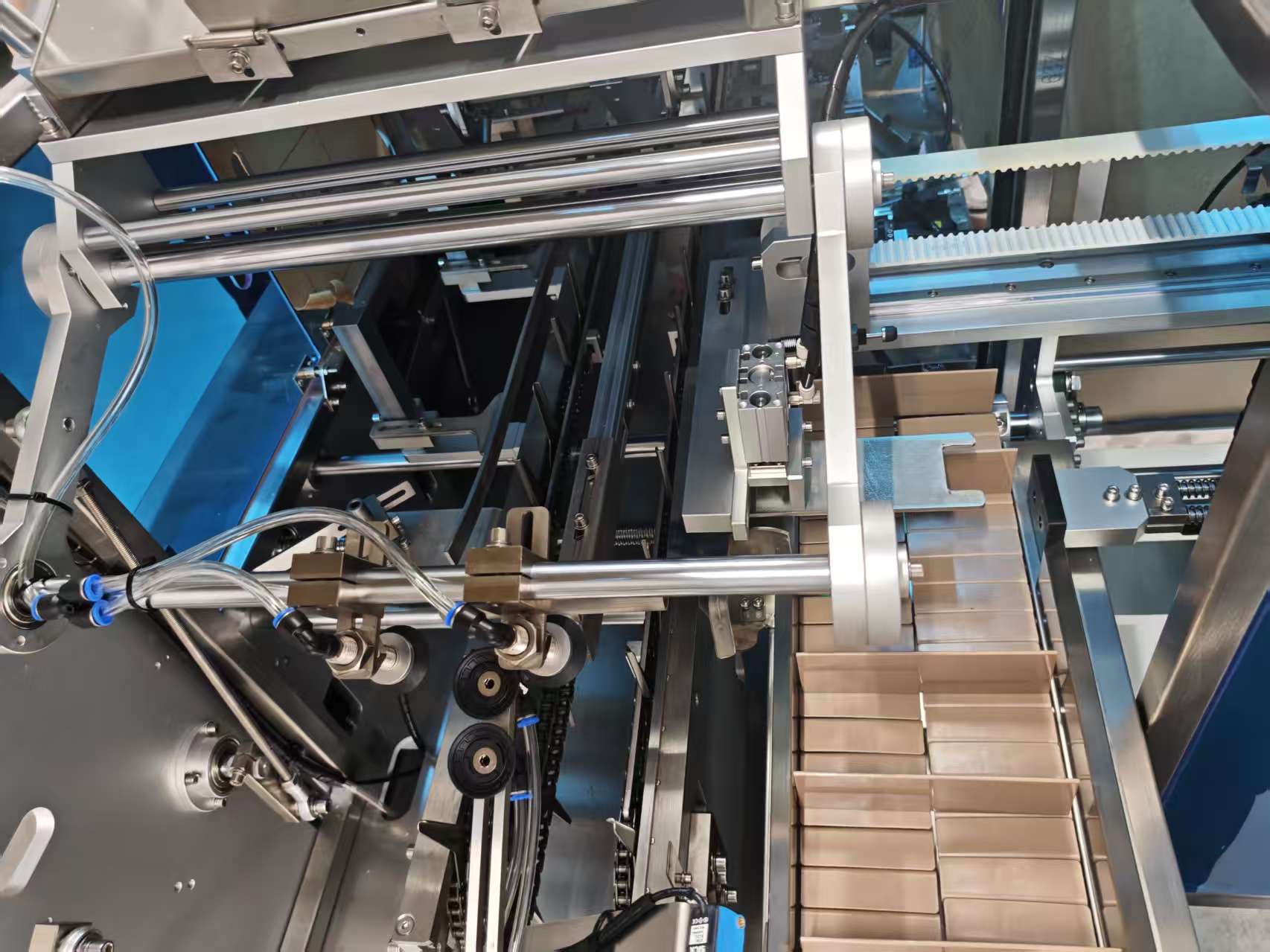
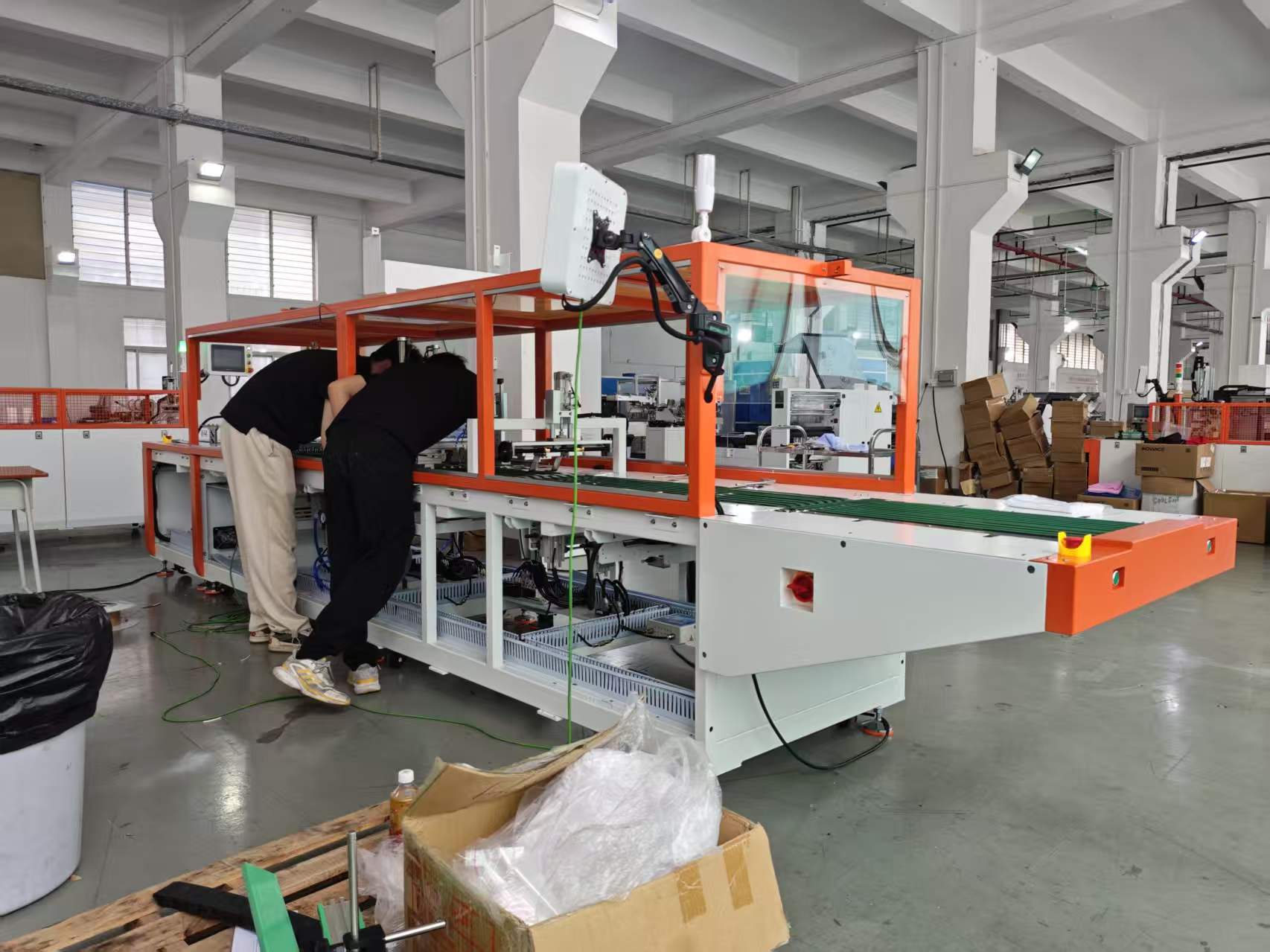
UBL is a factory-direct manufacturer. The machines are designed, built, and calibrated at the Dongguan production facility. Spare parts — belts, suction cups, blades, and mechanical components — are produced in-house and available for direct order rather than through a third-party distributor.
2. What Is the After-Sales Response Commitment?
A garment folding machine is a production-critical piece of equipment. When it stops, your line stops. The relevant after-sales metrics are: how fast does a technical response arrive, what does remote support actually cover, and when does an engineer come on-site?
UBL’s after-sales structure is: 6-hour remote response guarantee for operational issues. Most common problems — a minor misalignment, a jam caused by a foreign object, an HMI setting that needs adjustment — are resolved remotely via video call in a single session. For mechanical failures requiring physical repair, a field engineer is dispatched on-site. The distinction between remote-resolvable and on-site-required issues is usually clear within the first remote session.

3. Does the Supplier Offer Sample Trials Before Purchase?
Any reputable garment folding machine manufacturer should be willing to run your actual garments through the machine before you commit to a purchase. This is not a courtesy — it is the only reliable way to confirm that the machine handles your specific fabric weight, garment dimensions, fold specification, and bag format correctly. A supplier who refuses sample trials or who offers only generic demonstration videos is asking you to make a significant capital decision without evidence that the machine works for your product.
UBL’s standard pre-purchase process includes a sample trial: send your garments (and bags, if you have a specific format), specify the fold and labeling requirements, and UBL runs the complete cycle on video. The trial covers fold quality, bag entry consistency, seal integrity, and label placement. You review the video before placing an order.
Click to view operation case videos of UBL garment folding machine
4. What Is the Spare Parts Availability and Lead Time?
Consumable parts — sealing blades, conveyor belts, suction cups, bag-opening components — wear out over time. How quickly you can replace them determines how long your line is down when a wear part fails. A supplier who ships parts from overseas with a 3–4 week lead time creates a structural vulnerability in your production schedule. A supplier with local parts inventory or same-week shipping capability does not.
UBL recommends purchasing a consumable parts kit at the time of machine purchase — this is offered at a favorable price at order time and ensures the most commonly replaced components are already on hand when needed. For parts not in stock, UBL ships direct from the factory with standard international freight timelines.
5. Does the Supplier Have Overseas Presence or Local Support?
For buyers outside China, the practical question is: if an on-site engineer visit is required, how long does it take and what does it cost? A supplier with no overseas presence means international travel every time a field visit is needed — expensive, slow, and often impractical for lower-value machines. A supplier with regional warehouses or established partner networks in your market can respond faster and more cost-effectively.
UBL currently operates a branch in Vietnam serving Southeast Asian customers with local inventory and technical support. Expansion to additional markets — including the US — is in planning. For buyers in markets not yet covered by a local branch, UBL manages remote support globally with the 6-hour response standard, and coordinates field visits when the issue requires on-site resolution.
6. What Are the Delivery and Installation Terms?
Standard machines (non-customized configurations) ship the day after contract signing. Custom configurations — including non-standard fold sequences, special bag dimensions, or integrated production-line setups — typically take approximately three months from order to delivery, covering site planning (with AB-option layouts provided), machine production, testing, and shipping.
Installation and calibration are included in the purchase price. UBL sends the machine configured and tested; on-site installation involves positioning, connection, and calibration to the specific production floor layout. Operator training — covering basic operation, parameter adjustment, and routine maintenance — takes approximately 30 minutes for a new operator to reach basic proficiency, with full independent operation typically achieved within 2–3 days.
Red Flags When Evaluating a Supplier
| Red Flag | What It Usually Means |
|---|---|
| Refuses sample trial or offers only video demos | Machine may not handle your specific garment well; supplier avoiding a failed trial |
| No clear after-sales response time commitment | Support is informal and will be slow when you need it most |
| Cannot provide spare parts independently | Trading company, not a factory — parts go through a chain with added lead time and cost |
| Price significantly below market without clear explanation | Cost reduction typically comes from components, build quality, or omitted after-sales |
| No customer references or case documentation | Limited deployment history; unproven in production environments |
| Cannot customize fold sequence or bag dimensions | Rigid catalog product; will not adapt to your production requirements |
Questions to Ask Any Garment Folding Machine Supplier
Can I see a sample trial with my garments before purchasing?
This should be a yes from any serious manufacturer. The answer tells you whether the supplier is confident the machine works for your product and whether they have the production facility to run a trial on demand.
What is your after-sales response time commitment, in writing?
Get a specific number — not “we respond promptly” but “we respond within X hours.” Ask what the escalation path is if the first remote session does not resolve the issue.
Where are your spare parts stocked, and what is the lead time for a critical wear part?
The answer determines your risk exposure when a consumable fails mid-production. If the answer is “we ship from our factory in China,” ask for the realistic delivery timeline to your location and whether a parts kit is available at purchase.
Do you have existing customers in my industry I can contact?
Reference customers in a comparable industry and production context are the most reliable external validation of a supplier’s claims. A supplier without customer references either has limited deployment history or is unwilling to expose their existing customers to scrutiny — neither is a positive signal.
Related Reading
- UBL Garment Folding Machine — Product Line and Manufacturer Information
- Garment Folding Machine: How to Match the Right Model to Your Industry, Volume, and Packaging Format
- Clothes Folding Machine Buyer’s Guide: Choosing Between Semi-Auto and Full Auto for Your Factory
- Automatic Clothes Folding Packaging Machine: Full-Line Solutions for Garment Manufacturers
Evaluate UBL as Your Garment Folding Machine Supplier
UBL is a factory-direct manufacturer based in Dongguan, China, with an operational branch in Vietnam and international export experience across the apparel, protective garment, and home textile industries. Sample trials, customer case documentation, and direct factory contact are available before any purchase decision.
Contact us to start the evaluation process:
Email: Helen@huanlianauto.com