The first question most buyers ask is: how much does a clothes folding machine price? The honest answer is: it depends — but the range is specific enough to be useful, and the more important question is not what the machine costs but how quickly it pays back. A machine that replaces five workers and costs $20,000 is not a $20,000 expense; it is a one-time capital outlay that starts generating labor savings from day one. This article gives you the real price ranges, the factors that move the number up or down, and a concrete payback calculation based on actual labor cost data.
Clothes Folding Machine Price Ranges
Semi-Automatic (Single Station)
A semi-automatic single-station clothes folding machine — where the operator places the garment and the machine executes the fold automatically — typically costs $2,000–$5,000 (excluding freight). The range within this band reflects the configuration: a basic fold-only unit sits at the lower end; a unit with integrated bagging, sealing, and optional labeling moves toward the higher end. Semi-auto units are the entry point for operations that are not yet ready for full-auto throughput — either because daily volume is below the full-auto justification threshold (roughly 3,000 pieces per day) or because floor space or capital budget limits the investment at this stage.
Full-Automatic Line
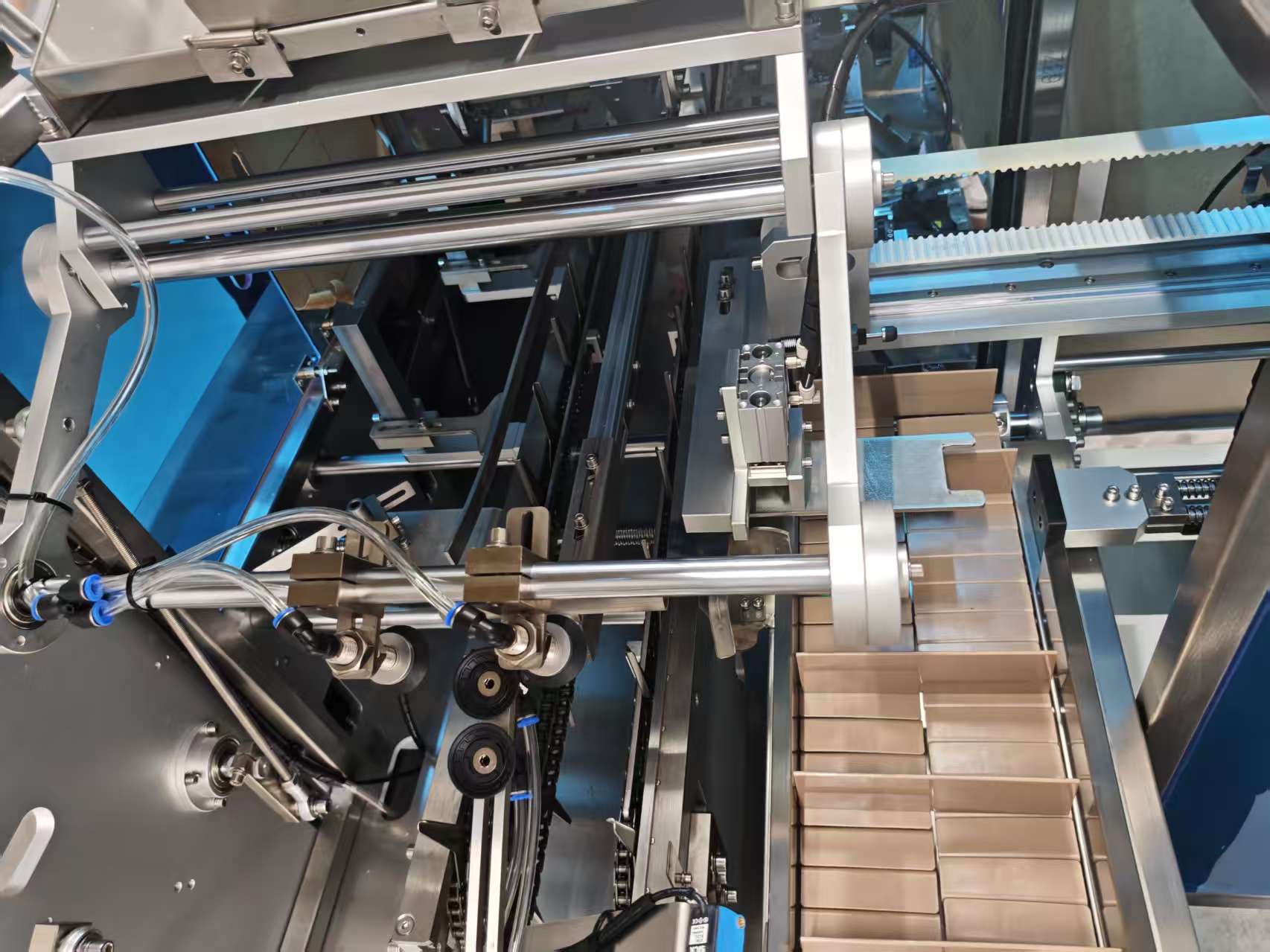
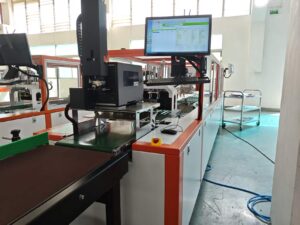
A full-automatic garment folding and packaging line typically costs $20,000–$30,000 (excluding freight). This range covers the core fold-bag-seal line with standard configuration. The final number is influenced by:
- Add-on modules: labeling stations, auto-stacking units, vacuum compression, express-bag overbagging, and sorting lines each add to the base price
- Garment type: standard T-shirt/lightweight configurations versus thick-and-thin extended models for heavier garments
- Customization: non-standard fold sequences, special bag dimensions, or integration with existing production lines
- Logistics: freight cost varies significantly by destination — confirm with UBL for your specific location
What Moves the Price Up or Down
| Factor | Lower End | Higher End |
|---|---|---|
| Automation level | Semi-auto single station | Full-auto with multiple integrated modules |
| Included functions | Fold only | Fold + bag + seal + label + stack + vacuum |
| Garment compatibility | Lightweight T-shirts only | Thick-and-thin extended model for heavy garments |
| Customization | Standard catalog configuration | Custom fold sequence, non-standard dimensions, line integration |
| Delivery timeline | Standard machine: ships next day after signing | Custom configuration: ~3 months including site planning |
The ROI Calculation: How Fast Does It Pay Back?
The payback calculation for a garment folding machine is straightforward: divide the machine cost by the monthly labor savings it generates. Here is the calculation using real labor cost data for a US-based apparel manufacturer:
Assumptions
- Machine cost: $20,000 (full-auto base configuration)
- Workers replaced: 5 (a full-auto line at 600 pcs/h replaces approximately 5 manual packers at comparable output)
- US apparel worker average monthly wage: $4,000/month (gross salary; Bureau of Labor Statistics data for production workers in apparel manufacturing)
- Employer total cost (including payroll taxes, workers’ compensation, and benefits): approximately $4,000 × 1.3 = $5,200/worker/month
Monthly Savings
5 workers × $5,200/month = $26,000 per month in labor cost savings
Payback Period
$20,000 ÷ $26,000/month = less than 1 month on paper — but in practice, buyers account for installation, training, ramp-up time, and the reality that not all workers are immediately redeployed. A realistic conservative payback estimate for a US operation is 2–4 months.
For manufacturers in lower-wage markets, the payback period extends accordingly. In Southeast Asia, where apparel factory wages average $300–600/month, the same $20,000 machine replacing 5 workers saves $1,500–$3,000/month — a payback period of roughly 7–13 months. UBL’s internal benchmark of 8–12 months to payback reflects a global average across different labor cost environments.
The One-Year Warranty Alignment
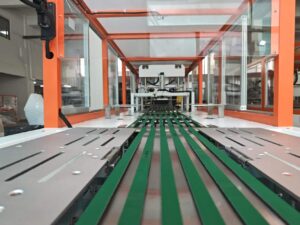
UBL machines come with a one-year warranty covering parts and labor for manufacturing defects. The alignment between the warranty period and the typical payback period is deliberate: for most buyers, the machine has fully paid back its cost before the warranty expires. From that point forward, the labor savings are pure margin improvement.
After the warranty period, the primary ongoing costs are consumable wear parts — belts, suction cups, sealing blades — which are low-cost and available direct from UBL. Major mechanical components typically have service lives well beyond the warranty period under normal operating conditions.
Semi-Auto vs Full-Auto: The ROI Comparison
| Factor | Semi-Auto ($2,000–$5,000) | Full-Auto ($20,000–$30,000) |
|---|---|---|
| Workers replaced | 0 (operator still required per station) | ~5 per machine |
| Throughput improvement | +30–50% vs manual (same headcount) | 2–4× vs manual (fewer people) |
| Primary benefit | Output consistency and speed per operator | Labor cost elimination + throughput increase |
| Payback driver | Reduced overtime, higher output per shift | Direct labor cost saving |
| Best for | Under 3,000 pcs/day; space or budget limited | 3,000+ pcs/day; labor cost is significant |
Click to view differences between automatic and semi-automatic garment folding machines
Common Questions About Clothes Folding Machine Pricing
Does the quoted price include installation and training?
Yes. UBL’s machine price includes installation, calibration, and operator training. Freight cost to your destination is calculated separately and depends on your location and shipping method. Confirm the freight estimate with UBL when requesting a quote.
Can I get a formal quotation with line-item pricing?
Yes. Contact UBL with your garment type, daily volume requirement, desired output format (fold only, fold + bag, fold + bag + label, etc.), and destination location. UBL will provide a formal quotation with itemized pricing for the base machine, any add-on modules, and a freight estimate.
Is financing or payment in installments available?
Payment terms vary by order size and customer profile. Contact UBL directly to discuss available payment arrangements for your specific situation.
What is included in the one-year warranty?
The warranty covers manufacturing defects in parts and workmanship for one year from delivery. Consumable wear parts (belts, blades, suction cups) are not covered under warranty as they are expected-replacement items, but they are available at direct-from-factory pricing. The warranty is supported by UBL’s 6-hour remote response commitment — warranty claims are handled through the same support channel as operational issues.
Related Reading
- UBL Garment Folding Machine — Request a Quote
- Clothes Folding Machine Buyer’s Guide: Choosing Between Semi-Auto and Full Auto for Your Factory
- Garment Folding Machine Manufacturer: How to Evaluate Suppliers Before You Buy
- Garment Folding Machine: How to Match the Right Model to Your Industry, Volume, and Packaging Format
Request a Formal Quote
Tell us your garment type, daily volume, required output format, and destination. UBL will return a formal quotation with itemized pricing and a freight estimate — typically within one business day.
Contact us for pricing:
Email: Helen@huanlianauto.com