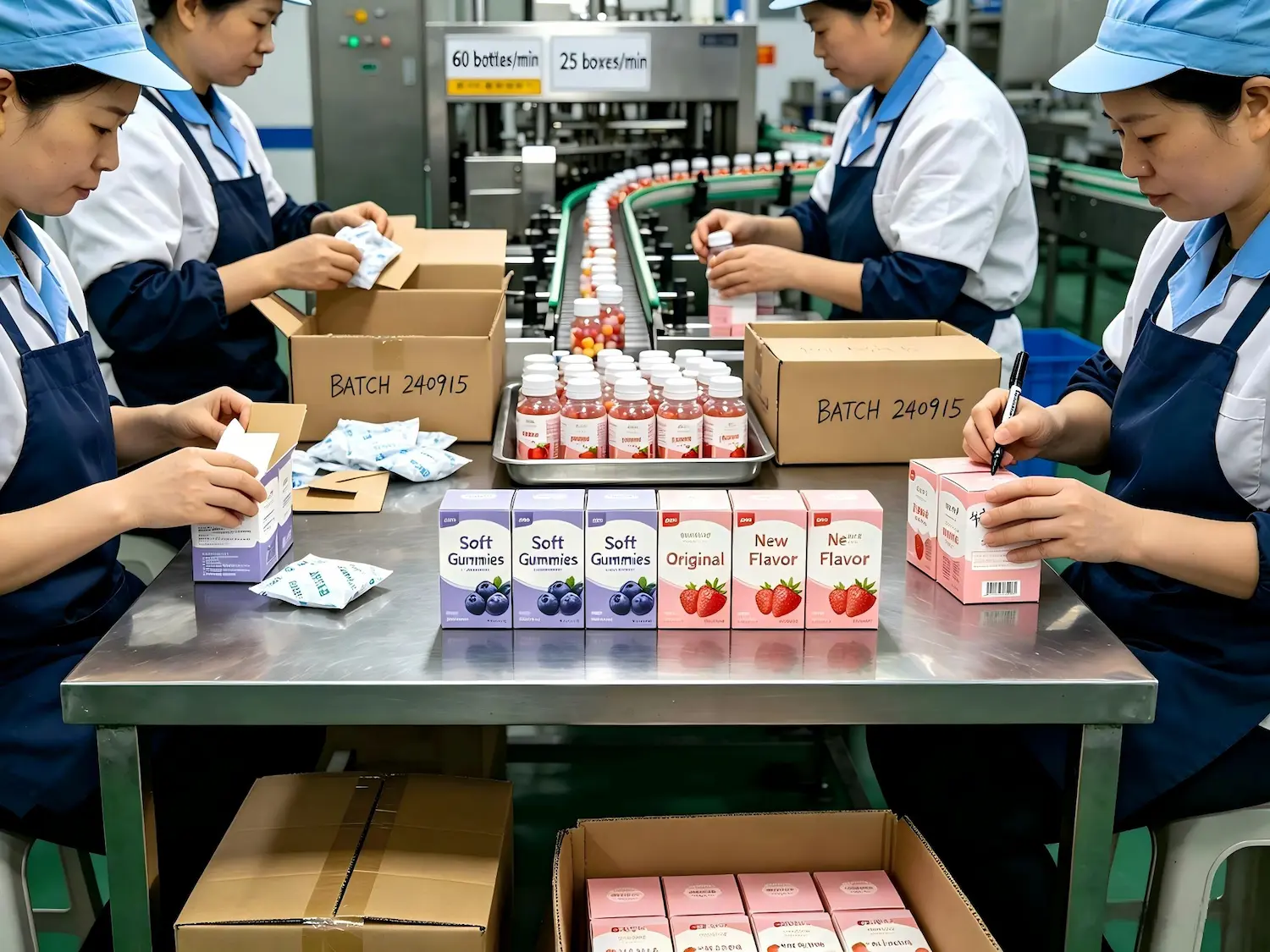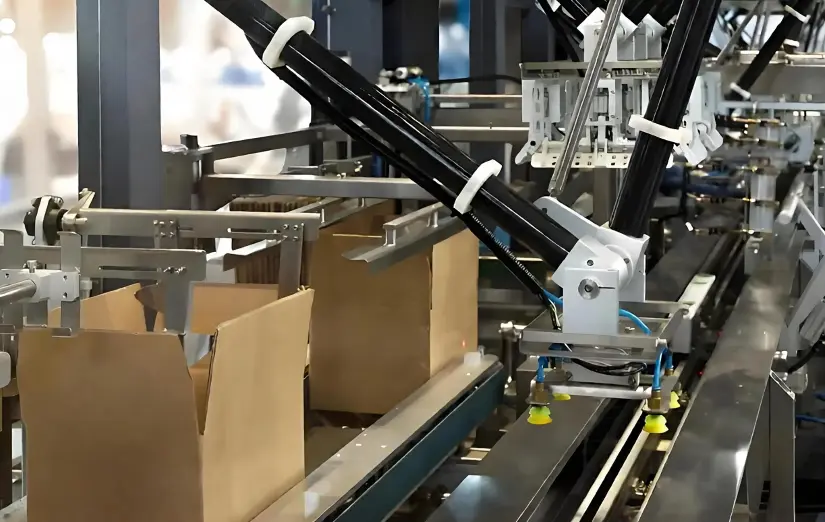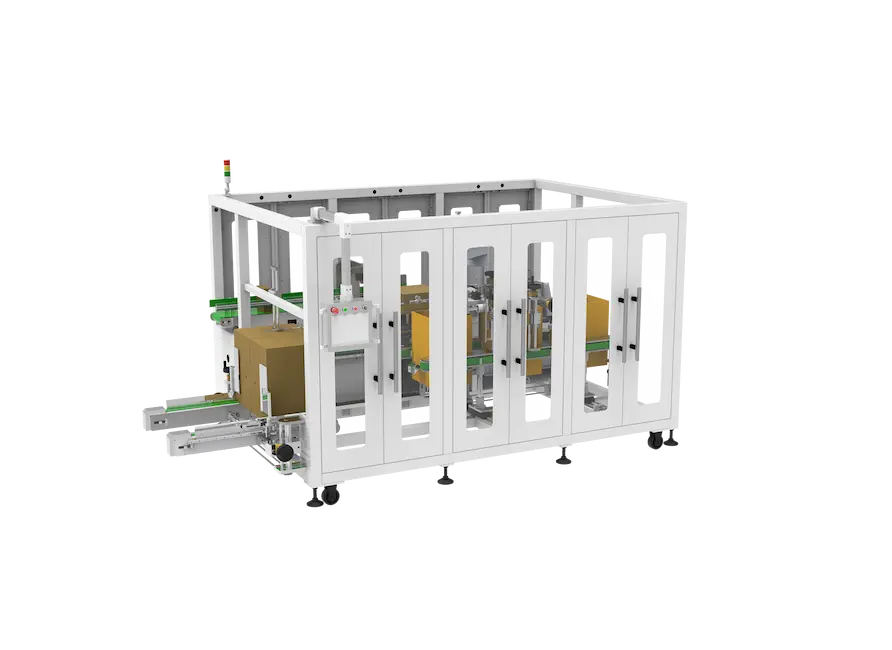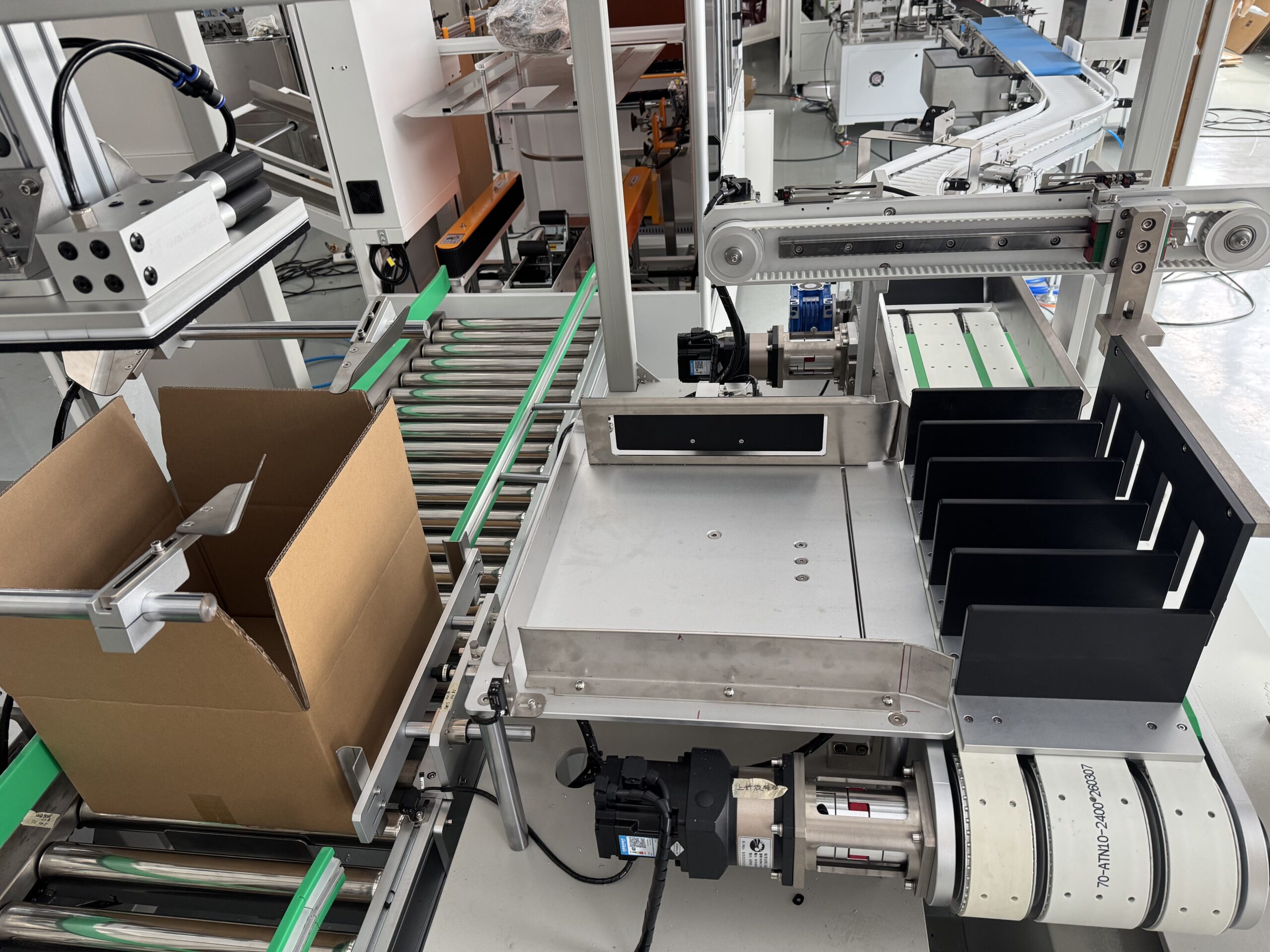
Last March, a coffee co-packer in Izmir, Turkey, ran into a wall nobody had modeled. Its new multi-lane bagger filled and sealed 600 stick packs a minute. Two metres downstream, six operators stood around a table, feeding those sticks into cartons by hand. The bagger never reached more than a quarter of its rated speed, because the line was only as fast as the slowest person on the floor. (Synthesized composite scenario, not a specific UBL customer.)
Quick answer: A stick pack cartoning machine takes flexible sachets or stick packs, counts them into the right quantity, collates them gently, and loads them into a carton, tray or case. Three things decide whether it helps or hurts: counting accuracy, double-sheet detection, and collating force. Get those right and the cartoner matches your multi-lane bagger instead of throttling it.
That is the whole game with stick packs. The product is thin, light and springy, which makes it far harder to move and count than a rigid bottle. A sachet cartoning machine is built for exactly this; a cartoner designed for boxes will fight you here. One built for sachets will quietly double your usable output. The market behind this is growing fast, as Grand View Research’s stick packaging market analysis shows.
Key takeaways
– A stick pack cartoning machine is judged on three numbers: packs-per-carton accuracy, cartons per minute, and rejects per shift.
– Count in packs or rows, not individual light sachets, or you pay for the accuracy twice in speed and rejects.
– Double-sheet detection belongs before the carton seals; catching a miscount after sealing means scrapping the whole carton.
– Top-load trays suit retail coffee and supplement club packs; side-load cartons suit premium gifting and OTC display.
– Throughput bands for multi-lane stick pack lines are reported industry ranges, not guarantees; confirm yours on your own product at FAT.
What a stick pack cartoning machine actually does
The cartoner is the first rigid-format step on the line. Everything upstream moves flexible film; everything downstream moves solid cartons and cases. For a neutral definition of the format itself, see PMMI ProSource’s stick pack definition.
Its job is to turn a stream of loose sachets into a counted, oriented, packed group. That group is then presented for sealing, coding and case packing.
The machine does four things in sequence: it receives the sachets, groups them, inserts them, and closes the carton. Each step has its own failure mode, and each failure mode shows up as either a reject or a stopped line.
Most buyers focus on speed. The number that actually ruins a shift is the reject rate.
Where the cartoner sits in the line
Picture the line end to end. A wide film roll goes into a multi-lane bagger. Depending on the machine, that bagger runs anywhere from two to twelve lanes, and the whole unit produces a reported range of roughly 120 to 600 sachets a minute, varying by machine.
From there, sachets flow to a counting and collating stage, then into the cartoner, then a checkweigher, then the case packer. If you are building the upstream half, our guide to multi-lane bagging and filling equipment covers how lane count and film handling shape your output.
A cartoning machine for stick packs must exceed the bagger’s capacity, or the bagger is never the bottleneck. Plants usually learn this only after the invoice.
Send us your stick pack dimensions, fill weight and target cartons per minute, and our engineers will return a line layout with the counting and collating stage sized to match your bagger.
Stick pack counting and collating: the step that decides line speed
Counting is where most stick pack lines lose money. A sachet weighs a few grams and has almost no stiffness, so it slides, stacks and clings.
There are three common counting methods. Each trades accuracy against speed.
| Method | How it works | Best for | Watch out for |
|---|---|---|---|
| Count-by-row | Groups a pre-formed row, then counts rows | Uniform, flat sachets | Needs consistent sachet length |
| Optical / vision count | Camera counts individual packs | Mixed shapes and small counts | Sensitive to static and glare |
| Weigh-count | Uses weight to infer quantity | Free-flowing, consistent fills | Struggles when fill weight drifts |
The fastest reliable approach is to count in rows or collations, not one sachet at a time. It reduces the number of decisions the machine makes per minute, and fewer decisions mean fewer errors.
If your sachet geometry varies a lot across SKUs, an optical count is more forgiving. If your fills are rock steady, a weigh-count is simple and cheap.
There is a second reason to prefer row counting. A light sachet in free flight is hard to see and easy to double. Rows impose order before the count happens, so the sensor reads a stable pattern instead of a chaotic stream.
Speed claims deserve sharp reading. A machine described as 300 cartons a minute is usually quoting its maximum, at a low count. At a count of twenty sachets per carton, the same machine may manage only half that, because every carton needs twenty correct decisions.
Match the counting method to the product before you match the speed. A machine rated at 300 cartons a minute means nothing if it miscounts one carton in fifty.
Double-sheet detection and gentle handling
Two sachets stuck together pass every crude count. They register as one, and you ship a short carton.
This is the single most common quality failure on stick pack lines, and it is usually invisible until a customer complains.
The double-sheet problem
Double-sheet detection is a check that catches two or more packs where there should be one. It sits between the counting stage and the carton infeed.
Good detection is fast enough to reject the group without stopping the machine. It should also record the event, so you can trace how often it happens and why.
A line without double-sheet detection is a line that ships short counts and never knows until returns arrive.
Detection is only half the job. The other half is rejection. When the sensor fires, the machine must divert the bad group cleanly, without disturbing the good sachets behind it and without slowing the line. A divert that jams is worse than no divert at all, because it turns a small quality miss into a full stop.
Why gentle collating matters
Sachets are fragile in a specific way. They do not tear easily, but they crease, curl and jam.
Collating force has to be low enough to avoid crushing the pack, yet firm enough to keep the group square as it enters the carton. This is a mechanical balance, not a software setting.
A collating stage tuned for rigid boxes will crush or misalign sachets. Ask the builder to show you a real sachet running through the stage, not a plastic dummy.
Force is not the only variable. Sachet surface friction matters too. Matte film drags on steel; glossy film slips. Two sachets from the same brand can behave differently after a film supplier change, which is why the collating stage should be adjustable, not fixed at the factory.
Top-load versus side-load: choosing the retail format
The carton format you choose changes how the cartoner feeds, closes and presents the product. It also changes what the shelf looks like, which is where your product actually sells.
| Format | Load direction | Strengths | Typical use |
|---|---|---|---|
| Top-load tray | Vertical drop | Fast, simple, good for club packs | Retail coffee, warehouse clubs |
| Side-load carton | Horizontal push | Premium feel, clean graphics | Gifting sets, OTC display |
| Wrap-around case | Product grouped, blank wrapped | Low material use, high speed | Case-ready multipacks |
Top-load trays are the workhorse for high-speed counting lines. The sachets drop in as a counted group, which keeps the count honest.
Side-load cartons look better on a premium shelf and protect printed faces. The trade-off is a slower, fussier infeed.
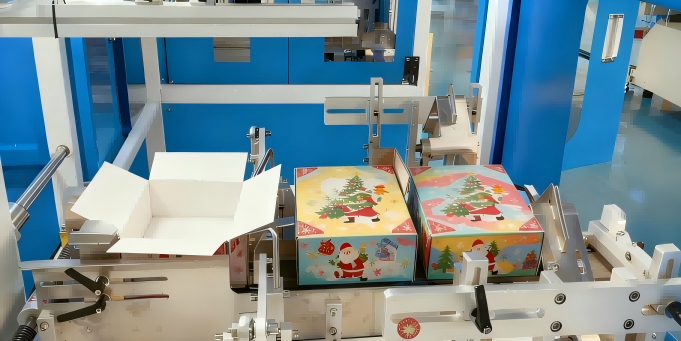
For many coffee and supplement brands, the answer is both: a top-load retail carton for the main channel, a side-load gift set for the holiday push. A changeover-friendly cartoner can run both.
A specialty roaster in Portland, Oregon, tested both formats on the same line. The top-load tray packed coffee sticks faster and cheaper, and it became the everyday carton. The side-load carton only ran for the holiday gift set, where the printed face and rigid feel justified the slower infeed. Running both on one cartoner, with a stored recipe for each, gave the brand one machine instead of two. (Synthesized composite scenario, not a specific UBL customer.)
A multi-lane stick pack cartoning line versus separate units
You can buy a cartoner as a standalone unit and link it to an existing bagger, or buy the whole multi-lane stick pack cartoning line as one integrated system.
A standalone cartoner is cheaper up front and easier to justify if you already have a bagger. It also means you own the interface between the two machines, and every mismatch lands on you.
An integrated line arrives matched. Counting, collating and cartoning are designed as one flow, with one control system and one throughput target. This is often the better choice when you are scaling past manual packing for the first time.
If your project spans bagging, cartoning and case packing, the economics usually favor turnkey line integration over buying machines one at a time. The saving is not the hardware; it is the integration risk you do not have to carry.
A collagen brand in Busan chose the integrated route after a painful first attempt. It had bought a cartoner separately and spent four months chasing a feed mismatch between the bagger and the cartoner. The second time, the line arrived as one system, and it ran at target within a week. (Synthesized composite scenario, not a specific UBL customer.)
Format choice by product: coffee, collagen and OTC powders
The three big stick pack categories behave differently, and the cartoner has to respect that.
Coffee sticks are dense, flat and relatively stiff. They collate well in rows and tolerate a faster infeed.
Collagen and protein sticks are lighter and more likely to curl. They need gentler handling and often a slightly larger carton allowance.
OTC and supplement powders are the fussiest. Fill weight matters, batch coding is regulated, and the carton may need a leaflet. If you are cartoning supplement sticks alongside bottles and jars, the constraints overlap with supplement powder cartoning. Where the product is regulated as a medicine, the bar rises again, and our guide to GMP-ready pharmaceutical cartoning covers what changes.
| Product | Handling note | Carton format |
|---|---|---|
| Coffee sticks | Flat, stiff, fast collating | Top-load retail tray |
| Collagen sticks | Light, prone to curl | Top-load, gentler infeed |
| OTC powder | Regulated, may need leaflet | Side-load display carton |
In the United States, OTC packs still sit inside the rules for finished pharmaceuticals; the 21 CFR Part 211 cGMP requirements are the reference to keep in view.
One cartoner, tuned once per SKU, can usually run all three. The trick is a recipe that stores the count, collation length and carton size for each product.
A US OTC packer in Ohio ran coffee, collagen and a vitamin powder on one line. Instead of three machines, it used one cartoner with stored recipes and cut its floor footprint by half. The changeover, not the hardware, was the real cost. (Synthesized composite scenario, not a specific UBL customer.)
Case-ready stick pack line and shelf presentation
Retailers increasingly want case-ready units: the tray or carton that arrives at the store is the unit that goes on the shelf. This pushes presentation requirements upstream into the cartoner.
A case-ready stick pack line has to hold count accuracy, print clean graphics, and survive the journey without scuffing. That means the carton board, the closing method and the case packing all have to agree. The case-ready packaging handoff is where a weak carton shows up first.
The cartoner is the station that has to hold that agreement together. A poorly closed carton bulges in the case and looks tired on the shelf.
If your case-ready trays feed a robotic or high-level palletizer, the whole line has to be balanced end to end. That is an end-of-line design question, and the cartoner’s output rate is the anchor the rest of the line is built around.
Specifying a stick pack cartoning machine: the checklist
When you write the spec, force the supplier to commit to numbers you can test. Vague promises become your problem after the invoice clears.
Ask for these in writing:
- Count accuracy, stated as rejects per thousand cartons on your product.
- Cartons per minute at your count, not at the machine’s best-case count.
- Double-sheet detection, including what it does when it fires.
- Collation force or a demonstrated run with your real sachet.
- Format-to-format changeover time, measured at FAT on your hardest pair. Our SMED changeover checklist shows how to cut that time once the machine is installed.
Then insist on a factory acceptance test with your own product and your own cartons. A cartoner that runs clean at the builder’s site with sample packs is not proof; a cartoner that runs clean with your coffee is.
Numbers in a quotation are not the same as numbers on a floor. A builder can legitimately quote a fast figure that assumes ideal sachets and a full crew. Your line will run at your film, your fill and your operators. The only figure that matters is the one measured on your product.
If your upstream uses food-grade sachets broadly, our overview of food cartoning covers how carton board and coding choices carry into regulated channels.
Want to see a sachet actually run through a collating stage? Send us your product and our engineers will film the trial and share the reject data before you commit to a line.
FAQ
What throughput can a stick pack cartoning machine reach?
The realistic band depends on your count, sachet geometry and counting method, and it is a reported industry range rather than a fixed guarantee. A multi-lane line feeding a well-matched cartoner commonly targets the low hundreds of cartons per minute. Confirm the figure on your own product at FAT.
How does the cartoner avoid short counts?
It counts in rows or collations and runs double-sheet detection before the carton seals. Catching a stuck sachet early lets the machine reject the group without scrapping a sealed carton. The detection event should also be logged so you can trace patterns.
Should I buy a standalone cartoner or a full line?
If you already own a reliable bagger and can own the interface, a standalone cartoner is cheaper. If you are scaling past manual packing or adding case packing, an integrated line usually wins, because it removes the feed-matching risk between bagger and cartoner.
Can one machine run coffee, collagen and OTC sticks?
Usually yes, if it stores a recipe per SKU covering count, collation length and carton size. The limit is not the product mix; it is how fast and repeatably the machine changes between formats. Ask for the changeover time, measured at FAT.
Do stick packs need a leaflet in the carton?
Only if your market or product category requires it. Retail food sticks generally do not; some OTC and supplement cartons do. If a leaflet is required, choose a cartoner with an integrated leaflet feeder and a verified insert presence check.