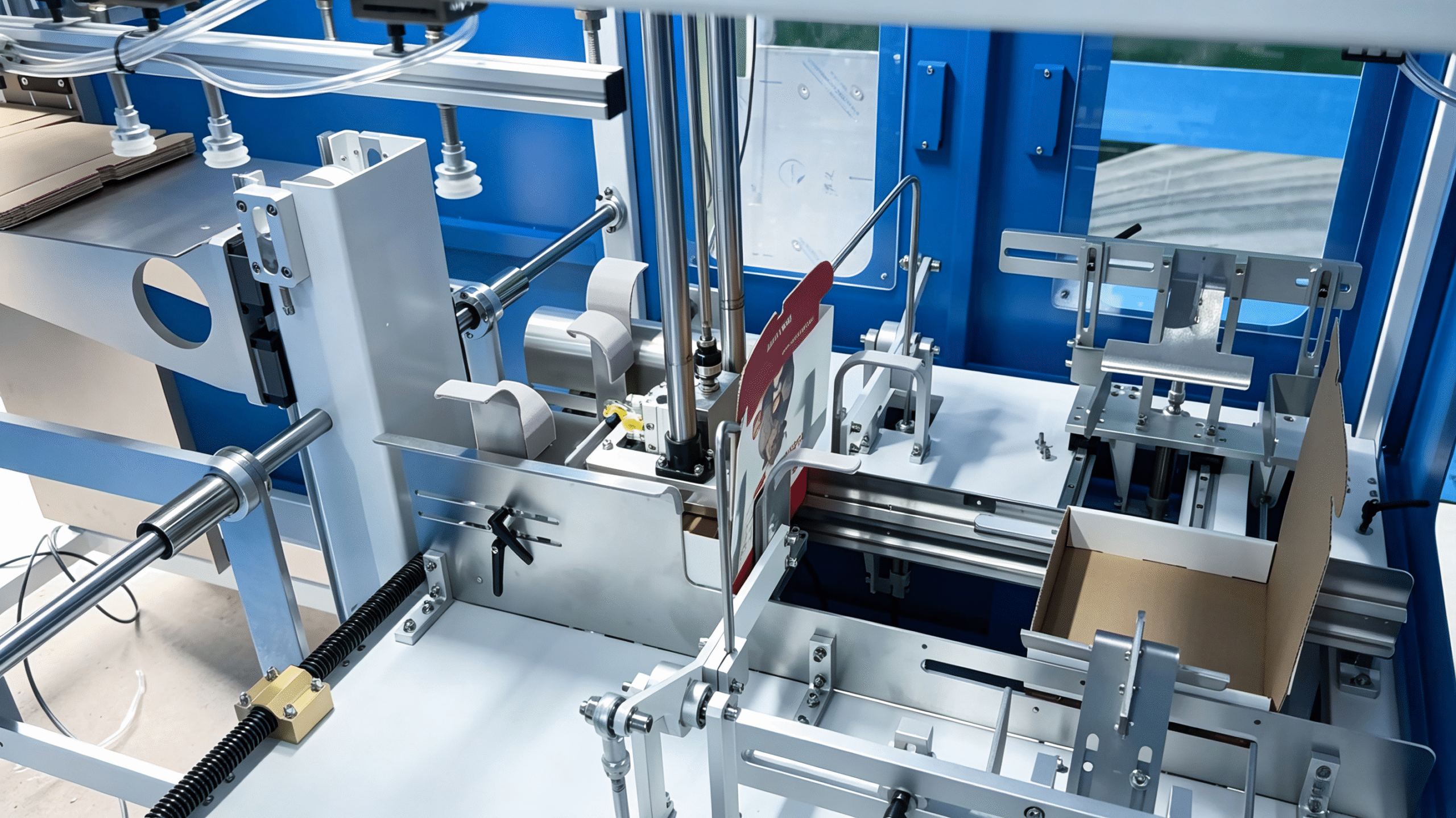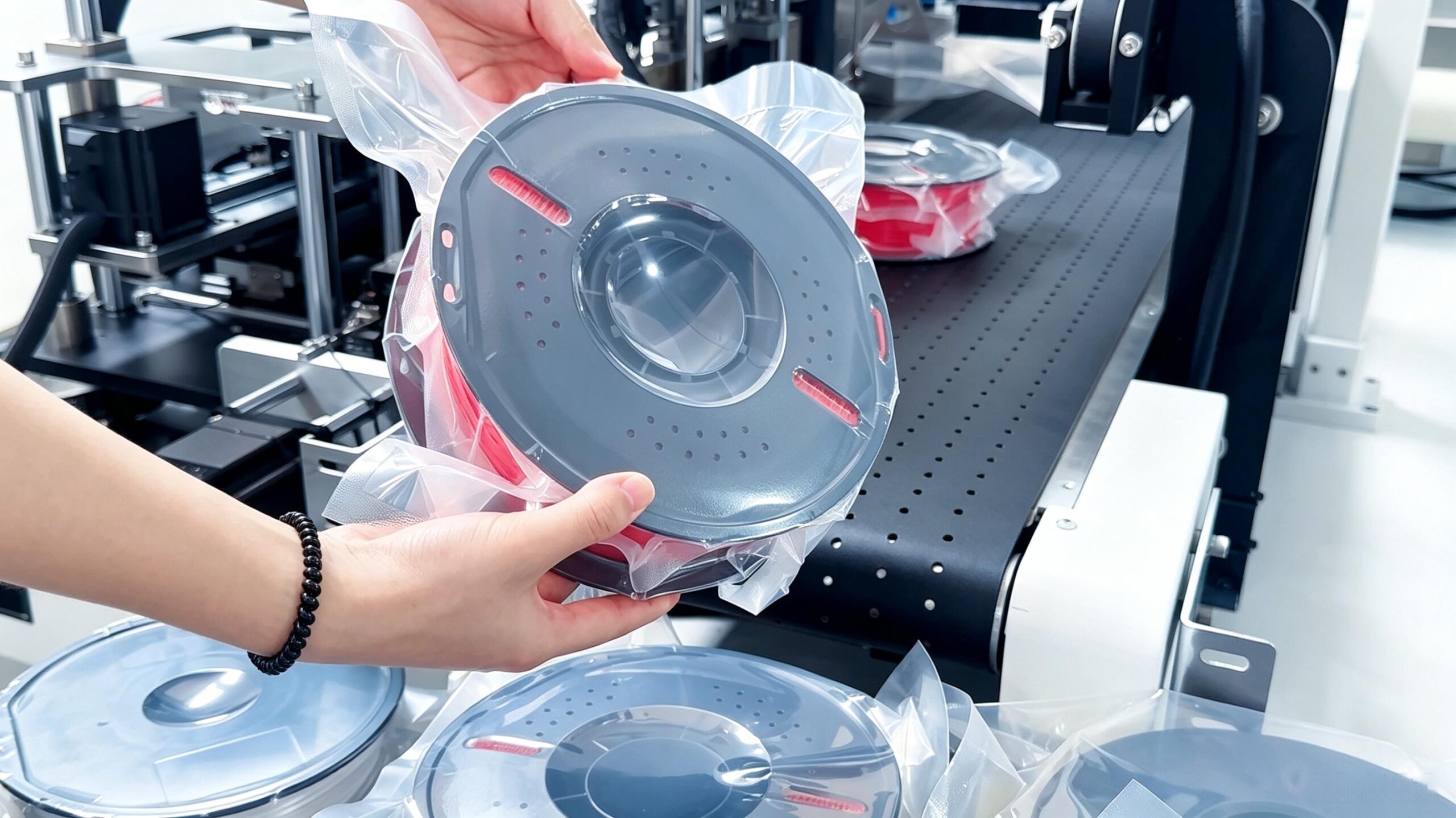
A manual vs automatic mailer box folding decision is not a feature comparison. It is a question about whether the conditions on your floor make the machine’s job harder than the operator’s job it would replace.
Some plants fold every mailer box by hand and keep doing it well. Not because they cannot buy a machine. Because the boxes come in four sizes, the blanks arrive slightly out of square, and the volume moves around. A machine handles that badly and a person handles it fine. The plant that bought one anyway spent a year feeding it one format at a time.
That plant did not run a bad manual vs automatic mailer box folding comparison. It ran no comparison at all. It read a range in a brochure and treated the range as the decision.
The other plant folds the same box every day, in volume, and does the work twice before the box goes out the door. Worth reading the conditions below before deciding which plant you are.
A separate article on this site covers when to keep cartoning by hand on purpose. That one is about loading product into a carton. This one is about the box itself: forming the blank, creasing it, getting it to stand up.
The Conditions That Actually Decide It
Six conditions decide a manual vs automatic mailer box folding decision. None is a machine specification. All can be read off the plant’s own records before the meeting.
| Condition | What you look at | What it decides | The record it comes from |
|---|---|---|---|
| Box size range | The spread between the smallest and largest blank the plant runs | Whether one machine covers the range | The SKU list and blank order history |
| Blank uniformity | Whether every blank of a given size comes off the same die | Whether a machine can hold a consistent crease or fights the material | Supplier samples and incoming inspection notes |
| SKU count and how it moves | How many formats run in a shift and in a week | How much of the day is changeover | The production schedule and order book |
| Who folds today | Whether the work sits with a dedicated person or with whoever is free | What is actually released when a machine takes the task | The shift roster and the task sheet |
| Format changeover cost | Time and parts to move from one size to the next | Whether the machine gains are eaten by changeovers | The changeover log |
| What happens to the box next | Whether the formed box is filled by machine or by hand | Whether you buy a standalone erecting station or half a line | The line layout |
Box size range is the one people skip
Every supplier will tell you the machine takes a range. Every supplier’s range means something different, and the plant rarely checks which end its own boxes sit at. A machine quoted for the small end and fed the large end runs at its limits on day one.
Take the sizes from the blank order, not the product catalogue. Look at the spread, and where the volume sits inside it. A plant with a wide range but most of its volume in one size has a different decision from a plant with a narrow range that moves.
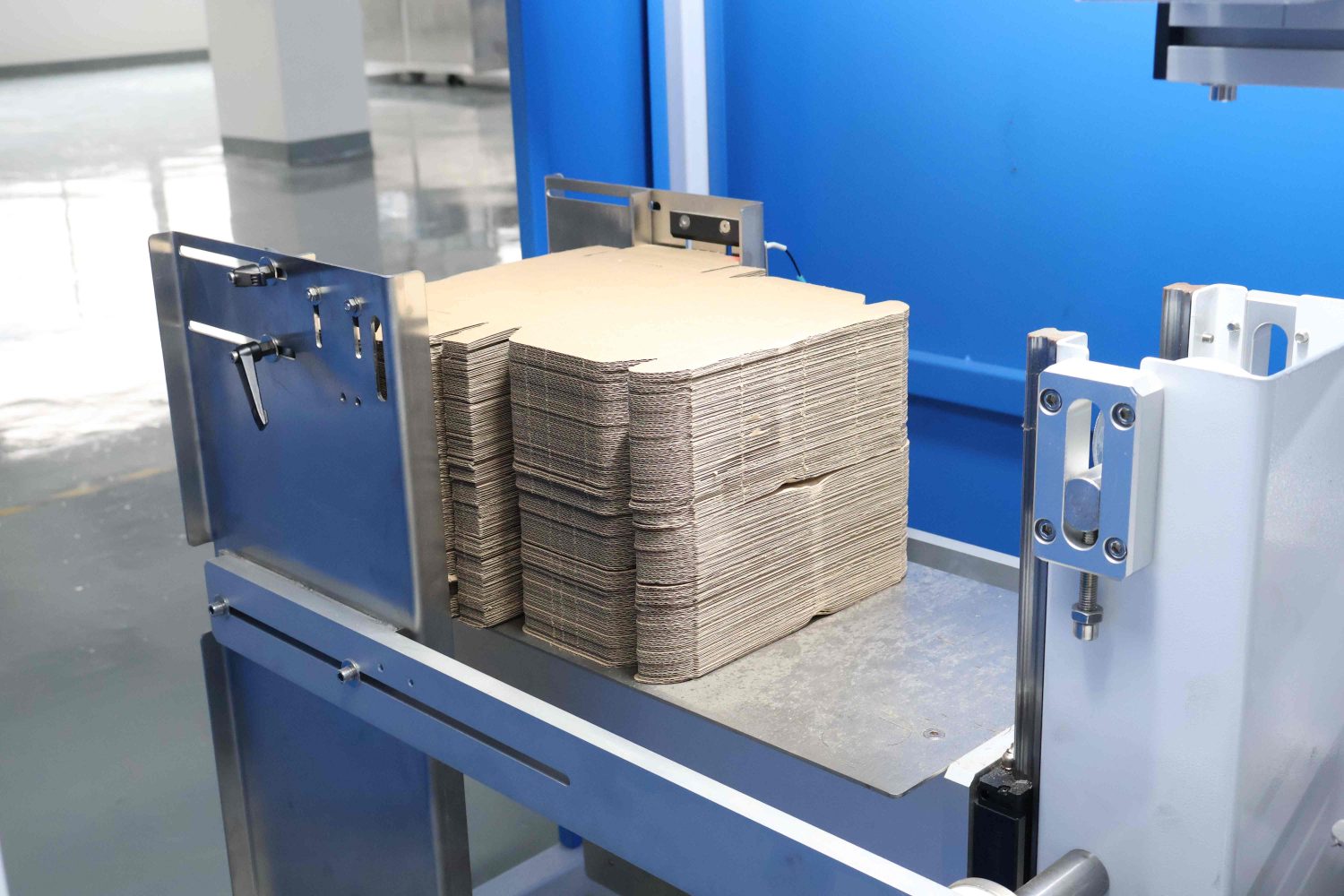
What the machine actually eats: flat blanks, each a specific die cut with a specific flute and board weight. The stack is the specification.
Blank uniformity is the condition that bites later
A machine that folds boxes does the same motion every time and expects the blank to arrive the same way every time. When the blanks come from two dies, or from one die that has drifted, the machine absorbs the difference by mis-creasing rather than by stopping.
A person folding by hand absorbs it without noticing. The crease ends up slightly off and nobody cares, because the box still closes and ships. This is the quiet reason a manual operation can beat an automatic one on paper: the operator corrects, the machine cannot.
The question is not whether the board is good. It is whether the blanks are the same. Ask the blank supplier whether every size comes off one die, and whether the die is maintained.
SKU count and how it moves
Two plants can run the same number of formats and have completely different problems. One runs four formats and holds them for a week. The other changes between them every few hours. That second plant is not really running a folding operation. It is running a changeover operation with some folding in the gaps.
Automatic case erecting does not remove the changeover. It moves it. The machine needs its guides reset, its tooling swapped and its first boxes checked, and none of that work exists on a bench where a person picks up the next box.
The machine case often falls apart here, and it falls apart quietly. The supplier quotes the cycle on one format. The plant multiplies it by the number of formats and gets a number that looks fine on paper. In practice the day is made of changeovers.
The record that settles this is the changeover log. How long the last changeover took, how many people were on it, how many times it happened in a month. If the plant does not keep that log, it can start now.
Who folds today
This condition decides whether the saving is a saving. If the folding is done by a person whose whole shift is folding boxes, a machine that takes the task releases something real. If the folding is done by whoever is free between two other jobs, a machine releases nothing at all, because the freed minutes get absorbed by the other jobs.
Manual folding labor sits in the roster in one of two ways, and only one is a wage line. A dedicated folding station is a line item. Folding folded into another operator’s shift is a rounding error in that person’s day.
That difference is invisible in a quotation and obvious on the floor. The wage savings verification sets out the records that settle it.
When Manual Is the Right Answer
There are plants where folding by hand is the correct decision, and it is worth being able to say so in a meeting.
Manual folding wins when the format changes too often for fixed tooling, when the volume is too small to cover a setup, when the boxes are large and light enough for a person to handle comfortably, and when the folding is a side task between two others.
It also wins when the boxes are the product. A rigid gift box with a magnetic closure or a fabric wrap is not a corrugated blank. A person assembles it. A machine would need tooling for a format the plant may make once a year.
| What the plant looks like | What manual folding gives it | What the machine would take away | The honest read |
|---|---|---|---|
| One box size, steady volume | Nothing much; the work is repetitive | Several hours of folding every day | The clearest case for automating |
| Many sizes, volume concentrated in one | Flexibility to run the odd size by hand | The concentration size only, if the machine is narrow | Automate the concentrated size, keep hands for the rest |
| Format changes every few hours | The ability to change without a setup | Time spent on changeover instead of folding | The machine gains less than the quotation suggests |
| Low volume, high variety | Setup cost of nothing | A setup cost of hours | Manual is the right answer here |
| Boxes are rigid, wrapped or decorated | A person who can handle a delicate pack | The ability to handle something a fixed tool would mark | Manual, and this is not a compromise |
The case that should end the meeting quickly
One plant we hear from folds a rigid box for a consumer product. The print is the point, the corners are sharp, and the insert is a moulded tray. An automatic erecting machine would have to grip the box somewhere, and every grip is a chance to mark the print. They are going to keep the person.
That is a legitimate answer and it does not need a spreadsheet. A manual vs automatic mailer box folding decision has “keep folding by hand” in it, and a supplier who argues against that on every product has not read the product.

Manual folding up close. The hands find the score line without looking for it, and the corner closes while the other hand moves. On a rigid or fragile box that beats a fixed tool.
Changeover Is Where the Machine Case Is Won or Lost
Once the conditions point toward automating, the next question is not the machine. It is the changeover. A plant that folds one format all day and one that changes format several times a day are buying different amounts of the same machine, and the manual vs automatic mailer box folding comparison has to price the difference.
The multi-SKU changeover checklist on this site sets out how the changeover is measured. The part worth repeating is why a manual operation has no equivalent problem: a person does not need a fixture to move to a different box size.
| Where the changeover time goes | What it is | What the plant can measure today | What it costs the manual operation |
|---|---|---|---|
| Getting to the format | Changing tooling, guides and settings | Time from the last box of one format to the first good box of the next | Nothing |
| First-article judgement | Checking whether the first boxes are right | How many boxes get pulled and re-folded after a change | Nothing |
| Waiting for material | The new blank size not being at the machine | Time the line waits for the next blank stack | Nothing |
| Recovering the rhythm | The run settling down after the change | The gap between the change and the normal rate | Nothing |
Where the machine earns its place
When the changeover is measured, most plants find the same thing. The changeover is not the problem. The folding is. A machine that folds the concentrated format continuously, and is left alone for the odd sizes that still go to hands, is the answer that survives the floor.
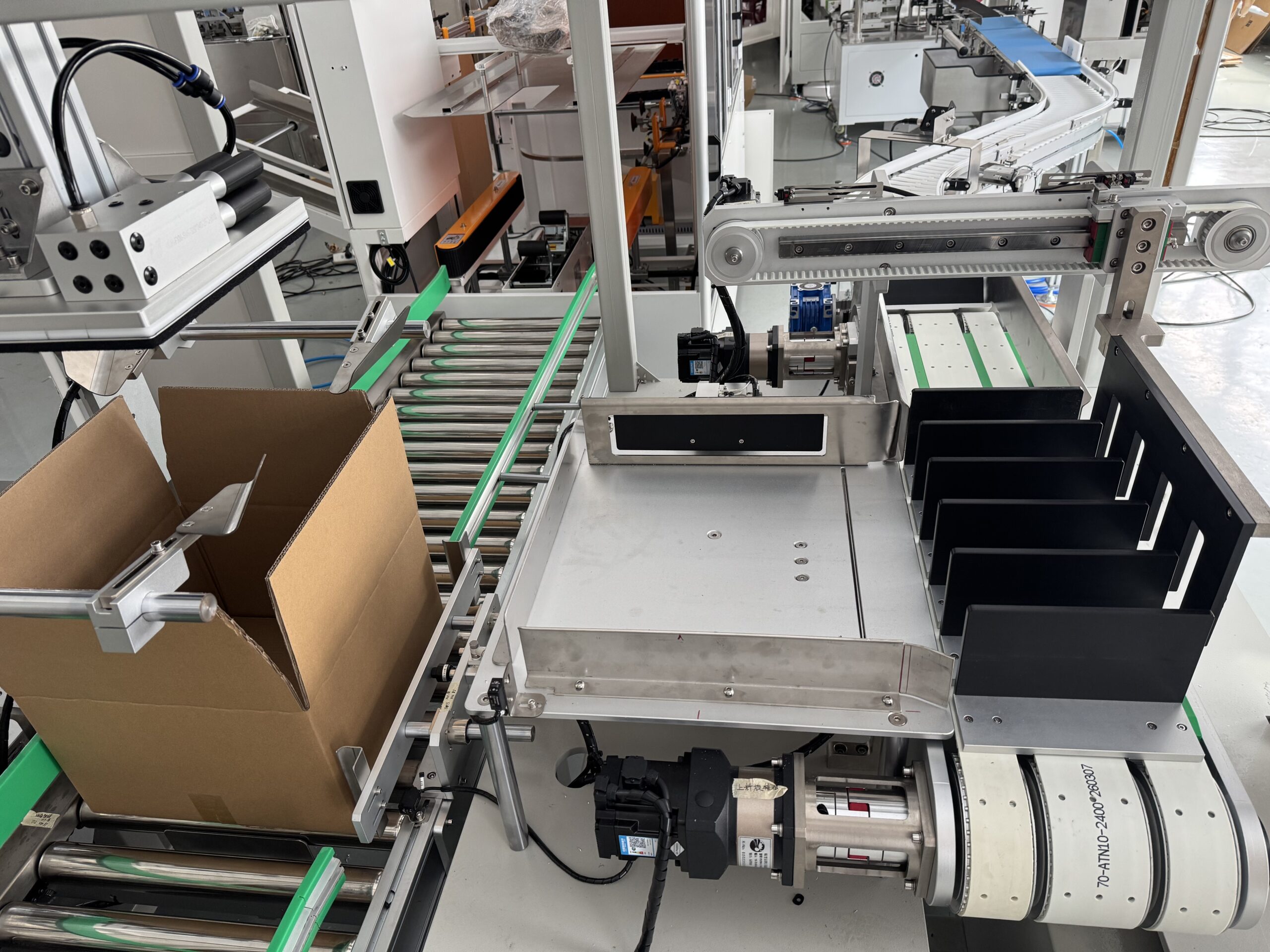
That is also why a plant with mixed formats should read the carton folding machine selection guide first, and why a manual box folding decision is a conditions question rather than a machine question. The selection question for a mixed-format plant is how wide the range is, not how fast it runs on one size. The equipment sits in the carton folding machine range, and a supplier quoting from it should be asked to quote the range against your blank stack rather than a catalogue.
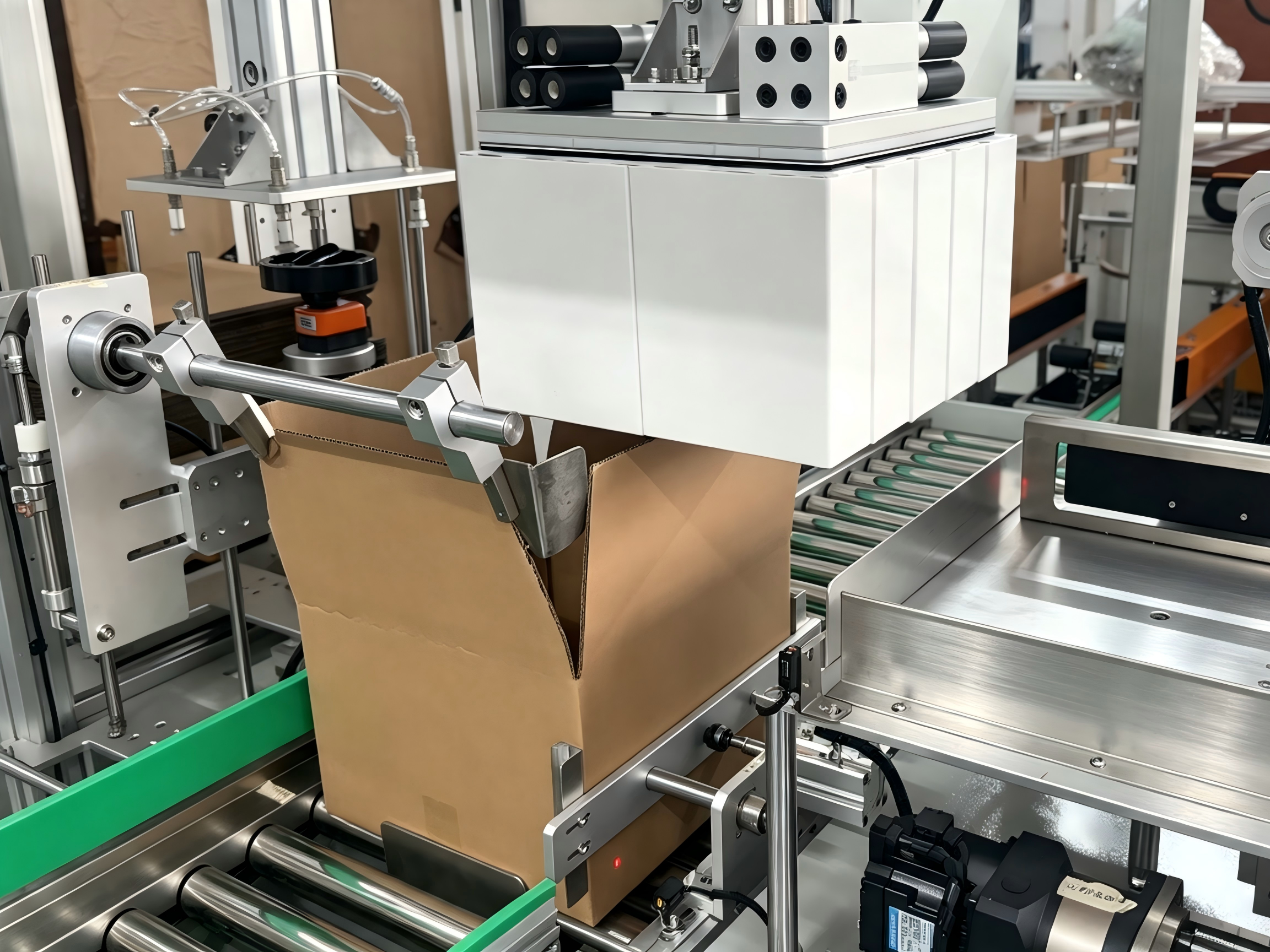
Empty mailer boxes leaving the forming station, each creased on the same line. That consistency is the argument for the machine, and the reason a drifting blank is a problem.
What to Take Into the Meeting
The decision needs six answers, each from a document the plant already holds. Not a quote, not a catalogue range. A document.
Mailer box blank uniformity is the one to check first, because it decides whether the machine can hold a crease at all. That one is a property of the supplier’s die and the plant’s incoming inspection. It is either true or it is not.
Pull the blank order and the SKU list. Pull the changeover log. Pull the shift roster and the task sheet for the station where the folding happens today. Pull one sample blank of every size in the concentrated volume and stack them the way the machine receives them.
Then write the answers down the way the line output measurement sheet is written: the figure, the record behind it, the owner. A plant that arrives with the blank stack on the table and six answers on paper is doing a manual vs automatic mailer box folding comparison. A plant that arrives with a supplier’s range is doing a sales conversation.
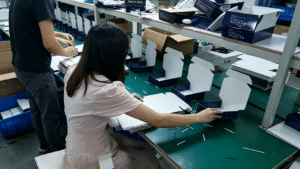
One box, one operator, one bench. This is the operation a machine has to beat, and it is worth watching it for an hour before writing anything down. The time study nobody did is the reason half the folding decisions on the floor are guesses.
[Send us your blank stack and your changeover log, and we will tell you which of the six conditions your own records decide, before anyone quotes you a machine.]
Email: helen@huanlianauto.com
FAQ
How do you decide between manual and automatic mailer box folding?
On six conditions, all from your own records: the spread of box sizes you run, whether the blanks are identical every time, how many formats change in a shift, who does the folding today, what a format change costs you, and what happens to the box after it is formed. If the answers point in both directions, the folding is probably not the bottleneck.
When is folding mailer boxes by hand the better choice?
When the formats change too often for fixed tooling, when the volume is too small to cover the setup, when the boxes are rigid or decorated so that any fixed grip would mark them, or when the folding sits between two other jobs rather than being a station of its own. None of those is a failure to automate.
What does a supplier need to quote an automatic mailer box erecting machine?
The physical blank of every size in your volume, not a drawing. The board specification and flute. The dieline for each size. Your SKU list with the volume in each. And the changeover pattern, so the supplier can say what the machine does between formats.
How many formats should a mailer box folding machine handle?
There is no number to quote, because the answer depends on your range, your blank consistency and your changeover pattern. The useful question is narrower: which formats hold the volume, and can the machine hold those without being adjusted for each.
What if our blanks are not consistent?
That is worth knowing before the purchase, not after. A machine repeats one motion, so it absorbs blank variation as mis-creased boxes rather than as a stop. Ask the blank supplier whether each size comes off one die and whether the die is maintained, and check the incoming inspection notes. Fixing the blank supply is often cheaper than a machine that fights it.