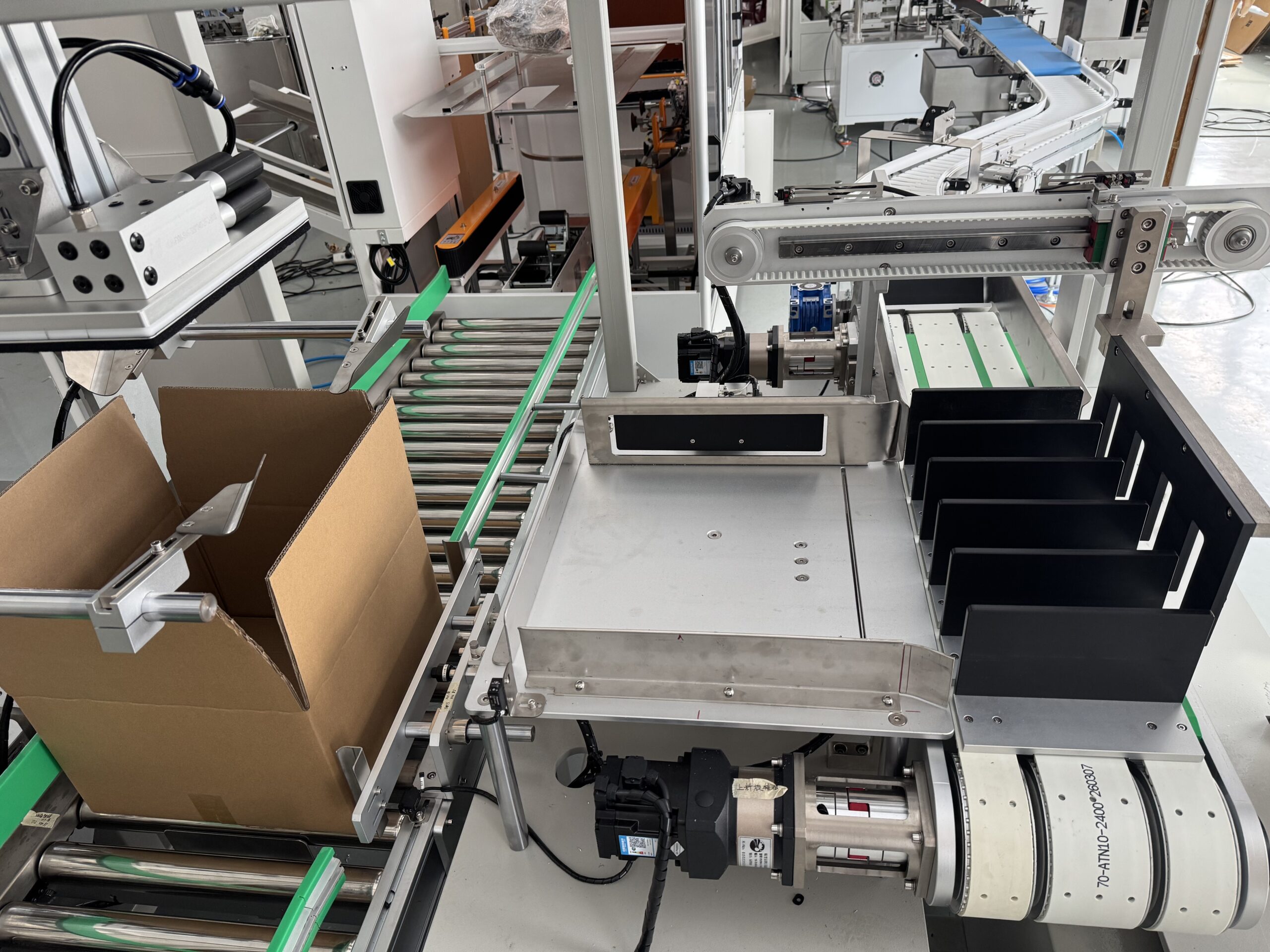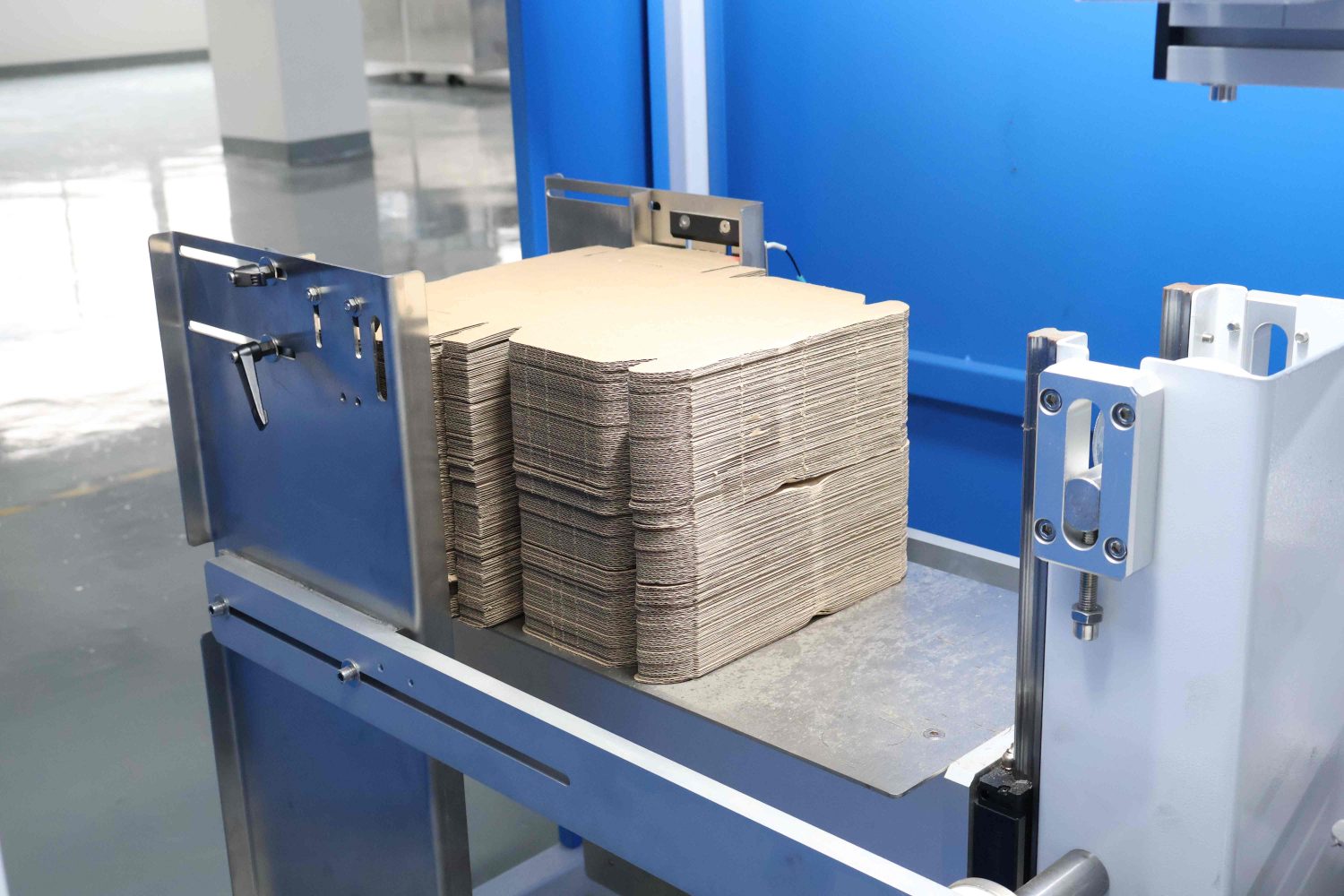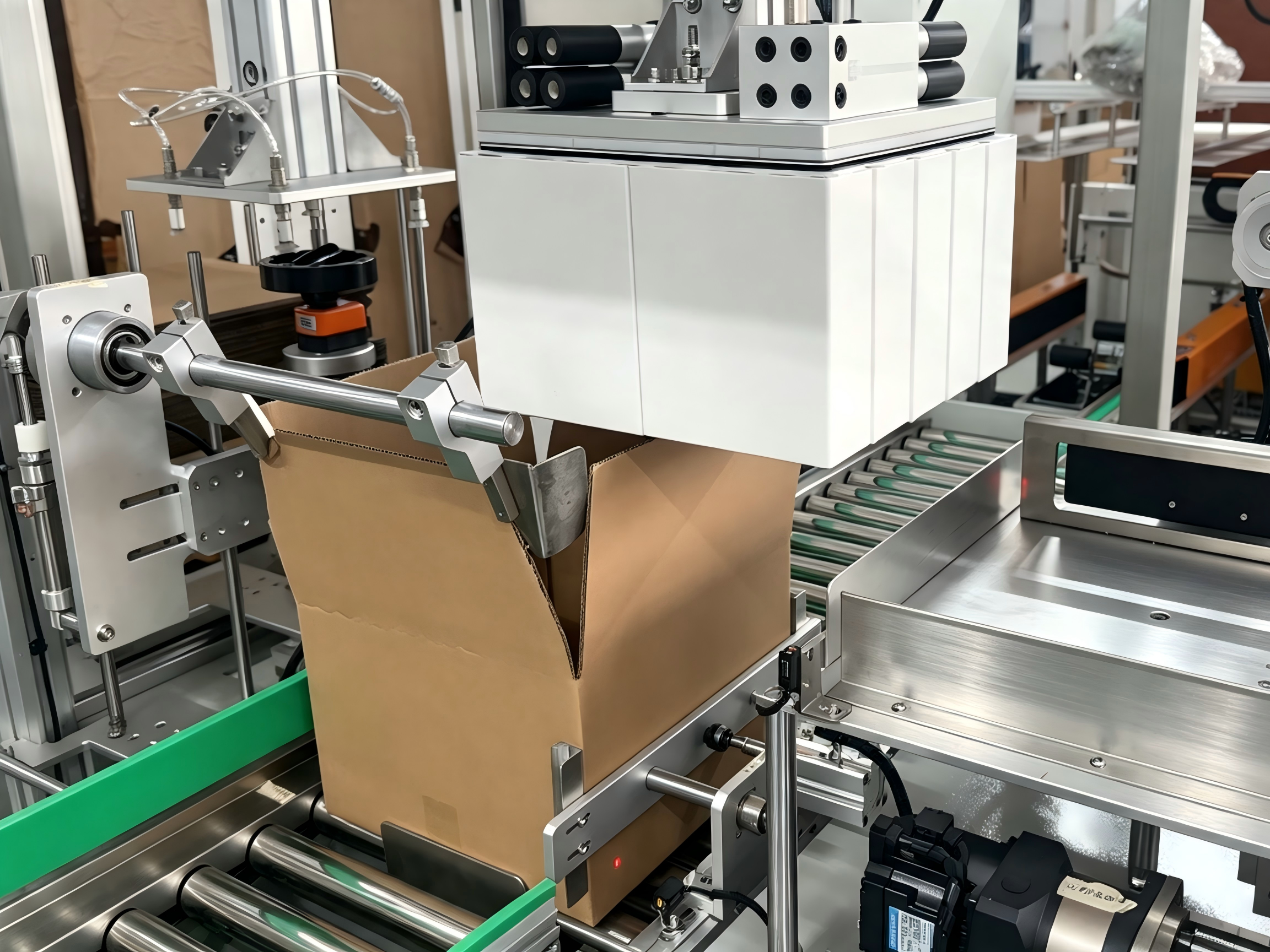
Case packing SKU verification asks a different question from the one a checkweigher asks, and the gap shows up after the truck has left. A case passed the scale. The customer opened it and found the wrong product inside. Everything the plant recorded said the case was good.
Automatic case packing and weight checking solve a real problem. They catch the mechanical packing anomaly, the missed carton, the count that does not match the order. They do not necessarily catch the wrong SKU, and least of all when two SKUs sit close together in weight. That error can also come from picking, order grouping, label master data, or the final check. A passing weight result does not prove the order was filled right.
Break the outer-carton process into stages and the question becomes answerable. Opening the case. Inserting product. Counting or identifying. Sealing. Identity verification. The outbound event record. Six stages, each with its own blind spot, and the blind spots do not line up with the machine names. That is how a checkweigher and a case sealer can both work and the case still be wrong.
Most plants run one SKU per case and the question does not arise. Where the plant does use a mixed SKU case, one more thing is needed on top of the six stages: a real association between the SKU and the case ID, plus written rules for repeat scans, mixed cases, missed scans and exception removal. Those rules are not machine features. They are decisions somebody has to make, then write down.
When the customer evaluates the line, accept four things separately. Mechanical case-forming success rate. Wrong-item interception capability. Net good cases for the whole line. WMS event consistency. Passing the first does not mean the other three have been achieved. A supplier putting all four on one line of a quotation is offering one measurement and naming it four.
The Outer Carton Process, Stage by Stage
What each stage sees, and what it misses
Most plants think of the case as one operation. It is six, and each stage fails in its own way. Write them down in the order of the line, because a supervisor asks which stage should have seen this. Case packing SKU verification starts at the case, not the scale.
| Stage | What can go wrong here | What the stage catches | What it cannot catch |
|---|---|---|---|
| Opening the case | The erector jams, a flap folds wrong, the case panel is worn | Cases that cannot physically hold product | Whether that case fits that SKU |
| Inserting product | Units arrive from the wrong buffer, a gripper drops one | A missing unit, a jam at the infeed | Which SKU the unit is |
| Counting or identifying | The count is read from a template, not a scan | A count that disagrees with the expected count | That the units counted are the units ordered |
| Sealing | The wrong flap, tape across the label, the sealer on a setting for another board | That the case is closed | What is inside it |
| Identity verification | The case label carries a code from an edited master record, or a scan goes through with no match | A case code that is unreadable or has no match | That the code matches the contents |
| Outbound event record | The event is written against a case ID that was not raised, or the write fails and it ships | Nothing on the floor. This one happens in the system | That the record and the case are the same case |
A side load case packer pushes boxed product into the case. The product arrives already decided. Nothing at this station decides what the case contains.
The checkweigher compares weight, not identity
Most of the confusion comes from the checkweigher. It compares the weight of this case against an expected value for this SKU, and when two SKUs sit close together in weight, the wrong one still lands inside the tolerance. It is doing its job. It is measuring mass.
The expected weight comes from the plant’s own SKU set and weight data, packaging and case included, so no outside figure says whether the comparison is meaningful. Where two SKUs share a nominal weight, the gap narrows as the case fills. That is when the checkweigher’s answer stays comfortable and the complaint arrives. Case packing SKU verification has to start somewhere other than the scale.
Four Places a Wrong SKU Enters the Case
The symptom the customer sees, and the check that would have caught it
The stages tell you where to look. The four error sources tell you what to look for, and the customer sees none of them the same way. Case packing SKU verification at the case level comes down to which you are actually catching.
| Error source | What the customer actually sees | The check that would have caught it |
|---|---|---|
| Picking error | The case holds the wrong filament. The spool label inside reads correctly | A scan at pick time comparing the picked unit against the order line |
| Order grouping | The case holds two SKUs that were both on the order, in wrong quantities | A case level SKU list reconciled against the order lines before closing |
| Label master data | The case label scans and decodes, and points at a SKU that is not inside the case | The master record behind the code checked against the SKU record |
| Final verification | The wrong case reaches the pallet. Nobody looked at the last station | A final verification reading the case content against the case ID |
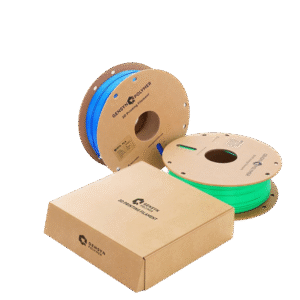
A spool and its retail box. The customer holds this unit and compares it with what the case label claimed. That is where the picking error and the master data error stop looking alike.
The label carries an identifier, not the contents
The case label is the part of the outer carton most people trust, and it is worth being precise about what it carries. The code identifies the case. It does not describe what is inside it, and it comes from a master record somebody can edit later. That is the weakness described in why a readable barcode can still be the wrong batch, one layer up: the batch label was right for a spool, the case label is right for a case, and neither checks the other.
Where that data enters the plant systems is a separate question, and how barcode and QR data reaches WMS and ERP sets out that interface. The point for the case is narrow. A code in the WMS event log tells the system which case is being reported. It does not tell it what was picked in, unless something upstream wrote that down.
A Mixed SKU Case Needs a Real Case ID
The association has to exist at the moment of insertion
A count of pieces in a case is not an association. A template that says this case is SKU X is not one either, once the plant mixes SKUs. What the plant needs is a record tying the case ID to the SKUs that actually went in, created while the units go in and carried to the outbound event. Then the case ID is something you can go and look at.
Whether that runs at unit level or order line level is the customer’s risk decision, and it goes with the question of whether one serial per spool is enough or whether the case needs its own identity. Both belong with the integrator.
Four rules that have to be written down
Repeat scans. The same unit scanned twice into one case, or the same case scanned at two stations, has to be defined and handled. Without a rule, one reading is accepted and the count drifts.
Mixed cases. Which SKUs are allowed to share a case, and who signs off a new pair, is a decision with an owner. The plant usually already makes it, in conversation rather than a document.
Missed scans. A case where a scan did not happen must have a defined path, and it should not be the quiet one. A case with no scan does not pass by being quiet.
Exception removal. A case pulled out at the reject station has to leave the record as well as the floor. If it is still in the WMS event log, the system believes it shipped, and the interception was only half done.
The mechanical side of all four is the same question as the handoff signals between two machines on one line. What does the next station do when the one before it has nothing valid to hand over? On a mixed SKU line, case packing SKU verification is mostly this paragraph, written down before the line runs.
What the Customer Should Accept Separately
Four items, four different proofs
The acceptance test is where a lot of this gets lost, because the supplier passes a demonstration and the customer signs for something wider. Four items, four pieces of evidence, four different days if the plant runs it that way. The sheet needs a line each.
| Acceptance item | What a pass looks like | What a pass does NOT prove |
|---|---|---|
| Mechanical case-forming rate | Cases formed, closed and presented correctly, rejects counted and explained | That the cases hold the right product |
| Wrong-item interception | A wrong SKU put into the line is detected and the case is removed | That detection covers every route in, including the manual pick upstream |
| Net good cases for the whole line | Cases off the end sealed, correct and shipped, divided by the cases that started | That a good count is a correct count |
| WMS event consistency | The events match the cases physically present: same case IDs, quantities, SKUs | That the data behind those events was correct when written |
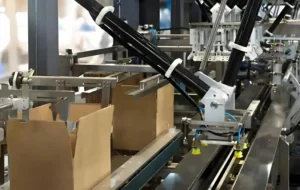
A robotic case packing station at the end of the line. Interception here is a mechanical fact about grippers and vision, and it has to be shown on the abnormal case, not the clean run.
Test the abnormal case, not the clean run
The demonstration worth asking for is the abnormal one. Feed a case of the wrong SKU into the run deliberately and watch what happens. A line that catches it, removes it, and writes the removal into the record has told you something a clean run video does not. A line that passes it has answered the question that mattered.
Interception is worth separating into two claims before anybody signs. The first is that the machine can identify a wrong unit. The second is that the plant process routes that unit to the wrong place, which is where the picking error and the order grouping live. A supplier can prove the first on the machine. The second is a process question, and the customer owns the answer.
The Records Behind the Verdict
Every line has a version of this problem, and it has nothing to do with SKUs. A customer says the filament was wet, the bag was sealed, the gauge read normal, and the plant cannot show which check should have caught it. The same discipline applies to a wrong SKU. If the plant cannot name the stage, the rule and the record that should have caught it, the customer cannot name them either. That is what the record to pull when a customer says the filament was wet anyway is for. Applied to the outer case, it turns a wrong SKU into a record: which stage, which rule, which WMS event.
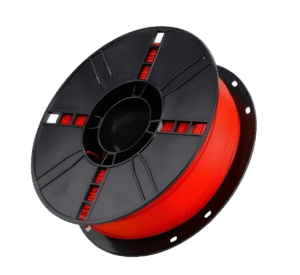
A labeled spool. The label reads, the label is right about the spool, and the case around it is a separate question.
Case packing SKU verification is not a machine feature you switch on at commissioning. It is a set of written rules and a set of records, and the case that reaches the customer is the proof of both. Bring the composite case to a supplier and ask which of the four sources it came from. If the answer is a clean run, you have an answer about the machine, not the case.
A case packer forms, loads and closes the case, and what a case packer does that a case sealer does not separates the two machines. The one thing neither does on its own is decide what the case contains. That decision was made upstream. If the line is being specified now: case packer.
FAQ
Does a passing weight check confirm the right SKU?
No. A checkweigher compares the weight of a case against an expected value for that SKU, and when two SKUs sit close together in weight, the wrong one still falls inside the tolerance. The weight check answers whether the case holds the expected amount, not whether it holds the expected product. Interception comes from identity.
Does an automatic case packer include order traceability?
Not by itself. A case packer forms, loads and closes cases, and some machines read a code at the infeed or the outfeed. Order traceability means the association between a case ID and what went into it, carried through to the event written to the WMS. That is a set of rules and records, specified and tested rather than assumed.
What should a customer accept separately when it evaluates a case packing line?
Four items, on four different pieces of evidence. Mechanical case-forming success rate. Wrong-item interception. Net good cases for the whole line. WMS event consistency. A pass on the first says the machine forms cases well. It says nothing about the other three, and the four are often measured on different days, so the sheet needs a line each.
How do you catch a wrong SKU in a case when two products weigh almost the same?
You stop relying on the weight. Pick the wrong unit upstream and the checkweigher passes it, so interception has to happen earlier, where the unit is picked or scanned in. The test to ask a supplier for is the abnormal one. Feed a wrong SKU into the line and watch what happens. A clean run tells you nothing.
What rules does a mixed SKU case need?
Four of them, written down. Repeat scans, so the same unit or case scanned twice is defined and handled. Mixed cases, so the SKUs allowed to share a case are stated and the decision has an owner. Missed scans, so a case with no scan does not pass by being quiet. Exception removal, so a case pulled out leaves the record.