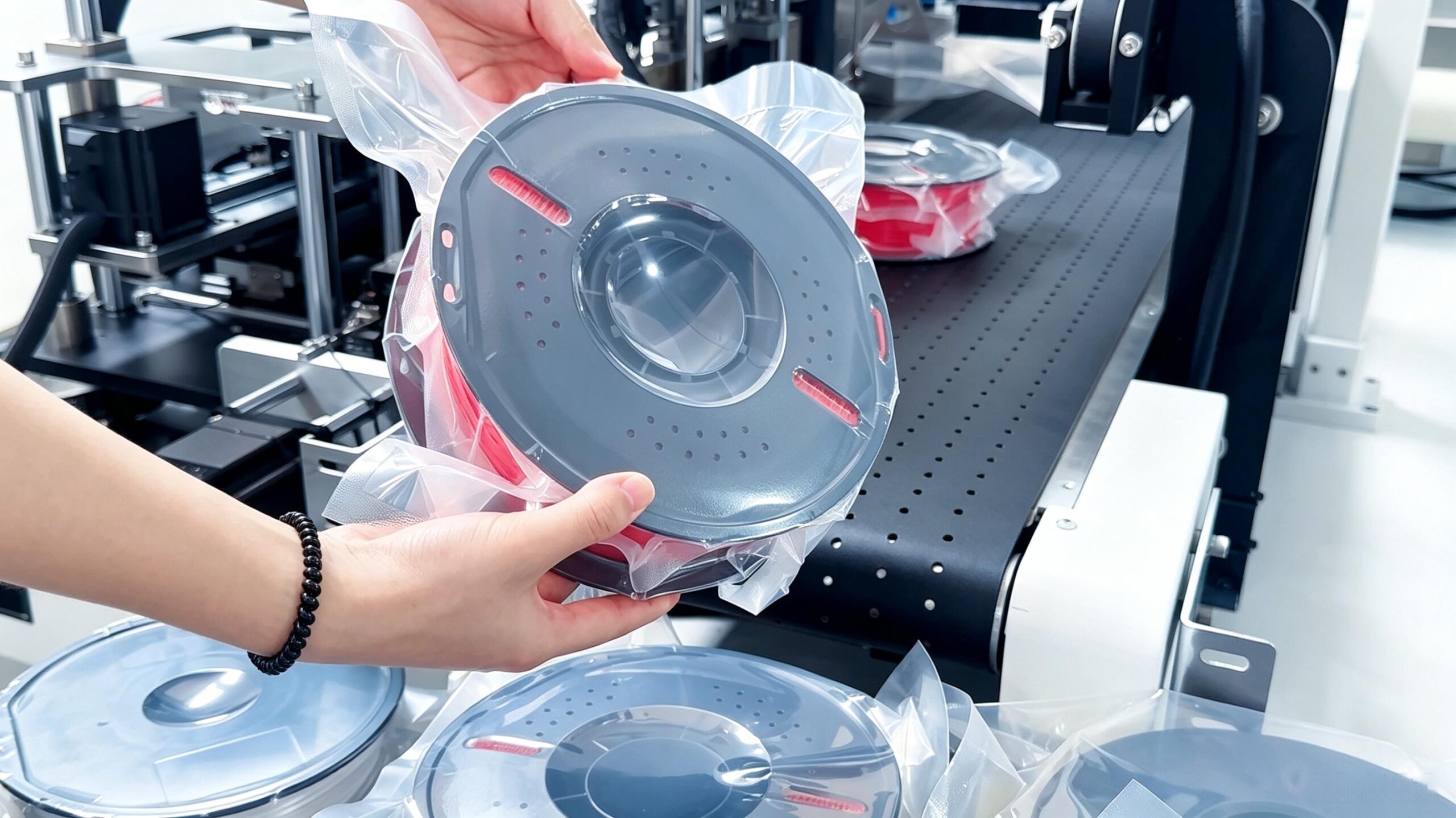
Filament traceability fails in a way that looks exactly like success. The barcode scans. The label reads clean. The batch is still wrong.
A plant buys a complete filament packaging solution. Bagging, sealing, labeling, a verification scanner at the end of the line. Months later a customer sends a spool back and asks which batch it came from. The label was printed from a master data record that had already been edited, so the code points at a batch that never ran that material. Nothing on the line looked wrong that day.
Scan succeeded. Wrong data in. The gap between those two sentences is where filament traceability is won or lost.
A Scannable Code Is Not a Correct Batch
When the spool was never tied to the work order
Two things have to hold for a label to mean something. The code was raised from the right master data. And the physical spool carrying it is the one the record was made for. Miss either and you get a barcode batch error no scanner can catch, because scanning only proves the code is readable.
Both failures look the same from the floor. A label printed from a stale SKU record scans clean. A label applied to the wrong spool scans clean. What separates them is the record trail behind the code, and the record trail is not in the scanner.
The composite case is ordinary. Two materials run in one shift, one batch label covers both because somebody set the field once and forgot it. The codes all read, and the customer receiving the wrong one cannot tell which side of the shift it came from. Neither can the plant.
Start with where labeling sits on a filament packaging line. The labeler is normally the last point where a mistake can still be caught by contact. Everything after it is data, and data does not look wrong when it is wrong.
The Six Steps of the Traceability Chain
What each step establishes, and what it does not
A traceability chain is six steps, and the failures hide in the gaps between the steps rather than inside them. This is where filament traceability is actually decided.
Confirm the SKU and batch master data. Identify the physical spool object. Print the label according to the rules. Re-scan after application. Write the result into the event log. Isolate the cases that went wrong: wrong codes, duplicate codes, network outages, reprints.
| Step | What it establishes | What it does not establish | Where it fails |
|---|---|---|---|
| Master data confirmed | A batch record exists for this SKU | That the record is the current one | An edited SKU or batch record |
| Spool identified | Which unit the record belongs to | Which unit carries the label | Spool identification taken from a template or a count, not from the unit |
| Label printed by rule | The code matches the printing rule | That the rule matched the batch | Wrong master data behind the rule, print database not updated |
| Re-scanned after application | The applied label still reads the same code | That it sits on the right spool | Read failure, double application, label across a seam |
| Event log written | A record exists for this unit | That the data behind it is true | Network outage during the write, or a write never committed |
| Exceptions isolated | Wrong, duplicate and reprinted cases were stopped | That nothing else was missed | A duplicate accepted, a reprint with no link to the original |
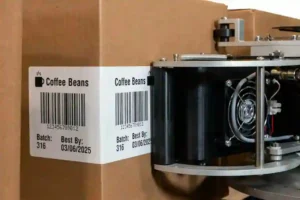
Print and apply labeling puts the code and the packaging in contact for a moment. After that moment the link exists only as data, and data has to be written down somewhere on purpose.
For the build side of the same chain, see how QR code tracking is put together on a filament line. The part that is easy to skip is the column on the right of the table above, the step a given setup does not actually establish.
One decision sits on top of the chain: batch code vs serial code. A batch code ties a group of spools to one run. A serial code ties one spool to one record. Which one you need depends on the product and the quality risk, and the decision belongs to your own risk assessment, not to the machine. Serializing every spool narrows a recall and settles a dispute faster, and puts a per-unit data obligation through labeling, rework and shipping. Batch level is simpler and often enough when the risk sits in the material rather than in one unit. See which identity model to build the label on.
Neither answer is wrong. The expensive answer is the one you did not decide on purpose.
Four Ways a Traceability Chain Breaks
The symptom, and the check that catches it
Most barcode batch errors arrive in one of four shapes. The symptom tells you which one you are looking at, and each has a check that catches it before the spool leaves the line. Filament traceability holds when those checks run, not when the labeler looks busy.
| Failure mode | What you observe | The check that catches it |
|---|---|---|
| Wrong master data | Code scans, batch absent or under an old SKU | Print from a stale SKU revision, confirm the line refuses it |
| Wrong physical object | Two spools carry codes for different batches | Bind the print to the unit, reconcile counts against units produced |
| Duplicate code | Same code on two spools, one code with two records | Scan the same code twice, confirm the second is refused |
| Network outage and reprint | The line kept running, the log has a gap | Drop the link mid-run, check queued writes reconcile and the reprint is linked |
Wrong master data is the quiet one. Nothing on the line complains. The label prints, the code reads, the event log grows. The error surfaces weeks later, when somebody reconciles the log against the production record and finds the two disagree.
Wrong physical object is the other quiet one, and it turns on spool identification. If the unit is identified by a queue position, a shift change, or an operator counting what came off the machine, the identity of the label and the identity of the spool are decided by two people who never compare notes.
A reprint is where a barcode batch error gets its cover. The damaged label is destroyed, a new one goes on, and the code may or may not be the same code. Print and apply labeling makes reprints easy, which is why reprint verification has to be a written rule before it is needed: which reprint keeps the original code, which takes a new one, who authorises it, and how the event log links the two. A reprint with no link is a second, undocumented unit in your data.
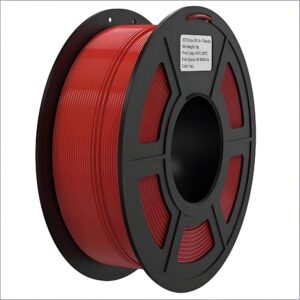
One spool, one applied label, one code. The label is only as good as the record the print was raised from, and the record is not on the spool.
Where the Machine Ends and Your System Begins
Two scopes, and the handoff between them
A cross-device traceability project has two halves, and most arguments about it come from a scope that never said which half was whose. A filament traceability project nobody scoped this way stalls in the same place.
UBL’s side is the mechanical and electrical interface for print and apply labeling: printer, applicator, trigger, read-code scanner, and the signals between stations and the line controller. For that interface we can research what is required, what it connects to, and what the machine hands over.
Read what a print and apply labeling machine actually does before you write the specification. The machine decides how a label is printed and applied. It does not decide what the code means. The hardware options sit in the labeling machine range.
Your side is the data. ERP and MES integration, the fields that carry SKU and batch, the NFC protocol if a tag is involved, and whether the quality data behind the code is true. UBL cannot sign off on any of those, and neither can a machine. See the interface clauses to write before the machine is ordered.
NFC deserves a straight answer, because it is often assumed to be standard. It is not standard equipment on every machine. Where a customer wants it, the real questions are where the tag sits, who writes it, and which protocol the reader expects. The write, the protocol and the data behind it belong to your system or your integrator. Settle it in the same meeting as the mechanical scope, or it stalls late.
One more interface sits between stations, and it is easy to forget. A re-scan result only counts if the downstream station accepts it. A labeler that verifies a code and a cartoner that ignores the verdict are two machines arguing. the handoff signals between two machines on one line covers how those handovers are built, and why a bottleneck anywhere in the net sets the pace of the slowest stage, not the fastest. A verification station at the end of a starved line slows it down and adds a scan.
Ask for the Abnormal Cases
What to run, and what a pass looks like
An evaluation that shows one successful scan has shown you that the printer works. It has not shown you that the traceability chain holds. Ask for the abnormal cases, and ask to see what the line does, not what the slide says.
| Test case | What to run | What a pass looks like |
|---|---|---|
| Normal run | Live master data, real label format | Every code prints, reads back, lands in the log against its unit |
| Duplicate code | Same code on two units | Second unit refused at the re-scan, one code on one unit |
| Wrong SKU | Deliberately stale SKU revision | Line stops on the mismatch instead of printing cleanly |
| Network outage | Drop the connection mid-run | Line holds or diverts, no unit passes without a record |
| Reprint | Reprint a damaged label | Reprint linked to the original in the log, under a rule you can name |
| Unreadable print | Print a label that will not read | Unit diverted at the re-scan, not passed with a warning |
Who runs the test cases matters as much as which ones. Run them on the customer’s own master data, with the customer’s own label file, on a line configured as it will run in production. A test on a demonstration file only proves the machine handles that file. See the verification cases that provoke each handover.
The abnormal cases are the evaluation. If a supplier will not run them, you are watching a printer rather than a chain.
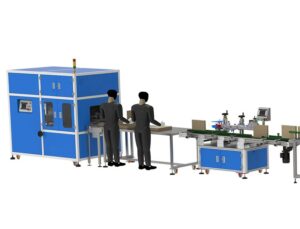
Two stations, one line. Every handover between them is a place where a verification verdict can be accepted, ignored, or lost in transit.
The Record That Answers the Next Dispute
Questions to settle before the line runs production
The next dispute will not ask whether the barcode scanned. It will ask which run the material came from, when it was packed, and whether anyone can say so without guessing. The answer comes from records, and records come from the chain.
So settle these before the line carries production, and write the answers where the plant can reach them:
- What the event log holds for every unit, and who can read it after a shift change
- Who owns the ERP and MES integration fields, and who signs off on the data in them
- How a reprint is authorised, which code it carries, and how it links back to the original unit
- Whether NFC is in scope or out of scope, and who writes and reads the tag
- Whether a unit is identified by batch code or by serial code, and which risks drove that choice
- What the line does when the data link drops, and who decides when it runs again
None of these are answered by the machine. The line is what makes the answers repeatable, which is the value of filament traceability to a plant already through one dispute.
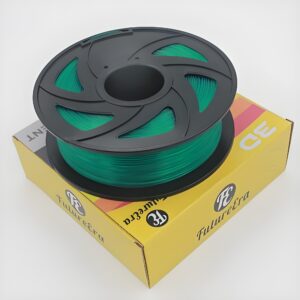
The finished unit in its retail box is what the customer scans when they want to know what they are printing with. Whatever that code says, the record behind it has to exist before the box is closed.
FAQ
Why can a barcode scan and still be the wrong batch?
Because a scan proves the code is readable, not that the code belongs to this spool. The code has to be raised from the right master data and applied to the physical unit the record was made for. Miss either link and a clean scan carries the wrong batch into your system, and into the dispute that follows.
Must every spool be serialized?
Not always, and it is your call. Batch code vs serial code is decided by the product and the quality risk. A serial code gives the narrowest recall and the strongest answer to a dispute, and it adds a per-unit data obligation through labeling, rework and shipping. A batch code is simpler, and is often enough when the risk sits in the material rather than in one unit. The value belongs to your own risk assessment.
Is NFC a standard UBL feature?
No. NFC is not standard equipment on every UBL machine. Where a customer wants it, the real questions are where the tag sits, who writes it, and which protocol the reader expects. The tag write, the protocol and the data behind it usually belong to your system or your integrator. Ask for the interface to be defined and tested rather than for a feature name on a specification sheet.
Where do procurement and responsibility sit on a cross-device traceability project?
Split it at the interface. UBL can work on the mechanical and electrical side of print and apply labeling, and on read-code connectivity: printer, applicator, scanner, triggers and the signals between stations. Your IT team or integrator owns the ERP and MES integration fields, the data behind the code, the NFC protocol and whether the quality record is true. Name both sides in one specification, or you end up with a machine printing codes nobody owns the data for.
What should a traceability evaluation actually demonstrate?
Abnormal cases rather than one good scan. A normal run, a duplicate code, a wrong SKU, a network outage, a reprint and an unreadable print, with a demonstration of what the line does in each. A video of one successful scan proves the printer works. It does not prove the chain holds.