A labeling system interface is where the packaging line and the plant system that feeds it meet, and it is the part of a labeling machine purchase that gets written down last and understood least. The machine has a specification, a speed, a price. The interface has none of those. It gets a paragraph in the quotation, a test on the supplier floor with the supplier’s own file, and then it is why a plant cannot close its month.
That is why this article is written for the person holding the purchase order. A labeling machine can be picked off a spec sheet. A labeling system interface cannot. It has to be written down as clauses, in language a clerk, a supplier engineer and a plant IT lead can each read.
The interface is not the software. It is the agreement about what crosses the boundary, in which direction, in what shape, and what happens when it does not arrive. The acceptance clause and the interface specification are two halves of one document, and a purchase that separates them gets a machine that works and a plant that cannot use it.
Two articles on this site sit on either side of this one. What a print and apply labeling machine actually does is the machine side. Why a readable barcode can still carry the wrong batch is the data side. Neither is about the agreement between the two.
What the Interface Actually Is
The data that crosses, and the data that comes back
A labeling station needs a few things from the plant system before it can print, and it needs to send a few things back after it has. Confusing the two directions is the most common way a labeling system interface gets written backwards.
| Direction | What crosses | Who owns the meaning | What a plant finds in the first week |
|---|---|---|---|
| Plant system to line | The code value to print, and the artwork it belongs to | The plant system, which holds the master data | The line prints, but the value does not match what the plant system sent |
| Line to plant system | The code printed, the time, and the read result | The line, which alone knows what the applicator did | The plant system holds a label that was not applied, or nothing about one that was |
| Line to plant system, exception | The diverted part and the reason it was held | Both, where the disagreement starts | A diverted spool appears on the plant side with a reason nobody defined |
Read that as an agreement between two departments rather than between two machines. The plant system knows what the code means, the line knows what was printed on the spool, and both facts have to survive the journey. An interface carrying only one leaves a gap that surfaces later.
Why it is written last
The machine is usually chosen first, because the machine is what the quotation is built around, and the interface gets whatever space is left over. The people who write the interface clause are often not in the room when the machine is specified, and are often the ones who did not attend the factory acceptance test. The fix is procedural. Write the clauses before the machine model is fixed, and treat any change to the machine as a reason to re-read them, because a different applicator head changes how a read is performed, a different printer changes what the read is checking, and a different network segment changes what the line can ask for.

The operator’s screen and the clipboard beside it are the same interface seen from two ends. The screen is the machine’s side and the paper is the plant’s side, and a purchase that only specifies the screen leaves the paper to be written later, by whoever is still at the plant.
The Clauses to Put in the Contract
What follows is not a template to paste. It is the list of clauses a labeling system interface needs, in the order a purchase discovers it has missed one. Each is written so it can be tested, because a clause that cannot fail cannot be signed off.
What the line is allowed to ask the plant system for
The first clause is about permission, not about data. A line told it may request a record for a specific code, at a specific moment, on a specific network path, can be tested. A line told only that it is integrated is one where every test depends on somebody finding a firewall rule by hand.
| Clause | What it has to say | How it gets tested | What the plant sees without it |
|---|---|---|---|
| Scope of the request | Which records the line may ask for, keyed by what | The line asks for a held code and a missing one | The line asks for everything, and the plant system refuses |
| Identity of the record | Which value identifies a spool | Two spools carrying the same value are pushed through | The plant system accepts a duplicate the line prints twice |
| Format and encoding | How the value is carried and the artwork addressed | A value with a barred character is submitted | The line truncates it, and the operator calls it a machine fault |
| Timing of the answer | How long the plant system may take | The plant system is made slow and the line is watched | The line prints the previous value while waiting |
| Behaviour when the link drops | Whether the line holds, continues, or stops | The connection is broken mid-run | Each side invents its own rule |
| What comes back | The printed code, the read result, the diverted part | A part is made unreadable | The plant holds a count with no idea which spools were held |
The clause about who owns the artwork
The artwork question is separate and causes more argument than the data question. The label design may live in the plant system, in the supplier’s system, or in a file both sides copy. Each works alone and all three fail predictably, because the copy is what diverges. The plant changes the artwork and the line keeps printing the version it has. So the clause names one owner and says how the other side is told. The test is simple: after the artwork changes at the source, the next part off the line carries the new version.
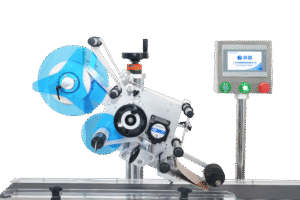
This is the panel an operator actually touches, and it is worth checking against the clauses. The buttons decide whether the line holds or continues, and the screen shows what the plant system last said.
Acceptance: What Has to Be True Before It Is Signed Off
The acceptance clause is where the labeling system interface stops being a description and starts being an obligation. It matters more here than on the machine side, because a machine can be accepted on speed and shape and an interface cannot be accepted on a demonstration.
Written as conditions, not as intentions
The distinction between a condition and an intention is the whole difference between an acceptance clause that works and one that generates a dispute. An intention says the interface will be integrated and the line will exchange data with the plant system. A condition says which record may be requested and what the line does when the answer does not come back. The first can be argued about after handover, the second tested on a bench. The pattern that works is to write each condition as a question with an observable answer, and to name who provides the input. A condition needing the plant’s own master data, artwork and network path can be tested at the factory acceptance test, while one needing a supplier demonstration file only proves the supplier’s building works.
| Condition to be satisfied | Input the plant provides | Who observes it | The sign-off question |
|---|---|---|---|
| The line requests a record the plant system holds | One master record from the live system | The plant IT lead, not the supplier engineer | Did the label value match the plant system on the same screen |
| The line requests a record the plant system does not hold | A code the plant does not keep | The operator who meets this case on shift | Did the line hold or stop, and did the reason reach the plant system |
| A label is applied and cannot be read | Nothing, the case is provoked | The plant quality person | Was the part held, and did the plant system show the exception |
| The artwork changes at the source | The plant artwork workflow | The packaging designer | Did the next part carry the new version without a copied file |
| The link to the plant system drops mid-run | Nothing, the case is provoked | The plant IT lead | Did both sides behave as the clause says |
| The printed value is wrong for that spool | The plant master data and stock | The owner of the SKU list | Could the plant find the affected spools |
None of these conditions needs a number written down. Each needs a question with an answer a person can watch happen. The plant system has to be on the other side of every one, because an interface accepted only between the supplier and themselves has been accepted by nobody who lives with it.
The station side is covered in the verification cases a print and apply station has to pass. A verification case asks what the line does with a bad label. An acceptance clause asks what the plant system does with the answer.
The line that sits next to it
One more clause belongs in the same place and is often in a different document. When the interface hands over, who may change what the line sends, and who may change what the plant system returns. If the answer differs on the two sides, the plant will eventually receive a field it cannot parse, and the line a field it did not expect. The question is how a change reaches the other side. A plant that adds a field to its master data has to tell the supplier, and a supplier that adds a field to what the line sends has to tell the plant, and both need a way to say what happens to a part on the conveyor when the change lands. GS1 publishes the vocabulary for this kind of event exchange in the EPCIS standard.
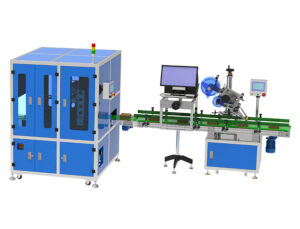
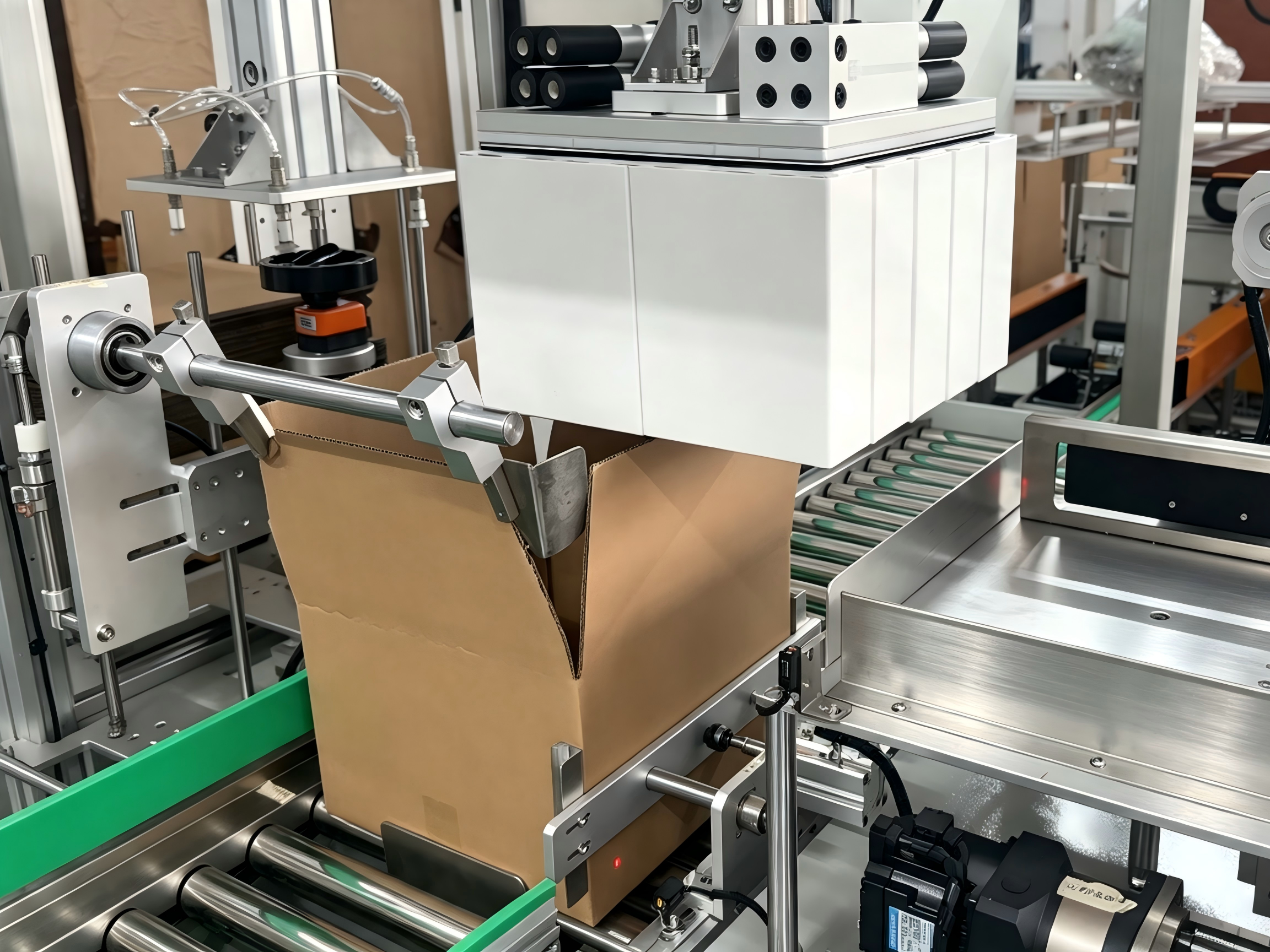
Two people beside a small line is the scale at which most of these decisions get made. They are the operator who will hold the exception and the engineer who will read the fault, and a clause that does not tell them what to do gets settled by whoever guesses.
What to Ask the Supplier
Ask which of the clauses above the supplier has already written for a customer in the same industry, and ask to see the wording, not a summary. If it differs every time, the clauses will need writing from scratch.
Ask what the line does when the plant system does not answer, and ask to see it rather than hear it described. A supplier who shows it has a design for it. One who describes it has an opinion, and the plant finds out which it bought.
Ask who on the supplier side owns the interface after handover, by name and role, and what happens to that person if they leave. An interface with no owner gets changed by whoever is nearest.
And ask the supplier to name the people from the plant who will be at the acceptance test. A supplier expecting only their own engineer has a different test in mind than one expecting the plant IT lead and the operator. The difference shows up on the day, and the day is not the place to discover it. The station is described in where labeling sits on a filament packaging line, and the equipment is in the labeling machine range.
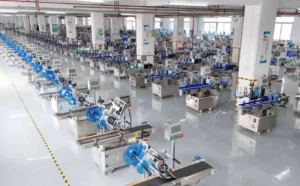
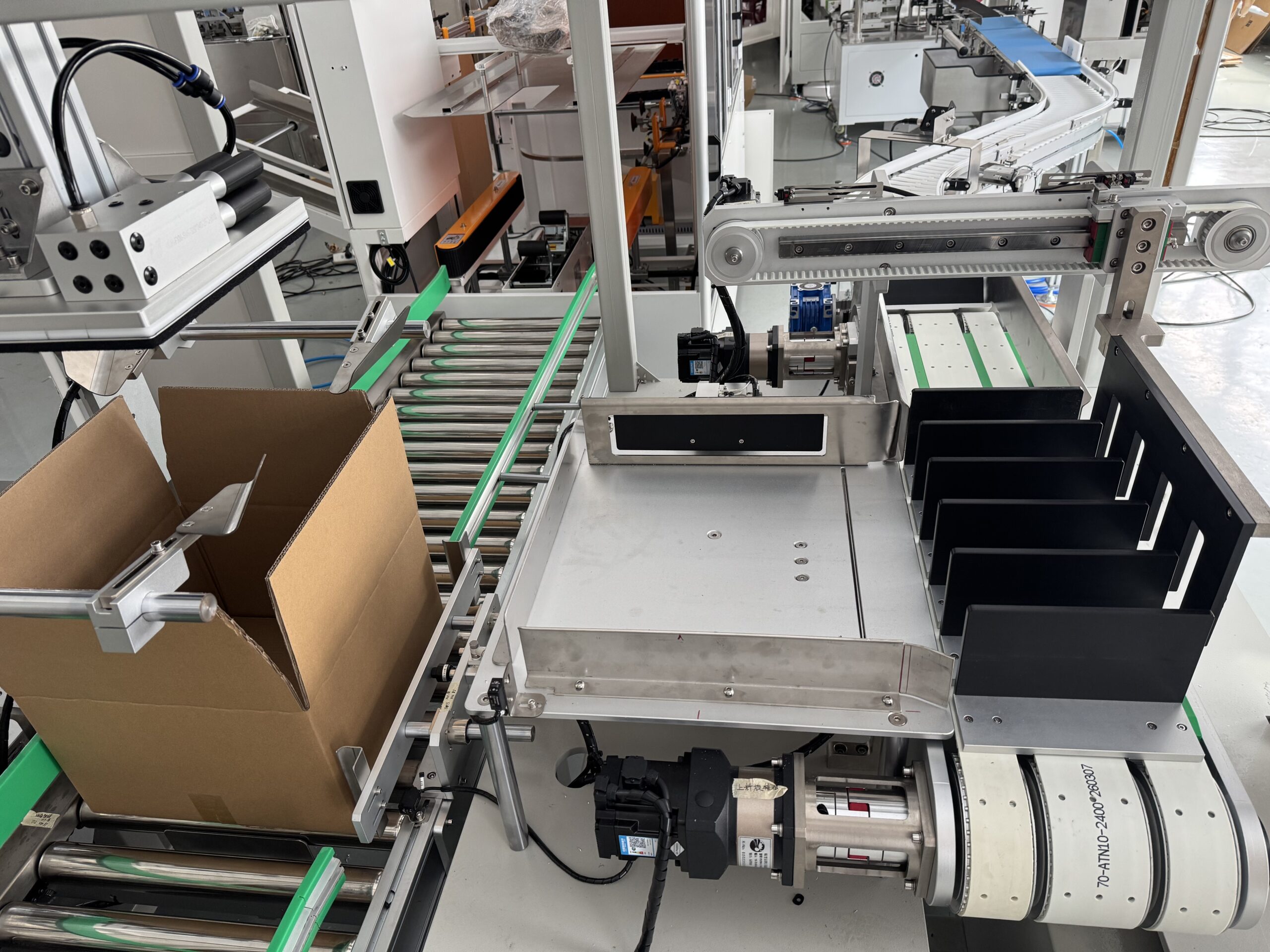
Rows of machines on a factory floor look like a capacity decision, but the ones running against a plant system are a data decision first. Each needs a master record, a read result and an exception path, and the plant system must answer for all of them.
[Tell us which system feeds your line and which one has to receive what back, and ask for the interface clauses written out before the machine is ordered. Engineering will say which parts of the data path are standard.]
Email: helen@huanlianauto.com
FAQ
Is the interface the same thing as the machine software?
No. The machine software runs the station. The labeling system interface is the agreement about what crosses between the station and the plant system, in which direction, in what shape, and what happens when it does not arrive. A machine can have excellent software and a badly written interface, and the interface decides whether it is usable.
Who should write the interface clauses, the plant or the supplier?
The plant writes them and the supplier reviews them, because the plant owns the data and carries the consequences. A supplier who offers to write them is describing their own machine, and the clauses that get missed are the ones about the plant system misbehaving.
Can the interface be tested before the machine is installed?
Yes, and it should be. The data path can be exercised against the plant system with the line standing in, which is how a supplier finds out that the plant system holds the record under a different key than the line expects. Finding that early is the difference between a configuration question and an installation problem.
What has to be in the acceptance test for the interface?
Cases that can fail, and a person from the plant who watches them. The cases that matter are the plant system holding a record the line does not have, the line printing a value that does not match, a label applied that cannot be read, and the link dropping mid-run. Each runs on the plant’s own data.
What happens to a part when the plant system does not answer?
The clause has to say, and both sides have to agree on it. Holding the part is the safe reading, because continuing on the last value means a label can carry a code the plant system did not send for that spool. Whichever way the plant decides, it needs writing down, testing, and understanding on the floor.