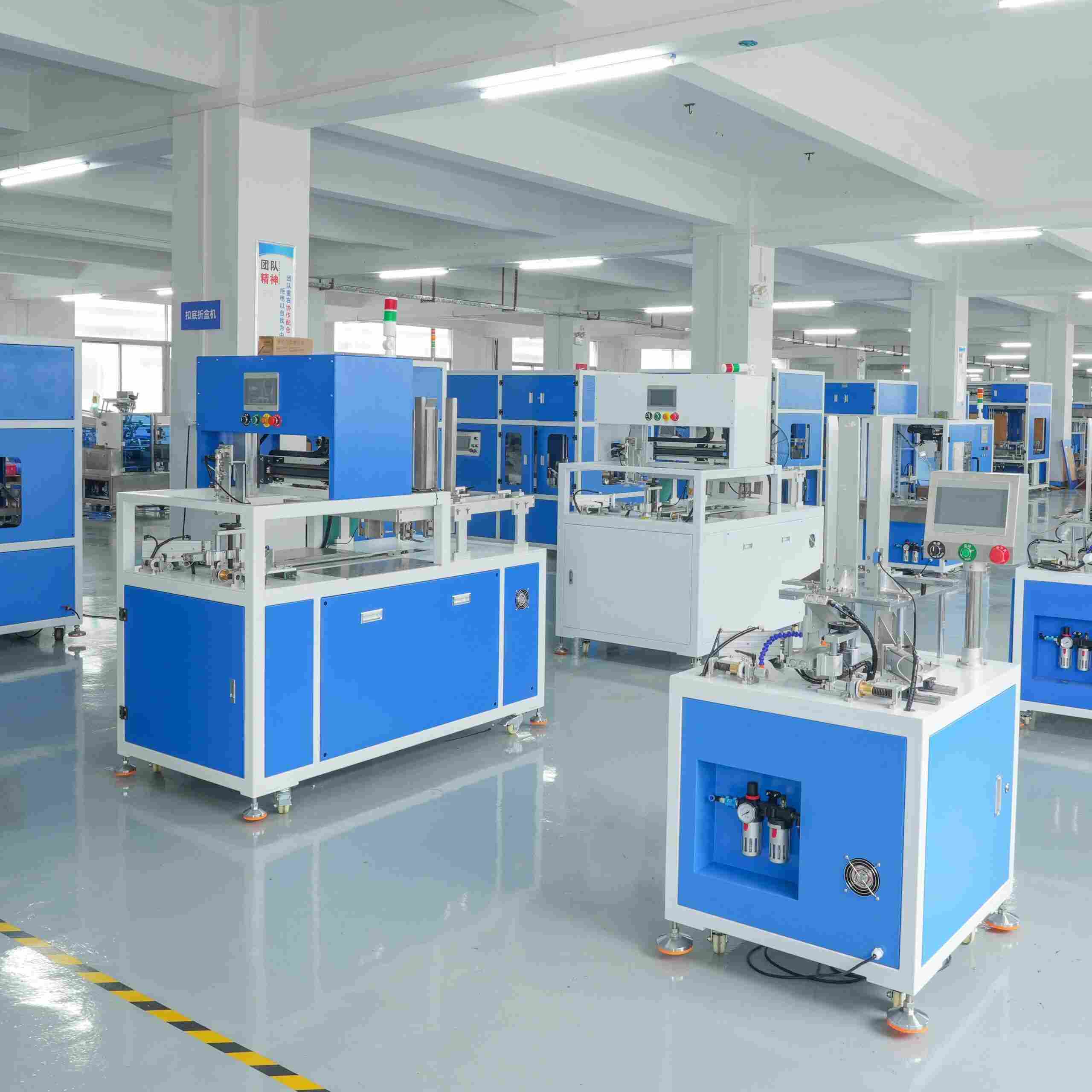
A cartoner that runs at 60 cartons a minute on a test floor can crawl at 25 on a live line, and usually nothing is broken. The erector upstream feeds blanks half a beat late. The case packer downstream trips its infeed sensor and blocks back through the transfer. Two machines that each passed their own separate run-off fail as a pair.
That is the puzzle at the heart of cartoning machine line integration. Most trouble lives in the interfaces between machines, not inside them. The cartoner is rarely the villain. The handoff is.
If you have stood at the end of a line watching cartons pile up, you already suspect that the speed printed on a quote means very little until three machines agree on a rhythm. Three handoffs decide whether a line runs: the erector feeding cartons in, the case packer taking them out, and the signals that keep them synchronized.
Find the slowest of the three, measured over a real shift, and you have found your line speed. The methods below are the ones UBL engineers use when we lay out a line, and they hold whether you buy all three machines together or bolt a new cartoner onto equipment you already run. Good cartoning machine line integration is less about buying faster boxes and more about agreeing on interfaces.
A cartoning machine does not run alone
Every cartoner sits between a feeder and a receiver. Upstream, something has to produce empty, formed cartons and hand them over at a steady rate. That job belongs to a carton erector for retail folding cartons, or a case erector if the line runs corrugated shipping cases. A manual magazine changes the handoff but not the principle behind it.
Downstream, the filled and sealed carton has to be grouped and packed. That is usually a case packer, sometimes followed by a sealer. In a few layouts the cartons go straight to a shrink wrapper or a palletizer with no case at all.
The first question in any cartoning machine line integration job is not how fast each machine runs. It is what each one hands to the next, and in what form. Our overview of the erector, packer and sealer sequence sorts out which machine does what before you start matching interfaces.
Treat the cartoner as the middle of a chain and the questions get sharper. What shape does the carton arrive in? What shape does the receiver need it in? At what rate? And what happens when one link stops for thirty seconds?
Image placeholder: three-machine line flow (erector to cartoner to case packer) with the two physical handoffs and the PLC signal path highlighted.
The three handoffs cartoning machine line integration depends on
There are two physical handoffs on a simple line, and a third, invisible one that ties them together. The invisible one is the control handshake, and it decides whether the other two behave. Get this trio right and cartoning machine line integration mostly takes care of itself. Get it wrong and no amount of extra speed will rescue the line.
Erector to cartoning machine
At this handoff the erector discharges a formed, open carton and the cartoner’s infeed collects it. Four properties have to line up before the machines ever run together.
- Discharge height. A mismatch of even 10 to 15 mm forces a conveyor incline that can tip light cartons or jam flimsy ones. Match the erector’s discharge centerline to the cartoner infeed centerline, and confirm it with a gauge rather than a tape measure held at arm’s length.
- Discharge direction. Left-hand or right-hand inline matters more than buyers expect. Get it wrong and you rebuild the transfer deck.
- Carton orientation. Flap up, flap down, seam front or seam back. The cartoner infeed expects one orientation, and flipping it later is not a software change.
- Rate and spacing. The erector has to keep up with the cartoner’s demand, not its nameplate. Spacing, or pitch, also sets how many cartons fit between the two machines.
A small accumulation zone here is often worth its footprint, because it lets the erector pause to refill its blank magazine without immediately starving the cartoner. How to size that zone is a calculation in its own right, and we cover the method in a separate guide. Getting the geometry and the cartoner infeed and discharge right is where integration pays off first, because it is the handoff most lines get wrong.
If your erector already exists and you are adding a cartoner, measure the discharge before you order anything. It is the single most common reason a good machine arrives and will not connect.
Cartoning machine to case packer
At the outfeed, the cartoner discharges sealed cartons and the case packer groups them into a case. This handoff is usually harder than the infeed one, because it involves counting and orientation, not just a clean transfer.
Watch these interfaces.
- Discharge orientation. Side-seam leading or trailing, upright or laid flat. The packer’s collation nest is built for exactly one of these.
- Grouping. Cartons per case, rows per layer, and whether the packer counts in single file or in lanes.
- Rate matching. This is where arithmetic decides the outcome. If the cartoner produces 120 cartons a minute and the case packer runs 12 cases a minute at 8 cartons per case, the packer’s ceiling is 96 cartons a minute. The cartoner then spends part of every minute waiting, and nobody notices until the daily count comes up short.
That last point is the one teams miss most during cartoning machine line integration. The cartoner is quoted at a rate the packer can only match if you ignore case count, product size and changeover. An arithmetic check on paper costs ten minutes. Discovering it during a weekend startup costs a week.
The bottleneck is the slowest net stage
Line speed is not the cartoner’s rated speed, and it is not the average of the three machines. It is the net output of the slowest stage, measured over a real shift rather than a polished demo. Net means after stops, after refills, after the small waits that never appear on a spec sheet.
A practical way to find it: run the line for two hours and log each machine’s good output separately at the transfer points. The stage with the lowest count is your constraint, and pinning it down is the moment cartoning machine line integration stops being guesswork. Speeding up the other two will not move the line. Only that stage will.
Consider a personal-care line filling tubes. The cartoner is rated for 100 tubes a minute, the erector for 90, and the case packer for 12 cases a minute at 10 cartons per case, so 120. On paper the packer has margin to spare. On the floor the cartoner’s net rate settles near 72 once infeed waits are counted, and the erector near 80 after magazine refills. The line runs at about 72, and the fastest machine on the line is the least useful.
The fix is rarely a faster packer. It is a small accumulation loop ahead of the packer and a refill sequence that overlaps with running. Those figures are illustrative arithmetic, and reported industry ranges vary by product and format, so treat any nameplate rate as a benchmark rather than a guarantee.
The handshake signals cartoning machine line integration needs
Two machines can be bolted together at the perfect height and still argue all day. What keeps them civil is the signal handshake between their control systems, and this handshake work gets written last and tested least of anything on the line.
No product, no carton
The logic is simple to state and easy to get wrong. If the cartoner’s infeed stops seeing product, it should stop drawing cartons. Otherwise you fill the outfeed with empty cartons and eventually hand the case packer a case full of air. This single rule prevents more waste than anything else in cartoning machine line integration.
A clean version of this logic has three conditions worth writing down before startup: pause the product infeed when a carton is missing rather than running dry, hold the carton when no product arrives rather than feeding an empty box downstream, and run only when both are present.
Small plants sometimes skip this because an operator is watching. That works until the line speeds up, or until the plant adds a night shift, and then empty cartons start arriving at the packer with nobody sure why.
Starve, block, fault and e-stop
Every machine on the line should be able to tell its neighbors what state it is in, and both sides need to agree on the names.
- Starve. I have no input, so I cannot run. Send me more, or tell me to idle.
- Block. My output is full. Stop sending me more or I will jam.
- Fault. Something inside me failed. The line should stop in a controlled order.
- E-stop. Someone hit a button or tripped a guard. Everything stops at once.
Those four words are the shared vocabulary of cartoning machine line integration, and every operator on every shift should recognize them without reaching for a manual.
The subtle part is restart order. After a block clears, the downstream machine should start before the upstream one, so nothing gets pushed into a full outfeed. After an e-stop, the line should not restart itself; an operator resets and confirms each zone in sequence. Define this order once and put it in the manual. Improvising it at two in the morning is how cartons get crushed and how fingers get hurt.
PLC communications and interlocks
The machines have to speak to each other, and someone has to be in charge. On most lines the cartoner’s PLC is the line master, with the erector and case packer as slaves that accept start, stop and speed commands. A fieldbus such as EtherNet/IP, PROFINET or Modbus TCP carries the interchange, usually whichever protocol the plant already standardizes on. Deciding the master early saves an argument later, because cartoning machine line integration fails quietly when two controllers both believe they are in charge.
Interlocks deserve their own line in the acceptance test. Safety-related stops, guard switches and e-stop circuits follow interlock and risk-assessment principles set out in standards such as EN ISO 12100 and the machinery safety series EN 415-1. For packaging machinery in North America, ANSI/PMMI B155.1-2023 frames the same duties. The rule that catches people off guard: a safety stop must never be treated as an ordinary block or starve. It needs a deliberate reset, not an automatic one. The trade association PMMI publishes further guidance for teams wiring their first multi-machine cell.
Accumulation between handoffs
We raised accumulation earlier, and it earns a caveat. A little buffer between stages smooths the small stops that would otherwise ripple through the line. Too little and every magazine refill stalls the cartoner. Too much and you hide a growing bottleneck behind a wall of waiting cartons, which then masks the real constraint for months. Accumulation is also one of the easiest parts of cartoning machine line integration to get quietly wrong, because nothing about a full buffer looks like a problem until it is one.
Sizing that buffer is a calculation, and it is a separate discipline from wiring interfaces. Rather than repeat the method here, we keep it in one place. Our guide on buffer sizing between stages works through the minute-level approach. For our purposes here, accumulation is an interface decision: does the handoff have physical room for cartons to wait, and does the control logic slow the upstream machine when that room is empty?
The two questions are linked. A buffer with no sensor is just a longer jam. A sensor with no space behind it has nothing to sense.
Combined erecting-and-cartoning, or two separate machines?
Some products suit a single machine that erects the carton and loads it in one unit. Others need a separate erector feeding a standard cartoner. The choice sits squarely inside the integration effort, because it adds or removes a handoff from the list.
A combined erecting-and-cartoning machine earns its place when:
- Volumes are high and the carton format rarely changes.
- The product is awkward to hand off, because it is soft, irregular or fragile.
- Floor space is tight, and eliminating one transfer deck frees room for something that matters more.
Two separate machines earn their place when:
- The erector also supplies cartons to other lines nearby.
- Carton formats change often, and you would rather swap the erector without touching the cartoner.
- You already own a serviceable erector, and adding a cartoner is the cheaper path.
The trade is interfaces against flexibility. Removing a handoff removes a failure point, but it also removes your ability to run the erector on its own. A contract packer that runs six SKUs on one erector will usually want two machines. A single-product line running three shifts will often do better with one.
Send us your product range and SKU count before you decide, and we will tell you honestly which layout suits your mix. The answer is not always the machine with the longer feature list.
Failures that catch teams off guard
After enough line startups, the surprises start to repeat. Cartoning machine line integration failures are rarely dramatic. These are the ones we see most often, and most of them trace back to a handoff that was agreed on paper and never checked on the floor.
- Infeed mismatch. The erector and cartoner match in the proposal but not on the floor, usually because discharge height and carton orientation were never confirmed against real blanks.
- A buffer too small to matter. Twenty cartons of accumulation vanishes in a single magazine refill, so the buffer never actually absorbs anything.
- A reject gate that was never tested with a real defect. A gate proven on a perfect demo carton can miss a badly formed one. Test the reject logic with your worst blanks, not your best. We have watched a snack line ship misformed cartons for an entire shift because the gate was validated on sample boxes that were, by definition, already good.
- No written acceptance standard. Each machine passes its own run-off, and nobody tests them as a set. Combined, they underperform, and every supplier blames another.
That last failure deserves more than a bullet. When machines are bought separately, hand the suppliers a shared, written target: line speed at the discharge of the case packer, running your product and your blanks. Then test it as a line, not as three machines. Our notes on erector acceptance testing cover what to demand from the upstream unit, and the line-level acceptance testing checklist covers the cartoner and the handoffs around it. A single measured number at the end of the line ends more arguments than any specification sheet.
If you are in the middle of a build and want a second pair of eyes, send us your line layout. We will look at the two handoffs and tell you where we expect the bottleneck to land before you switch the line on.
Layout and maintenance access
A handoff is only as good as the space around it, and this is the cost that hides in plain sight during cartoning machine line integration. Clearance diagrams are drawn at the proposal stage and forgotten by installation.
Walk the line on paper and then in person. Can an operator open the cartoner’s infeed door with the erector running behind it? Can a technician reach the case packer’s collation nest without climbing over the transfer? Where does the blank magazine refill from, and does that path cross a walkway people use?
Electrical cabinets need swing clearance, and they need to stay cool, so a cabinet pressed against an oven wall will fail in summer. A compressed-air drop on the wrong side of the line means a hose across a walkway forever. None of these are machine defects, and all of them cost real downtime.
Plan maintenance access the way you plan product flow. Set the walkways and service aisles on the layout before steel goes down, and you will not be moving machines six months later to reach a filter.
Where to go from here
Cartoning machine line integration comes down to treating a cartoner as one link in a chain rather than a machine that happens to sit in the middle of a plant.
Define the two physical handoffs first: discharge height, direction, orientation and rate on both sides, checked against real blanks and real cases. Then write the handshakes that tie the three machines together, including no-product and no-carton logic, the starve, block, fault and e-stop states, and the restart order everyone follows. Find your true line speed from the slowest net stage, not the loudest nameplate, and decide early whether one machine or two serves your product mix. Finally, hold every supplier to one shared, measured target at the end of the line, because that single number is where cartoning machine line integration either holds or falls apart.
Do that, and the cartons move. The erector keeps feeding, the cartoner keeps sealing, and the case packer keeps taking them away, one case at a time, without an operator babysitting the seams.
If you would rather not assemble that discipline from scratch, we do this every week. Whether you need a single cartoner that fits an erector you already own, or a full line designed end to end, our engineers will map the handoffs with you and hand you a layout you can test against.
[Start a conversation about your line layout. Tell us your product, your carton, and what is feeding and packing it today, and we will come back with where we expect the handoffs to bite.]