A packaging line bottleneck is not proved by the arrival of new extrusion lines. Capacity can be added at the front of a plant while the constraint sits in the middle of it, and the order gets written for the wrong machine.
The check is unglamorous. Pick the same SKU, the same shift and the same window. Then record, station by station, the good-unit net output, the downtime, the changeover loss and the work in process backlog at winding, packaging, labeling, cartoning and case packing. Mismatched windows compare different plants.
Only when a station consistently runs below the stable upstream input, and the buffer in front of it keeps growing across comparable periods, do you have grounds to study expanding it. A rated actions-per-minute figure is not net good output, and a faster sealer creates no orders.
The labor case needs the same discipline. Separate the reduction in task seconds, the reassignment of people, and the actual realizable cash savings in wages. Count one employee twice, once at folding and once at cartoning, and the payback inflates itself.
New Extrusion Capacity Is Not Evidence of a Packaging Line Bottleneck
The same SKU, the same shift, the same window
Upstream expansion changes the question. Before, the plant could be judged on total output. Now the front end offers more than the back end accepts, and the question becomes which station turns that surplus into a delay. New winding equipment raises upstream capacity, not where surplus lands.
So choose the window before you measure anything. Fix the SKU, fix the shift, fix the hours. A window with a changeover in it tells you something different from one without. You want how the line behaves when nothing unusual happens.
Same window across every station. Winding measured on Monday morning and cartoning measured on Friday afternoon are not comparable numbers, and no analysis afterwards makes them comparable. A packaging line bottleneck nobody measured costs more than a slow station.
What each station’s numbers actually mean
Net good output counts only what came out of that station finished and acceptable, not the count on the machine display. Downtime is why time was lost, split into planned and unplanned, because a planned stop is a schedule decision and an unplanned stop is a material question. Changeover loss belongs to the station where the change happens.
| Station | What to record | What “below upstream input” looks like | What it does NOT tell you |
|---|---|---|---|
| Winding | Good spools off the winder, downtime cause, reel change | Good spools handed on fewer than extrudate arriving | Whether the filament ran at its rated rate |
| Packaging | Good sealed units, seal rejects, cycle time as run | Sealed units handed on fewer than spools received | Whether the deficit started at the sealer or its feed |
| Labeling | Labels applied and verified, mislabels, reprints | Labels applied fewer than sealed units arriving | Whether the waiting is at labeling or its feeder |
| Cartoning | Cartons closed, jam recovery, format change time | Cartons closed fewer than labeled units arriving | Whether the constraint is feed, glue, change or operator |
| Case packing | Cases sealed and palletized, pallet change | Sealed cases fewer than cartons arriving | Whether case packing is the real delay |
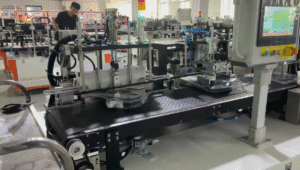
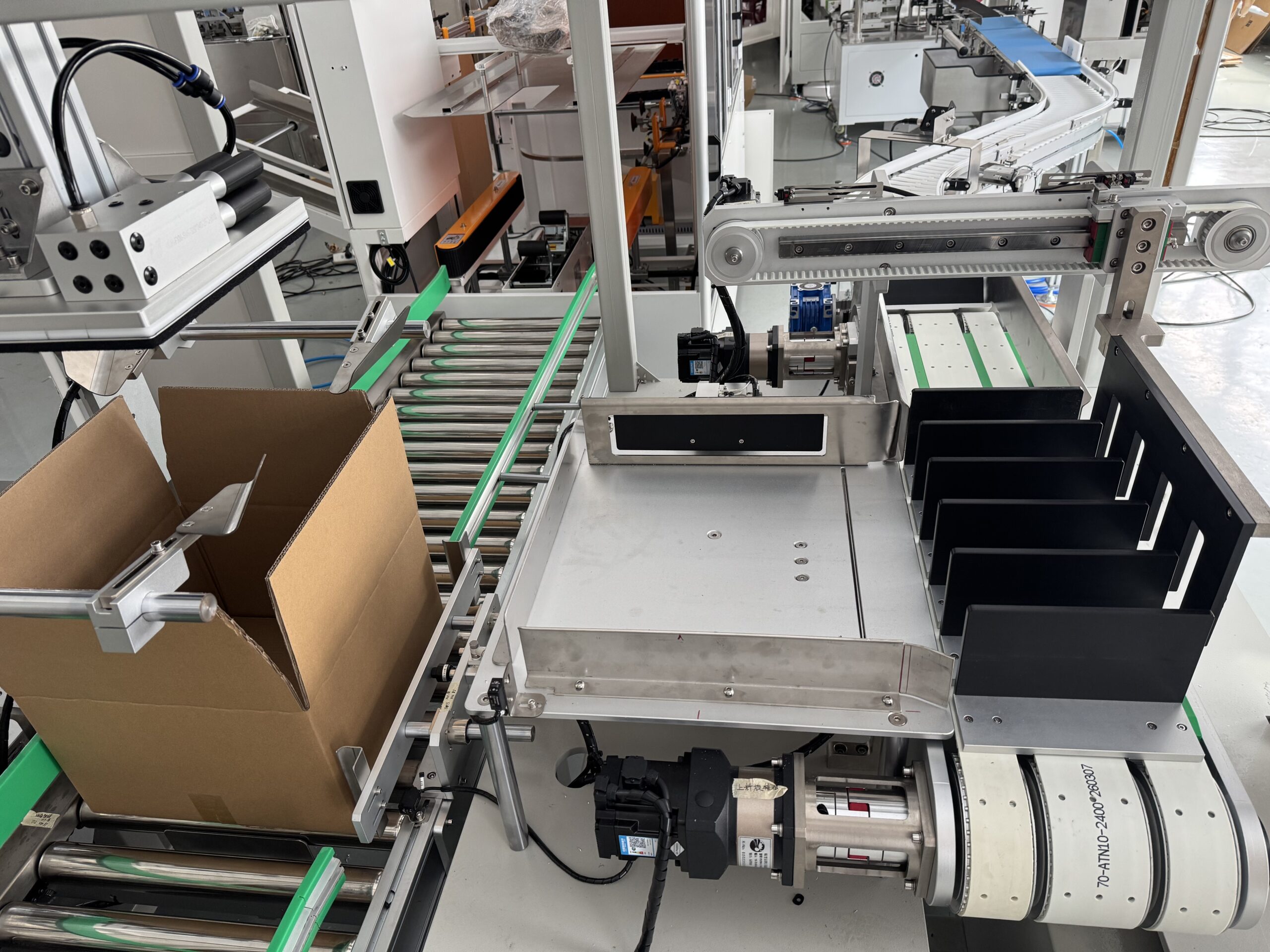
A filament packing station mid-run. Bag handling and change time are both visible here, and both belong on the sheet.
One note on the right-hand column. “Below upstream input” is relative, not a threshold. The station handed on fewer good units than it received, and the gap ran the same way as the window grew.
The condition that earns the right to look at a machine
Two things have to hold together. The station runs below the stable upstream input across comparable periods, not just in the bad week. And the buffer keeps growing. If the queue drains, the station absorbs what it receives, and a machine bought for a station that recovers on its own is bought for a bad week.
Compare it against the neighbour. If packaging trails winding but the gap is stable shift on shift, you have a rate mismatch. If the gap moves with the SKU, you have a changeover problem.
Buffer sizing makes this legible over time. how buffer sizing decides whether a station starves or blocks sets out why the queue in front of a station tells you about the handoff, not the machine behind it. If the station is the constraint, the hardware sits in the bagging machine range.
Rated Speed Is Not Net Good Output
The gap between actions per minute and finished units
A rated figure comes from a controlled run. The feed is perfect and nothing jams, the operator is in place, and the machine is measured over a stretch nobody waits on. That number is useful, but it is not a statement about your shift.
Net good output is the number that matters, and it comes out of the plant’s own records: what was finished, accepted and moved on. The distance between rated and actual is where the order book lives. Walk it and you find the walk time. See a line output measurement of the plant net good output.
Not a new point on this site: the difference between machine speed and plant output is worth reading properly, and the line-level version is in why the slowest net stage sets the line speed. What matters is what changes when upstream expands: the station that had slack now has none.
Where the queue appears
Work in process backlog is the physical proof. If material accumulates between labeling and cartoning during comparable shifts, then downstream of that point runs below what upstream is delivering. If it does not, the line is balanced there whatever the nameplate says.
There is a second pattern worth naming. A queue that appears and drains, over and over, usually means the two stations are close in rate but out of phase. That is a handoff and signalling problem, not a capacity one. A queue that only grows is the rate mismatch.
A bottleneck analysis that starts at the nameplate ends at the wrong station. A packaging line bottleneck is a net output finding, not a catalogue finding.
Four Answers to a Bottleneck Finding
What each one fixes, and what it leaves
“Winding is starving packaging” is a finding, not a decision. There are four responses to it, and each fixes something different. The usual mistake is picking the one easiest to quote. See the four ways to add output at one station.
| Response | What it actually fixes | What it still leaves | What evidence would justify it |
|---|---|---|---|
| A faster single machine | The gap at one station, where that station is the limit | Everything downstream, and the changeover loss a faster cycle cannot remove | Net good output there still trailing upstream input |
| A buffer | Short starvation and blocking at one handoff between close stations | A sustained rate mismatch, because the buffer fills | Starve and block alternating at one handoff |
| A tooling or jig change | Time lost inside a handling step, a misfeed or a manual placement | A station whose rate is genuinely below the upstream rate | Repeated stoppages logged against one handling step |
| A segmented line | A multi-SKU line where changeover loss dominates | The upstream capacity question, and any step still slow | Changeover loss a large share of available station time |
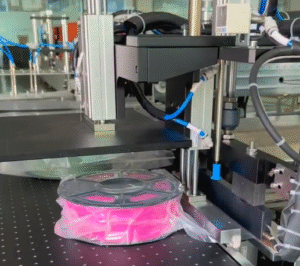
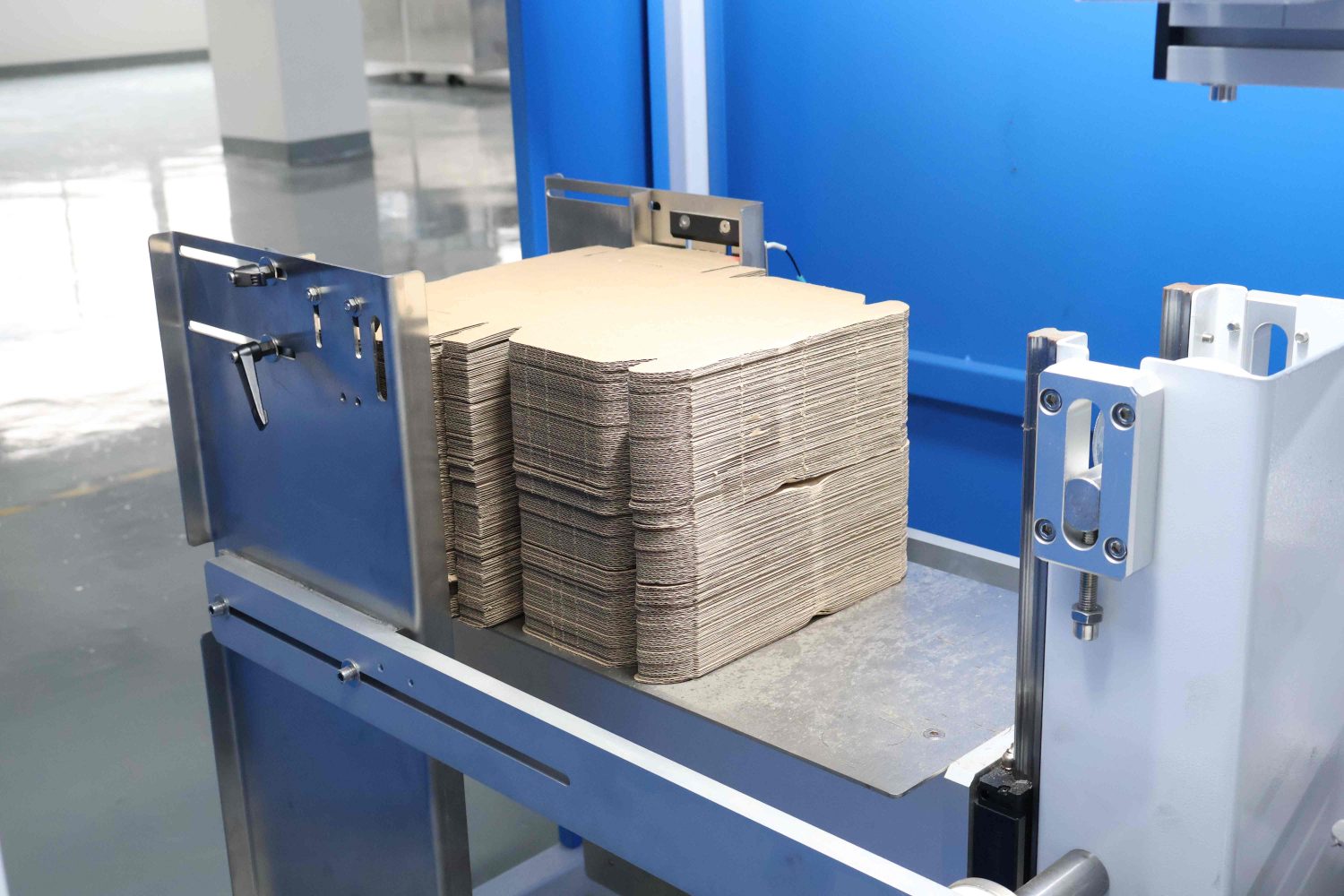
A vacuum sealing station working on a spool. Whether a second machine here adds anything depends on what the sheet said about this station, not on what the quotation says it can do.
Reading the evidence column before the quotation
Fill in the last column of that table before anyone opens a quotation. If you cannot, you have an opinion with a machine attached, not a project.
A buffer is worth checking before a machine. It is cheaper, and right when the two stations are close and out of phase. It is wrong when one is genuinely slower. A tooling or jig change deserves a look when the loss sits inside a handling step. A segmented line comes last.
The Labor Case, Which Is Where the Numbers Break
Task seconds, reassignment, and cash
Most packaging automation cases carry a labor number, and most labor numbers mix two things. One is a reduction in task seconds: the hands-on handling time at a station falls. The other is a reassignment of people: an operator moves from folding to cartoning. Nothing left the payroll.
Only the third is money. Actual realizable cash savings in wages, which means a position that changed on the roster, or paid hours that stopped appearing. Everything else is released capacity, not cash.
The double count is easy to make and hard to see. The same employee appears at the folding station in one part of the model and at the cartoning station in another, so their hours are claimed as a saving in both places. The total comes out larger than the plant’s labor cost, which is the give-away. how a CFO should read a packaging automation payback case covers it.
| Observation | What it measures | Is it cash savings | How it is usually double-counted |
|---|---|---|---|
| Task seconds per station, measured | The hands-on handling time at that station | No, it is released capacity | Counted as money without asking what the minutes were for |
| A person reassigned to another station | That the operator moved | No, the wage is still on the payroll | Claimed where they left and again where they moved |
| Overtime or agency hours avoided | Whether extra paid hours disappeared | Sometimes, where they actually disappeared | Added on top of the reassignment figure for a covered shift |
| A position removed from the roster | An actual reduction in the payroll | Yes | Assumed from a task-second study rather than confirmed |
| Peak pressure absorbed into the line | Whether the overtime peak still needs covering | Only where that peak is gone | Treated as a headcount saving while the roster is unchanged |
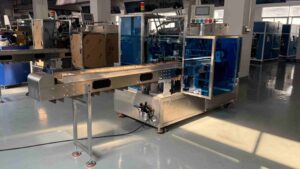
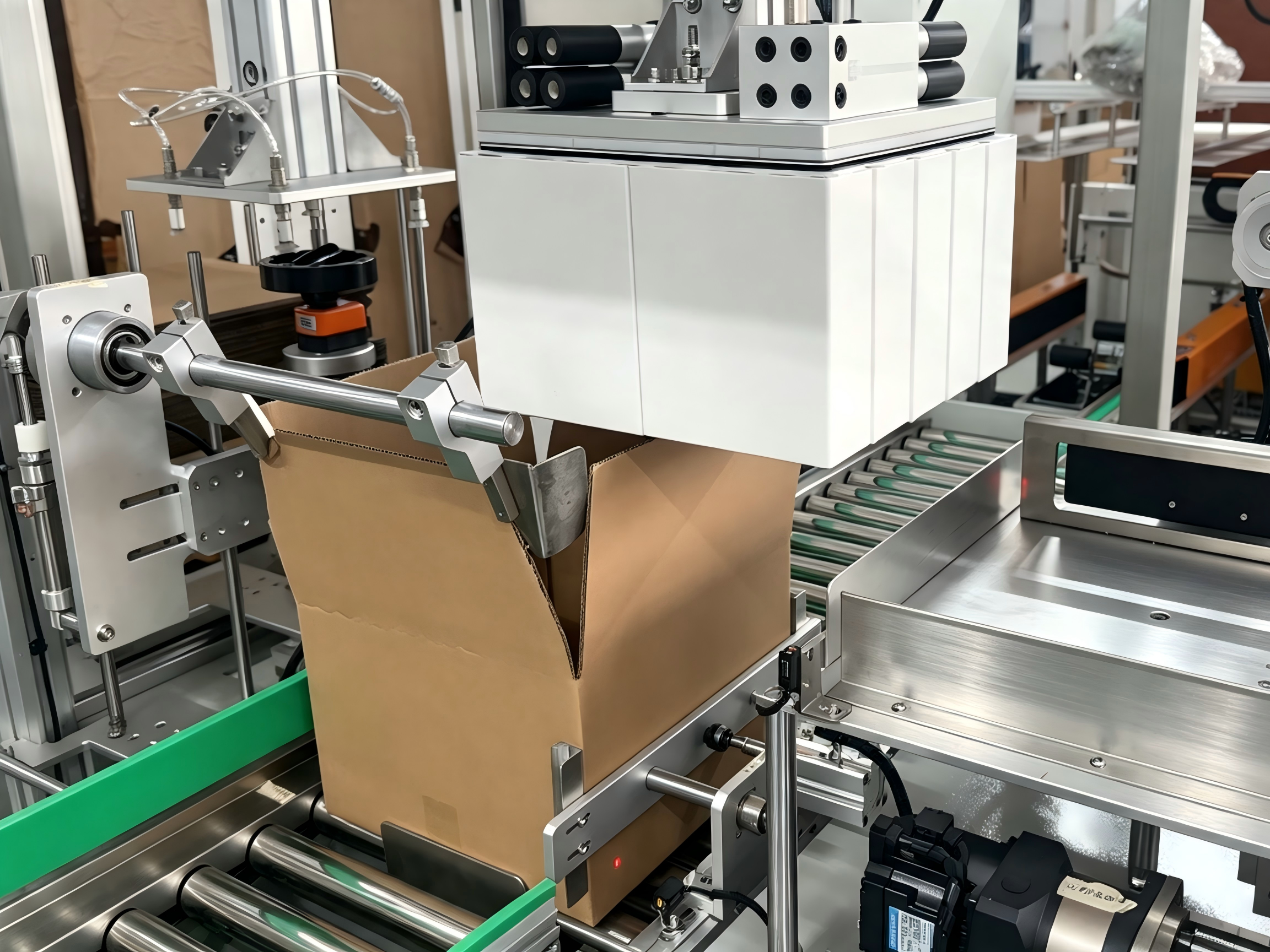
An inline cartoning machine working on a line. A machine like this moves work off the operator’s hands. Whether that becomes a wage saving is a roster question, not a machine one.
The roster question, asked first
Before the payback question, ask one: does the roster change? If no, this is a capacity case and should be argued as one, against the line takt the plant has committed to rather than the takt the fastest station could reach. That number makes the case look good and does not arrive. If yes, keep the roster change and the cash figure apart.
Changeover Loss Belongs in the Record
The number that changes the answer
On a multi-SKU line, changeover loss can be the largest single item in the observation sheet, and it is the one most often left out because it is nobody’s station. It belongs to the station where the change happens. what a multi-SKU changeover really costs covers that.
It matters because a bottleneck analysis changes which answer is right. If changeover loss is eating a large share of the station’s available time, a faster machine for one SKU family addresses the wrong problem. A segmented line that lets each family run its own rhythm is what the record supports. The window needs a representative SKU mix.
What to Take Into the Machinery Conversation
A short list of what the plant can support
By this point there should be a document, not an opinion. It should hold the observation sheet with its windows stated, the evidence for which station falls below its input, the changeover loss figure, the buffer behaviour, and the labor case with task seconds and cash apart.
Every number in it comes from the plant’s own records. A number a supplier brings is one you will be asked to defend; a number from your own shift log is one you can point at. Where there is no record, say so.
A composite case, from a pattern rather than one plant: a filament producer added winding capacity and came back wanting a second vacuum sealer. The sheet showed the sealing station well above its input, and the real deficit at cartoning, where format changes were eating the station’s available time. The sealer would have run at its current rate.
They bought the cartoning change instead. The line takt did not move much, as they expected, but the work in process backlog in front of case packing stopped growing, and the order book started leaving on the day it was promised. The packaging line bottleneck had been real, and not where the request came from.

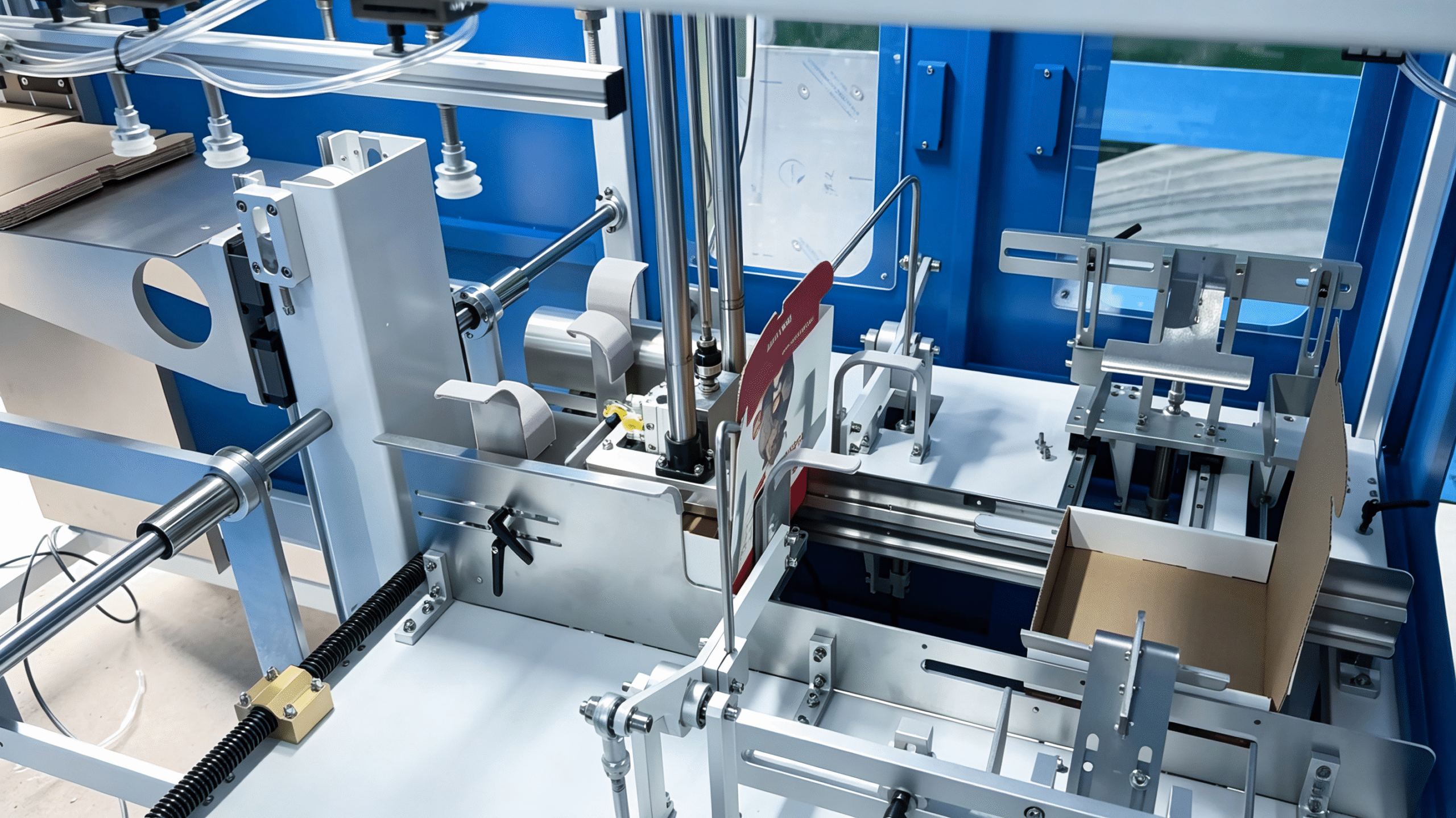
An end-of-line case packing station. The queue forming in front of a station like this is usually read as a capacity verdict. Sometimes it records an upstream station that ran out of buffer.
FAQ
Is the rated speed of a machine the effective capacity of the plant?
No. A rated figure comes from a controlled run with perfect feed and nothing jammed, so it describes the machine rather than the shift. Effective capacity is the net good output the plant actually produced. The gap between the two is where walk time and rejects live.
Does moving one person to another station equal saving one wage?
No. A reassignment moves the wage from one station to another. The roster and the payroll stay the same, so nothing is saved in cash. It becomes cash when a position comes off the roster, or paid hours stop appearing. Task seconds released by a machine are capacity, not money.
Can a line improvement be the sum of the individual gain from each machine?
No. Gains at a station that is not the constraint do not convert into line output, because the slowest net stage sets the pace for everything ahead of it. A station can run faster while the line gets no faster. The sheet has to show which station is below its input.
What should be recorded before packaging can be called the bottleneck?
For one SKU, one shift and one window, at each station: good-unit net output, downtime split into planned and unplanned, changeover loss, and the work in process backlog waiting in front of the station. Then the same records for the upstream station feeding it. Without the upstream figures there is a slow station, not a packaging line bottleneck.
Should the answer be a buffer or a faster machine?
It depends on the pattern the buffer records. A queue that appears and drains between two stations of similar rate is a phase and handoff problem, and the buffer is the answer. A queue that only grows is a rate mismatch, and a buffer only delays it.