If you manufacture bottled products — beverages, sauces, shampoos, or cleaning fluids — you already know the frustration: a label that drifts, wrinkles, or overlaps by even 1–2mm makes an otherwise excellent product look amateurish on the shelf.
Round bottles are one of the most technically demanding surfaces to label. Unlike flat cartons or pouches, a cylindrical surface demands precise rotation control, consistent label tension, and split-second timing between the label applicator and the bottle conveyor.
This guide breaks down everything a production manager or procurement engineer needs to know before choosing a round bottle labeling machine — from how the mechanism works, to the speed tiers, to the real-world ROI math.
Why Round Bottles Are Harder to Label Than Flat Surfaces
Flat-surface labeling is relatively forgiving. The label lands, pressure rollers press it down, done. Round bottles introduce three variables that don’t exist for flat packages:
- Wrap angle consistency — the label must wrap evenly around the circumference without bunching at the seam
- Bottle rotation speed matching — the bottle must spin at exactly the right speed relative to label feed rate
- Vertical drift control — labels tend to migrate upward or downward during the wrap if tension isn’t perfectly calibrated
Manual labeling on round bottles typically produces a 3–8% defect rate — misalignment, air bubbles, or label tears. On a production run of 10,000 bottles per day, that’s 300–800 relabeling operations, plus the labor cost of inspection.
A properly configured automatic round bottle labeling machine brings defect rates below 0.3%.
How a Round Bottle Labeling Machine Works
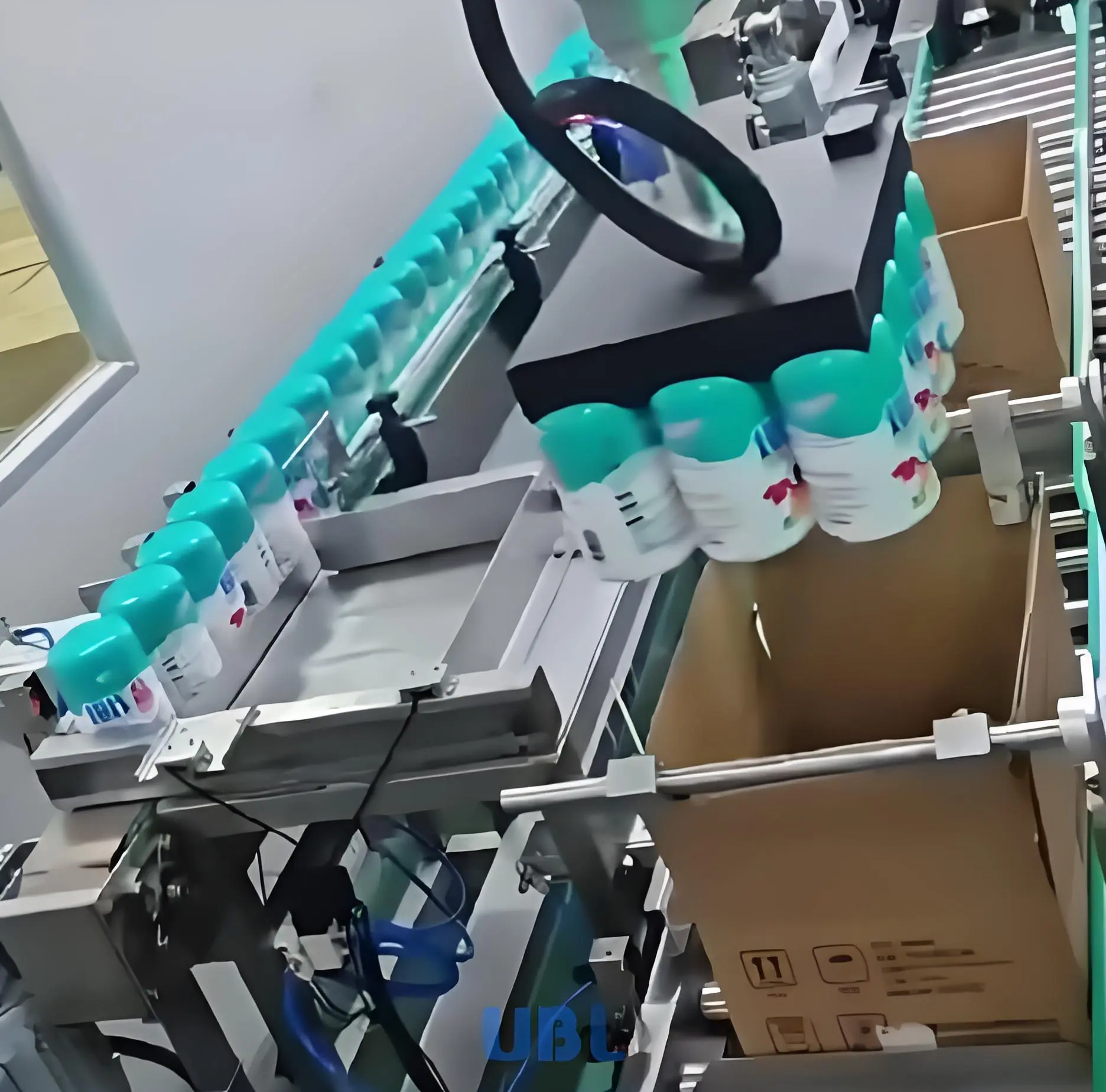
The core mechanism in a wrap-around bottle labeling machine involves five coordinated subsystems:
- Infeed conveyor & bottle spacing — star wheels or screw conveyors separate bottles to a fixed pitch before they reach the labeling station
- Label unwind & feed — servo-driven label roll feeds at a controlled speed, with dancer-arm tension control to prevent label stretch
- Bottle rotation station — friction belts or rotating spindles spin each bottle at a precisely matched speed as the label is applied
- Label placement detection — optical sensors detect the bottle seam or a registration mark to trigger label release at the correct angular position
- Smoothing & finishing rollers — sponge or silicone rollers press the label flush, eliminating air pockets and loose edges
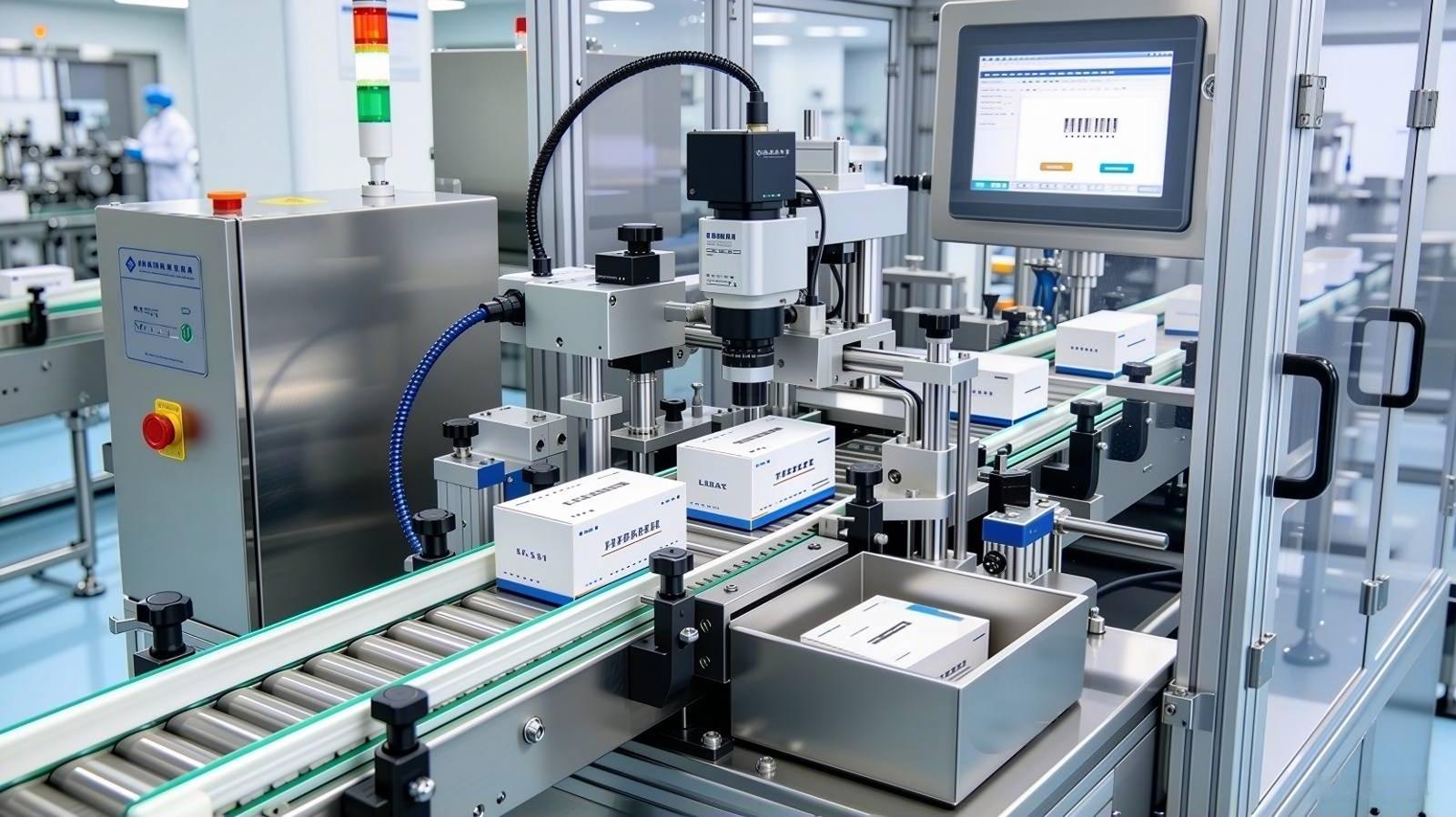
Higher-end machines add a vision inspection module after the labeling station, which photographs every bottle and automatically rejects any that fall outside placement tolerance. This is standard practice for pharmaceutical and premium cosmetics lines.
Single-Side vs. Wrap-Around vs. Front-and-Back: Which Configuration Do You Need?
Not all round bottle labeling jobs are the same. The three main configurations differ significantly in complexity and cost:
- Wrap-around (360°) — one continuous label wraps the full circumference. Common for water bottles, beer cans, cleaning products. Requires precise bottle rotation synchronization.
- Front & back (180° + 180°) — two separate labels applied on opposite sides, with a gap between them. Common for premium food products, wine, and pharmaceutical bottles where back labels carry regulatory information separately.
- Partial wrap (90°–270°) — label covers less than the full circumference. Often used for small-diameter bottles like eye drops, serums, or test tubes where a full-wrap label would overlap.
If your product line includes multiple bottle diameters or label configurations, a multi-format labeling machine with quick-change tooling can handle the full range without purchasing separate equipment for each SKU.
Speed Tiers: Matching Machine Capacity to Your Production Volume
Round bottle labeling machine speeds are typically measured in bottles per minute (BPM). Here’s how the tiers break down:
- ⚡ Entry-level semi-automatic: 20–40 BPM — requires an operator to place bottles manually. Suitable for startups or low-volume specialty products.
- ⚡⚡ Mid-range automatic: 80–150 BPM — fully automated infeed, labeling, and outfeed. Ideal for most SME food, beverage, and personal care manufacturers.
- ⚡⚡⚡ High-speed industrial: 200–400+ BPM — servo-driven precision systems integrated into full production lines. Standard for major FMCG brands and contract packaging facilities.
A common mistake is purchasing a machine at exactly your current throughput need. Build in at least 30–40% headroom above your current peak demand — labeling machines running at 90%+ of rated capacity degrade much faster and require more frequent maintenance.
Label Material Compatibility: What the Spec Sheet Won’t Always Tell You
The label material affects machine setup more than most buyers realize. Key considerations:
- Paper labels — most forgiving, but susceptible to moisture on chilled beverage lines. Require careful tension calibration to avoid tearing.
- BOPP (biaxially oriented polypropylene) — the most common choice for food and beverage. Moisture-resistant, high stretch recovery. Generally easiest to run at high speed.
- Clear/transparent PET labels — visually premium (“no-label look”), but require optical sensors that can detect a nearly invisible label edge. Cheap sensors fail here.
- Shrink sleeve labels — not applied by traditional labeling machines at all; require a separate heat-shrink tunnel system.
Always provide your label material specifications — including thickness, liner weight, and adhesive type — when requesting a machine quotation. Running the wrong label on a machine not configured for it is the #1 cause of labeling jams and mislabels in the first month of operation.
Integration with Your Existing Line: 4 Questions to Ask Before Buying
A round bottle labeling machine rarely operates in isolation. Before committing to a purchase, confirm answers to these four questions:
- What is the upstream filling/capping machine output rate? Your labeler must match or exceed this rate. A bottleneck at the labeling stage defeats the purpose of upgrading upstream equipment.
- Is your conveyor height and width compatible? Most machines accept conveyors in the 600–900mm height range, but custom tables or risers may be needed for line integration.
- Do you need date/batch coding at the same station? Inline thermal inkjet (TIJ) or thermal transfer overprinting (TTO) modules can apply variable data (dates, lot numbers, QR codes) on the label during application — eliminating a separate coding step.
- What are your changeover frequency requirements? If you run 5+ SKUs on the same line, look for machines with tool-free quick-change bottle guides and label roll holders. Poor changeover design can add 45–90 minutes per SKU change.
For manufacturers building or upgrading a complete secondary packaging line, these integration decisions are best made as part of a full line planning consultation rather than as individual equipment purchases.
ROI Calculation: When Does a Round Bottle Labeling Machine Pay for Itself?
Here’s a real-world calculation framework for a mid-size beverage or sauce manufacturer running one shift (8 hours/day, 250 days/year):
- 💰 Labor saving: replacing 4 manual labeling workers at $18/hour = $144/day × 250 = $36,000/year
- 💰 Defect reduction: reducing relabeling from 5% to 0.3% on 50,000 bottles/day = 2,350 fewer defective bottles/day × $0.08 label cost = $47,000/year
- 💰 Line speed gain: automated labeling at 120 BPM vs. manual 40 BPM = 3× throughput increase enables accepting larger orders
Combined direct savings often exceed $80,000–$100,000 per year for a single production line. A quality mid-range automatic round bottle labeling machine typically costs $15,000–$45,000, delivering a payback period of 3–7 months in most production environments.
Common Failure Points and How to Prevent Them
Based on field service reports, the most frequent issues with round bottle labeling machines are:
- 🔧 Label feed jams — usually caused by incorrect tension setting, damaged label roll edges, or static buildup. Solution: install an ionizing bar near the label unwind station.
- 🔧 Placement drift over time — servo encoder wear or label sensor calibration shift. Solution: include encoder calibration in quarterly preventive maintenance schedule.
- 🔧 Bubble formation under label — insufficient pressure from smoothing rollers, or wrong roller durometer for label material. Solution: match roller hardness to label film type.
- 🔧 Bottle jamming at infeed star wheel — bottle diameter variation beyond tolerance, or worn star wheel inserts. Solution: verify bottle tolerances with supplier; replace star wheels every 6–12 months on high-volume lines.
Is a Round Bottle Labeling Machine Right for Your Operation?
If you’re producing more than 500 round bottles per hour and still relying on manual labeling, the efficiency gap — in labor cost, defect rate, and throughput capacity — is almost certainly costing you more than the machine itself.
The right labeling system doesn’t just apply labels faster. It stabilizes your entire secondary packaging output, reduces rework, and gives you the production consistency that larger retail buyers and distributors require before committing to volume contracts.
UBL’s round bottle labeling machines are available in multiple speed configurations and support wrap-around, front-and-back, and partial-wrap formats. Our technical team can review your bottle dimensions, label specifications, and line layout before recommending a configuration — no generic catalog selection.
Ready to eliminate labeling as a production bottleneck? Contact UBL today for a free consultation and line assessment.
References:
[1] Statista — Global Packaging Industry Overview
[2] U.S. FDA — Food Labeling Guidance for Industry