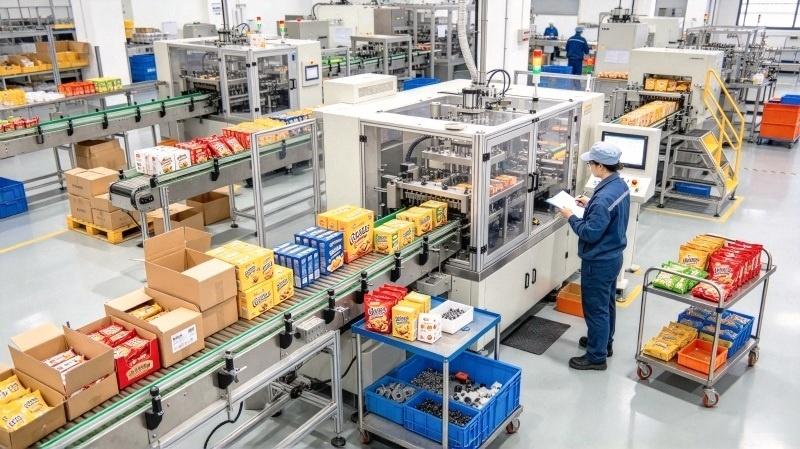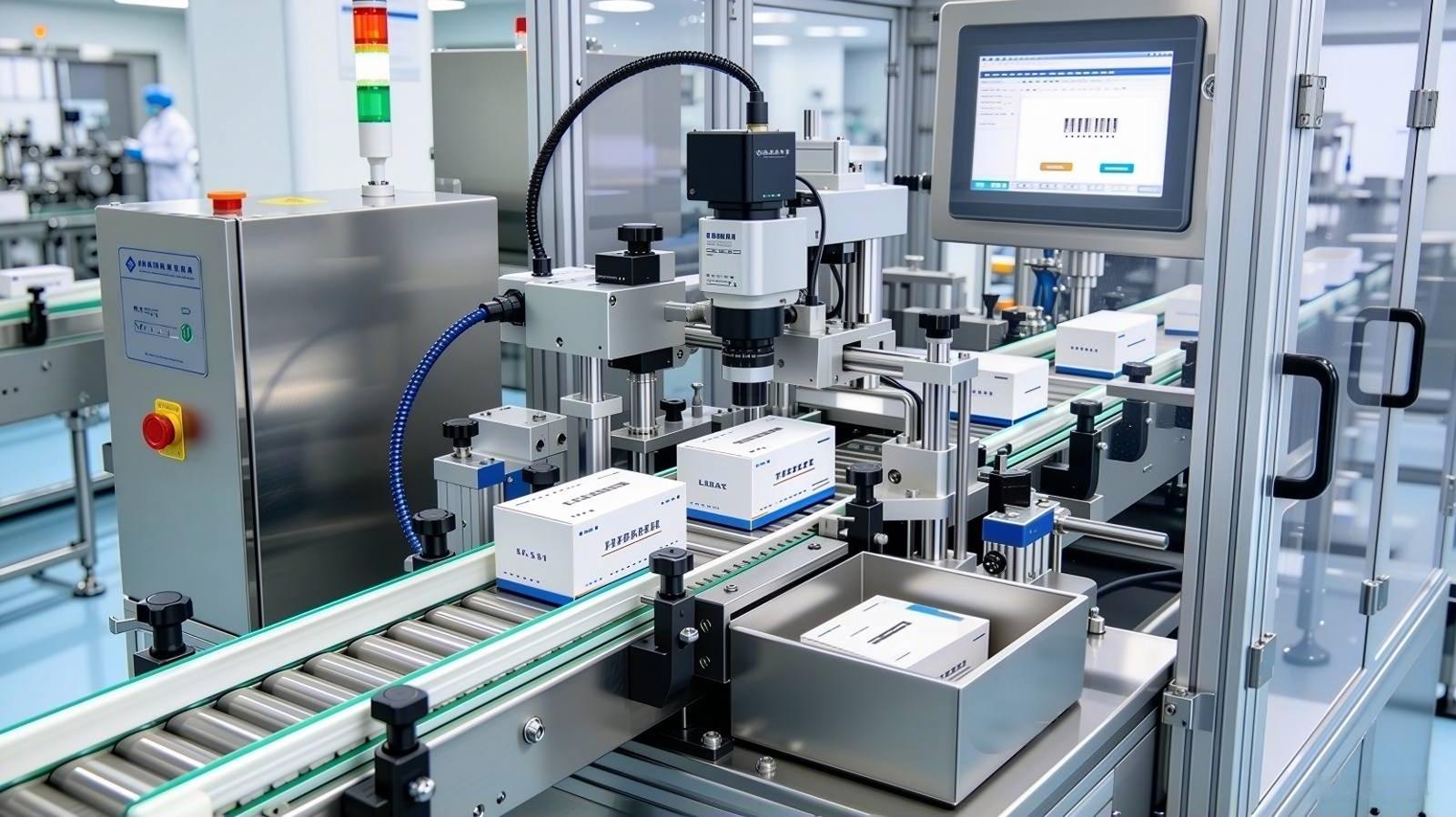
The laundry detergent sheet — a pre-measured, dissolvable film strip that replaces a full measure of liquid or powder detergent — is no longer a niche product. It is one of the fastest-growing categories in the global household care market. According to Business Research Insights, the laundry detergent sheets market reached USD 1.38 billion in 2026 and is projected to reach USD 3.13 billion by 2035, growing at a compound annual growth rate of 9.54%. That growth is being driven by eco-conscious consumers in North America and Europe, the travel and convenience segment, and a younger generation of buyers actively choosing zero-waste alternatives to plastic-bottled detergent. For manufacturers in this segment, the commercial opportunity is clear. The operational challenge is just as clear: how do you package laundry sheets fast enough to keep pace with rising order volumes without your back-end packaging labor costs growing faster than your revenue?
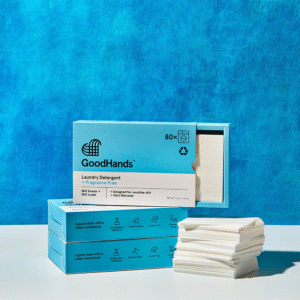
What Is Driving the Laundry Detergent Sheet Market?
The Eco-Packaging Shift Is Structural, Not Cyclical
Consumer demand for plastic-free household products has moved from a trend to a baseline expectation in key markets. In North America — the largest market for laundry detergent sheets — retail chains including Walmart have expanded their eco-cleaning ranges, and brands such as Tru Earth have moved from online-only to mainstream shelf placement. In Europe, EU regulatory pressure on single-use plastics and mounting consumer preference for biodegradable formats have made the detergent sheet a natural fit for the zero-waste household movement. The product itself is the packaging: a cardboard box or paper envelope of sheets replaces a heavy plastic jug. For brands, it is also a margin opportunity — detergent sheets carry a premium over equivalent-load liquid or powder detergent, and the category is still early enough that differentiated products can command shelf space.
Portability and the Travel Economy
Laundry sheets are approximately 70–90% lighter than an equivalent load of liquid detergent — which is typically 70–90% water by weight — and take up a fraction of the volume. That makes them the preferred choice for frequent travelers, campers, and anyone managing a compact living space — a demographic that is growing in urban markets globally. As travel volumes continue to recover and expand, the demand for portable, TSA-compliant laundry solutions reinforces the category’s growth trajectory.
The Asia Manufacturing Opportunity
While North America and Europe drive retail demand, a significant and growing proportion of laundry sheet manufacturing happens in China, where both the raw material supply chain and the contract manufacturing capacity are concentrated. Chinese manufacturers serving global brands — as well as growing numbers of domestic e-commerce brands — are scaling production rapidly to meet export demand. That scaling creates an acute need for efficient back-end packaging equipment: specifically, equipment that can carton laundry sheets at the volumes required for export-grade production without the labor intensity of manual packing.
Why Manual Cartoning Breaks Down at Scale
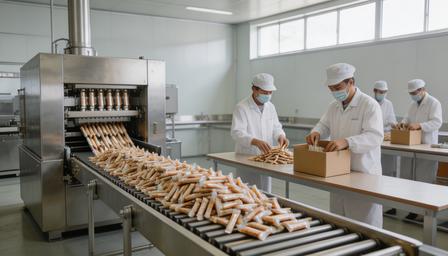
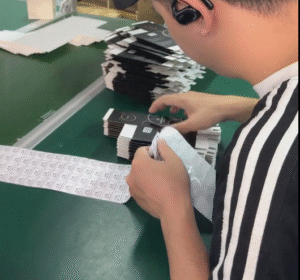
Laundry sheet cartoning looks deceptively simple: take a stack of sheets, place them in a box, close the box. At small volumes — a few hundred boxes per day — this is manageable with manual labor. At the volumes required to serve a major retail buyer or e-commerce platform, it is not. Consider what manual cartoning of laundry sheets actually involves at scale:
The Manual Cartoning Bottleneck
- Box erection: each flat carton must be opened and set up before filling — a repetitive, physically tiring task that slows as workers fatigue
- Sheet stacking and insertion: sheets must be correctly stacked, counted, and placed into the box without misalignment — consistency degrades under time pressure
- Flap closing and sealing: tuck-end or glue-seal closure requires precise motion at each cycle — manual execution is slower and more variable than mechanical
- Throughput ceiling: an experienced manual packer can typically carton 8–12 boxes per minute; a cartoning machine runs at 30–120 boxes per minute depending on configuration
The throughput gap means that as order volumes grow, the only manual-line response is to add workers. More workers mean more floor space, more supervision, more training, more absence risk, and more variable output quality. A cartoning machine eliminates all four of those variables simultaneously.
What a Laundry Sheet Cartoning Machine Does
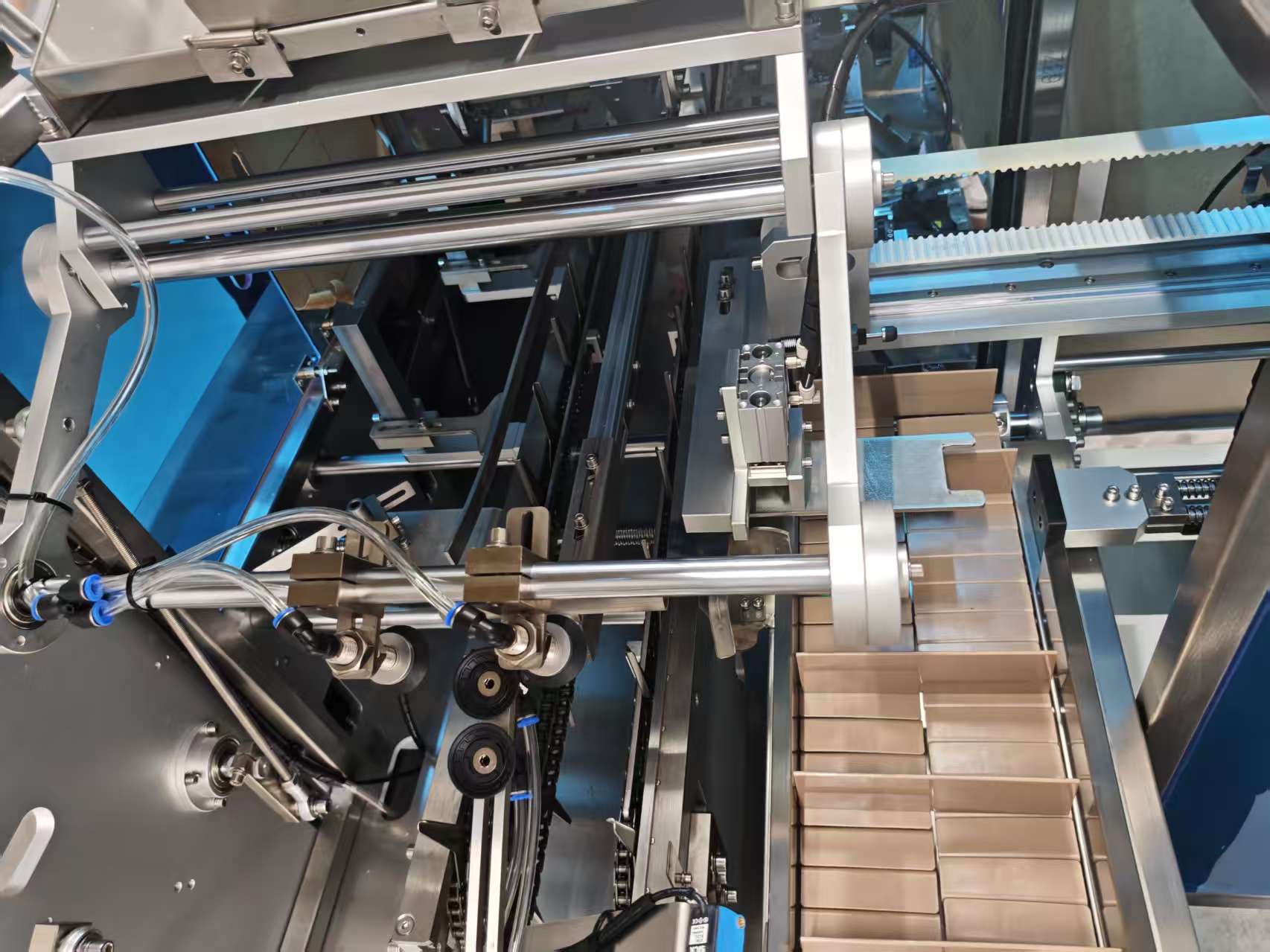
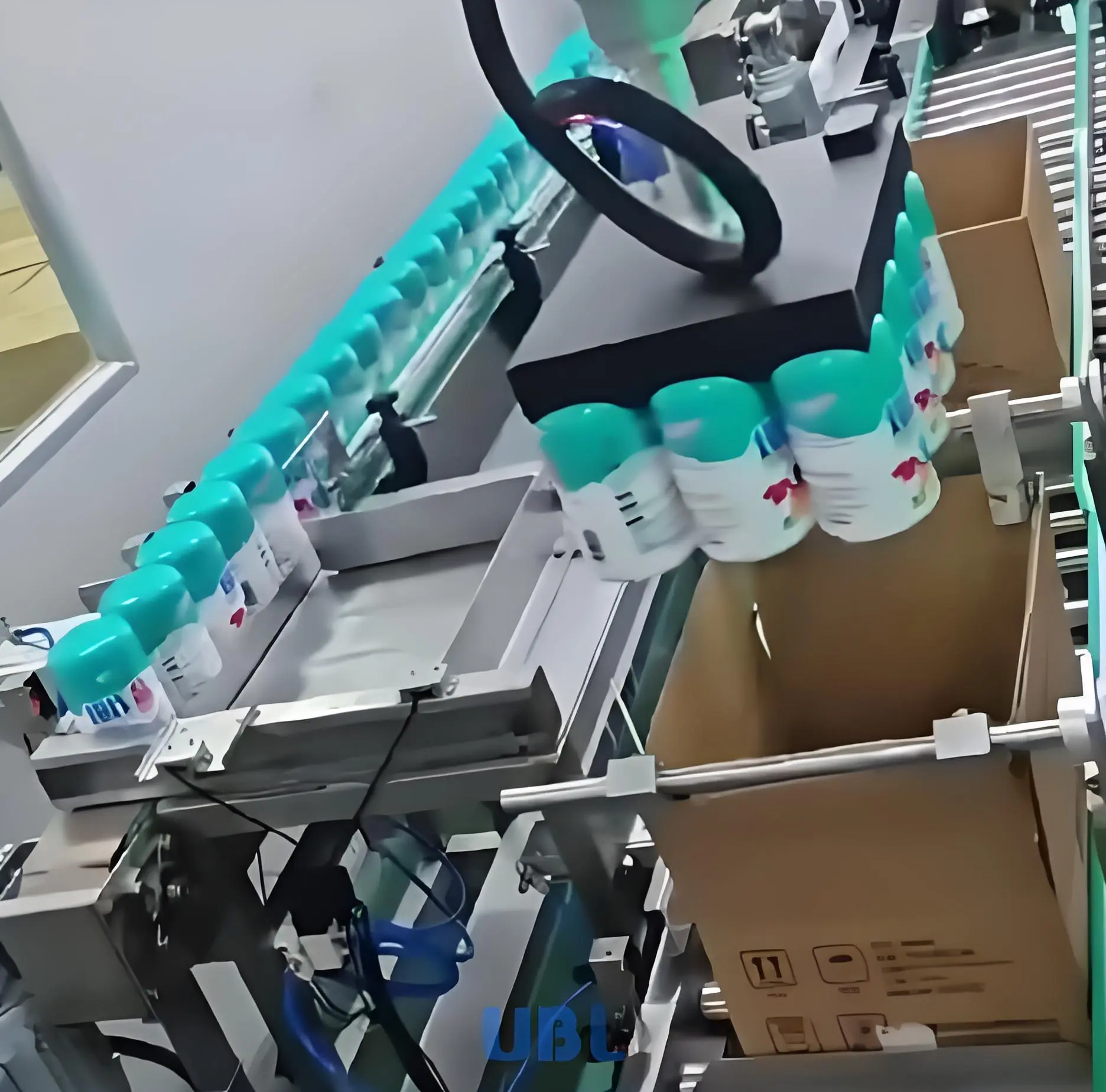
A dedicated laundry sheet cartoning machine automates the three core functions of the back-end packaging process:
| Function | Manual Process | Cartoning Machine |
|---|---|---|
| Box erection | Manual fold and set-up per carton | Automatic erection from flat blank magazine |
| Product loading | Manual count, stack, and insert | Automatic feed — push or pick-and-place |
| Carton sealing | Manual tuck or glue application | Automatic tuck-end, snap-lock, or hot-melt glue seal |
| Throughput | 8–12 boxes/min per worker | 30–120 boxes/min (UBL high-speed configuration) |
| Labor required | 6–10 workers for mid-volume line | 1–2 operators for monitoring and replenishment |
| Consistency | Variable — degrades with fatigue and turnover | Uniform on every cycle |
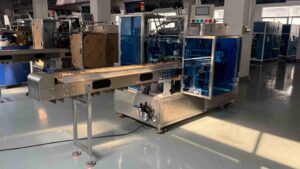
UBL’s Cartoning Solution for Laundry Sheet Manufacturers
UBL’s high-speed cartoning machine is designed for exactly the kind of flat, stackable product that laundry sheets represent. The machine handles the complete open-fill-seal sequence automatically, and is compatible with tuck-end, snap-lock, and hot-melt glue-seal carton formats — covering the full range of laundry sheet retail packaging configurations currently used in the North American and European markets.
Key Specifications
- Speed: up to 120 boxes per minute (high-speed configuration)
- Carton formats: tuck-end, snap-lock bottom, hot-melt glue seal
- Product feed: automatic push-feed compatible with stacked sheet format
- Changeover: approximately 10 minutes for size changes within the compatible range
- HMI: touchscreen control panel, bilingual (Chinese/English), stores multiple product configurations
- After-sales: 4-hour remote response guarantee; on-site engineer dispatch for mechanical issues
- Standard delivery: next-day dispatch for standard configurations after contract signing
Why Automated Cartoning Matters for Laundry Sheet Export Brands
Export buyers — whether retail chains, e-commerce platforms, or private-label distributors — have consistent quality and delivery requirements. A carton that arrives with a misaligned fold, an improperly sealed flap, or inconsistent sheet count fails retail presentation standards and generates returns. Manual cartoning at scale cannot reliably meet those standards across thousands of units per shift. Automated cartoning can — and does, on every cycle.
For a laundry sheet manufacturer currently producing at 5,000–20,000 boxes per day with manual packing labor, the transition to automated cartoning is not a distant efficiency upgrade. It is the operational change that allows the production line to scale without adding proportional labor costs — and without compromising the package quality that retail and e-commerce buyers require.
The Right Time to Automate
There is a common pattern among laundry sheet manufacturers who contact UBL: they waited longer than they should have. The sequence typically goes — small-volume manual operation, order growth, more workers hired, labor costs rising, quality becoming inconsistent, buyer complaints starting, then the decision to automate. By the time the machine is ordered and running, weeks or months of margin have been lost to excess labor and quality issues. The right time to evaluate automated cartoning is before the manual line becomes the production ceiling — not after.
UBL offers a sample trial process: send your laundry sheet product and carton specifications, and UBL will run a live machine test and provide video documentation of the output. No commitment is required to evaluate the fit.
What to Ask When Evaluating a Cartoning Machine for Laundry Sheets
- Can the machine handle my specific carton format (tuck-end / snap-lock / glue seal)?
- What is the minimum and maximum carton size the machine accommodates?
- How does the product feed handle stacked sheet product — push feed or pick-and-place?
- What is the changeover time if I run multiple SKUs at different carton sizes?
- What does after-sales support look like if the machine stops during a production shift?
- Can I see a live test run on my actual product before committing?
UBL’s team can answer all of these with documented test results. To arrange a sample trial or discuss your specific production requirements, contact helen@huanlianauto.com or WhatsApp:+86 13602308576.
The Market Is Growing. Your Packaging Line Needs to Keep Up.
The laundry detergent sheet category is projected to more than double in market value over the next decade. The manufacturers who capture that growth will be the ones whose production lines can scale output without proportional increases in labor cost or quality risk. A laundry sheet cartoning machine is the operational lever that makes that possible — automating the most labor-intensive step in back-end packaging, and doing it consistently, shift after shift, at speeds no manual team can match.