A snack producer in Rotterdam signed what looked like a great deal. The cartoning line was quoted well below every European bid. By the time the line was running, the final bill was almost 60 percent higher.
Nothing had gone wrong with the machine. The buyer had budgeted for the price on the quotation and ignored the packaging machine total landed cost. Freight, duty, certification, commissioning and spare parts were all real, and all invisible at the signing stage.
Quick answer: Packaging machine total landed cost is the full amount you pay to get a machine running in your plant, beyond the ex-works price. It stretches from freight and import duty to compliance, commissioning, spare parts, training, financing and support. Buyers who budget only the machine price routinely pay far more. The fix is a checklist, not a discount.
No price table and no payback math follow, because those depend on your volumes and your market. What does follow is the list that decides whether the deal you signed is the deal you pay.
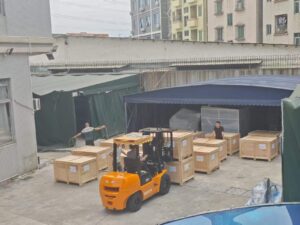
What total landed cost really includes
Total landed cost is everything you spend to get the machine producing good output in your plant. It starts at the supplier’s gate and ends when your operators run the line unaided.
The quotation price is one line in that list. The others sit around it, and they are just as real.
A useful habit is to split the number into two halves. The first half moves the machine to your door. The second half makes the machine work once it arrives.
Most buyers plan the first half and forget the second. That is where the surprises live.
The fastest way to size the packaging machine total landed cost is to build a simple sheet. List the eight items, then fill in a number for each, even a rough one. A rough number that exists beats a precise number that is missing.
The eight costs, in the order they hit
The table below puts the eight items in the order they usually appear on a project. Use it as a budgeting scaffold, then size each item for your own route and product.
| # | Cost item | When it appears | Easy to miss because |
|---|---|---|---|
| 1 | Freight and inland delivery | At shipment | Priced by volume and weight |
| 2 | Import duty and classification | At the border | Depends on a tariff code |
| 3 | Compliance and certification | Before shipping | CE, UL and marking are extras |
| 4 | Commissioning and start-up | On arrival | Engineers, travel and time |
| 5 | Spare parts and lead times | After start-up | Felt only when something breaks |
| 6 | Training and documentation | At handover | Often quoted as optional |
| 7 | Payment, currency and financing | Throughout | FX and interest add up |
| 8 | Support, warranty and downtime | Over the machine’s life | A support gap becomes lost output |
Read the list once and the shape of the problem is clear. The price you negotiate hardest is only the first line.
Freight and the packing method
Freight is priced by how much space the machine takes and how heavy it is, rather than by what you paid for it. A bulky, low-value machine can cost more to ship than a compact, high-value one.
Ocean freight, insurance and inland delivery are three separate charges. Buyers often bundle them in their head and under-budget the inland leg, which is where oversized loads need special trucks and permits.
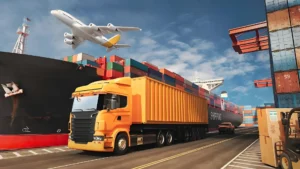
Packing method decides the freight quote
Packing drives the number more than most buyers expect. A machine shipped fully assembled may need a large open-top container, while a partially disassembled machine fits a standard container at a fraction of the cost.
Ask how the machine will be packed, and what that does to the quote. The answer often changes the freight line by more than any negotiation on price.
A Brazilian importer learned this the slow way. The company budgeted standard-container freight for a cartoning line, then found the machine could only ship assembled, on a flat rack with special permits at both ends. The freight alone came in at more than double the estimate. (Synthesized composite scenario, not a specific UBL customer.)
Duty, classification and the HS code
Import duty is set by the tariff classification of the machine, and classification is where careful buyers slow down.
Packing and cartoning machinery is commonly grouped under HS 8422.30, and Chinese exports are often declared under codes such as 8422.30.90. This is a starting hypothesis, not a fixed answer. The United States HTS may classify certain wrapping machinery under 8422.40.91.50, and Section 301 tariffs on Chinese goods have changed period by period.
The World Customs Organization publishes the Harmonized System behind national codes, and the United States publishes its own schedule in the USITC Harmonized Tariff Schedule. Use them to understand the structure, then confirm the exact code with your destination customs authority or a licensed broker.
Classification is not a one-time task. If you later add a machine that wraps, labels or palletises, the code for that machine may differ, and the duty with it. Keep each classification decision in your project file.
Send us your destination country and your machine list, and our engineers will map the classification and duty items you should confirm before you sign.
Why one code is a risky answer
Classification depends on what the machine does, not what it is called. A cartoner that also wraps can fall under a different heading than a plain cartoner.
Give your broker the machine’s technical description and function, and let them classify it. Keep the decision in writing, so the duty you budget matches the duty you pay. The wrong code can mean back duty, penalties and held shipments.
Compliance and certification
If you sell into a regulated market, your machine needs the right compliance marks before it ships, and these are not free.
CE marking for the European Union, UL or ETL listing for North America, and local electrical and safety approvals each carry engineering, testing and documentation costs. Some suppliers include them, and some quote them separately.
Confirm early which certifications your market requires, who pays for them, and how long they take. A missing certificate can hold a machine at the port long after it has been paid for. Certification also has a time cost. Testing and documentation can add weeks to the lead time, which matters if you are commissioning against a season or a launch date.
Commissioning and start-up
Commissioning is the packaging machine commissioning cost that catches buyers out. It covers engineers, travel, hotels, and the days your plant sits half-built.
It is usually quoted as a daily rate with no agreed number of days, so the bill tracks how long the install really takes. A line that takes two weeks to commission costs far more than one that takes two days, and two weeks is a project, not a visit.
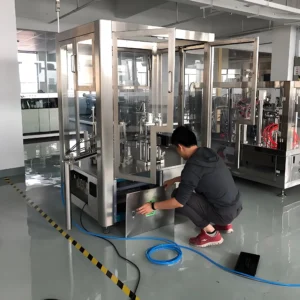
Remote video FAT: paying less for verification
A factory acceptance test is where you verify the machine before it ships. Traditionally, that means flying your team to the supplier’s plant.
Remote video FAT replaces part of that trip with a live, recorded test over video. You watch the machine run, check throughput and rejects, and sign off without the travel cost.
It does not replace every on-site visit, and it only works if the supplier can run and film the test properly. Planned in advance, it can cut a meaningful slice of the verification budget.
Fix the commissioning scope in the contract
Write the commissioning scope into the contract: how many days, what the supplier’s engineer will do, and what counts as acceptance. An open-ended daily rate is an open-ended bill.
Spare parts and lead times
Spare parts are cheap to ignore at purchase and expensive to ignore in production. The real cost is the lead time.
A wear part with a four-week lead time is a four-week risk of stopped production. On a high-volume line, that risk can dwarf the price gap between two suppliers.
Ask for a spare parts list with current lead times before you buy. Ask which parts the supplier stocks locally, and which come from the factory.
A second question matters as much as price: is the part proprietary? A proprietary sensor with a single source is a risk, while a standard component can be sourced faster. Ask which parts are standard and which are not.
Build a wear-parts kit
Budget a starter kit of the wear parts your line will actually consume. A co-packer in the Middle East escaped a costly stop this way. It made a stocked wear-parts kit a condition of purchase, and when a feed belt failed six months in, the replacement was on the shelf rather than on a ship. The line was down for hours instead of weeks. (Synthesized composite scenario, not a specific UBL customer.)
Training, documentation and localisation
Training is the difference between a machine that runs and a machine that runs well. It is also a line item buyers treat as optional until the operators are stuck.
Budget for operator training before handover, and for a manual your team can read. A manual only in the supplier’s language is a cost you pay in every troubleshooting session.
Ask what training is included, in what language, and whether it covers changeover and fault-finding, as well as start and stop.
Localisation goes beyond language. Voltage, plug types, safety signage and even the units on the HMI may need to change for your market. Each change is small, and together they add a line to the budget. Ask what is standard for your region before you order.
Payment, currency and financing
Payment terms carry a cost that rarely appears on the quotation. A letter of credit, a currency swing, or a deposit schedule can move the effective price.
If you buy across currencies, the rate on the day you pay may differ from the rate on the day you budgeted. A modest move can quietly add a line to your cost.
Understand the payment schedule before you sign: how much up front, how much on shipment, how much after acceptance. Then price the financing of that schedule into your budget.
Support, downtime and the whole-number budget
The last cost lasts longest. It is the value of support when the machine stops.
A supplier who answers in hours is worth more than one who answers in days, even at a higher price. On a line that runs two shifts, a single day of unplanned downtime can cost more than any of the first seven items.
Ask how support is delivered, how fast a response is guaranteed, and whether remote diagnostics are available. For the line-level view of how a stopped stage ripples downstream, our guide to buffer sizing and speed matching shows where buffer and support decisions meet.
It also helps to model the worst case. If the machine stops and the only spare is three weeks away, what does that cost? That figure is the real reason lead time belongs in the budget, long before anything breaks.
Add the eight items before you choose a supplier, and treat the packaging machine total landed cost as the number you compare. Review the cartoning machine specifications early, too, because machine size and weight drive both freight and commissioning cost. A slightly higher quotation with honest freight, included certification and fast spare parts often beats a lower one with everything extra.
For the parts of the line that are easy to overlook, see how changeover time affects operating cost after installation. If your product is regulated, the requirements in pharmaceutical cartoning add their own certification line to the budget.
FAQ
What is packaging machine total landed cost?
It is the full amount you pay to get a machine producing good output in your plant. It includes the ex-works price plus freight, duty, compliance and certification, commissioning, spare parts, training, financing and support. Buyers who budget only the machine price usually pay substantially more than expected.
How much import duty will I pay on a cartoning machine?
Duty depends on the tariff classification of the machine, which varies by destination and by what the machine does. Packing machinery is often grouped under HS 8422.30, but the United States HTS may use other lines for some wrapping machinery. Confirm the exact code with your destination customs authority or a licensed broker.
Can I skip a factory acceptance trip to cut costs?
Remote video FAT can replace part of the travel, letting you verify the machine over a live recorded video instead of flying a team to the supplier. It works best alongside at least one on-site visit, and only if the supplier can run and film the test properly. Plan it early so it becomes part of the scope.
Why does spare parts lead time matter so much?
Because a part with a long lead time is a long risk of stopped production. The part itself is cheap, and the downtime it causes is not. Ask for a spare parts list with current lead times, confirm what is stocked locally, and budget a wear-parts kit with the machine.
Is a lower quotation always the cheaper machine?
Rarely. A low quotation often excludes freight, certification, commissioning and spare parts, which then arrive as extras. Compare the cartoning machine price China suppliers quote against your full landed-cost sheet before you judge it cheaper, and write the non-price items into the contract so they are agreed rather than assumed.