Not every garment needs to go into an individual polybag. Disposable protective wear shipped in bulk cartons, medical garments packed in compressed bales, or folded apparel destined for retail shelves often needs to be stacked first — in precise, uniform layers — before being counted, bagged in bulk, or vacuum-sealed. A folding and stacking machine for clothes handles exactly that sequence: fold each piece to a consistent dimension, then deposit it onto a growing stack with every piece aligned, so what comes off the line is a clean, countable pile ready for the next step in your packaging process.
What Is a Folding and Stacking Machine for Clothes?
A folding and stacking machine for clothes is an automated system that performs two sequential actions on each garment: fold it to a defined dimension, then place it onto a stacking conveyor or tray in a precisely aligned position. Unlike an integrated folder-bagger that wraps each piece individually, a folding and stacking machine accumulates multiple pieces into a uniform stack before handoff to the next stage — whether that is manual carton loading, automated case packing, bulk bagging, or vacuum compression.
UBL offers two configurations for stacking applications, each with a different stacking mechanism to suit different garment types and production layouts:
FW-201C — Fold and Stack (Without Bagging)
The FW-201C is UBL’s dedicated folding and stacking unit. It folds garments and deposits each piece onto an outfeed stack at 500–700 pieces per hour. There is no bagging station — the output is a clean stack of folded garments ready to be counted into cartons, bulk-bagged, or processed by downstream equipment. This model is the right choice when individual polybag packaging is not required and the goal is simply to produce uniform, countable folded piles at speed.
FC-332C — Fold, Stack, Bag, and Vacuum Compress
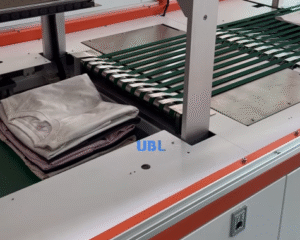
The FC-332C extends the fold-and-stack capability with integrated bagging and vacuum compression. After each garment is folded, the stacking system accumulates a set number of pieces — configurable from 1 to 5 per pack via the HMI touchscreen — before the complete stack transfers into a bag and is vacuum-sealed into a compact, airtight unit. This is the appropriate configuration for protective garments, cleanroom suits, and medical-grade disposable apparel where hygiene, compression, and tamper-evident packaging are all required. Output speed is approximately 600 pieces per hour on a full-auto line.
Two Stacking Mechanisms: Gripper Stacking vs. Descent Stacking
UBL’s stacking systems use one of two mechanical approaches depending on the garment type and production requirements:
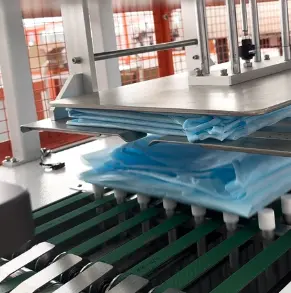
Gripper Stacking uses a mechanical clamp that reaches down to collect each folded piece as it arrives from the fold station. The gripper holds the accumulated stack in position as the next piece is added, then releases and transfers the completed stack once the target count is reached. This mechanism handles lightweight disposable garments — such as isolation gowns or coveralls — with consistent alignment on every cycle. The FC-332C protective garment line uses gripper stacking.
Descent Stacking uses a platform that starts at the delivery height and steps down incrementally as each folded piece is added. The stack builds upward from a dropping base, keeping the deposit point at a consistent height throughout the accumulation cycle. This mechanism is well suited to heavier fabrics or garments where a gripper-based system would compress or disturb the fold. The descent approach maintains stack geometry without clamping force.
Both mechanisms are controlled through the same HMI interface. Operators set the target stack count (1–5 pieces) on the touchscreen — the machine counts automatically and triggers the handoff to bagging when the count is reached.
When Does Stacking Beat Individual Bagging?
Individual polybag packaging is the right answer for consumer retail — a customer expects to receive a garment in its own bag, clearly labeled, with a visible presentation. But several contexts call for stacked output instead:
Bulk Protective Garment Distribution
Disposable coveralls, isolation gowns, and surgical drapes are often distributed in bulk cartons of 10, 25, or 50 pieces. The end buyer — a hospital, industrial facility, or distributor — does not need each piece individually bagged; they need a consistent count of uniformly folded garments they can dispense from a box. Individual bagging adds cost and complexity without adding value for this buyer. Stacking and bulk-packing is faster, more material-efficient, and exactly what this distribution format requires.
Vacuum Compression for Volume Reduction
Shipping cost is calculated by volume as often as by weight. A stack of 10 folded garments that is vacuum-compressed into a 5 cm-thick slab ships at a fraction of the cost of 10 individually bagged pieces occupying their natural folded volume. For high-volume manufacturers supplying distant markets — or those operating in high-shipping-cost corridors — the per-unit freight saving on vacuum-compressed stacks can be substantial enough to justify the FC-332C investment independently of labor considerations.
Cleanroom and Hygiene-Sensitive Applications
Garments destined for cleanroom use, food processing environments, or healthcare settings must be packed with minimal human contact. A stacking machine that accumulates pieces directly from the fold station and transfers them into a vacuum bag without intermediate human handling preserves the hygiene chain from folding through to sealed package. This zero-contact workflow is a compliance requirement in some regulated environments, not just a convenience.
Real Case: Protective Garment Manufacturer Requires 5-Piece Gripper-Stacked Vacuum Packs
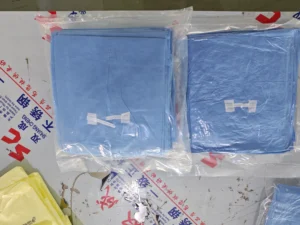
One of UBL’s protective garment customers had a specific pack specification: every finished unit must contain exactly five folded garments, vacuum-compressed into a single sealed pack. This is a common distribution format for disposable isolation gowns and coveralls — hospitals and industrial facilities receive them in multi-piece packs they can dispense from a carton, rather than opening one individually-bagged item at a time.
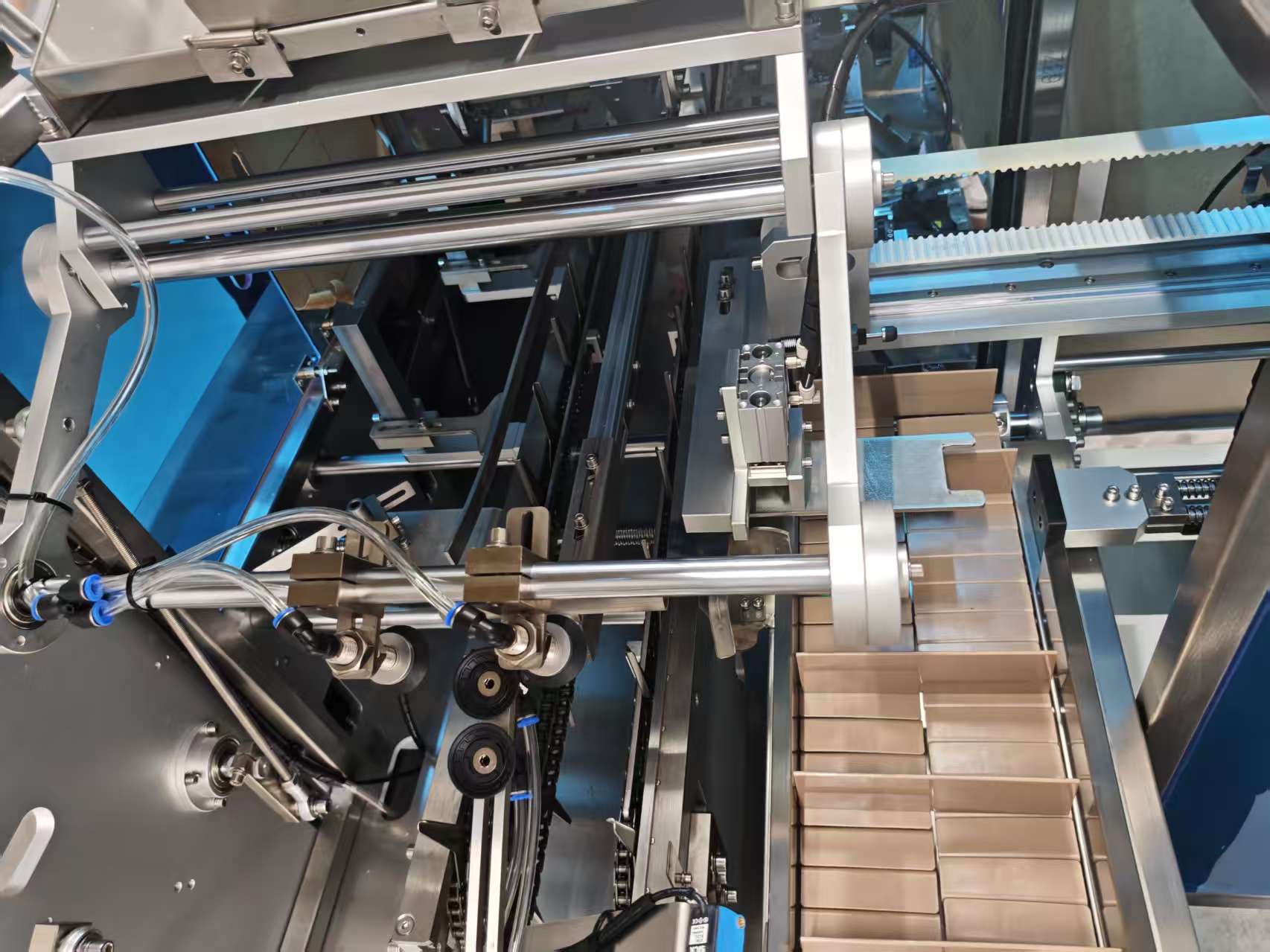
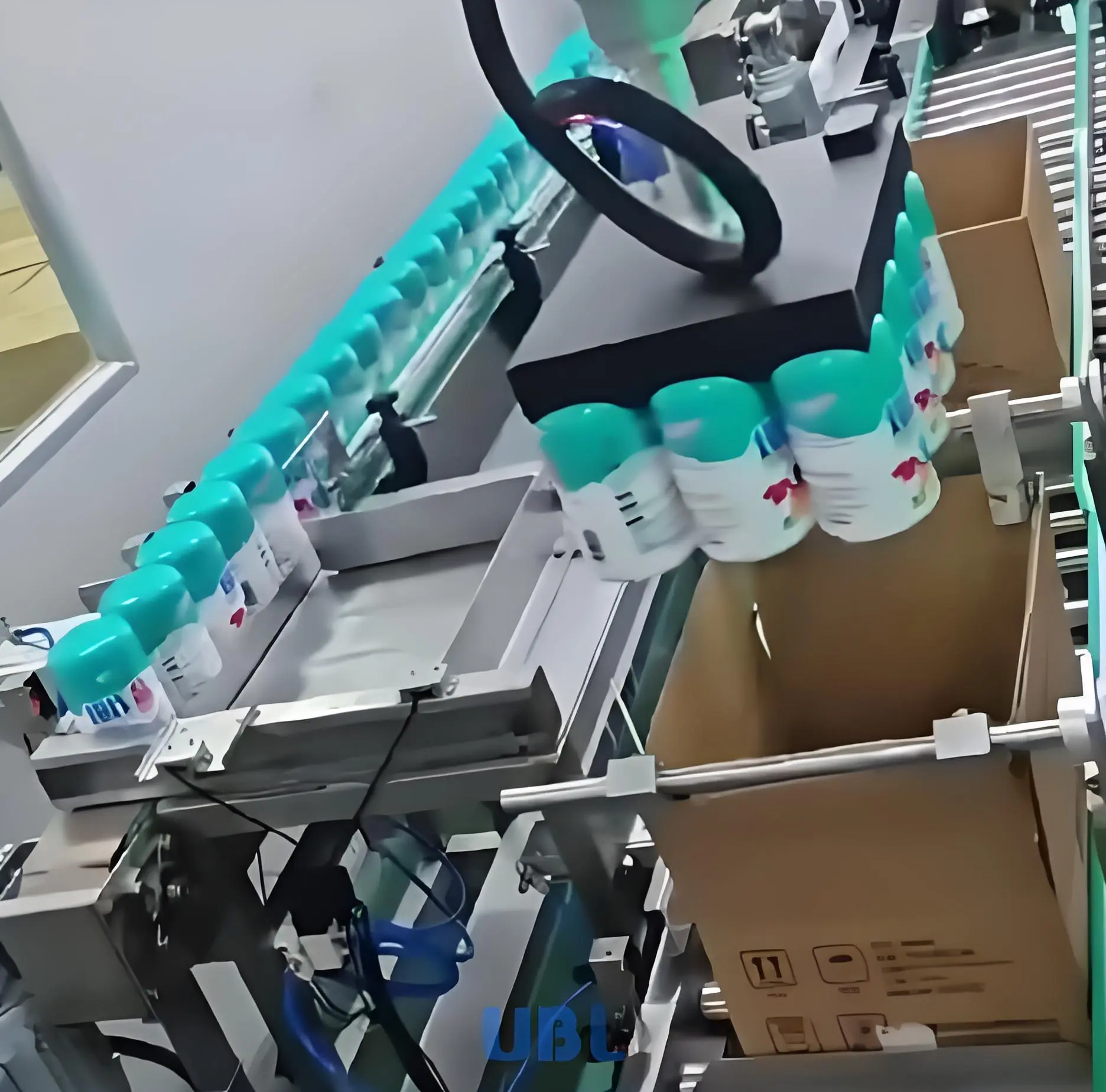
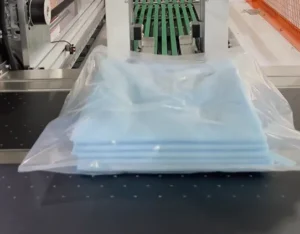
The requirement called for gripper stacking. After each garment is folded, the gripper arm descends, clamps the piece, and holds it in position. The next folded garment arrives, and the gripper collects it onto the stack. This continues until five pieces are accumulated — all held in precise alignment by the gripper mechanism throughout the count. Once the fifth piece is added, the completed five-piece stack transfers automatically to the bagging station, where it is inserted into a bag and vacuum-sealed in a single continuous motion.
UBL configured the stack count at 5 via the HMI touchscreen — the operator can adjust this between 1 and 5 pieces at any time without a mechanical changeover. The full-auto line runs at approximately 600 pieces per hour, with the only manual roles being garment infeed and finished-pack removal for carton loading. Zero human contact occurs between the fold station and the sealed vacuum pack.
The outcome: consistent five-piece vacuum packs at the specified compression level, repeatable pack geometry for efficient carton utilization, and a hygiene-compliant zero-contact workflow from sewing line to sealed unit.
Click here to watch the UBL folding and stacking line in action.
How the Fold-Stack-Vacuum Sequence Works
Step 1 — Garment Folding
Each garment enters the infeed zone and passes through the folding mechanism. The fold arms execute the primary and secondary fold sequence, producing a compact, uniformly dimensioned piece. On the FC-332C, fold dimensions are configured to match the target stack geometry and the vacuum bag dimensions that will be used downstream.
Step 2 — Stacking (Gripper or Descent)
Folded pieces are collected by the stacking mechanism — either a gripper arm that clamps each piece from above as it arrives, or a descent platform that steps down incrementally as each layer is added. The system counts pieces and accumulates them in precise alignment until the HMI-configured target count is reached. For the FC-332C protective garment line, the target is typically set to 5 pieces; the HMI allows adjustment between 1 and 5 without any mechanical changeover. Alignment at this step is critical: each piece must land squarely on the previous one so the final stack slides cleanly into the vacuum bag and produces a uniform compressed block.
Step 3 — Transfer to Vacuum Bag (FC-332C)
Once the stack count is reached, the accumulated stack transfers into a waiting vacuum bag. The machine opens the bag, receives the stack, and positions it for the vacuum and sealing cycle.
Step 4 — Vacuum Compression and Sealing
The vacuum pump extracts air from the bag to the configured vacuum level, compressing the stack. The seal bar then closes the bag with a heat seal, locking the vacuum. The finished compressed pack exits onto a take-away conveyor for carton packing or palletizing.
FW-201C vs. FC-332C: Which Configuration Do You Need?
| Factor | FW-201C (Fold + Stack) | FC-332C (Fold + Stack + Bag + Vacuum) |
|---|---|---|
| Output format | Open folded stacks for carton packing or bulk bagging | Vacuum-sealed compressed packs (1–5 pcs per pack) |
| Stacking mechanism | Descent stacking (platform steps down as layers accumulate) | Gripper stacking (clamp arm holds stack in alignment until count is reached) |
| Stack count control | Configurable via HMI | 1–5 pcs per pack, adjustable on HMI touchscreen — no mechanical changeover |
| Speed | 500–700 pcs/h | ~600 pcs/h (full-auto line) |
| Human contact after infeed | Operator handles stacks at carton packing stage | Zero contact from infeed to sealed vacuum pack |
| Hygiene compliance | Good — reduces handling vs. manual | Full zero-contact, suitable for regulated environments |
| Volume reduction | Standard folded volume | Significant compression; reduces shipping volume per pack |
| Best for | Bulk apparel, retail shelf prep, carton-packed distribution | Protective wear, medical/cleanroom garments, export-heavy operations |
Common Questions About Garment Stacking Machines
Can the FW-201C handle mixed garment types in the same stack?
Mixed stacks are possible only when garment dimensions are nearly identical — the stacking mechanism aligns pieces based on consistent folded size. If garments differ in length or width by more than a few centimeters, the stack alignment degrades and downstream handling becomes more difficult. For mixed-SKU operations, most facilities stack by SKU batch and separate stacks at the carton-packing stage.
What stack counts can the FC-332C be configured for?
Stack count is set via the HMI touchscreen and can be adjusted between 1 and 5 pieces per vacuum pack without any mechanical changeover. The operator simply enters the target count on the screen; the machine counts automatically and triggers the transfer to bagging once the count is reached. This makes it straightforward to switch between a single-piece vacuum pack and a five-piece compressed bundle on the same production run.
Is the vacuum function suitable for sterile packaging?
The FC-332C’s vacuum compression provides a hygienic, airtight seal that maintains pack integrity from factory to point of use. However, UBL recommends confirming specific sterility requirements with your regulatory or quality team, as medical-grade sterile packaging may require additional validation steps beyond what a standard vacuum seal provides.
Is sample testing available?
Yes. Send your garments to UBL and we run the complete fold-stack (and vacuum, if applicable) cycle on video. You see the stack quality, alignment, and sealed pack dimensions before committing to an order.
Related Reading
- UBL Garment Folding Machine — Full Product Line Including FW-201C and FC-332C
- Automatic Clothes Folding Packaging Machine: Full-Line Solutions for Garment Manufacturers
- Folding and Bagging Machine for Garments: Why Integrated Folding-to-Bagging Beats Two Separate Steps
- Garment Folding Machine Selection Guide: Matching Model to Industry and Volume
Ready to Configure a Folding and Stacking Line?
Whether you need a clean stacked output for carton packing or a full fold-stack-vacuum sequence for protective garment distribution, UBL configures the right system for your product, volume, and compliance requirements. Sample trials are standard before any purchase, and installation includes calibration and operator training.
Contact us to discuss your folding and stacking requirements:
Email: Helen@huanlianauto.com
Website: ublpackaging.com