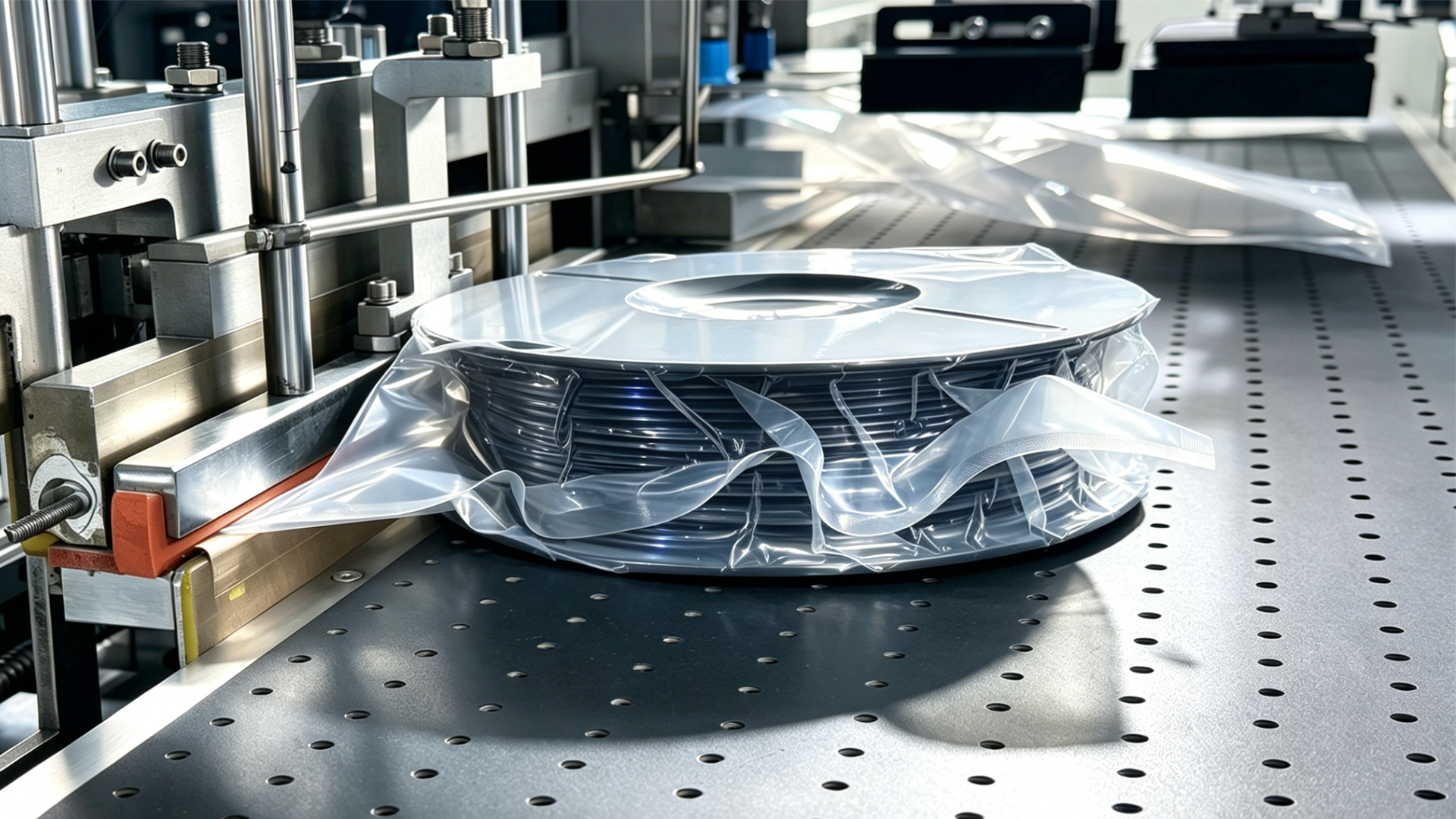
A snap lock vs tuck end vs glue bottom decision is not a preference between three names. It is a choice between three forming processes, and each one asks a different thing of the machine and of the blank.
Write the three names down and they look like three points on a scale. They are not. One of them is a mechanical interlock the machine makes, one is a fold the board makes, and one is an adhesive line applied by the machine. The snap lock vs tuck end vs glue bottom comparison is only useful once you know which of those three you are looking at.
A plant made rigid boxes for years with a tuck end, then moved to corrugate for shipping. The blank changed, the closure changed, and the machine they had been told would do both spent its first month folding nothing at all, because a tuck end machine cannot form a glued bottom and the supplier had quoted both.
The supplier was not wrong. The order was, because it named the closures rather than the process.
The tuck end box against snap lock bottom article on this site compares two styles for product fit. The snap lock bottom types article sorts out the naming. This one is about what happens after the name is settled: what each bottom needs, and how to choose when the formats keep moving. That is the snap lock vs tuck end vs glue bottom question.
What Each Bottom Needs
Three processes. Each one is a different set of motions the machine has to make, and each one is a different set of things the blank has to bring with it. The snap lock bottom tooling is the first of the three, and it is the one that constrains everything else.
| Bottom | What the machine has to do | What the blank has to bring | What it costs at the changeover |
|---|---|---|---|
| Snap lock bottom | Fold two panels in past each other, then push the locking flaps across each other | Two panels with locking flaps cut into the free edges, and the die geometry that makes them meet | New tooling, because the panels are shaped differently |
| Tuck end | Fold one panel in and push its tuck flap into a slot in the opposite panel | A tuck flap and a slot, cut to a width that matches the board | New tooling, because the tuck and the slot move |
| Glue bottom | Fold the panels in, hold them, and apply an adhesive line | Panels with a flat closing edge and enough surface for the adhesive | An adhesive change and a cure or dwell, rather than a tooling change |
Snap lock: the machine does the locking
The snap lock bottom is the only one of the three where the closure is made by the machine. The machine folds both panels and pushes the flaps across each other, and the interlock is what holds the box. That makes it fast and self-contained, and it also means the whole thing depends on the die being cut for that exact structure.
It also means the failure is a hard failure. A flap that does not cross properly does not sit half closed, it sits open, and the box is visibly wrong on the conveyor. That is a good property for a plant, because the error is obvious.
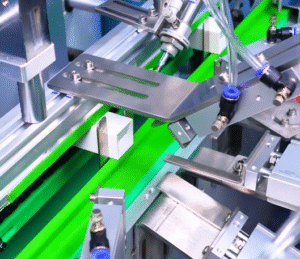
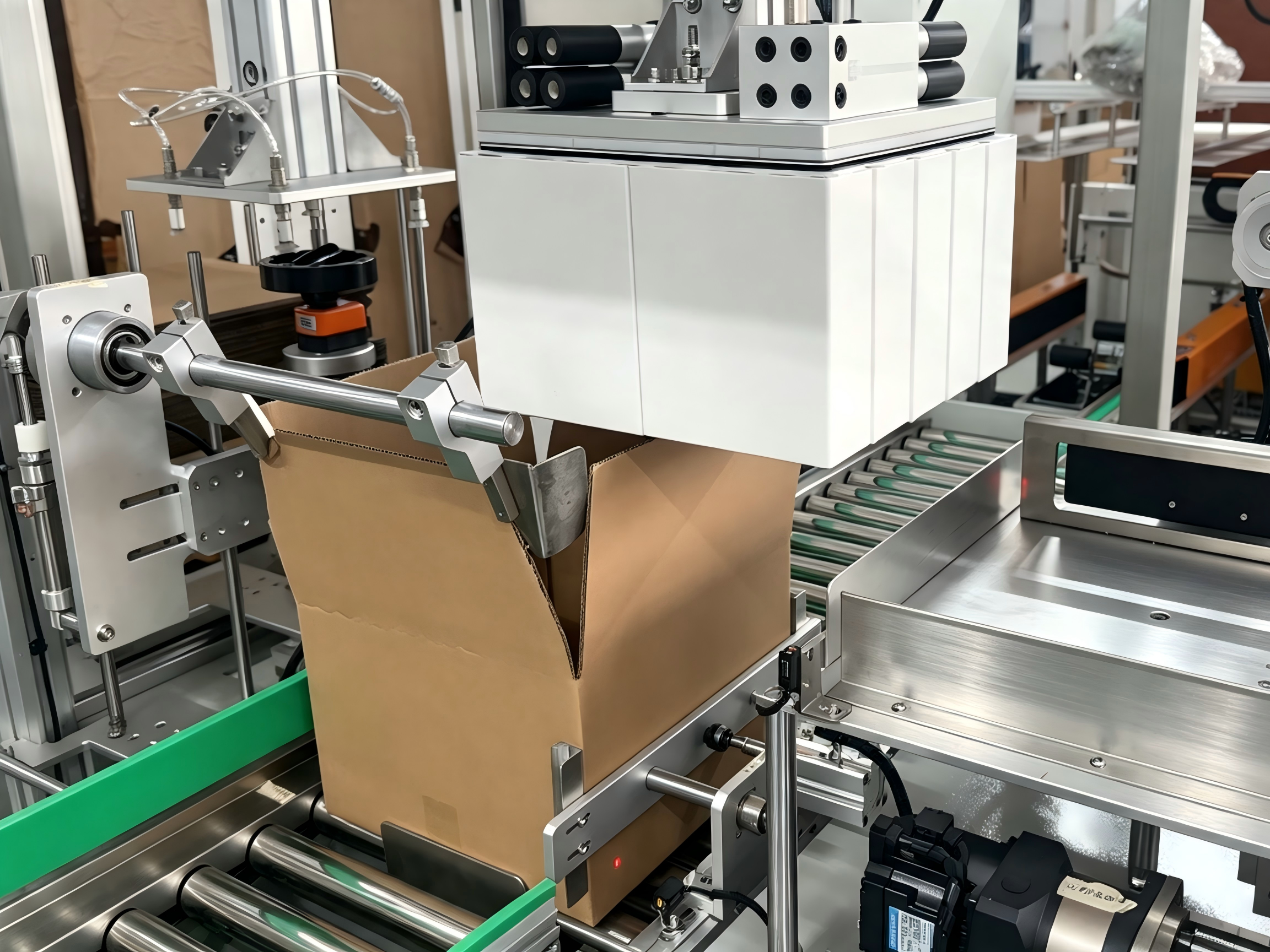
The folding plates doing the closing. A snap lock bottom is a motion the machine owns, which is why it is fast and why the tooling has to be right.
Tuck end: the machine folds and the board holds
The tuck end is the simplest of the three to form and the easiest to change between sizes. The machine folds one panel in and pushes a flap into a slot. The flap is cut from the board itself, so tuck end box forming needs no separate locking hardware and no adhesive.
The weakness is the score rule. A tuck flap cut too wide for the flute splits instead of folding, and a tuck that is cut too narrow for the slot will not go in. This is why the tuck end is the one that punishes a plant with inconsistent blanks, and it is why the board specification and humidity article on this site matters as much for a tuck end as for anything else.
Glue bottom: the machine holds and the adhesive does
The glue bottom is the odd one out. The machine folds the panels into position and holds them while an adhesive line is applied. The closure is made by the adhesive, not by the board and not by a mechanical interlock.
That buys a lot. No die geometry to match, so the same machine can handle a wide range of sizes with adjustments rather than tooling. No score rule to get right on the closure. And a glue bottom carton that looks the same from the outside whatever the size.
It costs something too. The adhesive has to be applied, and applied properly, which means the machine needs an applicator and somewhere for the line to cure or set before the box is handled. A glue bottom is a bigger machine decision than a tuck end is, because it brings a process with it.
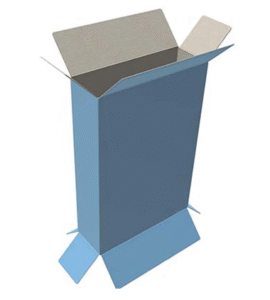
A glued carton with the adhesive seam along the base. Nothing here locks and nothing interlocks, and the closure exists because a line of adhesive was run where the panels meet. That is the third process, and it is the one that changes what the machine has to be.
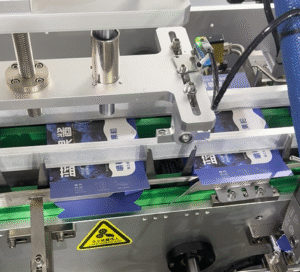
The adhesive head above the cartons. A glue bottom brings a glue unit with it, and the glue unit brings its own consumables, its own temperature control and its own cleaning routine.
Choosing for a Real Format Mix
Almost nobody runs one format. The useful question is not which bottom suits a catalogue but which mix of bottoms a plant can run, and how often the mix changes.
| What the format mix looks like | What it suits | Why | What it costs |
|---|---|---|---|
| One format, high volume, stable for months | Snap lock | The machine owns the closure and the tooling is set once | New tooling for the next format, whenever that is |
| Several formats of a similar family, changing often | Tuck end | Tooling changes are quicker and the closure needs no consumables | Consistent blanks, or the score rules will split |
| Many formats, including sizes the plant has not made before | Glue bottom | Adjustments rather than tooling, so an unfamiliar size is not a project | An adhesive unit to maintain and consume |
| A rigid box that has to look expensive | Tuck end or snap lock | No adhesive line, so no glue shadow and no cure time | Tooling for each size |
| A format that changes within the shift, often | Glue bottom | No die change to make between formats | Adhesive setup and cleaning between formats |
The decision is mostly about the changeover
Look down the second column and the pattern is that the right answer follows from how often the format moves. A stable format suits a mechanical closure. A moving format suits an adhesive one, because an adjustment is faster than a tooling change. The production format mix, with the volume in each size, is the input to the whole thing.
That is the framing that decides most cases, and it is why the question is worth asking as a bottom forming process choice rather than as a preference between names. The multi-SKU changeover checklist on this site sets out how the changeover is measured, and the number that comes out of that measurement is the input to this decision. The folding machine format change is the thing being priced here, and a snap lock vs tuck end vs glue bottom answer that ignores it is an answer to the wrong question.
What is not a good reason to choose is a preference for the look of a box, or a name a customer used on a drawing. Those things belong in the product decision. The forming process decision is about what the line can do, and a snap lock vs tuck end vs glue bottom answer is only as good as the format mix behind it.
The mistake that costs the most
Quoting one machine for a mix of bottoms. The supplier hears tuck end and glue bottom in the same order and hears a machine that can do both, and quotes it, and the machine arrives with a tuck end section and a glue applicator that cannot both run at once on the same product type. This is the most common way a snap lock vs tuck end vs glue bottom decision goes wrong, and it is a purchasing failure rather than a technical one.
It can be done. It is a machine with two sections and a changeover between them that is not a tooling change. But it has to be designed, quoted and priced as two processes on one machine, not as one machine that happens to do two things. The name in the order is what lets that mistake through.
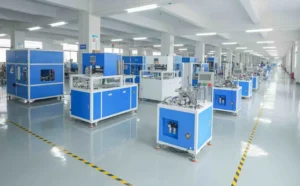
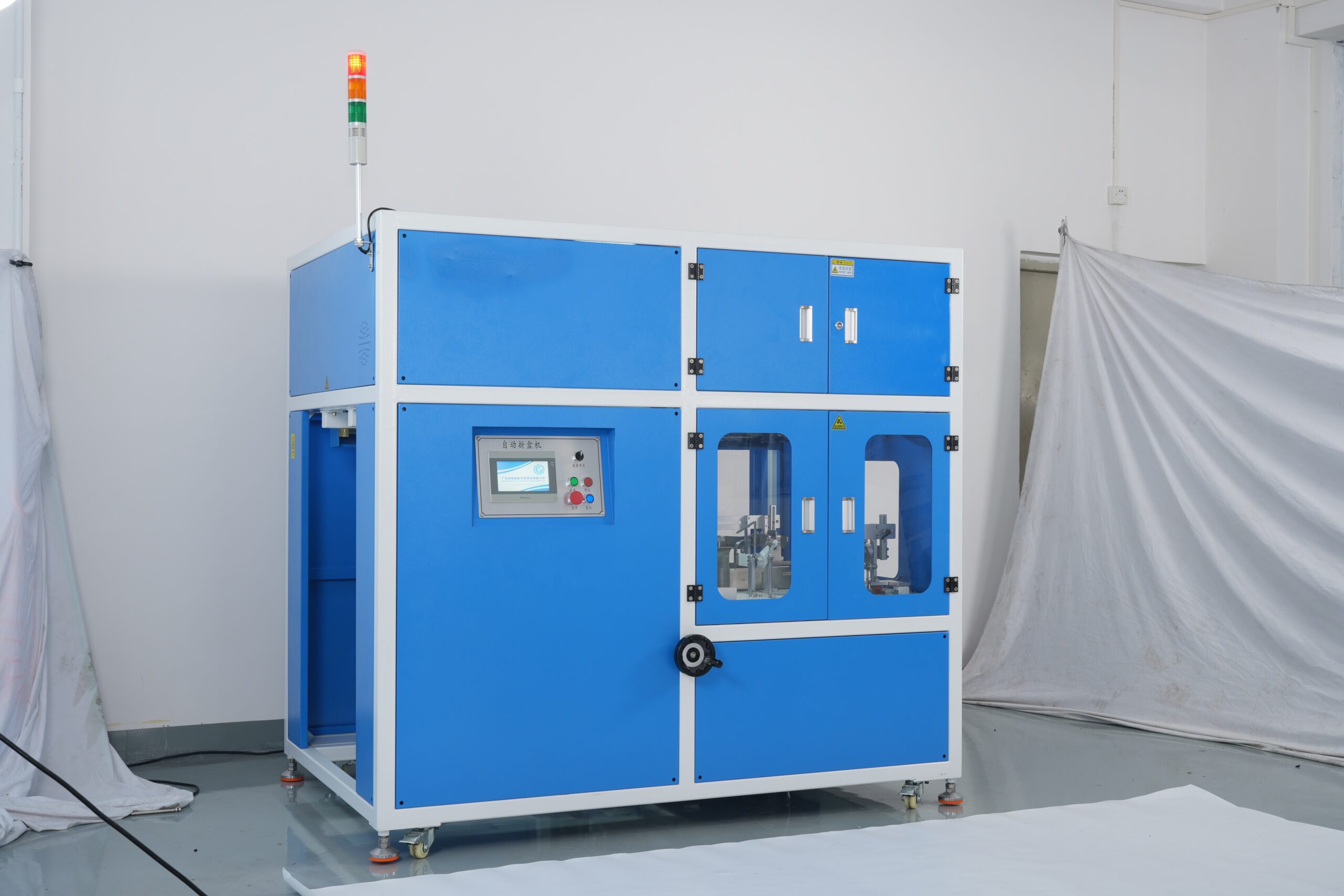
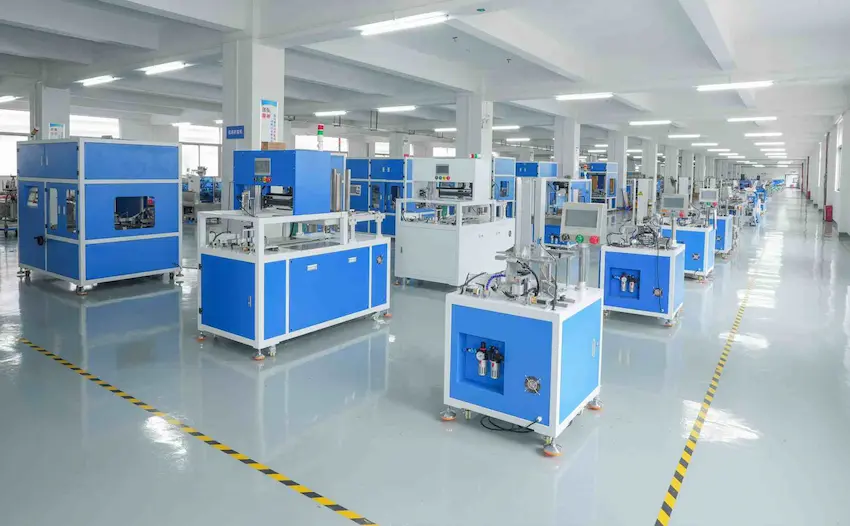
A row of folding machines in a workshop, each one configured for the work it is doing. The bottom forming process a machine is set up for is a property of that machine, not an option it carries.
Turning the Decision Into a Specification
The order should describe the process, not the name. Three lines, and the third one is the one that saves the money.
State the motion. Say that two panels fold in past each other and their locking flaps cross, or that one panel carries a tuck into a slot in the other, or that the bottom panels are folded in and closed with an adhesive line applied by the machine. A supplier quoting a snap lock bottom tooling package can work from that. A supplier working from three names cannot.
State the range, and state it as the sizes the plant actually runs with the volume in each, not as the range the machine can be configured for. Write the volume in each size next to the size.
Then state what happens at the changeover. How long it takes, who does it, what has to be swapped, and what has to be re-checked afterwards. That line is where the cost of a moving format lives, and it is the line nobody writes because everybody assumes it is a tooling change and tooling changes are quick.
Put the three lines next to each other, because the plant is going to be asked for them separately by three different suppliers and the answers need to be comparable.
| The line on the order | What it has to say | What it settles | What it costs to leave out |
|---|---|---|---|
| The motion | How the panels close, in words rather than names | Which forming process the machine has to run | A machine quoted for a process the plant did not mean |
| The range and the volume | The sizes the plant runs, with the volume in each | Whether one machine covers the mix | A configured range that the production range does not use |
| The changeover | How long it takes, who does it, what is swapped, what is re-checked | What a moving format actually costs | The changeover, discovered on the floor, in the busiest week of the year |
The carton folding machine selection guide on this site covers the rest of the buying questions. The equipment sits in the carton folding machine range, and a supplier quoting from that range should be given the motion and the format mix rather than a list of box names.
[Send us the formats you run and the volume in each, and we will tell you which forming process fits that mix, what the changeover will actually cost you, and whether one machine covers it.]
Email: helen@huanlianauto.com
FAQ
Is a snap lock bottom better than a tuck end?
Neither is better in the abstract. A snap lock is a closure the machine makes, which is fast and gives an obvious failure. A tuck end is a closure the board makes, which changes between sizes more easily and needs no consumables. The right answer depends on how many formats you run and how often they change.
What does a glue bottom need that the other two do not?
An adhesive applicator, somewhere for the box to be held while the adhesive sets, and the consumables and cleaning routine that go with them. It buys you a bottom that adjusts between sizes instead of needing new tooling, which is worth a lot on a line that runs many formats.
Can one machine form both a tuck end and a glue bottom?
It can, as a machine with two sections and a changeover between them, but it has to be designed and quoted that way. The mistake is quoting one machine for both because the order mentioned both names. That produces a machine with a tuck end section and a glue unit that cannot both run on the same product type.
How does the format mix affect the choice?
More than anything else. A stable format suits a mechanical closure, because the tooling is set once. A format that changes often suits an adhesive bottom, because an adjustment takes less time than a tooling change. The volume in each size matters as much as the number of sizes.
What should the order say instead of the bottom style?
The motion. Say that two panels fold in past each other and their locking flaps cross, or that one panel carries a tuck into a slot, or that the bottom is closed with an adhesive line applied by the machine. Then give the sizes with the volume in each, and say what happens at the changeover and how long it takes.