ReFill filament packaging starts with a question the brochure cannot answer. A customer sends a photo of a spool-less roll and asks whether it can be pushed straight into the standard spool bagging machine. Somebody wants a yes or a no before the sample arrives.
A conventional rigid spool has a fairly stable outer profile and a defined gripping interface. The bag is opened, the roll pushed in on its flanges, the film drawn past it, the seam heat sealed. A ReFill form may be a roll with no traditional spool sidewalls, and its bag may be built for repeated opening and closing. The geometry the machine was built around is not there.
Before any of that gets discussed, engineering wants facts off the actual roll, not off a product page. Inner and outer diameter. How the shape is held together. How readily the roll loses its form. What gripping surface exists. How the bag mouth is built. Whether a reusable vacuum bag is involved. Whether the packed unit survives the trip. With those in hand, three routes can be compared. ReFill filament packaging gets quoted off the roll, not a catalogue.
One documented market example, so nobody has to invent one. The FormFutura ReFill page describes filament sold without a spool, in a reusable vacuum packaging bag. That establishes one thing: the format exists and somebody is shipping it. It does not establish that a standard spool bagging machine can take it, or that any plant has budget waiting. A market fact is not a capability claim.
The Assumption a Standard Spool Line Is Built On
The grip the standard machine expects
Every station on a conventional filament line sits downstream of one assumption: the product is a rigid spool, with flanges, a hub and an outside profile the machine knows. Push-in needs somewhere for the flanges to land. Gripping needs a surface to close on. The bag is formed and cut to suit that profile. Cartoning needs a flat, square object.
That is what you are reading when you look at what the standard spool bagging machine is built to grip. The machine grips a spool, and the rest of the line inherits that assumption without restating it. A spool-less form removes several at once: no flange to land on, no hub, nothing for a jaw to close onto. Something has to take that role, or the station stops doing what it did.
| What the standard line assumes | What a spool-less or re-openable form changes | Which mechanism has to be re-checked |
|---|---|---|
| A rigid spool, two flanges, stable profile | A roll with no traditional spool sidewalls | Push-in and guide rails |
| A defined hub for the jaws to close on | Possibly no hub and no flange | Gripping and holding mechanism |
| A bag formed and cut for that spool | A bag made around the roll, another mouth | Film draw and bag former |
| A bag opened once, then heat sealed | A bag opened and closed again | Film seal, and film at the re-close |
| A product that keeps its shape in a carton | A product whose form may not survive stacking | Carton insert, tray, shipping case |
| A defined hand-off between stations | A grip that changes between stations | The hand-off: who releases what and when |
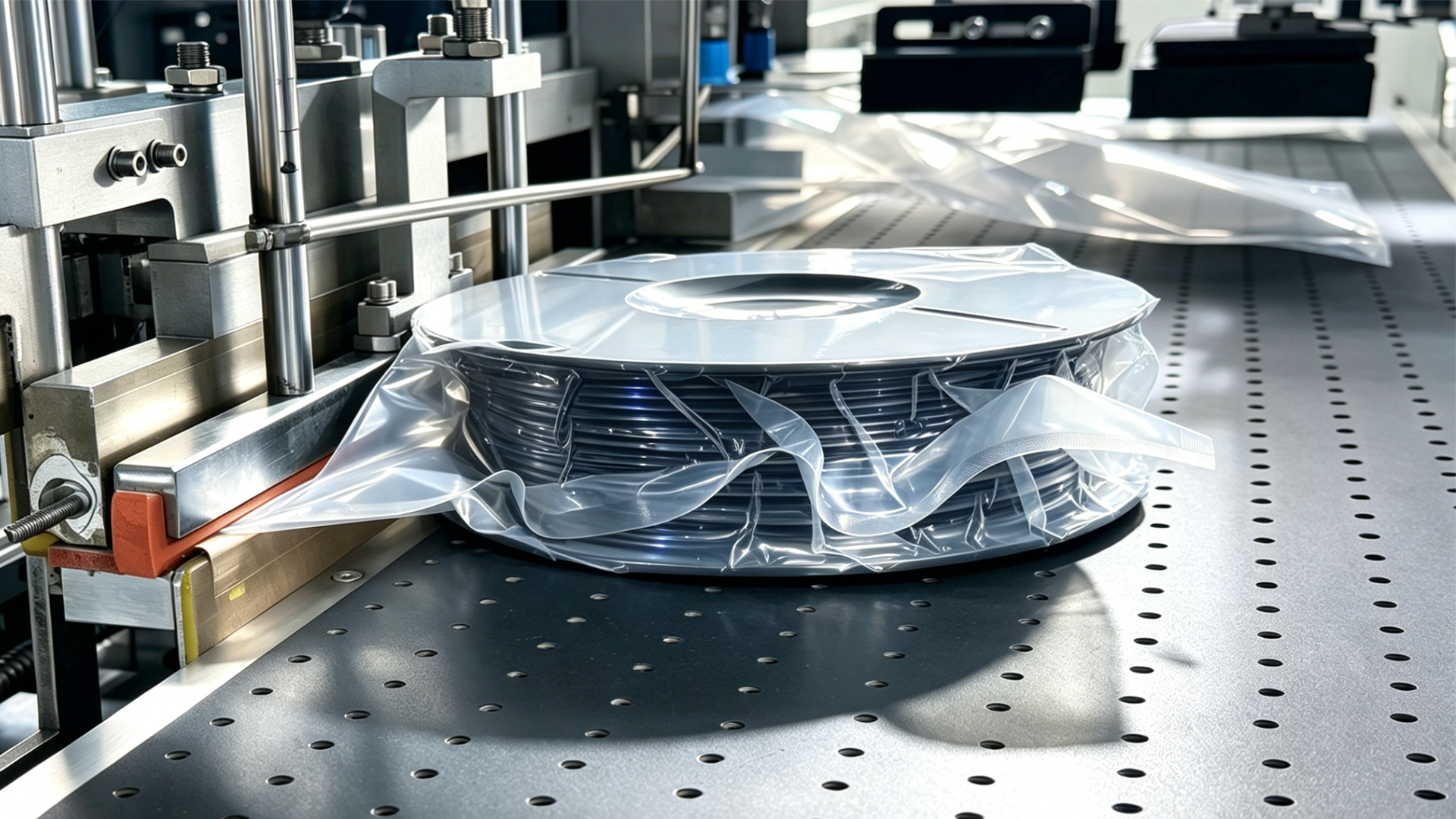
A reel of filament in a clear bag on the machine table. The bag is open, the product is in it, and the machine does the rest.
Where forming and insertion get decided separately
The grip problem is not solved by making the jaws stronger. It gets solved the way the floor already solves it on other products: forming the package and inserting the product are two separate decisions, with separate acceptance checks. That is why forming and insertion are bought and accepted separately on a mailer box line, and the same split turns up here. The bag can be built to suit the roll, or the roll presented to suit the bag. Picking both after the fact is not on the table.
The sealing side moves too. A bag built for repeated opening and closing is a different object from one built to be opened once and heat sealed. On a re-openable bag the film seal belongs to the bag design, not to the machine that seals it first. Sealing at the factory and sealing again at the customer are two operations needing two checks.
What Engineering Collects Before Anyone Quotes
The facts to pull off the customer
Ask the customer, not the catalogue. This is the list we start from for ReFill filament packaging, and every line comes from the customer’s own roll, film and route. The table is split into what an item tells you and what it does not, because the second column is where quotations go wrong.
| What to obtain | What it tells you | What it does not tell you | Which decision it drives |
|---|---|---|---|
| Inner and outer diameter | Whether it clears the pocket, guide and jaw opening | Whether it holds that dimension under film tension | Keep, adapt or replace the station |
| How the shape is held together | Where the load bearing surfaces are | Whether that joint survives handling | Whether a custom support is needed |
| How the roll loses form | Whether the risk sits at handling or storage | How often, and under which stacking | Whether the pack needs its own rigidity |
| The gripping surface that exists | Whether there is anything for a jaw to hold | Whether gripping it is the right move | Whether insertion stays automatic |
| How the bag mouth is built | Whether the bag opens once or repeatedly | Whether the customer can re-close it | Whether the film seal is a machine job or a bag feature |
| Whether a reusable vacuum bag is planned | What the sealing step has to achieve | That the filament inside is dry | Whether a vacuum station belongs here |
| Whether the unit survives transport | Whether the current pack is adequate | Which route it actually travels | Whether the pack is the right pack |
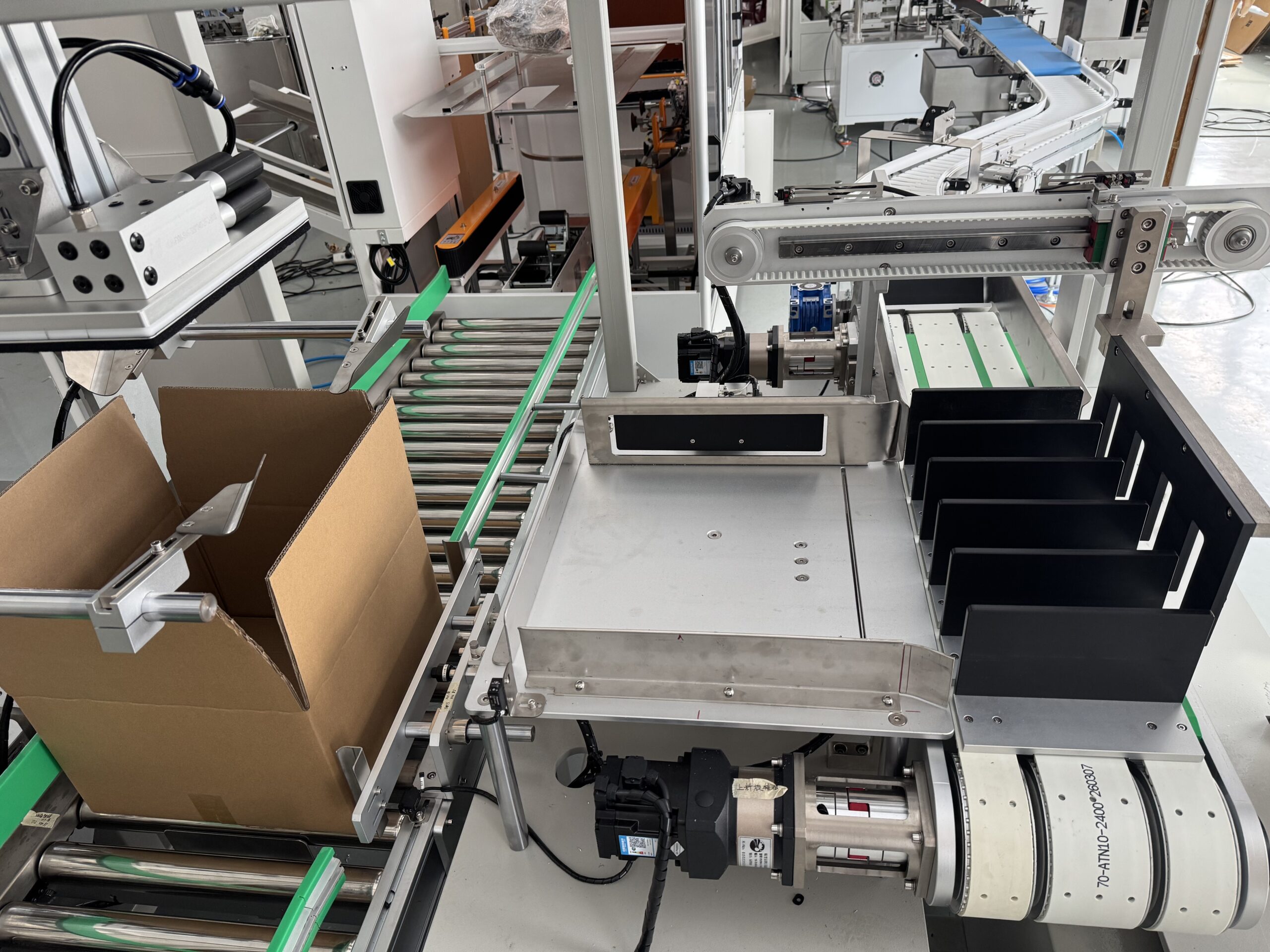
The product on the bench. Diameter, label, flange, whatever it carries. Engineering reads the roll, not the product page.
What those facts will not settle
Two of the items deserve a word of their own. Roll form stability is the first. A roll that holds its shape on the bench can still deform in a carton under stacking. The answer there is a transport trial on the customer’s route, not a figure read off a drawing. Nobody should quote a form-stability value for a product they have not watched on a pallet.
The second is the vacuum bag, because the customer’s second question usually arrives right after the first one: does a vacuum bag stop filament taking up moisture? The honest answer is no, not on its own. Read how a vacuum station protects filament from production to delivery and the boundary is plain: it holds the condition the filament was in at sealing, working alongside the film and the seal rather than instead of them. It does not keep moisture out through a film that is not a barrier for the route, and it does not dry filament that was already wet. When a complaint comes back, how to tell a drying problem from a barrier or seal problem is the method.
Bag structure and seal integrity have their own list of checkpoints, and it is worth running the customer’s film against the checkpoints your bagging line has to get right rather than assuming the standard set applies. A re-openable bag and a single-use bag fail differently, and the check that catches one misses the other.
Three Routes, and What Each One Leaves Open
Once the facts are on the table, three routes for ReFill filament packaging usually present themselves. None is automatically the answer, and the table puts what each leaves open next to what it fixes.
| Route | What it solves | What it leaves open | What would justify choosing it |
|---|---|---|---|
| Custom engineering on the standard station | Keeps the line, the operator pattern, the cycle | Whether the custom part still fits when the product changes | Dimensions and grip details close to a spool |
| Keeping a manual step in the line | Commits no custom tooling to a changing product | Placement consistency, cycle time, who owns seal variation | Low or shifting volume, frequent product change |
| Changing the packaging form | Puts a stable object back in front of the machine | Material use, downstream line, what the customer receives | A roll with no stable form to work with |
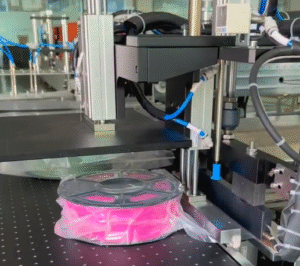
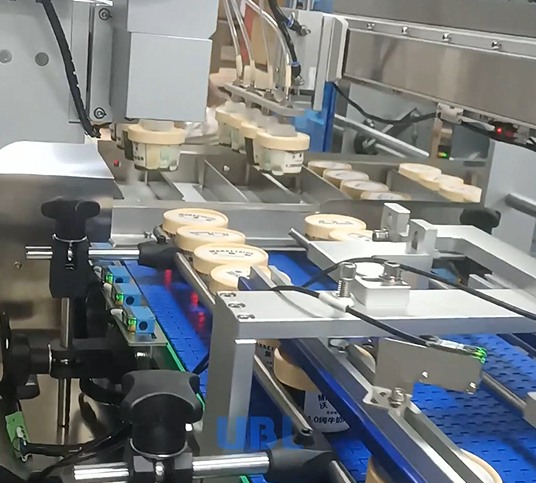
A spool under the sealing head. The station holds its parameters, and the bag on this run goes in the carton.
Route one: custom engineering on the standard station
Keep the machine and change what it grips. A dedicated support, a mandrel, a fixture, a different jaw profile, a different way of drawing film around the roll. The starting point is a standard machine from our bagging machine range, and the work sits in the grip, the fixture and the film draw, not the controls.
This is the route when the product sits dimensionally close to a spool. It is also the route where the evidence matters most, because the custom part is built to one customer’s actual roll and film. Change the product and the fixture stays where it is, still sized to the old roll. That failure mode is the one to plan for.
Route two: keeping a manual step
Not every station has to be automated, and a manual step is often the honest answer at low volume or with frequent product change. Somebody places the roll in the opened bag, the machine seals, the line continues. What it leaves open: placement consistency between operators, the cycle time it costs, and who owns seal variation when the bag is set up differently each time.
Route three: changing the packaging form
If the roll has no stable form to grip, pack it in something that does. A carton, a tray, a sleeve, a rigid carrier the roll sits inside, and the machine gets a consistent object back. What that leaves open: more material per unit, a different line downstream, and a change in what the customer opens. It also moves the question from a machine question to a product one.
What a Market Example Does and Does Not Prove
Back to the FormFutura page, because it is the line most easily misread. It is a documented product format, on the market, sold in that packaging. It says nothing about any machine of ours, what a competitor machine does with it, or whether any plant has decided to buy anything. Reading a market fact as a capability claim is how a plant buys a line for a job it cannot do.
So the ReFill filament packaging question this page opens with has one answer that holds up: it gets settled by engineering against the actual roll, the actual bag and the actual film. We will not claim here that our standard machines can run a ReFill format, and we will not claim that they cannot. Both would be the same mistake in opposite directions. It is a real engineering question, and the answer belongs to the roll in hand.
What to Bring Into the Machinery Conversation
If you are the one holding the roll: a few samples of the actual product, not a photograph of it. The bag, with its film and its closure described. The film specification. The route the unit takes and how it is stacked. The volume to run. With that, engineering hands back a comparison of the three routes, and you see what the ReFill filament packaging question turns on.
Bring the roll and the drawings, and the question gets an answer instead of a brochure. A non-standard machine is a quotation with a design attached, and the design comes first.
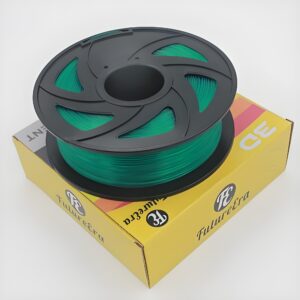
A finished pack. Whatever route you arrive at, the unit the customer opens is what every measurement was made for.
[Send us your roll and your bag. Engineering will read them and tell you which parts of the standard line the format touches, and which parts it does not.]
Email: helen@huanlianauto.com
FAQ
Can a spool-less ReFill roll go straight into a standard spool bagging machine?
Not from the brochure, and not from a photograph. A standard line is built around a rigid spool with a defined profile and a place to grip. Whether a spool-less roll can run on it depends on the dimensions of that roll, what shape it keeps, what surface there is to grip, and how the bag is built. That is engineering work on a real sample.
Does a vacuum bag stop filament from taking up moisture?
Not on its own, and this is the second half of the same answer. A vacuum bag holds the condition the filament was in when it was sealed. It does not dry filament that was already wet, and it does not stop moisture coming through a film that is not a barrier for the route. The film, the seal and the filament condition have to be right together, which is why a bag check and a barrier check are separate steps.
What does engineering need before quoting ReFill filament packaging?
The actual roll and its dimensions, how the shape is held together, the gripping surface that exists, the bag with its film and its closure, whether the bag opens once or repeatedly, and how the packed unit is transported. The values come from your product and your film.
Can your standard machines handle a ReFill format?
This article does not claim that they can and does not claim that they cannot, because either claim would be made without seeing your roll. What we can do is take the actual product, bag and film, work through the assumptions a standard line makes, and tell you which hold and which have to change. That is a custom engineering answer, not a catalogue answer.
Is a custom machine the only way to pack a spool-less roll?
No, and it is not even the first answer. Three routes are worth comparing: custom engineering on the standard station, keeping a manual placement step in the line, and changing the packaging form so the machine handles a stable object again. Each leaves something open, and which one you pick depends on volume, product stability and how often the product changes.