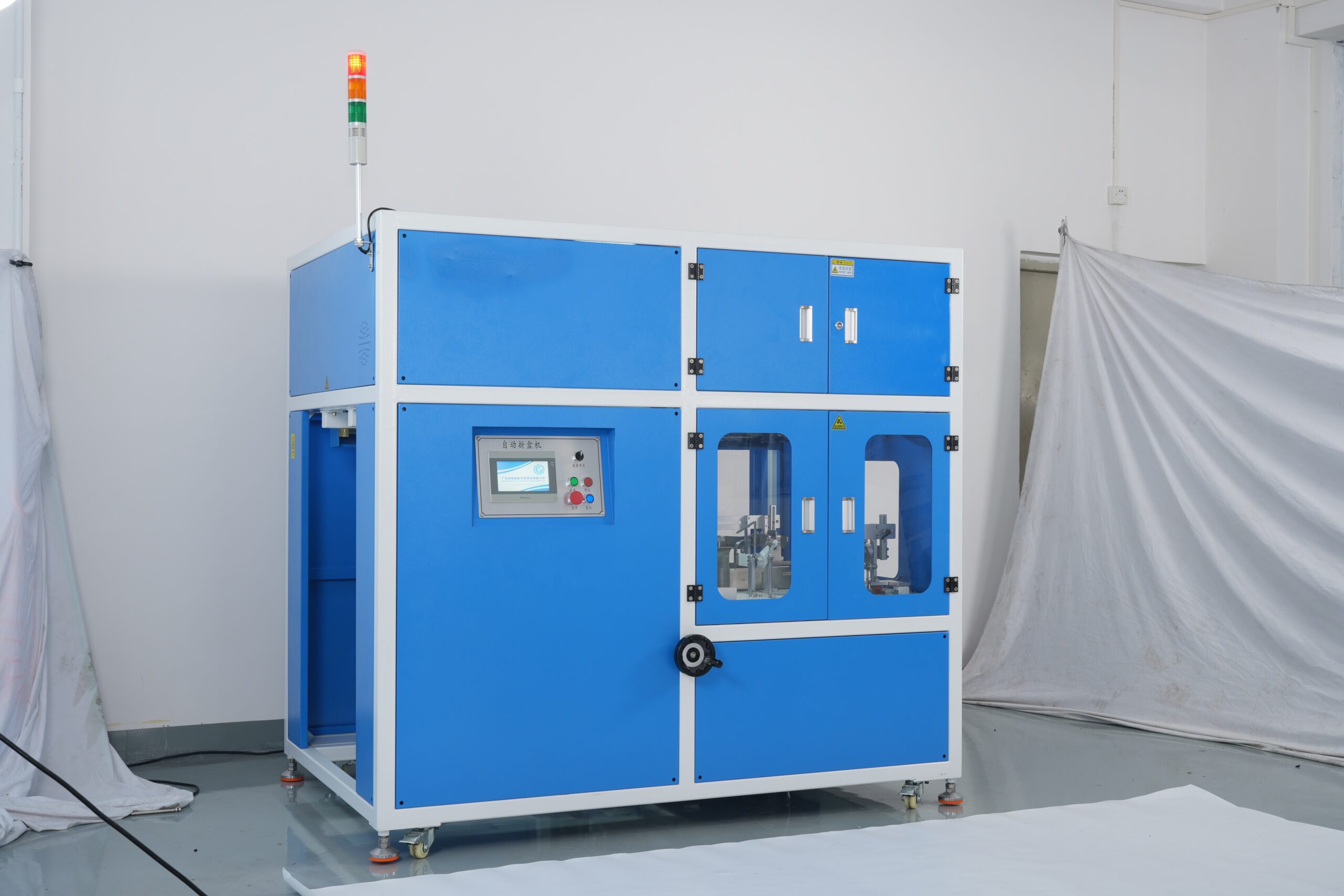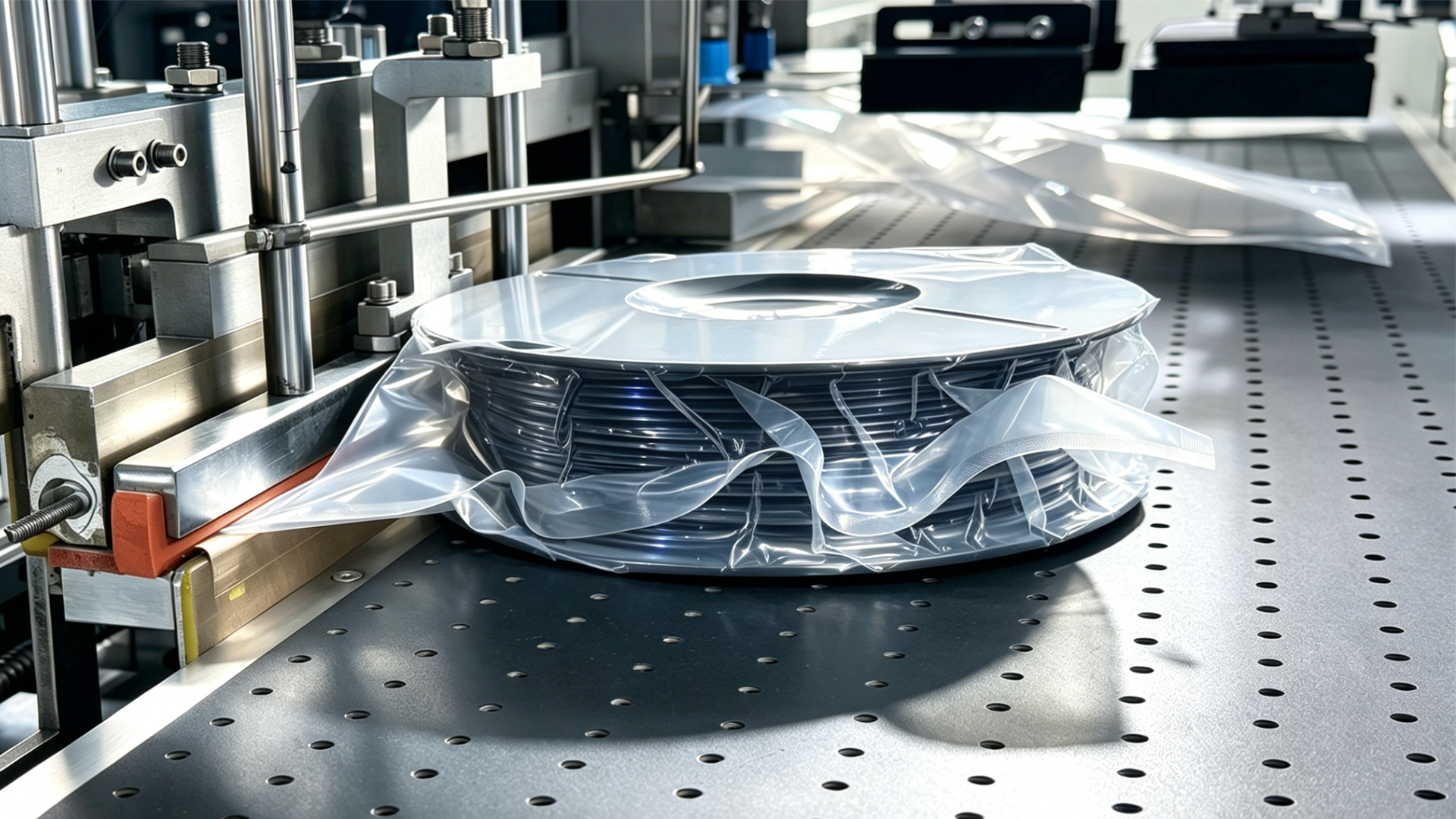
A snap lock forming and insertion test is where a line stops blaming the wrong machine. A box comes out of the forming station closed and the product goes in, but the box falls open when it is picked up. The operator says the insertion station pushed it out of shape. The supplier says the forming station made a bad box. Both are true and neither helps, because the test that was run did not separate the two.
Here is what that looks like on a real line. A plant runs snap lock bottom boxes for accessories. The automatic forming station folds and locks the bottom. The insertion station puts the product into the formed box. Everything sits in one enclosure, so it looks like one machine to anyone standing next to it.
Then the box supplier changes the board. Not the machine. The board. Slightly heavier, different flute. The forming station keeps folding and keeps locking, and the locked boxes have their panels pushed out of square because the board fights the fold rails. The insertion station then grips a box that is already out of shape and loads it a bit off. By the end of the line the box is visibly distorted and the operator has decided the insertion station is broken.
It is not broken. It was handed a box that was already wrong, and nobody tested the handover, because each station passed its own test on a different day with different material.
The snap lock bottom box article on this site covers what the closure is and how the machine makes it. The carton erector acceptance test article covers the whole-machine test. This one is narrower: how to split the work between the forming station and the filling station.
Why One Test Cannot Cover Two Stations
Each station has its own acceptance test, and each test has its own idea of a good output. The forming station is tested on forming. Does the blank feed. Does the die fold the panels. Do the locking flaps cross. The insertion station is tested on insertion. Does the product go in. Does it stop on a bad product. Neither test has an opinion about the other.
The forming station does not know what the insertion station will do to the box it produced, and the insertion station does not know the box was out of square when it arrived. A snap lock forming and insertion test closes that gap.
| Defect seen at the end of the line | Where it originates | How it gets mis-blamed | Where it has to be tested |
|---|---|---|---|
| Box is open, or the locking flaps did not cross | Forming station | Blamed on insertion because it opened on handling | Forming station, before filling |
| Box panels bow outwards after forming | Forming station, driven by the board | Blamed on the gripper in the insertion station | Forming station, on the plant’s board |
| Product sits off-centre in the box | Insertion station | Blamed on the blank because the box was narrow | Insertion station, good box |
| Box crushed or torn at one corner | Insertion station | Blamed on the forming station because the corner was weak | Insertion station, corner recorded |
| Bottom closure splits when the box is filled | Both, in sequence | Blamed on whichever station the operator heard of last | Both, same box |
Read that as handover questions, not machine names, which is what makes carton forming defect attribution possible at all. The board specification and humidity article covers the material side, and it matters because the forming station’s failures are often the board’s failures arriving late.
Splitting the Test Into Two Halves
The split is not about physically separating the machines. It is about what each half is allowed to prove.
What the forming half has to prove
The forming station on its own. A snap lock forming and insertion test that starts here, with the machine fed blanks and no product involved, keeps the halves apart.
The forming half proves that a box comes out in a condition the insertion station can accept. Not an ideal box. An acceptable one, on the plant’s own material. That is the snap lock bottom forming check, and it happens on an empty box. Note what the machine cannot tell you. It counts the boxes it formed, not whether a box survives handling.
Four checks belong here, and none involve the product. Together they are the snap lock forming station test that the insertion station depends on.
The first is the closure. The bottom is locked, the flaps have crossed, and the lock holds without being held by hand. This is checked on the box alone, with nothing inside it. A box that will not hold its own bottom empty is a forming fault.
The second is squareness. The four walls are in their plane and the corners are where they should be. This is the check that would have caught the board change above. The box was closed. It was also not square, and an empty box that is not square tells you the fold did not land where the tooling expected.
The third is the score. A cracked score along the fold tells you the board and the rule are not matched. A score that has opened up on one panel tells you the panel was folded the wrong way. None of these three is a snap lock closure failure in the strict sense, and all of them produce one.
The fourth is the handover condition itself: panels square within the plant’s own tolerance, bottom locked, no torn score, no crease crack, box standing on the conveyor without being held.
| The check | How it is done | What a failure points at | What it must not be judged on |
|---|---|---|---|
| Closure holds empty | Lift and shake it by hand | Lock geometry, flap length | Whether the product fit inside |
| Panels square | Stand it up, look down the walls | Board against rails, tooling | Who the board came from |
| Scores intact | Run a hand along the crease | Score rule against thickness | Machine speed |
| Score rule does not crack | Open one panel flat and look | Flute type against the scoring rule | Operator technique |
| Box stands unaided | Let the box leave and see | Panel geometry, crossing depth | How fast it is picked up |
That last column matters more than it looks. A forming check judged against something the forming station does not control is not a check. Grade it on whether the filled box stays square and you are grading the insertion station instead.
What the insertion half has to prove
The insertion half proves that a known-good box goes in correctly. Known-good is the important phrase. The boxes fed in for its test have to come from the forming station and have passed the forming checks, and that has to be recorded. If they do not, the insertion test measures the forming station.
Three checks belong here. The product goes in, every time, and the machine recovers from the ones that do not. The product ends up where it should, because a square box with a product in the wrong corner is an insertion fault. And the closed box comes out of the handover in the condition it went in: the corners are not crushed, the score is not torn, and the closure holds.
The mechanism that puts the product into the box. This station gets blamed for anything that goes wrong after the box is formed, and much of it was already wrong.
| Check on the insertion side | What the test needs as input | What a failure points at | Which station it rules out |
|---|---|---|---|
| Product goes in and the machine recovers | The plant’s product and board | Gripper setup, feed timing, shape | The forming station, the box was good |
| Product sits where it belongs | A box that passed the checks | Placement position, product nest | The blank, the box was square |
| Corners and scores survive filling | Corner condition recorded first | Gripper, loading position | The forming station, the box was sound |
| Closure still locked after filling | Closure condition recorded first | Whether the fill loads the panel | Anything before the product went in |
Look at the last column. Each insertion check can rule out the forming station, and each forming check can rule out the insertion station. That is what the split buys: a rule for each direction, written down, rather than a memory of the day.
The handover itself
The handover between the two stations is where a part leaves the checked population without anybody noticing. It is where an attribute set at the forming station gets lost. The insertion station handover test has to answer three questions about it.
The first is what carries the handover state. A box that came out square has to still be square when it reaches the gripper. If there is a buffer, if a box sits, if the conveyor accumulates, a box can wait long enough for the board to relax and the walls to bow again. The forming check was done earlier, the insertion check later.
The second is how a non-conforming box gets stopped. If the forming station makes a box that does not close, does something remove it before the insertion station finds it? If the answer is that the operator is expected to notice, the attribution is broken.
The third is what happens to a box rejected between the stations. Does it go back to the forming station, into a reject lane, or into a bin? A box that goes back into the flow gets counted twice and traced to the wrong cycle.

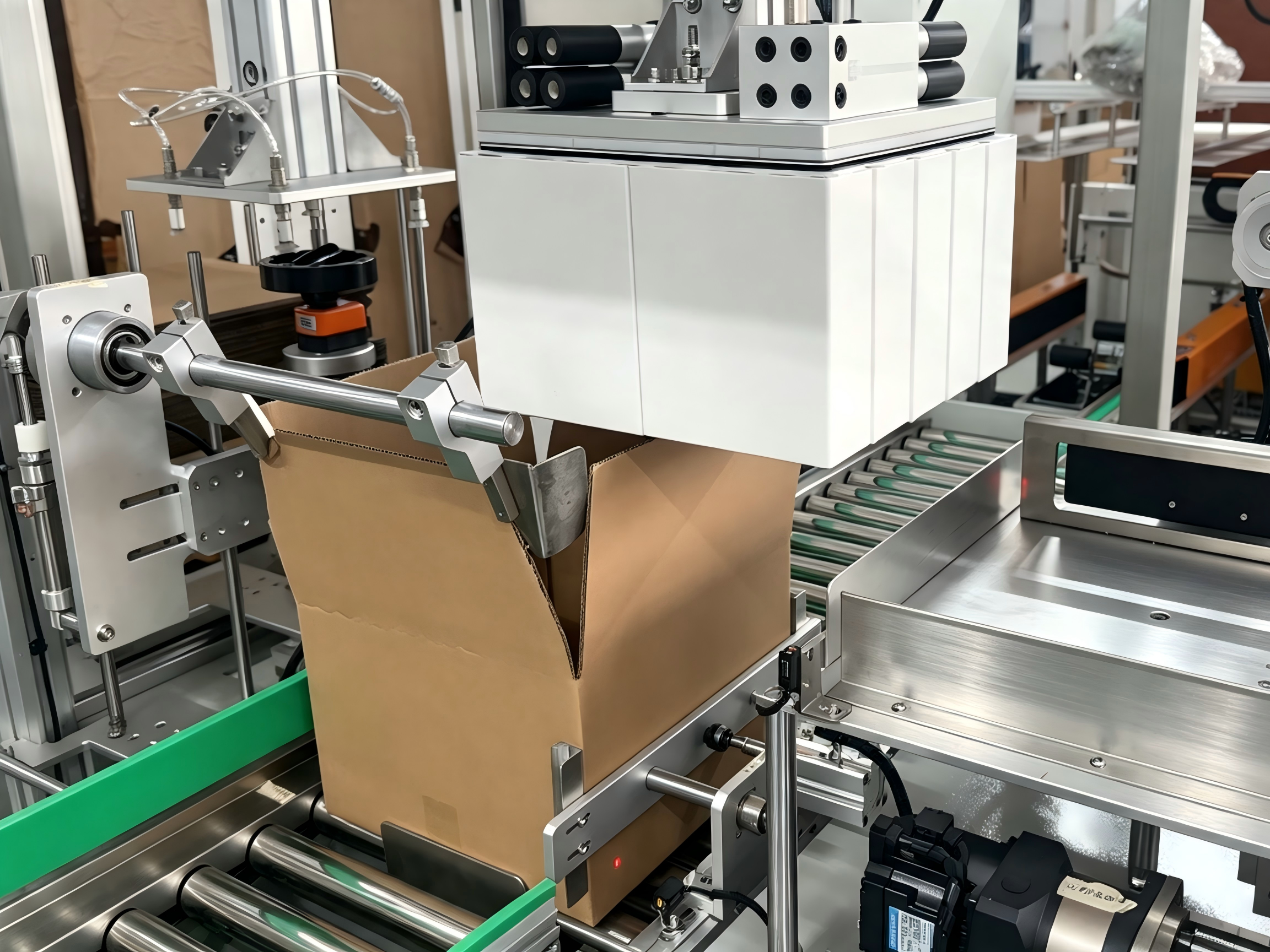
A folding machine and the boxes it makes. None were inspected before they were stacked. The forming station produces a population, and that population is only as good as the check run on it.
Setting the Test Up So Each Fault Can Be Found
A snap lock forming and insertion test is worth little if the conditions are not chosen. Running it on the supplier’s own board and boxes only proves the supplier’s setup works.
Use the plant’s material. The board the plant buys, at the moisture the plant’s warehouse produces, stored the way the plant stores it. Board behaviour is the commonest source of forming faults blamed elsewhere.
Use the extremes of the range. The size with the most volume, plus the smallest and the largest. Not because the small one is interesting, but because clearance runs out at the ends of the range, where the forming station assumptions stop holding.
Run the forming half first, alone. Fill a set of formed boxes, take them out of the flow, and inspect them with nothing else running. Whatever fails in that set belongs to the forming station. That is the whole point of the split, and it is what makes this a station level acceptance test rather than a demonstration.
Then run the insertion half with boxes that passed. If it produces a bad box, the fault is on the insertion side. If it does not, the earlier fault was upstream.
Finally, run the two together, end to end, on the plant’s own material and product, and record what the end-of-line inspection sees. A defect that appears only in the combined run is a handover defect, and belongs to neither station until the rules say where it goes.
The steel folding plates doing the closing. This is where a defect gets its first look, and where the temptation to blame the last station is strongest. The plates do not decide whether the box was square.
The cartoning line integration article covers the handoffs on a wider line. The case erector against case packer article covers where each machine sits in the order.
Writing It Down
The test produces three documents and all three need to exist before the machine ships. The first is the forming station acceptance sheet: the board used, the box sizes, the closure check, the squareness check, the score check, and what each one means. The second is the insertion station acceptance sheet: the product used, the boxes fed in and where they came from, the recovery behaviour, and the box condition after filling.
The third is the handover sheet, and it is the one nobody writes. What carries the state between stations, what happens to a box that fails a check, and how a box is linked to the cycle it belongs to.
Write all three on the plant’s own paper, before the acceptance run is scheduled. The equipment on both sides of the handover sits in the carton folding machine range, and a supplier quoting that range should be asked which sheets they expect to fill in and where a rejected box goes.
[Send us your board, your box sizes and your product weight, and we will tell you which checks belong on the forming side, which on the insertion side, and what to write in the handover sheet between them.]
Email: helen@huanlianauto.com
FAQ
What is a snap lock forming and insertion test?
It is an acceptance test split into two halves, one for the station that forms and locks the box and one for the station that fills it. Each half is run on its own first, and then the two are run together, so a defect found at the end of the line can be traced to the station that caused it instead of being argued about.
Which failures belong to the forming station?
The ones visible on an empty box. A bottom that will not lock, panels that are out of square, a score that has cracked along the fold, a box that will not stand without being held. None of these involve the product, so none can be caused by the insertion station.
Which failures belong to the insertion station?
The ones that need the product to appear. The product that will not go in, a machine that does not recover from a bad insertion, a product that lands in the wrong part of the box, and corners crushed or torn when the filled box is handled.
How do you test a box that fails between the two stations?
Define in advance where a non-conforming box goes, whether it can return to the flow, and how it is linked to the cycle it came from. A box that goes back into the flow gets counted twice and points at the wrong cycle.
Does this test need to run on the plant’s own board?
It needs to run on the board the plant actually buys, stored the way the plant stores it. Board behaviour under the fold rails is the commonest cause of a forming fault that gets blamed on the station downstream.