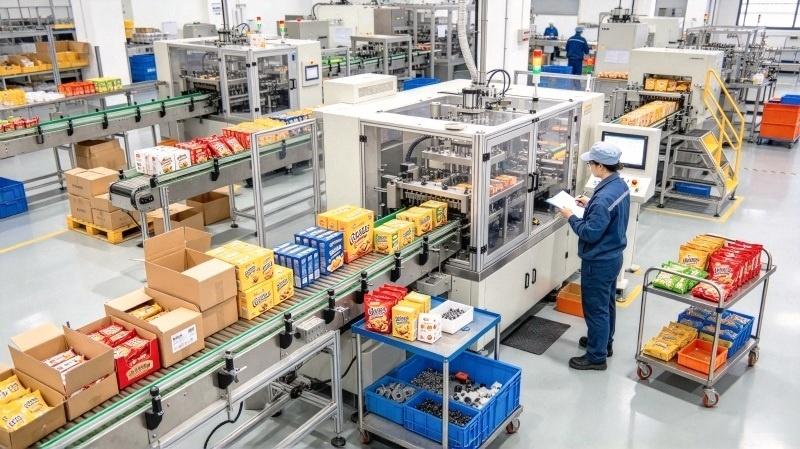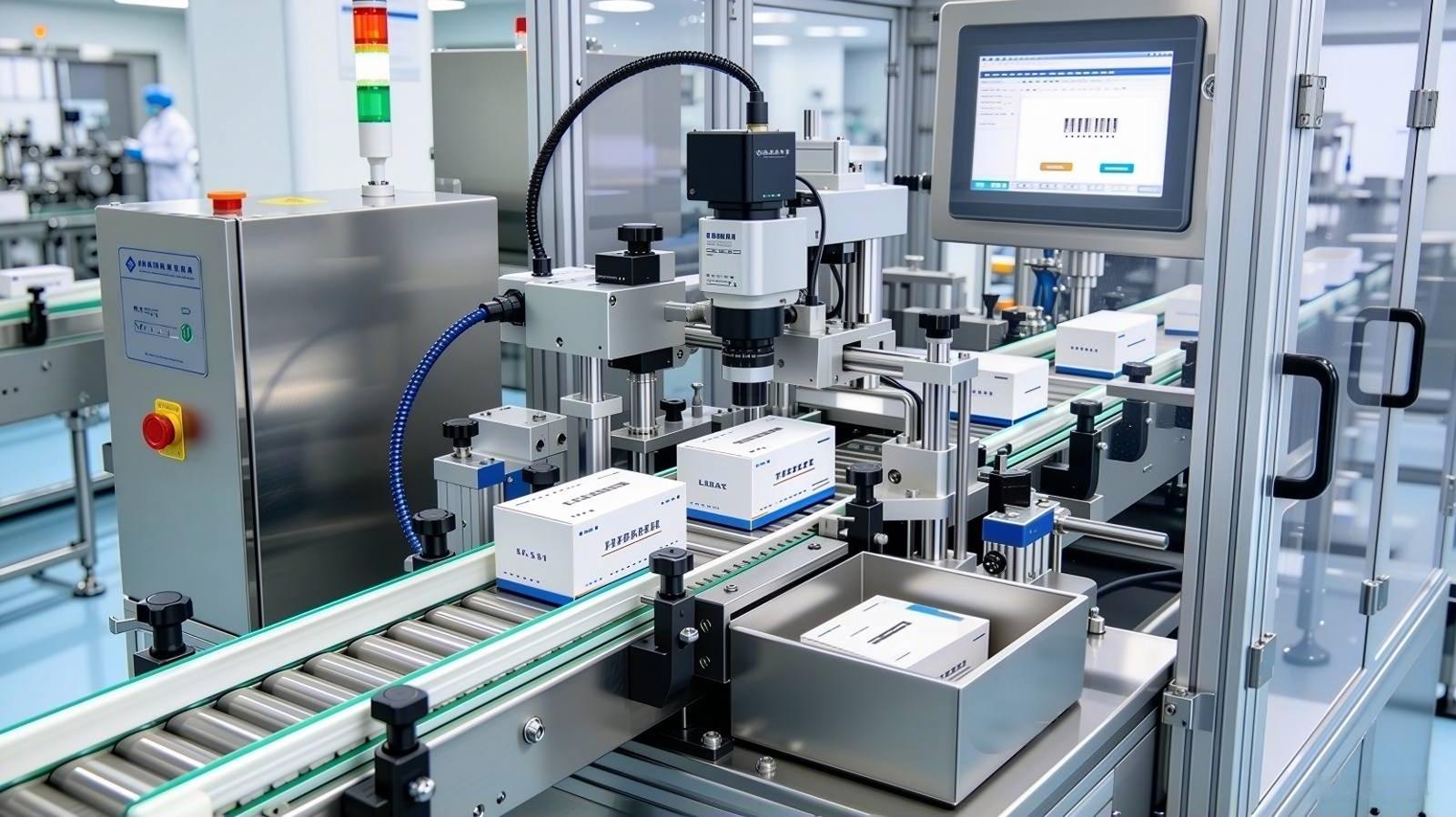
Ask any apparel factory manager which garment gives their packing team the most trouble, and the answer is almost always the same: jeans. Not because jeans are complicated in any conceptual sense, but because denim is heavier than jersey, longer than a T-shirt, and requires a tighter, more precise fold to produce the presentation-ready package a retailer or e-commerce buyer expects. A manual packer folding T-shirts might average eight to ten pieces per minute on a good day; the same person folding jeans is doing four or five — and that gap between T-shirt throughput and denim throughput is where production bottlenecks live. A jeans folding machine eliminates that gap by automating the full fold-to-bag sequence for denim and other bottom-wear at speeds that manual lines cannot sustain.
Why Jeans and Pants Are Harder to Fold Than T-Shirts
Three physical properties of denim and woven bottom-wear create the folding challenge:
Weight and Fabric Stiffness
A standard pair of adult jeans weighs roughly 600–900 grams. That is two to three times the weight of a cotton T-shirt. Heavier fabric resists the fold — it springs back partially rather than lying flat, which means manual folders must apply more pressure and spend more time setting each fold. A folding machine applies consistent mechanical force on every cycle, producing the same result on the thousandth pair as on the first.
Length and Leg Alignment
Pants are substantially longer than tops. The fold sequence must account for the leg length — typically a first fold that brings the hem up toward the waistband, then secondary folds that reduce the piece to the target package dimension. If the legs are not aligned before the first fold, the finished package is asymmetric and either fails retail presentation standards or requires a manual correction that defeats the purpose of automation. Machines achieve leg alignment through the infeed conveyor geometry before the fold sequence begins.
Fold Count and Sequence
A standard retail-ready jeans fold involves more steps than a T-shirt fold. How many folds, and in which direction, depends on the target package dimension and the retailer’s or brand’s display specification. UBL configures the fold sequence to match the customer’s specific requirement — the number of folds, the fold direction, and the finished package dimensions are set on the HMI before the run starts.
How a Jeans Folding Machine Works
Step 1 — Infeed and Alignment
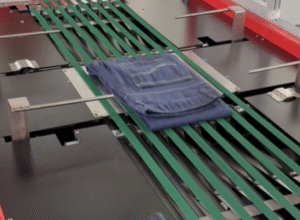
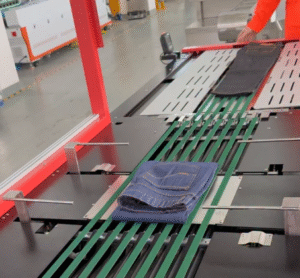
The operator places the jeans flat on the infeed conveyor, legs together and waistband oriented consistently. The conveyor feeds the garment into the folding zone at a controlled rate. The infeed geometry — the width of the conveyor and the guide rails — ensures the garment enters the first fold station in a consistent position.
Step 2 — First Fold: Bilateral Lateral Fold
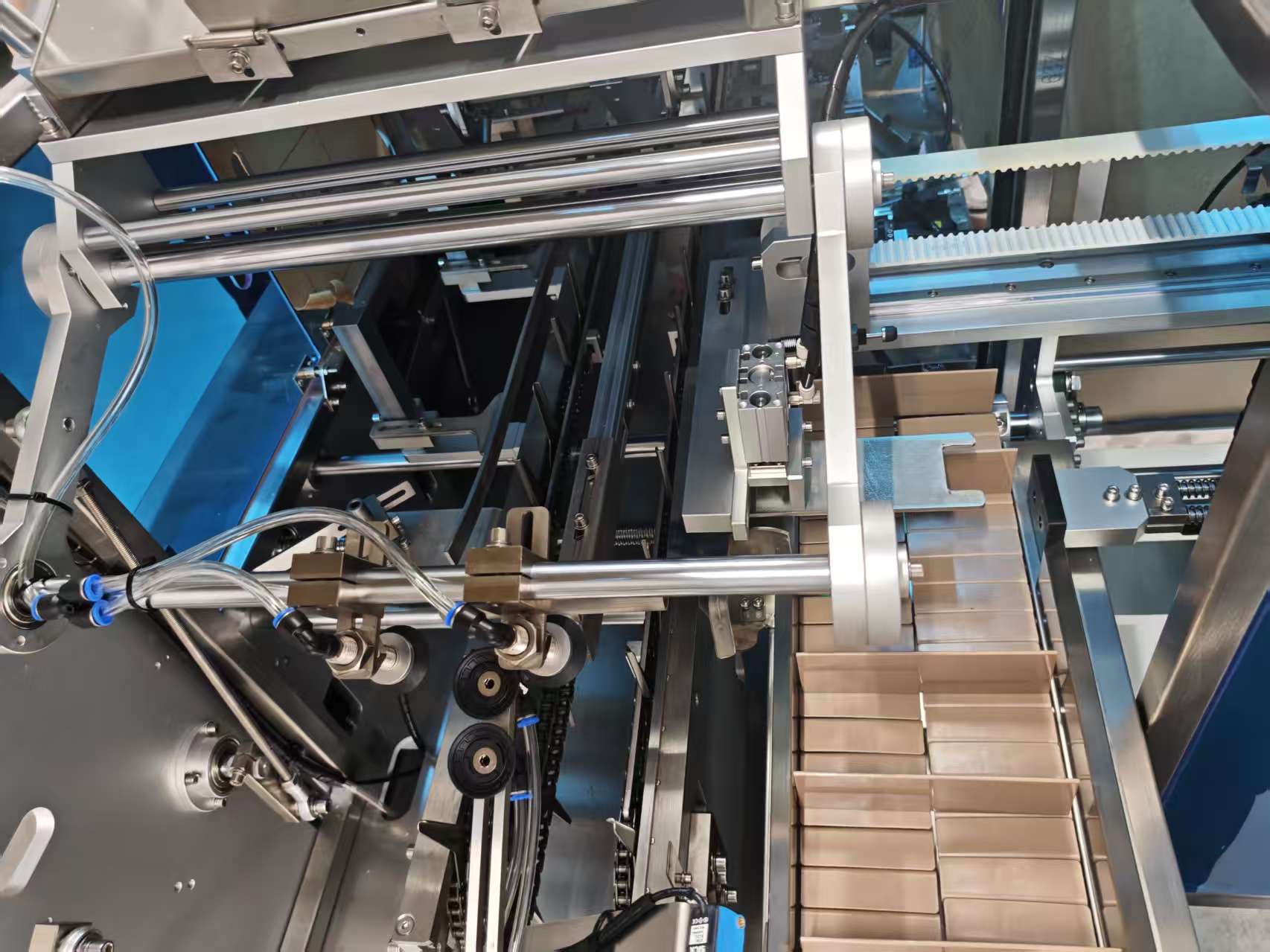
The fold arms execute the first fold: both sides of the garment fold inward simultaneously, bringing the left and right edges toward the center. This lateral fold reduces the width of the garment from its full leg-spread position to a narrow, rectangular strip — roughly the width of the target finished package. After the first fold, the piece looks like a long, narrow band.
Step 3 — Second Fold: Longitudinal Fold
The folded strip then passes through the longitudinal fold station. Here, the front section folds down toward the back, and a second fold brings the piece to the final compact, near-square dimension ready for bagging. The exact fold geometry at this stage is configured to match the target package size — typically a finished folded dimension that fits the designated polybag.
Step 4 — Bagging, Sealing, and Optional Labeling
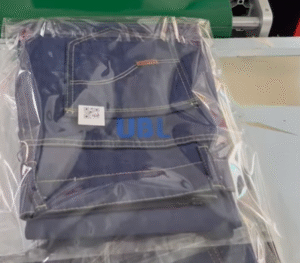
The folded jeans drop directly into the polybag. The bag seals automatically — heat seal or adhesive strip depending on configuration. If the line includes a labeling module, the product label (size, SKU, barcode, care instructions) is applied to the sealed bag before it exits to the takeaway conveyor.
Click here to watch the UBL jeans folding machine in action.
Real Case: Denim Manufacturer Deploys FC-252A for Full Fold-to-Label Line
One of UBL’s customers — a jeans manufacturing and processing factory — needed to automate their packing line end-to-end. The product was standard denim jeans across multiple size runs; the requirement was folded, bagged, and labeled units ready for retail distribution, produced at a consistent pace that manual folding could not maintain across a full production shift.
UBL configured an FC-252A line for the operation. The FC-252A — UBL’s thick-and-thin extended double-fold model — handles the bilateral fold followed by the longitudinal double fold in a single continuous sequence, then feeds directly into the automatic bagging and sealing station. The labeling module applies product information in line before the finished unit exits.
The line operates at 550–650 pieces per hour depending on the fold configuration selected for the run. The actual throughput per cycle reflects the infeed pace — jeans take slightly longer to place and align at the infeed than lighter garments, which determines the practical output rate. The FC-252A’s design accommodates this: the folding and bagging stations downstream of the infeed are capable of running faster than the infeed pace, so the bottleneck is always at the most manageable point in the line.
The result was a packing line that could sustain production-floor throughput without the variation, fatigue-related slowdown, or staffing gaps that characterized the manual operation. Size changeovers between runs — adjusting the fold geometry and bag dimensions for different jeans sizes — are handled via HMI settings in approximately 10 minutes without tools.
FC-252A Specifications for Denim and Pants Folding
| Parameter | FC-252A Specification |
|---|---|
| Speed (jeans) | 550–650 pcs/h (depending on fold configuration) |
| Fold type | Bilateral lateral fold + longitudinal double fold (thick & thin compatible) |
| Garment length range (before folding) | 400–1,200 mm |
| Garment width range (before folding) | 320–850 mm |
| Folded length range | 200–400 mm |
| Folded width range | 220–360 mm |
| Bag length range | 280–450 mm |
| Bag width range | 240–420 mm |
| Machine dimensions | 6,965 × 1,020 × 1,475 mm |
| Power | 2.5 kW / AC 220V |
| Optional add-ons | Hot-cut seal / adhesive seal / barcode labeling / auto stacking / semi-auto express bagging / sorting line |
Configuring the Right Setup for Your Jeans Line
How many folds does your retailer require?
Different buyers have different fold specifications. Some retailers require a specific finished dimension to fit their shelf display; some e-commerce buyers require a specific fold that presents cleanly in an unboxing context. The FC-252A’s HMI stores up to 99 garment folding parameters, so multiple fold configurations for different customers or SKU groups can be saved and recalled without re-entering settings.
Do you need bagging, labeling, or stacking?
The base FC-252A handles fold and bag. If your line also requires product labeling (size sticker, barcode, care instructions) applied in line, the labeling module integrates directly. If your output format is stacked bulk rather than individually bagged (for carton packing or wholesale distribution), the auto-stacking add-on accumulates folded pieces into aligned stacks before the carton-loading stage.
What is your daily production volume?
At 550–650 pieces per hour, a single FC-252A running one 8-hour shift produces approximately 4,400–5,200 pairs of jeans per day. If your current daily requirement exceeds this, a second unit or an extended shift configuration is the typical solution. If your daily volume is below 3,000 pairs, a semi-automatic unit may deliver a better return on investment during the ramp-up phase.
Common Questions About Jeans Folding Machines
Can the machine handle different denim weights?
Yes. The FC-252A is designed for thick-and-thin compatibility — the “厚薄款” designation refers specifically to its ability to handle both lightweight and heavyweight fabrics without requiring a mechanical swap between runs. Denim weights from lightweight stretch denim to heavy raw selvedge are handled through the same fold mechanism with speed and pressure adjustments on the HMI.
What about other bottom-wear: chinos, cargo pants, sweatpants?
The FC-252A handles woven and knit bottom-wear within the specified dimension range. Chinos and cargo pants fold comparably to jeans. Sweatpants (fleece, terry cloth) are heavier and longer in some cuts but generally fall within the compatible range. Send us your specific garment samples for a trial run — UBL tests your actual products on the machine before purchase.
How long does a size changeover take?
Switching between jeans sizes — say, from a size 30 run to a size 36 run — involves adjusting the fold width and bag size settings on the HMI and making manual width adjustments via the machine’s adjustment knobs. Total changeover time is approximately 10 minutes and requires no tools.
Is sample testing available?
Yes. Send UBL your jeans samples — different sizes, weights, and any specific fold specification you require — and we run the full fold-bag-label cycle on the FC-252A on video. You see the finished fold quality and package presentation before committing to a purchase.
Related Reading
- UBL Garment Folding Machine — Full Product Line Including FC-252A
- Automatic Clothes Folding Packaging Machine: Full-Line Solutions for Garment Manufacturers
- T-Shirt Folding Machine: Automating T-Shirt and Polo Folding for High-Volume Production
- Garment Folding Machine: How to Match the Right Model to Your Industry, Volume, and Packaging Format
Ready to Automate Your Denim Packing Line?
Whether you are folding lightweight stretch denim or heavy raw jeans, the FC-252A is configured to match your fold specification, bag dimensions, and labeling requirements before it ships. Sample trials with your actual garments are standard — we show you the finished package before you buy.
Contact us to discuss your jeans folding line:
Email: Helen@huanlianauto.com