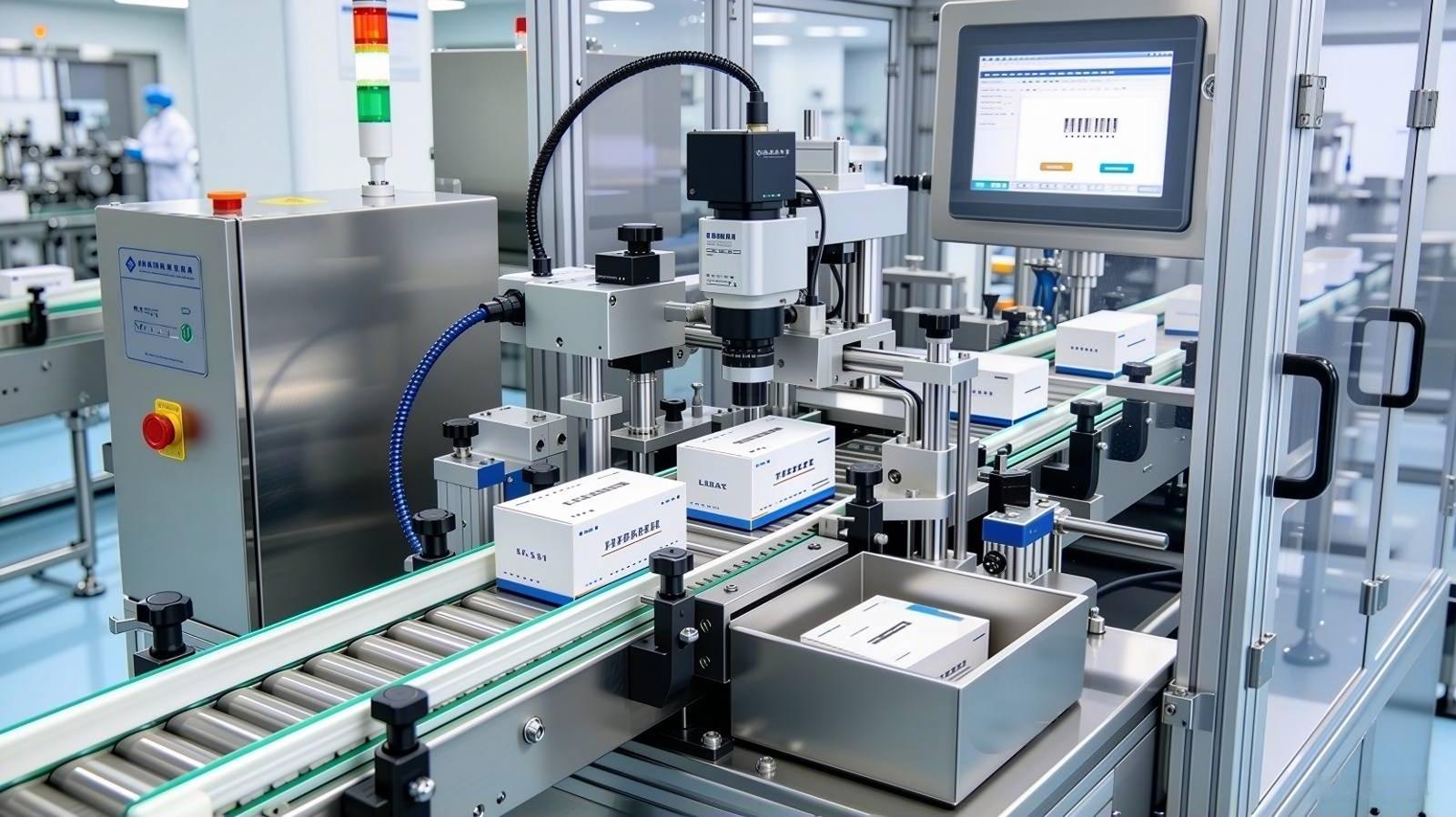
Walk down any cosmetics aisle and you’ll notice something immediately: label quality is a direct proxy for brand quality. A slightly crooked label on a premium serum, a wrinkle across a moisturizer jar, or a bubble under the foil stamp on a luxury perfume — these are packaging failures that cost brands customer trust, retailer shelf space, and repeat purchases.
Cosmetics labeling is technically demanding precisely because the packaging it’s applied to is so varied: cylindrical glass perfume bottles, flexible laminate tubes, rigid plastic or glass jars, flat compacts, and irregularly shaped novelty containers all appear in the same product line — sometimes requiring different labeling approaches for each SKU.
This guide is written for cosmetics manufacturers, contract packagers, and packaging engineers who need to make an informed decision about labeling automation for beauty and personal care products.
Why Cosmetics Labeling Is More Demanding Than Other Industries
Most industries label for information. Cosmetics label for brand experience. This distinction matters enormously when specifying equipment, because it changes the tolerance requirements.
In food manufacturing, a label that’s 2mm off-center is typically acceptable as long as the product information is legible. In cosmetics, that same 2mm misalignment can:
- Fail a retail buyer’s quality audit
- Disqualify the product from premium shelf placement
- Generate social media complaints from unboxing-focused consumers
- Violate cosmetic ingredient labeling regulations in key export markets (EU, US, and China each have distinct requirements)
Additionally, cosmetics packaging materials — especially glass bottles and soft laminate tubes — are less dimensionally consistent than food-grade PET bottles. A ±0.3mm diameter variation in a glass perfume bottle requires the labeling machine to compensate in real time, which demands higher-grade sensing and servo control than a comparable food application.
The 5 Most Common Cosmetics Package Types and Their Labeling Requirements
1. Cylindrical Glass Bottles (Perfume, Serum, Toner)
Wrap-around or front-and-back labeling on glass requires a labeling machine that can handle the higher inertia of glass compared to plastic. The bottle rotation mechanism must apply consistent torque without slipping — a common failure point on machines designed primarily for lightweight PET bottles. Servo-driven rotation with torque feedback is the correct specification here.
2. Flexible Tubes (Foundation, BB Cream, Sunscreen)
Soft laminate tubes present a unique challenge: they deform under pressure from standard conveyor rails and labeling rollers. Machines used for tube labeling must use gentle contact surfaces (foam or silicone-lined guides) and apply labels with reduced roller pressure to avoid tube deformation that misaligns the label position.
3. Rigid Jars (Moisturizer, Face Mask, Eye Cream)
Flat-top and side labeling on cylindrical or square jars is relatively straightforward, but cosmetics jars often have lid-and-body sets that require labels applied at a specific height — precisely at the shoulder transition, or centered on the body panel. Height registration sensors are essential for consistent placement across jar batches with lid-height variation.
4. Flat Pouches and Sachets (Sheet Masks, Sample Packets)
Single-use sachets and flat pouches are increasingly common in Asian cosmetics markets. These require top-surface labeling systems with vacuum conveyor belts to hold the flexible pouch flat during label application. Standard conveyor systems allow sachet flutter, which ruins placement consistency.
5. Irregular and Novelty Shapes (Lipstick Cases, Compacts)
Irregularly shaped cosmetics containers — bullet-shaped lipstick tubes, clamshell compacts, and multi-faceted fragrance bottles — often require custom labeling fixtures or robotic label application systems. These are specialized solutions that should be evaluated case-by-case with the machine manufacturer.
Key Technical Specifications to Evaluate
When comparing cosmetics labeling machines, these five specifications differentiate premium-grade systems from entry-level alternatives:
- Label placement accuracy: ±0.5mm or better — industry-standard for cosmetics. Some premium lines require ±0.3mm. Always request a production sample run before signing a purchase agreement.
- Servo-driven label feed — stepper motor systems are cheaper but lose registration accuracy over long production runs. Servo motors maintain accuracy consistently through an entire 8-hour shift.
- PLC control with recipe storage — Siemens or Mitsubishi PLCs with touchscreen HMI allow operators to save and recall machine parameters for each SKU. Essential for cosmetics lines running 20–50+ active SKUs.
- Vision inspection integration — inline camera-based inspection that verifies label placement, detects air bubbles, and confirms label presence is becoming standard in cosmetics contract packaging. It eliminates manual end-of-line inspection for these parameters.
- Quick changeover design — format changes between different bottle or jar sizes should take no more than 15–20 minutes with tool-free adjustments. Ask the supplier for their documented changeover time for your specific bottle range.
Compliance Labeling: What Cosmetics Manufacturers Can’t Ignore
Cosmetics are one of the most heavily regulated consumer product categories globally, and labeling is the primary compliance mechanism. A cosmetics labeling machine must support the following regulatory requirements depending on your target markets:
- EU Cosmetics Regulation (EC 1223/2009) — requires INCI ingredient list, PAO (Period After Opening) symbol, manufacturer name and address, country of origin, batch code, and expiry date. These are typically pre-printed on the label, but batch codes and dates may need inline coding.
- US FDA OTC Drug-Cosmetics (21 CFR Part 701) — specific font size requirements for ingredient declarations; country of origin mandatory for imported products.
- China GB standards — Chinese-language labeling mandatory for China market products; specific net content declaration format required. 2022 CSAR regulations added new ingredient disclosure requirements.
For manufacturers exporting to multiple markets, the practical implication is that the same physical product often requires different label versions. This increases SKU complexity and makes quick-changeover label systems — and accurate reel-end detection to prevent partially run labels — more important than they would be for a single-market brand.
Speed vs. Accuracy: Finding the Right Balance for Your Output
In cosmetics manufacturing, speed and accuracy are not always complementary goals. Here’s a practical framework:
- Under 60 BPM: Semi-automatic systems are viable and cost-effective for artisan, indie, or small-batch brands. Operator-placed bottles with automated label application and smoothing.
- 60–150 BPM: The sweet spot for most SME cosmetics manufacturers and contract packagers. Fully automatic systems in this range offer excellent precision-to-cost ratios and manageable maintenance requirements.
- 150–300+ BPM: Required for mass-market brands, large contract facilities, and retailers’ private label programs. At these speeds, vision inspection becomes mandatory rather than optional — human QC inspectors cannot reliably catch labeling defects at 200+ BPM.
A common error is specifying a machine based on average daily output rather than peak hour demand. Cosmetics production often runs in campaign batches — a seasonal launch or a major retail promotional period can demand 3–5× normal daily output for a short window. Size your labeling capacity for the peak, not the average.
Integrating Coding and Serialization at the Labeling Station
Modern cosmetics supply chains increasingly require variable data on every unit — not just for regulatory compliance but for supply chain traceability and anti-counterfeiting. The labeling station is the natural integration point for:
- Thermal Inkjet (TIJ) coding — applies batch numbers, expiry dates, and lot codes directly onto the label surface immediately after application. High resolution, solvent-free, suitable for most label materials.
- Thermal Transfer Overprinting (TTO) — higher contrast and durability than TIJ; preferred for labels that will face moisture or abrasion (travel-size products, products in humid climates).
- QR code and 2D barcode printing — enables consumer-facing authentication scanning and connects physical products to digital content (ingredient details, usage tutorials, authenticity verification).
Integrating coding at the labeling station eliminates a separate coding line, reduces floor space requirements, and ensures date/batch information is always synchronized with the correct label — preventing the mismatch errors that occur when coding and labeling are separate processes.
Building the Case for Automation: When Manual Labeling Becomes Untenable
Many cosmetics brands start with manual or semi-manual labeling and delay automation investment longer than is financially rational. Here are the four signals that indicate it’s time to automate:
- 📦 Your defect rate exceeds 2% — at scale, this translates to thousands of wasted units and material costs monthly
- 👷 You’re adding headcount to keep up with labeling demand — labor for repetitive packaging tasks is one of the highest-cost, least scalable investments a manufacturer can make
- ⏱ Labeling has become your line bottleneck — if upstream filling or downstream cartoning is idle while waiting for labeling to catch up, the productivity loss compounds across the entire operation
- 📋 A major retail buyer has flagged your labeling quality — retail buyers from large chains and department stores conduct regular packaging quality audits; repeated labeling QC failures risk losing the account
If two or more of these apply to your operation, the ROI calculation for a cosmetics labeling machine will almost certainly favor immediate investment over delayed action.

Choosing a Labeling Machine Partner, Not Just a Supplier
Cosmetics production environments change constantly — new SKUs, new packaging formats, new regulatory requirements. A labeling machine that’s perfectly configured for today’s product line may need significant reconfiguration for next season’s launch.
When evaluating suppliers, look beyond the initial machine specification to:
- Availability of retrofit kits and expansion modules for future formats
- Local or regional technical support response time (critical when a line stops during a production campaign)
- Spare parts availability and lead times for wear components
- Willingness to run sample tests with your actual bottles, labels, and adhesives before purchase commitment
UBL’s cosmetics labeling systems are designed specifically for the multi-format, high-precision demands of the beauty and personal care industry. Our engineering team works with your packaging specifications — not generic catalog configurations — to ensure the right label placement accuracy, format flexibility, and line integration from day one.
Talk to our team about your cosmetics labeling requirements. We’ll review your current setup, bottle specifications, label materials, and output targets before making any recommendations.
References:
[1] European Commission — Cosmetics Regulation EC 1223/2009
[2] U.S. FDA — Cosmetics Labeling Requirements