
A cosmetics brand owner called us last month with a specific frustration. Their flagship skincare set comes in a two-piece rigid box—base and lid, wrapped in decorative paper. It looks stunning on the retail shelf. The problem is what happens behind the scenes: each box takes one of their most experienced workers about 10 seconds to assemble by hand. At their current volume, that’s roughly 2000 boxes per shift per person—and during holiday gifting season, they need three times that output but can’t find workers who can do it cleanly enough.
“The box is part of the product,” they told us. “Customers judge the quality of what’s inside by the box it arrives in. But hand-assembling thousands of these every week is killing our margins.”
That’s the rigid box folding machine problem in a nutshell. Two-piece boxes (lid and base) are the gold standard for premium packaging across cosmetics, gifts, fruit sets, and high-end consumer goods—but they’re also the slowest structure to assemble by hand. This article explains what rigid boxes are, why brands use them despite the labor cost, and how automated folding changes the economics so you don’t have to choose between presentation and profitability.
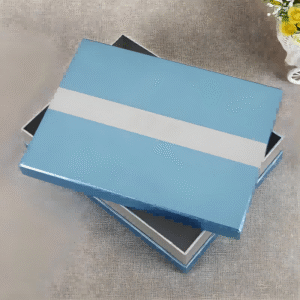
What Is a Rigid Box (Two-Piece Box)?
A rigid box—also called a two-piece box, setup box, or lid-and-base box—is constructed from dense paperboard (typically 1–3mm thick) rather than foldable corrugated or folding carton material. The base is formed as a four-sided tray, and a separate lid slides over or fits onto it. Unlike folding cartons that ship flat and erect at point of use, rigid boxes typically ship as pre-formed units—or are assembled from semi-finished components at the factory.
The global luxury rigid box market was valued at approximately USD 4.75 billion in 2025, growing at roughly 5% annually, driven primarily by cosmetics, fragrance, premium food gifting, and jewelry packaging demand. Rigid boxes command 41.19% share of the total luxury packaging market by format—more than any other packaging type.
Rigid Box Styles You’ll Encounter
- Full telescoping lid — Lid covers the entire base height. Most common for cosmetics, fragrances, and premium gift sets. Maximum visual impact when opened.
- Partial telescoping lid — Lid covers only part of the base. Used for products where the base design is meant to be partially visible on shelf.
- Hinged-lid rigid box — Lid attached to base by fabric or tape hinge. Popular for chocolate boxes, tea caddies, and stationery sets.
- Magnetic-closure rigid box — Magnets embedded in the lid and base create a self-closing seal. Premium feel, higher cost, increasingly common in beauty and electronics accessories.
- Sleeve-over rigid box — A paperboard sleeve wraps around both base and lid. Adds an extra layer of branding and security for high-value items.
Industries That Rely on Rigid Boxes
- Cosmetics & skincare — Serum sets, cream collections, perfume secondary packaging, beauty tool kits
- Fine fragrance — Limited edition releases, gift-with-purchase boxes, collector’s editions
- Premium food gifting — Fruit sets (cherry, grape, berry), mooncake boxes, tea collections, confectionery assortments
- Jewelry & watches — Display boxes, presentation cases, multi-item gift sets
- Consumer electronics accessories — Earphone premium packaging, smart device gift editions, cable and charger premium sets (for standard-weight electronics in snap-lock or tuck-end structures, see our snap lock bottom box guide)
- Fashion & apparel — Scarf boxes, belt presentations, limited-edition sneaker packaging
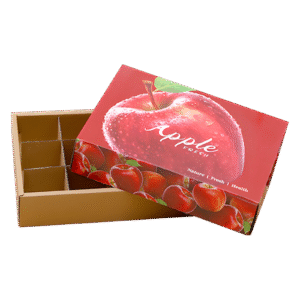
Click play: UBL rigid box folding machine, fruit rigid box making video
Why Hand-Assembling Rigid Boxes Hurts Margins
A rigid box isn’t folded—it’s assembled. The process involves wrapping paperboard around a forming die, applying adhesive to corner joints, pressing corners square, and then fitting the lid to the base with consistent clearance. Each step requires attention:
| Assembly Step | Manual Time per Box | Error Risk if Rushed |
|---|---|---|
| Base tray forming and corner gluing | 10seconds | Crooked corners, weak joints |
| Lid tray forming and corner gluing | 10 seconds | Misalignment with base dimensions |
| Drying / set time before handling | 30–60 seconds wait | Glue fails if handled too early |
| Lid-to-base fit check | 5–10 seconds | Loose fit = returns; tight fit = hard-open complaint |
| Total cycle time | 60 seconds per box | — |
At 60 seconds average, one worker assembles roughly 40 rigid boxes per hour—maybe 480 per 8-hour shift. That’s fine if you’re a small boutique operation. If you’re producing 2,000+ units per day for a retail launch or holiday campaign, you need 4-5 full-time assemblers just for the boxes. And because rigid box appearance directly affects perceived product value, you can’t cut corners on quality—the moment a customer receives a crooked-corner box, the premium illusion cracks.
How a Rigid Box Folding Machine Works
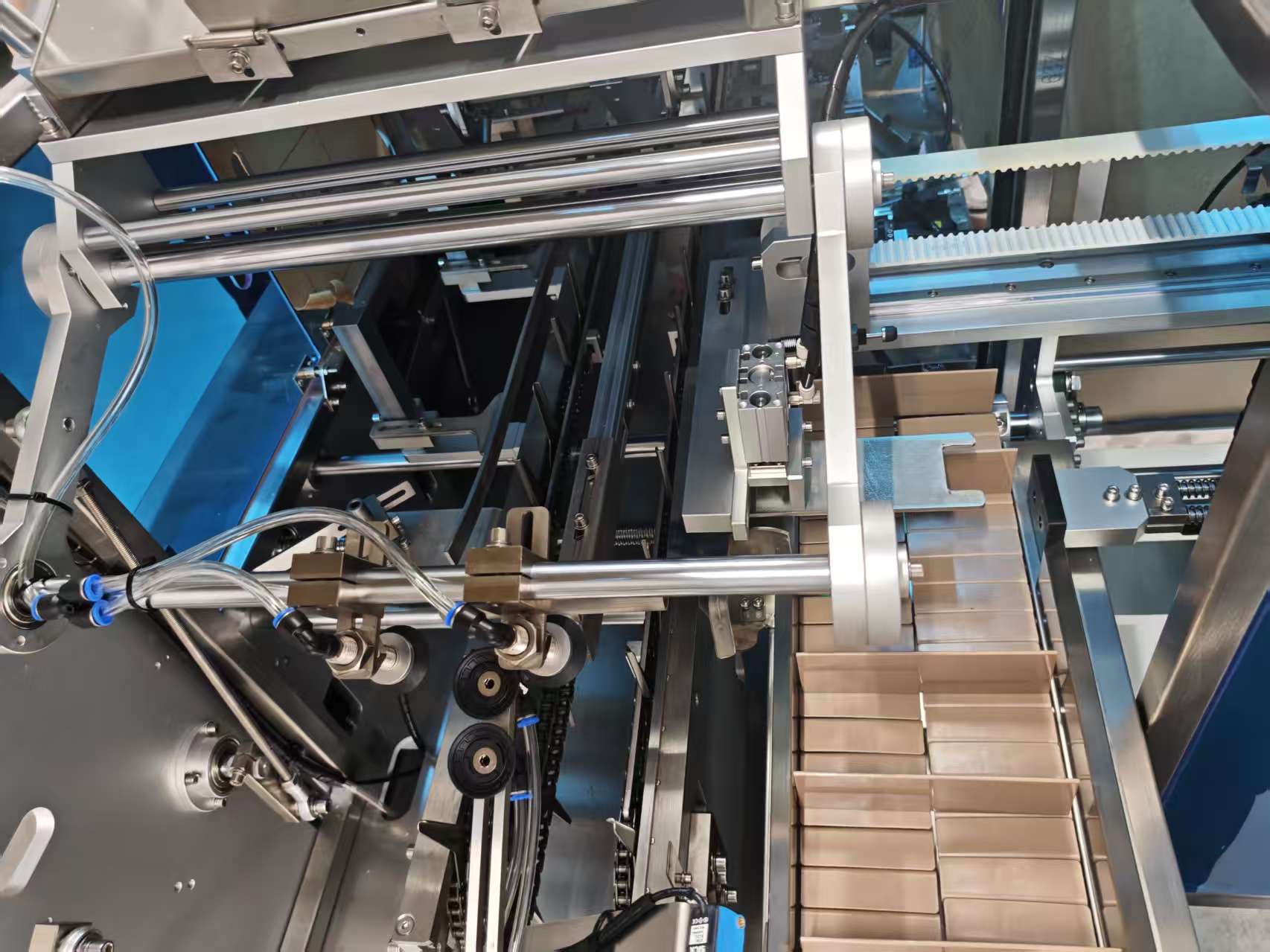
An automatic rigid box folding and forming machine handles the core mechanical steps: base tray forming, lid tray forming, corner gluing or interlocking, and fit verification. The exact configuration depends on whether your boxes use glued corners, wrapped construction, or pre-formed components that only need final assembly.
- Component feeding — Pre-cut paperboard blanks or semi-formed trays are loaded into the magazine hoppers (base and lid separately).
- Corner folding and gluing (or locking) — For wrapped-style boxes: the machine wraps the outer paper around the board blank, applies hot-melt adhesive to the corner flaps, folds them under pressure, and holds them until set. For pre-formed component styles: the machine aligns and presses corner joints.
- Lid-base matching — The system pairs each lid with its corresponding base and verifies dimensional fit tolerance before output.
- Output and accumulation — Assembled rigid boxes move to a collection conveyor or rotary table for downstream operations (product insertion, shrink-wrap, labeling).
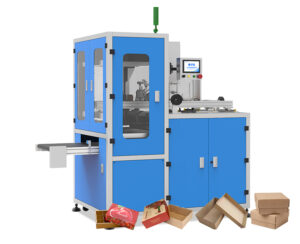
UBL’s HL-ZP30 rigid box folding machine operates at 20–30 pieces per minute depending on box size and complexity. Compared to 300 boxes/hour by hand, that’s a 6x throughput improvement.
Rigid Box Machine vs. Manual Assembly: Real Numbers
Here’s what the math looks like for a mid-size cosmetics packager producing rigid box sets:
| Factor | Manual Assembly (5 Workers) | Automatic (HL-ZP30 + 1 Operator) |
|---|---|---|
| Daily output | ~10,000 boxes | ~40,000 boxes (single shift) |
| Output consistency | Varies by worker skill and fatigue | Every box identical within ±0.1mm |
| Corner quality | Depends on individual technique | Mechanically uniform—no variation |
| Lid-to-base fit | Spot-checked; occasional rejects | Verified every unit; near-zero reject rate |
| Peak capacity (holiday) | Overtime + temps (quality drops) | Run extended shifts at same quality |
| Training time for new worker | 2–4 weeks to reach full speed | 2–3 hours basics; 2–3 days proficient |
| Cost per box (labor only) | High—premium labor for skilled work | One operator wage spread over high output |
The key insight: rigid box machines don’t just speed things up—they make the result predictable. When a retailer orders 50,000 units for a seasonal launch, they expect every single box to look identical. A machine delivers that. Six tired humans at the end of a long week don’t always.
Which Rigid Box Style Can Be Automated?
Not all rigid box constructions suit the same level of automation. Here’s the breakdown:
| Box Style | Automation Level | Notes |
|---|---|---|
| Standard telescoping lid & base (wrapped) | ✅ Fully automatable | This is the primary target for UBL’s rigid box folding machines |
| Pre-formed tray assembly (glued corners) | ✅ Fully automatable | If you receive semi-finished trays and need corner-glue + lid-fit automation |
| Magnetic-closure | ⚠️ Partially | Magnet insertion may be manual; base/lid forming is automated |
| Hinged-lid | ⚠️ Partially | Tray forming is automated; hinge attachment often requires manual step |
| Sleeve-over | ✅ Sleeve application automatable | Base+lid first, then sleeve applied downstream |
The rule of thumb: if your rigid box has a standard telescoping lid-and-base construction with wrapped or glued-corner paperboard trays, full automation is available. More complex features (magnets, hinges, embossing) add manual steps after the basic forming process.
Key Specifications: What to Look For
| Specification | UBL Range | Why It Matters |
|---|---|---|
| Throughput | 20–30 pcs/min (HL-ZP30) | Matches mid-to-high volume production needs without bottlenecking |
| Box size range | Custom-configurable per order | Rigid boxes tend to have fewer SKU variations than corrugated mailers—machine is tuned to your sizes |
| Board thickness | 1–3mm dense paperboard | Must match your current board spec; thicker boards require more forming force |
| Adhesive system | Hot-melt glue (standard); optional options available | Hot-melt sets fast (< 5 seconds), suitable for continuous production flow |
| Fit tolerance | ±0.1mm positioning accuracy | Tight tolerance ensures consistent lid-to-base fit—critical for premium perception |
| Control interface | Touchscreen, bilingual, recipe storage | Store parameters for each SKU size; switch quickly between runs |
Getting Started with Rigid Box Automation
Rigid box automation is less about replacing a simple manual task and more about scaling a craft-quality process. Here’s how to approach it:
- Send us your current box sample — We’ll evaluate the construction method, board thickness, and glue points to confirm which machine configuration matches your needs.
- Share your volume targets — Daily production quantity, peak-season multiples, and growth projections help us recommend capacity sizing.
- Tell us your tolerance requirements — Premium brands sometimes specify tighter fit tolerances than standard industrial packaging. We’ll verify the machine can hold those specs consistently.
UBL supports rigid box projects from initial sample testing through installation and operator training. For manufacturers who already run other packaging equipment—such as a carton erector for folding cartons alongside their rigid box line—we can plan an integrated layout where different box types feed into the same downstream packing area.
If you’re comparing multiple box types or need help planning a phased automation approach, our complete carton folding machine selection guide covers every decision point from box type to full-line integration.
Summary
Rigid boxes (lid and base) are the premium choice for cosmetics, gift sets, fruit packaging, and high-end consumer goods—but their hand-assembly cost makes them expensive to produce at scale. A rigid box folding machine automates base and lid forming, corner gluing, and fit verification at 20–30 pieces per minute, delivering the visual consistency that premium brands require while reducing labor dependency by 80% or more.
The luxury rigid box market is growing steadily at ~5% CAGR, which means more brands will face this same question: keep paying for hand-assembly, or automate. UBL’s carton folding machine lineup includes dedicated rigid box models designed for this exact challenge. Send us your sample and we’ll show you the difference.



One Response