Two machines will not run your whole plant. They were never meant to. The real question is whether a carton erector and labeling machine cover the two jobs that actually slow you down, and for a surprising number of small plants the answer is yes.
Picture the end of a shift in a packing room that has not changed in years. One person folds flat cardboard into open boxes by hand. A second packs product in. A third peels labels off a sheet, trying to land each one on the same spot, which works until the roll runs out or an order comes in a new size. Nothing here is difficult. It is just slow, and every new SKU makes it slower.
The reflex when a plant outgrows this is to shop for a full automatic line. That reflex is expensive. A complete line earns its money at high volume and one format. Most small manufacturers run several products, modest batches, and a crew that already knows the product better than any feeder ever will. What they need is not the whole line. It is the two or three machines that remove the ugliest manual bottlenecks and leave the rest to people. A carton erector and labeling machine, working as a pair, are usually the right pair.
The middle path is narrow and specific. A carton erector and labeling machine carry the two heaviest manual steps, folding and labeling, and a third labeler covers products that need a mark before packing as well as after. Match the beat between machines so neither one waits, and stay honest about where a person still beats a machine. These methods match how UBL engineers scope a line, and they hold whether you buy both together or add the second to equipment you already run.
Not every factory needs a full line
A full line is a chain of specialists: depalletizer, filler, capper, labeler, erector, case packer, palletizer, tied together by conveyors and a control system. Together they cost more than most small plants spend on machinery in a decade, and they want volume to pay for themselves.
A small line inverts the logic. Instead of automating everything, you automate the two or three tasks where hands are slowest and the work is most repetitive, then keep people on the steps where judgment matters. Folding and labeling are repetitive, easy to measure, and exactly where a tired operator drifts.
The trade is simple. You give up some throughput and some hands-off running, and in return you keep the flexibility to switch products in minutes and the capital to spend on something that grows the business. For a plant running a few thousand boxes a day across a handful of formats, a carton erector and labeling machine can be the better answer, not the cheaper one.
If you are not sure which two machines would take the most weight off your bench, that is a fair place to start. Send us your product and your current setup, and we will point to the first machines worth automating.
Combo A: automatic carton erecting, manual packing, automatic labeling
This is the workhorse layout, and the one to study first.
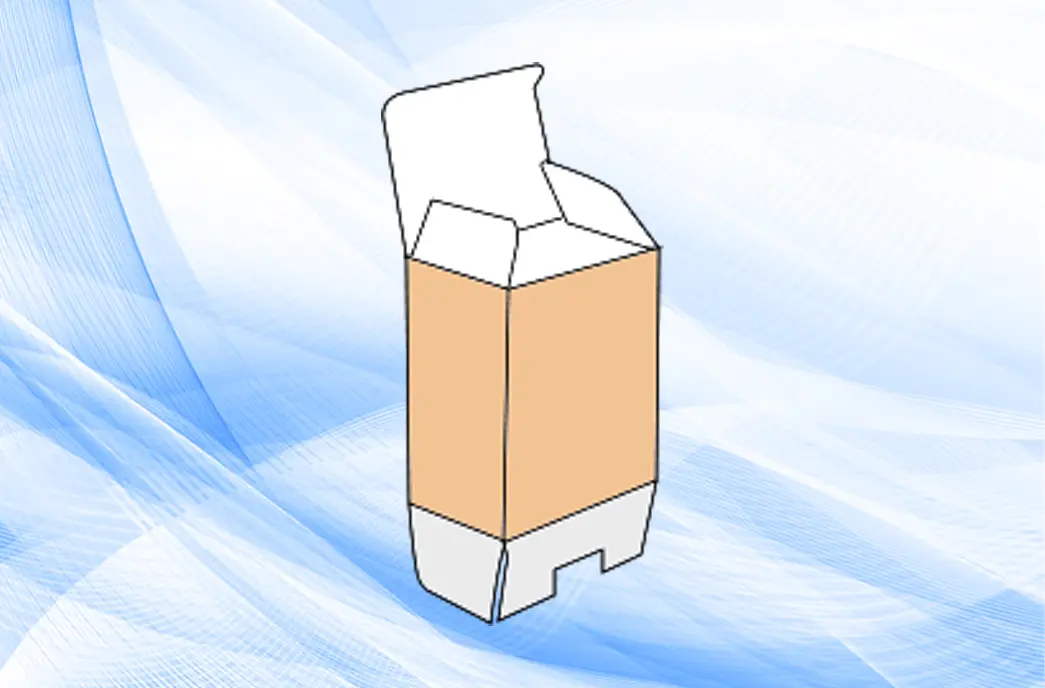
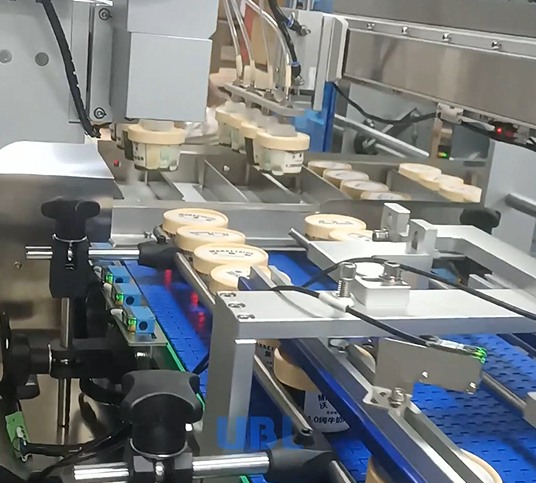
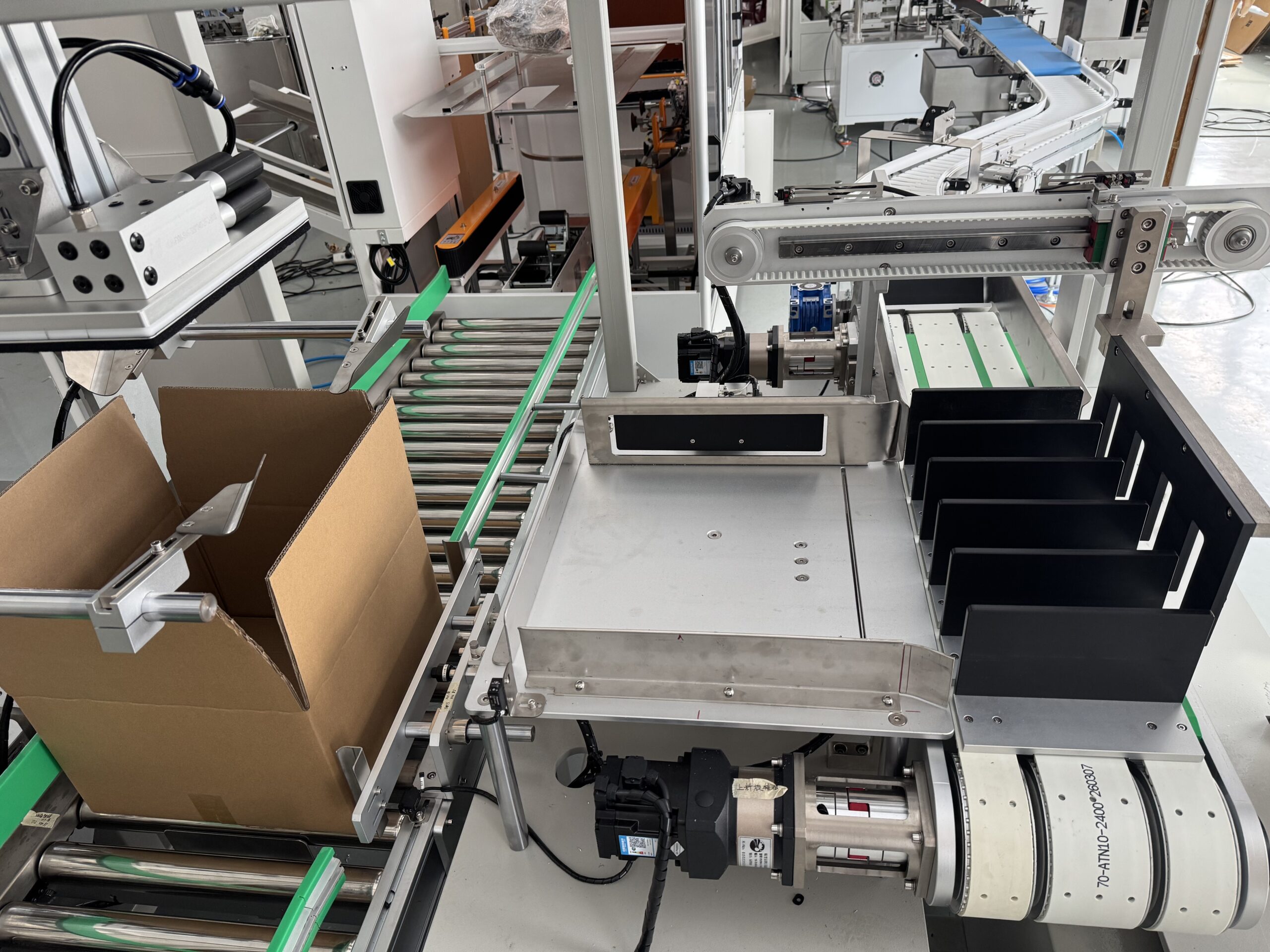
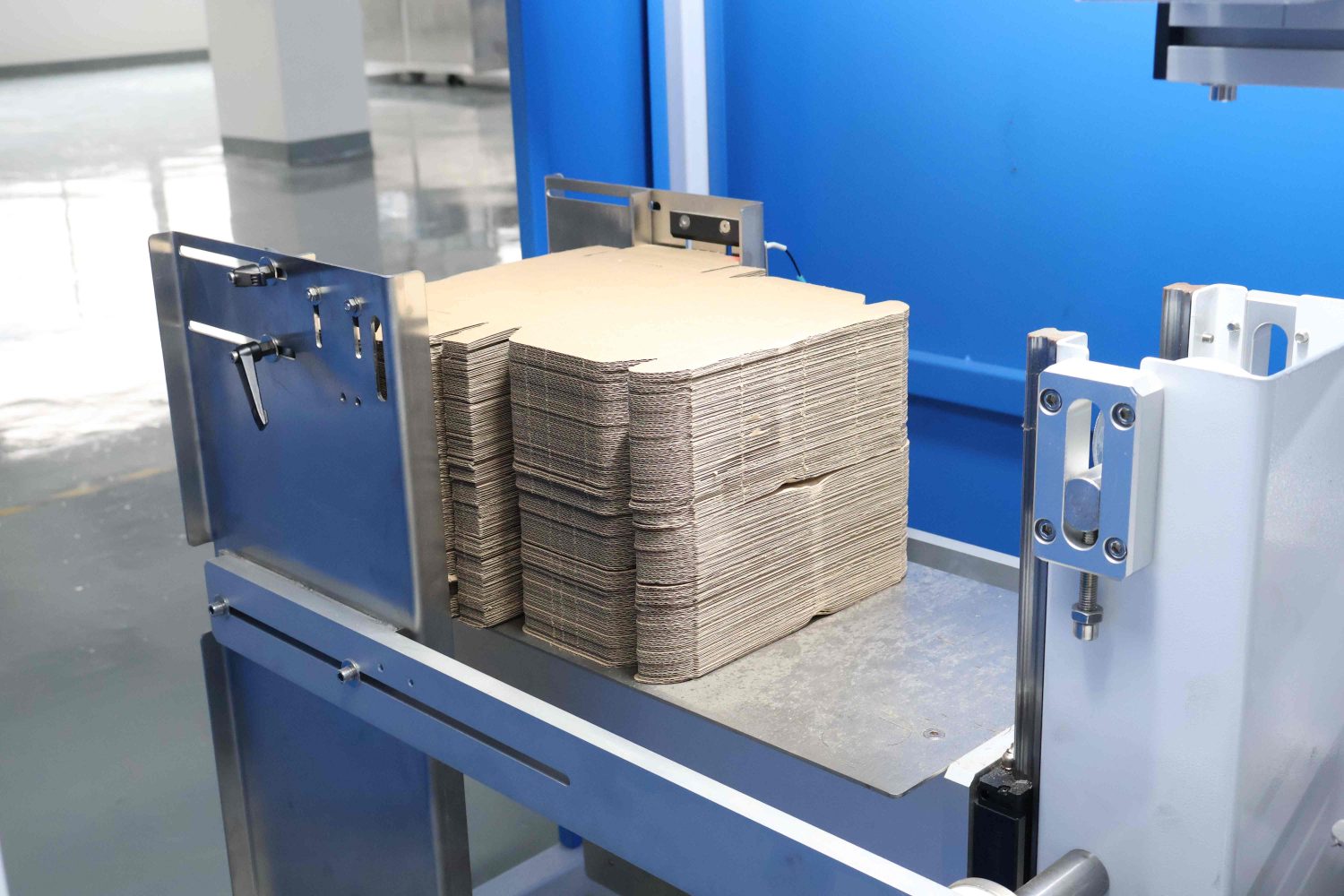
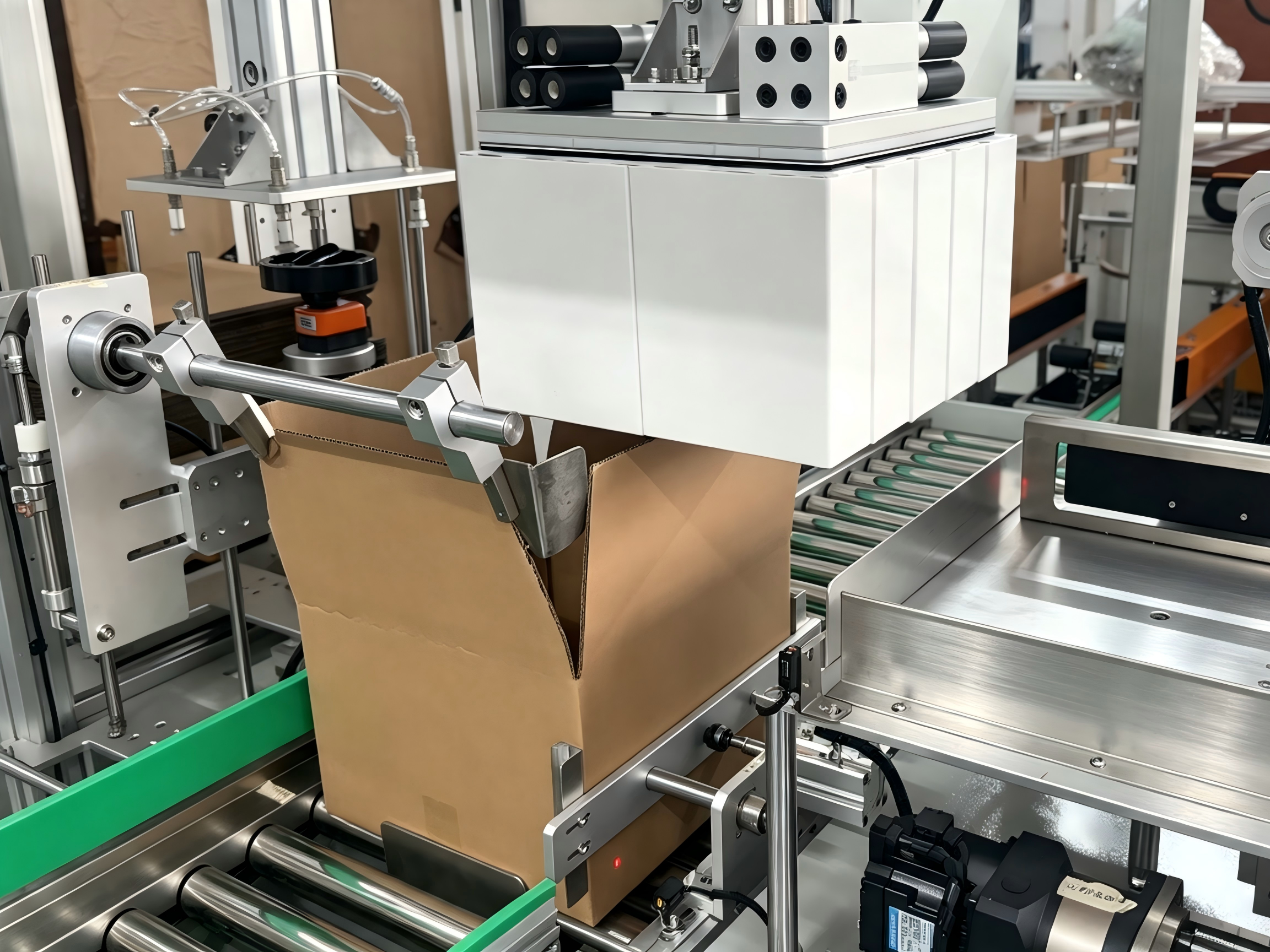
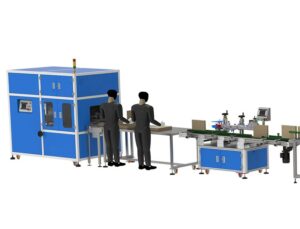
Flat blanks go into the erector’s magazine. The machine pulls one, forms the box, folds and seals the bottom flaps, and pushes a formed carton onto a short conveyor. It lands at an operator station. The operator drops the product in, closes what needs closing, and sends the box on. At the far end, a labeler takes the box, applies the label in a fixed position, and discharges it ready for the case.
Two machines, one human in the middle. The operator is not a bottleneck because packing is fast, and the machines never stop for a break.
Capacity ranges to expect
Erectors in this class are commonly reported to run between 25 and 60 boxes per minute depending on carton size and board grade. Labelers cover a wider band, often quoted from about 30 up to 120 pieces per minute for flat or top labels on rigid containers. Those are reported industry ranges and benchmarks, not guarantees, and any number on a quote should be confirmed at factory acceptance, running your box and your label.
Matched honestly, the pair will land well below those ceilings on a real shift. That is normal. What matters is that the pair keeps moving and the operator keeps pace.
The beat usually breaks at the erector and the hands
Here is the pattern that surprises first-time buyers. The labeler is almost always the fastest machine on a small line, sometimes twice as fast as it needs to be. People buy a fast labeler because the price gap looks small, then find the line never comes close to using it.
The bottleneck lives upstream. Erecting is steady, but it stops when the blank magazine runs low, and magazines on compact erectors are not huge. Manual packing is steady too, until boxes arrive in bursts or the product needs a second look. Line speed settles at whichever of those two is slower, not at the labeler’s rating.
The pair works best when you size the labeler to the erector rather than to its own spec sheet, and give the packing station room to absorb the bumps. A small accumulation zone between packing and labeling, holding a minute or two of boxes, lets the operator catch a breath without starving the labeler.
Want a second opinion on where your own line will bottleneck? Send us your box and your product, and our engineers will tell you which stage sets your speed before you buy.
Changeover has to line up on both sides
Format changes are where small lines quietly lose their day. Erectors typically take five to fifteen minutes to switch carton size, and labelers a similar five to fifteen to change label position or container type. Reported ranges again, and real time depends on how well the machines are set up for it.
The trap is mismatch. If the erector takes fifteen minutes and the labeler five, the operator waits ten, and four changes a shift give away an hour. Buy machines that change over with hand-adjustable guides and no tools, then run both changeovers in parallel. Teach them to one standard so a single operator resets the carton erector and labeling machine as one job, not two.
Combo B: automatic labeling, automatic carton erecting, manual packing, automatic labeling
Some products need a label before the box and a label after it. That turns the small line into a three-machine arrangement with labeling at both ends, solving a problem Combo A cannot.
The box may need an identity mark the moment it is formed, so the packer never confuses two similar SKUs. That is a first label, applied at the erector’s discharge or on the flat blank itself. Later, once the box is packed and closed, a second labeler applies the seal label, the batch code, or the certificate of conformity that ships with the product.
What the first label and the last label each do
The first label is about identity. It carries the SKU, the batch or lot number, sometimes a serial or an anti-counterfeit mark, and it goes on before anyone could mix the product up. Applied early, it also lets a scanner verify the box during packing, which is exactly when errors are cheapest to catch.
The last label is about closure and proof. It seals the flap, carries the date and expiry, and often serves as the certificate that declares the goods passed inspection. Placing it last means the variable data is final, staged after the contents are confirmed rather than before.
For a box that needs both, a carton erector and labeling machine arrangement with an extra labeler upstream is the light way to get there. You are not buying a print-and-apply line for every box. You are buying the labeling the product law or your customer actually requires.
When you need to label at both ends
Labeling twice on a carton erector and labeling machine setup is worth the money when one of four things is true.
- The product is regulated, and a batch or traceability code must be on the box before it is sealed.
- Two or more SKUs look alike on the line, and an early identity label prevents a mix-up that would cost far more than the machine.
- The certificate or date is finalized only after packing, so a last label is the honest place for it.
- A customer or a standard demands both an inner identity mark and an outer seal, and hand-labeling either one is too slow to be reliable.
For a plain shipping case with nothing variable inside, one label is enough, and Combo A stays the smarter buy. A carton erector and labeling machine pair covers that case completely.
For products that carry a certificate or a traceable code, a carton erector and labeling machine setup can be extended with print-and-apply, where the code is generated and placed in one step. Our guide to print-and-apply for certificates covers when that is worth it.
If you are weighing a single-label and a two-label layout, our notes on cartoning line integration work through what happens when an erector feeds a machine downstream, and where the extra handoff earns its keep.
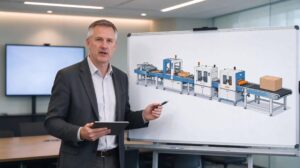
Small line versus pure manual versus full line
Choosing between a carton erector and labeling machine, a manual bench, and a full line is less about ambition than about three numbers you can measure.
Start with throughput. Below a few hundred boxes an hour, hand folding and hand labeling can still compete. Past that line, the arithmetic flips fast, because the manual steps scale with every box and the machines do not.
Formats matter just as much, though. A single format suits a full line. A dozen a month punishes one, while a small line with quick changeover absorbs variety that a rigid full line cannot. That is why so many contract packers run compact lines.
Then there is what a defect costs at the customer, which is harder to put on a spreadsheet. If a mislabeled or wrong-boxed shipment risks a recall, a chargeback, or a lost account, the case for automating labeling early is stronger than the throughput math suggests. Consistent label placement is not vanity. It is quality control that never gets tired.
Run those three numbers against your own plant. If volume is real, formats are few, and you have the floor and the capital, a full line is the better long-term tool, and our look at full production line scope covers what that commitment involves. If volume is moderate and variety is high, a carton erector and labeling machine is usually the setup you want to grow into first.
Laying out a carton erector and labeling machine cell
A small line lives or dies by its footprint, because you fit it into a building that already has walls, doors, and power where the last occupant left it.
A straight line is the simplest to understand and the easiest to expand. Machines stand in sequence, and the flow is obvious to anyone walking past. It needs length, though, and a long line means a long walk to clear a jam.
A U-shaped or L-shaped cell fits tighter floors and shortens the operator’s reach. One person can face the erector, the packing bench, and the labeler without walking.
Whichever shape you pick, protect three things.
- Reach. The operator should never have to leave the packing position to reset the erector or clear the labeler.
- Clearance. Service doors and electrical cabinets need swing room. A cabinet jammed against a wall runs hot in summer and fails.
- Access. Keep walkways clear of power drops and air lines. A hose across a walkway is a trip hazard that outlives the line.
Draw the layout at the scale of your actual floor, with doors and columns marked, before you commit. A carton erector and labeling machine that looked fine in a proposal can be impossible once the real walls show up.
Buying a carton erector and labeling machine: acceptance points
Two questions decide whether a carton erector and labeling machine setup works, and both come down to testing with your own materials.
Can the erector run your box? Not a sample box, but your board grade at your storage humidity. Corrugated changes with moisture, and a blank that folds cleanly in a dry showroom can crack or jam in a humid warehouse. Ask for a run-off on your blanks, and watch it more than once.
Can the labeler apply your label? Label size, material, and container shape all change how a labeler behaves. Transparent labels, thin films, and curved surfaces each need the right sensor and the right peel setup. Clear labels in particular defeat sensors chosen for paper, so test with the stock you will buy.
Build safety and quality expectations into the acceptance test, not the brochure. Interlocks, guard switches, and emergency stops should follow the risk-assessment approach in standards such as EN ISO 12100, with the machinery safety series EN 415-1 covering packaging machines in Europe and ANSI/PMMI B155.1-2023 framing the same duties for packaging machinery in North America. A supplier working to ISO 9001:2015 gives you a documented quality process to point at when a machine arrives and something is off.
Hold both machines to one shared number at the end of the line: boxes per hour, running your box and your label. A single measured target ends more arguments than any specification sheet. Our guide on labeling in packaging lines goes deeper on how labelers behave on different containers, and it is worth reading before you finalize a label spec.
When you are ready to specify, the automatic labeling machine and compact carton erector pages list the models and formats UBL builds for small lines.
Cost and return, in structure not in prices
Numbers here move too much by country and configuration to quote from a page, so look at the shape of the cost instead.
On the way in there is the capital cost of the machines, the conveyors and guards that connect them, installation, and the training that turns a crew into operators. On the way through there is the ongoing cost of changeover labor, routine maintenance, wear parts on the labeler, and the labels and blanks themselves.
The return side is where a carton erector and labeling machine usually justifies itself. One operator replaces two or three on the slowest steps. Label placement stops drifting, which cuts rework and chargebacks. Changeover stays in minutes, so short runs stop being a punishment. And the line keeps producing on the second shift without a second folding and labeling crew.
Put honest numbers against your labor rate and order mix. If the machines save two people and a few hours of changeover a week, the payback math tends to be short. If they save half a person and your formats change daily, wait.

What a small line really buys you
This two-machine setup will not match a full line box for box, and it is not trying to. It buys the specific automation that removes your worst manual bottlenecks while leaving the judgment calls with people who know the product.
The plan comes down to a few decisions you can make this week. Automate folding and labeling first, because that is where hands slow down most. Match the labeler to the erector rather than to its own spec sheet, and give the packing station a small buffer so the beat stays steady. Label at both ends only when a regulation, a lookalike SKU, or a customer demands it. Test every machine with your own box and your own label. Then hold both suppliers to one measured number at the end of the line.
Do that, and two machines carry the load that used to take a small crowd. The erector keeps forming, the operator keeps packing, and the labeler keeps landing the label on the same spot, shift after shift, without anyone peeling sheets at midnight.
[Start a conversation about your small line. Tell us your product, your box, and how you fold and label today, and we will come back with the layout and the two or three machines that fit.]