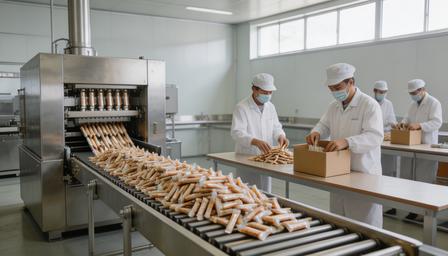
A chocolatier in Belgium built its year on one quarter. For ten weeks, gift sets left the line as fast as the team could pack them by hand. For the other forty, the packs sat in storage and the staff sat idle. The company did not need a faster line. It needed a line that could absorb a short, intense season and then switch back to everyday packs without a rebuild.
Quick answer: A gift box cartoning machine is a cartoner set up for gift and seasonal formats. It has to handle display-ready cartons, multi-pack gift combinations and fast changeover between holiday and everyday designs, while keeping the pack attractive on the shelf. For a seasonal business, those traits decide whether the peak weeks pay for the year.
The pattern is familiar and it never negotiates. The calendar is fixed, the demand is spiky, and the margin lives in a handful of weeks. A generic cartoner that runs one format all year does not fit that shape. A gift box cartoning machine built for variety does. That is why seasonal packaging automation is judged on changeover, not on raw speed.
This guide covers gift and seasonal cartoning as a production problem rather than a design mood board. It looks at display-ready formats, multi-pack gift sets, fast changeover for a short season, and the material choices that carry both shelf appeal and regulatory weight. It does not revisit the Q4 readiness checklist.
Key takeaways
– A gift box cartoning machine is judged on format variety and changeover speed, because the season is short and the designs change fast.
– Display-ready cartons and multi-pack sets need a cartoner that can handle unusual shapes without damaging the pack.
– A short season concentrates risk, so every stopped hour in the peak weeks costs more than a stopped hour in a quiet month.
– Regulation (EU) 2025/40 applies from 12 August 2026, so gift cartons sold in the EU need a recyclability plan now.
– Write the seasonal changeover and the shelf-ready format into the spec, so they do not become a last-minute scramble.
Why gift and seasonal cartoning is different
An everyday cartoner runs one pack, day after day, at a steady rate. A gift and seasonal cartoner does the opposite. It runs a small number of designs, each for a few weeks, and each with a different box, a different count and often a different insert.
That rhythm changes what matters. Raw speed matters less, because the volume per design is finite. Format range and changeover speed matter more, because the line has to move between designs quickly and without scrap.
There is also a presentation standard that everyday packs do not carry. A gift carton is part of the product. A scuff, a crease or a crooked lid is a reason the box stays on the shelf, not a defect the buyer forgives.
The confectionery industry tracks these peaks closely. The National Confectioners Association reports that most US households buy chocolate or candy every year, and that gift giving is a large part of the calendar. For a seasonal line, that calendar is the production plan.

What a gift box cartoning machine has to do
A gift box cartoning machine has to do four things well, and they sometimes pull against each other.
It has to handle the formats that sell gifts: drawer boxes, lidded boxes, display cartons and multi-pack sets. It has to do that without crushing the pack, because gift cartons are often softer and more decorated than a plain retail carton. It has to change over fast, because the season will not wait. And it has to run reliably in the weeks when every hour counts.
The buyer’s job is to rank those four needs for their own business, then hold every machine against the ranking. A line that is excellent on three and poor on changeover will cost money in the fourth week of December, when a late design change arrives.
Display-ready cartons and shelf appeal
Display-ready packaging is the format that lets a gift pack go from case to shelf with little handling. That is valuable in a busy season, because retail staff have no time, and torn packs do not sell.
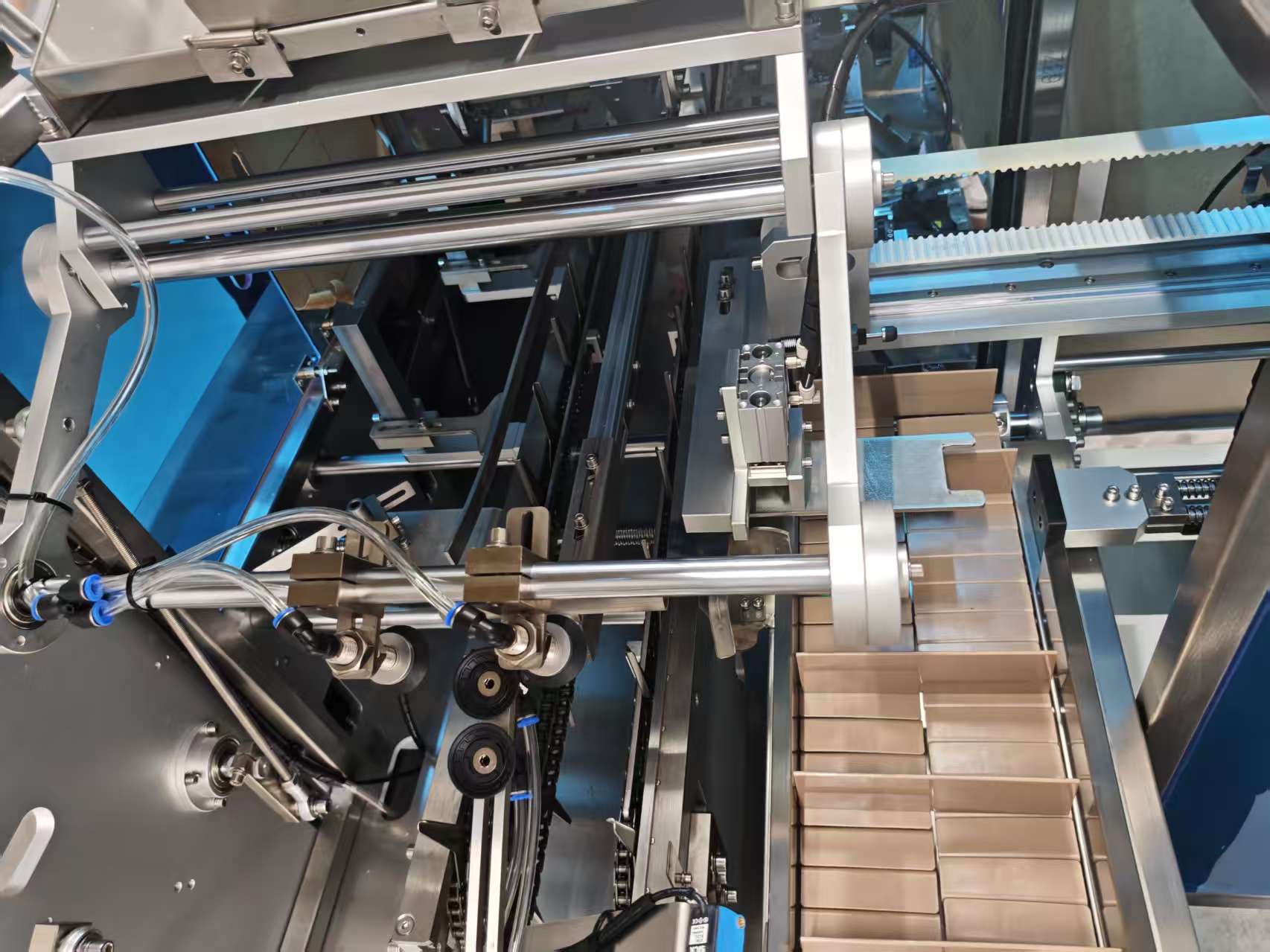
For a cartoner, display-ready means handling cartons that open into a display, and doing so without damaging the shelf edge or the print. The machine has to place the product so the pack faces the right way, and it has to close the carton cleanly so it opens as intended. A display-ready gift carton lives or dies on that handling. The right platform makes this easier, and our display-ready cartoning range is built for exactly these formats.
Designing for the shelf
Shelf appeal is set before the machine runs. The carton board, the print and the finish decide how the gift looks, and the cartoner decides whether it arrives that way. A decorated board that scuffs in the machine is a design that costs money on every pack.
Involve the machine early in the design. Ask whether the format can be handled at the required speed, and whether the closing method suits the board. A small change at the design stage is cheaper than a change in the machine after the season has started.
Multi-pack patterns for gift sets
Gift sets are combinations by nature. Multi-pack cartoning is really counting and collating under a decorative constraint. A box may hold a mix of flavours, a mix of sizes or a mix of products, and the mix is often the reason the pack sells. That makes counting and collating part of the gift design rather than an afterthought.
A cartoner for gift sets has to place the right number of the right items in the right position, then close the pack so the arrangement stays put. When the arrangement is decorative, the machine has to respect it. A set that shifts in transit arrives looking second-hand.
Counts, trays and combinations
The simplest gift sets use a fixed count of identical items. The harder ones use a tray or an insert to hold a mixed arrangement, and those inserts add a step to the line.
Ask how the machine handles inserts, and whether the insert can be placed automatically or needs manual help. On a short seasonal run, a manual step can be acceptable if it is planned. It is a problem only when it appears as a surprise.
A small confectionery maker in the UK learned this on its first automated season. The gift trays were designed after the machine was chosen, and they did not fit the infeed without a jig. The fix worked, and it ate two weeks that the season did not have.

Fast changeover for a short season
In a seasonal business, changeover is a peak-week event, not background cost. A holiday carton changeover eats peak hours that a quiet month can absorb, and a short season cannot spare them. When four designs share ten weeks, each changeover removes hours from the busiest part of the year.
The good news is that changeover speed is a design choice rather than a fixed feature. A cartoner with tool-less format parts, stored recipes and clear format change points can move between designs far faster than a machine that needs tools and trial and error. Our guide to fast changeover methods sets out the practical reset playbook, and the same principles carry into high-variety gift runs.
Where seasonal runs lose money
Seasonal lines lose money in three places. The first is slow changeover, which eats peak hours. The second is scrap on a decorated carton, which is expensive per unit. The third is a late design change that arrives after the format is locked.
Plan all three in advance. Sequence the designs so similar formats run together. Test each format before the season starts. And keep one changeover slot free for the inevitable last addition.
Planning a seasonal line? Send us your gift-set formats and your season dates, and our engineers will map the changeovers your line has to absorb.

Planning the seasonal run-up
A seasonal line should be ready long before the peak. That means proving every new gift format on the machine before the season starts, not just repeating last year’s maintenance pass. The last thing a short season needs is a week one problem.
This is where a gift and seasonal line overlaps with general peak planning. Our Q4 line readiness guide walks through the broader checklist for getting a cartoning and case-packing line ready for a peak, and it is worth running through before the first gift design launches.
The gift line adds one twist of its own. Because the designs change every year, the readiness work includes new formats as well as maintenance of old ones. Treat every new gift design as a small project with its own test run.
Carton board, print and finish
Gift packaging spends more on appearance than everyday packaging, and that spending has a production side. Foil, embossing, soft-touch laminates and unusual boards all change how the carton behaves in the machine.
A cartoner handles a smooth, consistent board more easily than a textured or laminated one. That does not rule out premium finishes. It means the finish has to be tested with the machine, on the actual board, before the season starts.
The safest approach is to send sample cartons to the machine builder and ask for a handling test. A short test on a real gift carton tells you more than a specification sheet.
What PPWR (EU) 2025/40 means for gift cartons
If you sell gift packs into the EU, the packaging rules have moved. Regulation (EU) 2025/40 on packaging and packaging waste, known as PPWR, is in force, and it applies from 12 August 2026. It replaced the older Packaging and Packaging Waste Directive.
For gift cartons, the practical effect is a push toward recyclable design and away from over-packaging. The rules aim to make all packaging on the EU market recyclable in an economically viable way by 2030, and they restrict substances of concern, including PFAS in food-contact packaging above set thresholds. A decorative gift box with mixed materials and a heavy laminate can be hard to recycle, and that is now a design risk. For the full obligation list, see our guide to PPWR compliance for cartoning and case packing. The European Commission’s packaging waste overview sets out the timeline and the rules.
What changes on 12 August 2026
The core obligations apply from 12 August 2026. Later milestones, such as recyclability grading and further design requirements, fall later in the decade. The message for a seasonal brand is simple: design the gift carton for recycling now, because a design locked in for this year’s season is a design you will live with.
Gift packaging is not banned. Over-packaging and hard-to-recycle combinations are the problem, and a well-designed gift carton can meet both the shelf and the rules.
A gift brand in the Netherlands hit this late. Its signature box used a foil laminate that looked premium and was hard to recycle. With the 2026 rules in view, the design was reworked to a recyclable board with a printed finish. The new box sold as well and cut a material cost.
Specifying a gift box cartoning machine
Treat the spec as next year’s season, written down in advance. Five items belong on page one.
- Format list. Every gift and seasonal design, with carton size, count and insert.
- Changeover target. The time between designs that you will accept, tested on a real carton.
- Shelf standard. The handling quality the pack must keep, so the cartoner does not scuff the print.
- Material set. The boards and finishes the machine must run, tested in advance.
- Recyclability plan. How each design meets the EU rules from 12 August 2026.
Add the inserts and trays to the format list. They are the items most often missed, and they cause the most scrap when they surprise the line.
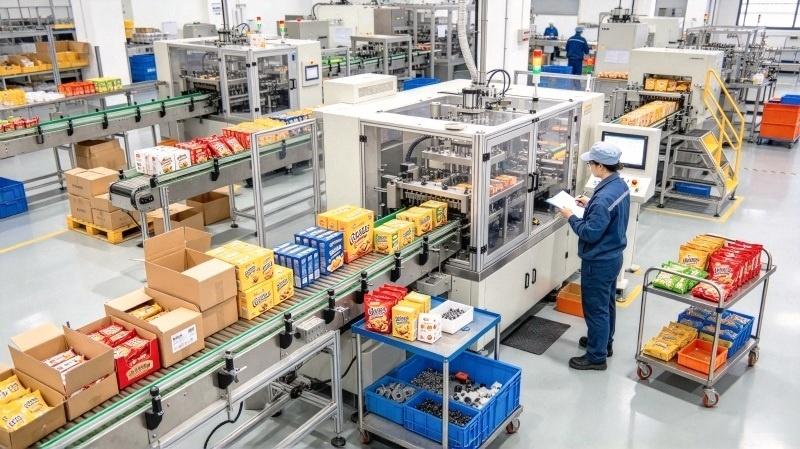
If your gift sets also carry filled bottles, jars or pouches, the handling overlaps with the formats in our guide to gummy and supplement cartoning, where container handling and inserts raise the same questions. And for the everyday packs that run after the season, a broader look at snack and confectionery cartoning shows how standard formats compare.
Working with the machine builder
A gift line is a partnership more than a purchase, because the designs change every year. Ask how new formats are added, how the builder supports a design that was not in the original scope, and how fast spare format parts arrive.
A builder who understands seasonal work will build in flexibility from the start. That flexibility is worth more than a low price, because it is the difference between a line that grows with your gift range and one that has to be replaced.
FAQ
What is a gift box cartoning machine?
It is a cartoning machine set up for gift and seasonal formats, such as drawer boxes, lidded boxes and display cartons. It is judged on format range, changeover speed and handling quality, because the season is short and the designs change often.
Can one machine handle both gift sets and everyday packs?
Often yes, if the format range covers both and the changeover is fast. That is the most efficient choice for a seasonal business, because it keeps one line busy all year instead of two lines busy for one quarter.
Why does display-ready packaging matter for gifts?
Because it lets a gift pack move from case to shelf with little handling, which saves retail staff time and protects the pack. A cartoner has to open and place the pack without damaging the shelf edge or the print.
How does PPWR affect gift packaging?
Regulation (EU) 2025/40 applies from 12 August 2026 and pushes EU packaging toward recyclable design and less over-packaging. Gift cartons are not banned, but mixed materials and heavy laminates are a design risk today. Build a recyclability plan into every design.
What should I test before the season?
Test each gift format on a real carton, including the insert or tray, and time the changeover between designs. Test the boards and finishes too, because a premium laminate can scuff in a machine that runs plain board without trouble.
The bottom line for seasonal brands
A gift box cartoning machine is a seasonal tool, and it should be specified like one. Format range and changeover speed decide whether the season runs smoothly. Handling quality decides whether the packs sell. And a recyclability plan, driven by the 12 August 2026 EU deadline, decides whether the design lasts.
Start with your gift designs rather than your machine catalogue. List the formats, the counts and the inserts, then hold every quotation against that list. When the pieces change every year, the flexibility you buy now is the capacity you have later.
If you want a second opinion before you commit, send us your designs and your season dates. We will help you turn them into a spec that survives the busiest weeks.
Ready for the next season? Send us your gift-set formats and season dates, and we will come back with the changeover plan and the layout that fit them.