Mailer Box Packing Line for 3D Printing Filament: Two Investments, Not One
Last month a quotation for a mailer box packing line reached Marcus Reyes, who runs a filament plant that ships to distributors and retail accounts. One line on the sheet:
"Mailer box packing line, complete, one price."
His question was not the price. It was the scope. The quotation covered the empty-box former, the spool cartoning and the lid closer as one item. His plant runs six colors, four materials and three net weights — some of those stations would sit idle most of the week.
A mailer box packing line is not one capital decision. For a filament plant it is at least two, and they have to be bought, accepted and verified separately. That is what a one-line quotation hides.
The folding machine on the other side of that quotation is not a mystery. How a mailer box folding machine actually works covers the machine, the board and the throughput. The risk sits past it.
- Two investments, not one. Empty-box forming and vacuum-sealed spool cartoning run on different objects, fail for different reasons, and get accepted on different terms.
- Color carton or corrugated mailer box? Retail single-spool shipments go out in a printed color carton. Bulk and case-level shipments go out in a corrugated mailer box — a stage many filament plants have never costed separately.
- A spool is a disc, not a box. There are two places to grip one, the rim or the hub, and which one works is set by the machine's structure rather than by preference.
- Bag wrinkles are normal and they still cost you. A vacuum bag shrinks onto the spool and wrinkles at the edges, which breaks the cross-section, skews the placement and leaves the lid off its seat.
- Measure three numbers, then send five samples. Actual seconds per piece, itemized rework count, station waiting time. Get the material to the vendor before you book the FAT.
Why a Mailer Box Packing Line Is Two Investments
Filament packaging usually means the retail box: a printed color carton that a suction-cup erector opens and folds, one spool inside. That line runs well. It is not the one in this article.
The corrugated mailer box is the other half. Multi-spool shipments and export cartons go out in corrugated mailer boxes, as an outer shipping case or a fitted inner tray. That needs its own equipment, and plenty of plants have never costed it — in their heads filament packaging means the color carton. A mailer box packing line is the corrugated half. The demand argument is thinner than it sounds: what climbed is filament volume, not the automation rate on your floor.
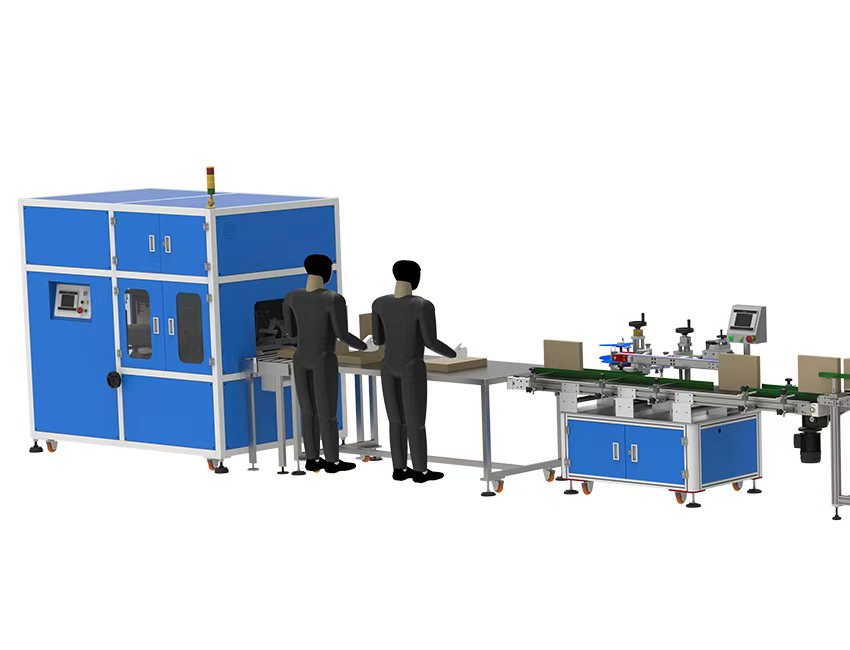
The three stages run together on the line and they can be bought separately. Keep them as three lines on the purchase order, because merged onto one sheet you cannot tell what you are paying for.
One side handles paper, the other handles product. Empty-box forming deals with a flat blank: board thickness, flute direction, whether the crease is real. Spool cartoning deals with a vacuum-sealed disc: diameter, hub bore, grip point, what the bag did to the shape. Which is why a mailer box folding machine passing its own trial tells you nothing about the cartoning stage.
| Stage | What it handles | Key parameters | What you accept it on |
|---|---|---|---|
| Empty-box forming | Flat corrugated blanks | Flute type, crease quality, dieline, panel folding sequence, board thickness and flute direction | Empty-box acceptance rate on your own board |
| Vacuum-sealed spool cartoning | Spools already bagged and vacuum-sealed | Spool diameter, hub bore, grip point, bag wrinkles, placement orientation | It grips it, it fits it, it sits square |
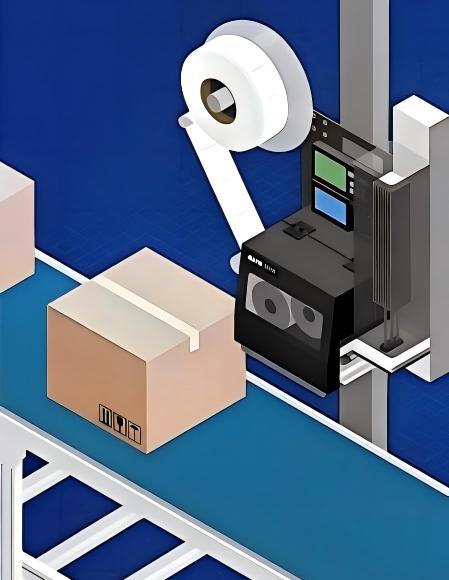
| Closing and labeling | Loaded, open mailer boxes | Lid fit, board match, label position, corner labels | Lid stays down, labels square and readable |

The Empty-Box Forming Side Is a Fight With Paper
Four things to settle before anyone talks about a folding machine.
Flute type. E-flute and B-flute are different thicknesses, and crease pressure and flap angle change with them. If board thickness and flute direction are not fixed, there is nothing to tune.
Crease. If the score is a little off, that corner stands up after forming and no tape fixes it. Crease quality sets the acceptance rate on this side of the line.
Dieline. The CAD flat pattern is what the machine works from: cut lines, score positions, panel sizes. Wrong drawing, wrong box, every time.
Panel folding sequence. Bottom, side, lid, in that order. Reverse it and the panels collide and jam.
A fifth item is filament-specific. The product is a disc, so the clear internal width of the box has to be derived from the spool diameter. Your SKU matrix moves on three axes at once — filament diameter, net weight, spool diameter.
Acceptance on this side is one number: empty-box acceptance rate, and you set the line yourself. Nameplate speed tells you nothing — it is measured on standard board, in a standard room, with no changeover.
So write the clause that way. Not "the machine passed trial," but "on the customer's actual board and actual box format, running X consecutive cases with the mailer box folding machine, empty-box acceptance rate not below Y."
Changeover is downtime to price in. A new format means a new dieline, a new die, a new panel sequence and new pick positions — and a plant running color times material times weight times filament diameter changes format several times a day.

The Vacuum-Sealed Spool Side Is Where the Product Fights Back
Change the subject from a flat blank to a sealed spool and every problem inverts — the machine is no longer fighting paper, it is fighting a disc.
There are two places to grip a spool: the rim, or the hub bore. Grip the rim and the load spreads across the flange — the spool can rock, and the machine has no idea how far it has turned. Grip the hub and you get position accuracy, because the hub locates the spool, but the hub is a thin plastic collar and it can crack under the grip force. Which one you can use is decided by the machine's structure, not by preference.
Then the bag wrinkles. Pull the vacuum and the bag shrinks onto the spool, film wrinkling around the edges. That is not a defect; it is what a good vacuum pack looks like, because the bag has to hug the spool or the seal will not hold. The cross-section is no longer a clean circle, so a machine gripping to a nominal spool diameter takes hold at the wrong offset. The spool drops in at an angle, the bottom does not sit flat, and the lid will not close on it.
Priya Raman runs the sealing shift at a filament plant in northern Europe. For months the line ran with one person beside the cartoner, straightening spools one at a time before the flaps closed. Nobody could state the real acceptance rate, because the line number included the corrections a person was making. Half machine, half hand. It also hides the waiting time.
The wrinkle is not only a placement problem. A wrinkled bag mouth is the most common trigger for a slow vacuum leak, because a generic vacuum machine has no step that flattens the mouth before it seals, and the pinhole is not visible from outside. That is why a sealed spool gets rested and re-checked before it goes near a carton — the hold-and-recheck step between sealing and cartoning deserves its own treatment.
Moisture is why this stage cannot be skipped. PLA, PETG, TPU and nylon all absorb moisture from the air. Nylon and PVA take it up fast; hours are enough to change the material. PLA and PETG are slower, but long exposure still degrades them. Some materials hydrolyze while they sit there, and once the molecular structure has changed, drying them later does not bring it back.
Desiccant alone is not enough. It has a finite capacity, and once loaded it stops working, while the air still in a non-vacuum bag carries water with it. Vacuum plus desiccant is two layers of protection and you need both. Which film and desiccant go in depends on the material — nylon and PVA need a different bag than PLA. The moisture checkpoints worth monitoring and the desiccant selection by material are covered on their own.

If the folding side is already running and stable, the cartoning stage is where the next bottleneck usually shows up. When a plant calls its mailer box packing line unstable, check which side it means. How a filament cartoning machine handles the retail color carton is a separate read, but the question is simpler: are you short of hands at the carton, or short of boxes?
Measure Before You Buy
Three numbers, and you can get them yourself this week.
Actual seconds per piece. Same shift, several experienced hands, 20 to 30 pieces, from the board being picked up to the case being closed. Include the adjustment actions. Do not measure on a good day.
Rework count. Itemize it. Creases that need re-scoring, bags that need straightening, lids that need re-pressing. A single total tells you nothing about which stage is bleeding.
Station waiting time. The gap between the previous station delivering and this one starting.
Compare the labor hours those three numbers produce against the equipment cost for that stage plus the new waiting it creates. That difference is the answer to whether the stage should be automated at all. Three mistakes are common: counting only the labor you save and not the waiting the machine adds; counting rework as zero; and comparing nameplate cycle time against a hand cycle measured on the fastest run of the month.
The measurement takes an afternoon: one shift, three experienced operators, a stopwatch, 25 pieces from board pickup to closed case. The number usually comes out worse than the quotation implied.

Then three questions for the vendor. They get answers that cannot be fudged.
- What board did you test with — my board, or your sample?
- Which box did you test — my dimensions with my dieline, or something else?
- Did you run the cartoning and closing stages on the target box, and with which three spool specs?
An answer that comes back as "the principle is the same, it will carry over" says the stage was never tested on your conditions.
And five samples to send.
- Flat blanks and a finished box. The blank shows the creases and cut lines; the finished box shows what came out.
- The die, or the CAD dieline. The die goes to engineering, the flat pattern goes to programming. They are not the same thing.
- Inside and outside dimensions. Inside decides whether the product fits. Outside decides how it stacks and ships.
- Board thickness and flute direction. Off by one on either and the machine settings all have to start over.
- Vacuum-sealed spools in three extreme specs: the largest spool diameter, the smallest, and the one with a loose or badly wrinkled bag mouth. Not a standard piece. If nylon or PVA is on your line, send those too — they need a different bag film and a different desiccant than PLA.

Then schedule the FAT. Not before. Turn up without the samples and you will find on the floor that the board thickness does not match, that the dieline does not match the physical box, that the extreme spools were never brought. The trip is wasted.
Preformed Boxes Are a Real Option
Not every filament plant should own a folding machine. If the landed cost of bought-in empty mailer boxes — unit price plus freight, times the volume you need — sits below the machine plus the labor plus the space it takes, do not buy the machine. You would be buying the folding half of a mailer box packing line you do not need.
What you save: the machine, the folding station's two operators, the floor where blanks get stacked, and the downtime every changeover costs.
What you take on: freight and the volume it arrives in, the inventory you hold to cover lead time, and a locked box design. A bought-in box generally cannot change its die without new tooling, so the format becomes a decision you make once and live with. For a plant whose SKUs still move, that can cost more than the machine did. Both sides of that trade are real, and the arithmetic differs for every plant.
Where to Start, and the Buffer You Have to Plan For
If the folding side is the problem. Unstable forming, hard to hire for, two experienced people permanently stationed at the folding station. If two of those three are true, fix this side first — a filament box also has to be labeled and shipped, so the folding station's labor is more visible than it would be for a simpler product.
If the spool side is the problem. Spool specification is stable, box format rarely changes, changeovers are rare, and the volume is there. Specifying both sides together saves a transfer — you save a station and some labor, not machine money. The line integration and the compatible mailer box formats have to be settled up front, and the cycle times have to match at the forming end.
There is a legitimate small-line configuration: automatic folding, manual cartoning, automatic labeling. The manual cartoning step is sometimes the deliberate choice rather than a compromise, because a fixed-stroke machine can crush a vacuum-sealed pouch. A manual vs automatic cartoning decision that ignores that is made on the wrong basis.
And plan the buffer. Two sides specified separately run at different speeds. The forming side is faster, the cartoning side is slower, and the difference has to land somewhere. If both are specified at full capacity, the excess has nowhere to go except the aisle. Leave a buffer position and connect the stages through a conveyor or a manual accumulation buffer. A full filament packaging line is covered elsewhere on this site, but the buffer is yours to plan.
So where does that leave you?
The answer to what a mailer box packing line costs is not on the quotation. It is in the three numbers you can measure on your own floor: actual seconds per piece, itemized rework count, station waiting time. Fill those in and the order of decisions makes itself — which stage to buy first, which to hold, and whether to buy preformed boxes instead of owning a folding machine at all.
Then send the five samples and book the factory acceptance test after them, not before. When that material is on the vendor's floor, the conversation stops being about whether a machine can work and becomes about whether it works on your board, in your box, with your spools.
FAQ
Do I have to buy a mailer box packing line as one package?
No. The three stages run together on the line and they can be bought separately. Keep them as three lines on the purchase order, because merged onto one sheet you cannot tell what you are paying for.
Does a folding machine passing its own trial mean the cartoning stage works too?
No. A mailer box folding machine passing its own trial tells you nothing about the cartoning stage. The folding machine runs on paper, the cartoning stage runs on a vacuum-sealed disc, and they fail for different reasons.
Which three numbers should I measure before asking for a price?
Actual seconds per piece, itemized rework count, station waiting time. Same shift, several experienced hands, 20 to 30 pieces, and include the adjustment actions.
What should a filament plant send before scheduling a FAT?
Flat blanks and a finished box, the die or the CAD dieline, inside and outside dimensions, board thickness and flute direction, and vacuum-sealed spools in three extreme specs: the largest spool diameter, the smallest, and the one with a loose or badly wrinkled bag mouth.
Should a filament plant buy preformed mailer boxes instead of a folding machine?
Sometimes. If the landed cost of bought-in empty mailer boxes sits below the machine plus the labor plus the space it takes, do not buy the machine. Count the freight, the inventory you hold to cover lead time, and the locked box design against the machine cost before deciding.
Ready to put numbers on it? Send us the board spec, the dieline and three extreme spools, and we will run them on the target box so you can see the result before you commit to anything.