
A packaging manager at an electronics factory reached out to us last month. They were making charger boxes, shaver boxes, and similar consumer electronics packages—all snap lock bottom style. The problem wasn’t the design. It was the people. Three workers spent their entire shift just folding boxes. When orders spiked, they hired temps who were slower, made more mistakes, and cost even more per hour. And whenever someone called in sick, the line slowed down.
“There has to be a way,” he told us, “where one machine does what three people do—and doesn’t call in sick.”
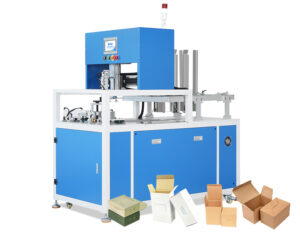
That’s exactly what a snap lock bottom carton erector does. It takes a flat sheet of corrugated or paperboard, folds the four bottom flaps into that interlocking 1-2-3 pattern, and delivers a fully formed box ready for product loading—at speeds no human can match consistently.
This article explains what a snap lock bottom box is, why it’s one of the most widely used package structures across industries, and how UBL’s automatic carton erectors handle the entire folding process on your production line.
What Is a Snap Lock Bottom Box?
The snap lock bottom—also called an auto-lock bottom, 1-2-3 bottom, or simply lock bottom—is a self-assembling base structure used on paperboard and corrugated boxes. It requires no tape, no glue, and no manual interlocking during assembly. The four bottom panels fold into each other in a specific sequence (hence “1-2-3”), creating a flat, strong base that locks itself into place under the weight of the product inside.
Why Manufacturers Choose Snap Lock Bottom
| Advantage | Why It Matters |
|---|---|
| No glue or tape needed | Saves material cost; cleaner unboxing experience for end customers |
| Strong load-bearing base | The interlocking structure distributes weight evenly; ideal for heavier products |
| Fast assembly when automated | A carton erector can form 40–50 boxes per minute vs. 10–20 per minute by hand |
| Professional appearance | Flat, uniform bottom looks better than hand-folded variations |
| Widely compatible | Works with paperboard, E-flute, B-flute corrugated, and most standard board grades |
Industries That Use Snap Lock Bottom Boxes
The snap lock bottom is one of the most versatile box structures in manufacturing. You’ll find it everywhere:
- Consumer electronics — Charger boxes, power bank packaging, earphone cases, shaver kits, cable organizers
- Cosmetics & personal care — Skincare sets, perfume secondary packaging, beauty tool boxes
- Food & beverage — Chocolate boxes, tea tins’ outer cartons, confectionery packs, snack multipacks
- Home goods — Small appliance packaging, kitchen gadget boxes, household accessory containers
- E-commerce fulfillment — Subscription boxes, gift sets, curated product bundles
How a Snap Lock Bottom Is Folded: Manual vs. Automatic
The Manual Process
When a worker folds a snap lock bottom by hand, here’s what happens:
- Pick up a flat blank from the stack
- Fold the first minor flap inward
- Fold the second minor flap over the first
- Fold the major flap down and tuck it into the pocket formed by the two minors
- Press the base flat to confirm the lock is engaged
- Place the formed box onto the next station or conveyor
A skilled worker manages roughly 3–6 complete folds per minute. An inexperienced worker—or worse, a temp brought in during peak season—might manage 2–3 at best, with inconsistent quality. After two hours, fatigue sets in. Fold alignment drifts. The lock doesn’t seat properly. Downstream packing slows down because the boxes don’t stand straight.
The Automatic Process (UBL Carton Erector)
An automatic snap lock bottom carton erector handles the same sequence—but without hands, fatigue, or variation:
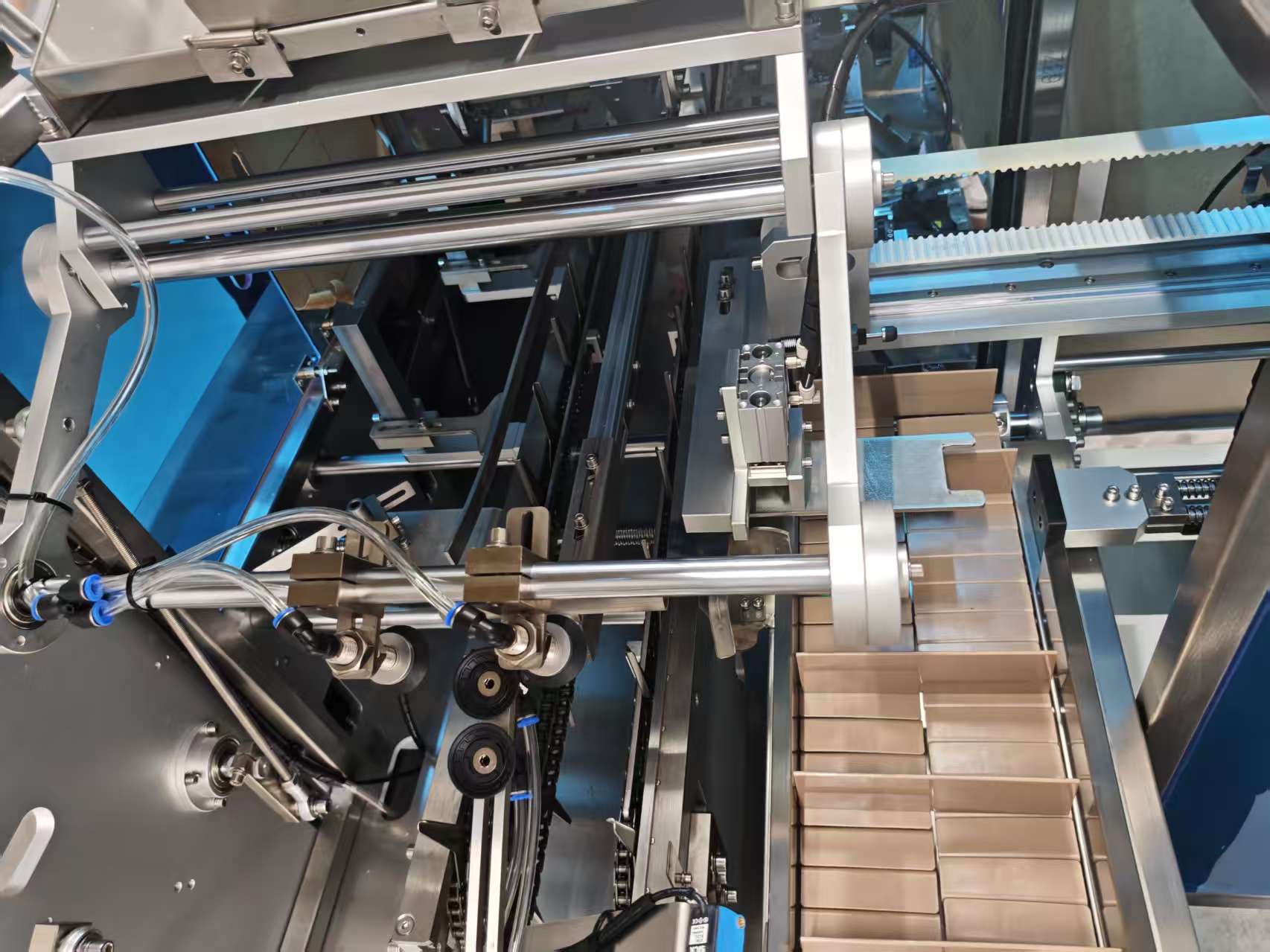
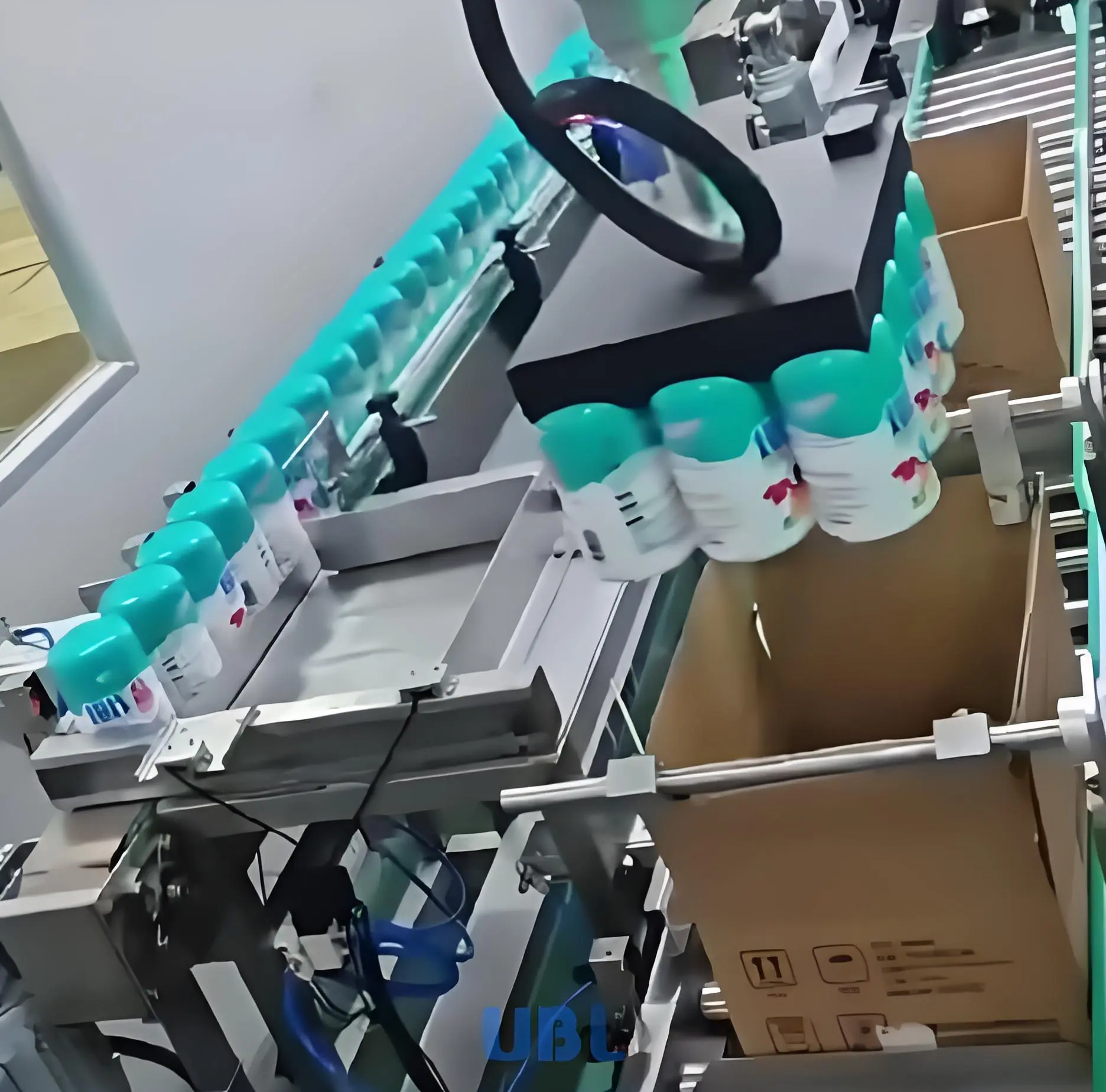
- Blank feeding — A suction-cup pick-and-place system pulls flat blanks from the magazine stack and positions them onto the folding carriage
- Multi-axis servo folding — Four servo-driven folders close the bottom flaps in precise sequence (minor flap → minor flap → major flap → lock engagement), with positional accuracy of ±0.1mm
- Lock verification — The formed base passes through a pressure roller that confirms the interlock is seated before releasing the box
- Output transfer — The completed box is pushed or conveyed to the next station—ready for manual or automatic product loading
UBL’s snap lock bottom carton erectors operate at 2,400–3,600 pieces per hour. That means one machine replaces approximately 4–8 full-time folder workers, depending on shift patterns.
Real Setup: How One Machine Feeds an Entire Line
We have customers running exactly this configuration right now. Here’s what it looks like on the floor:
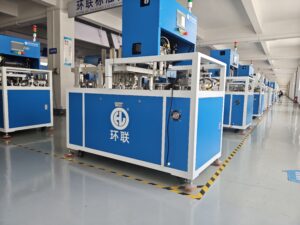
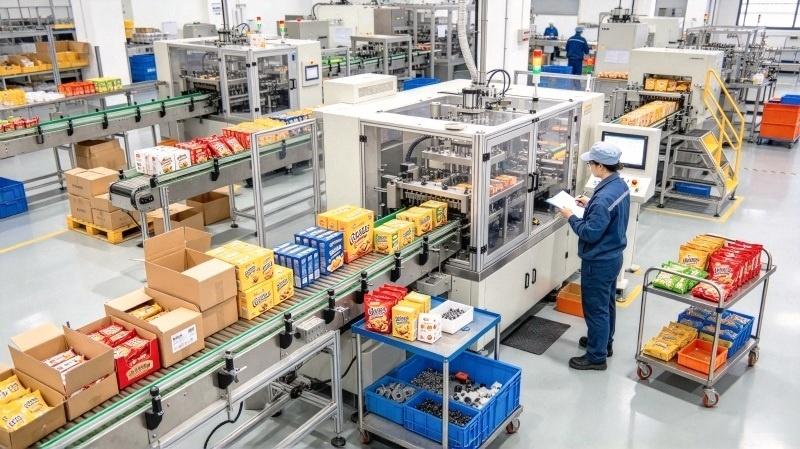
- Station 1: The snap lock bottom carton erector sits at the front of the line. It pulls blanks from the hopper, folds every bottom automatically, and pushes completed boxes onto the outfeed conveyor belt.
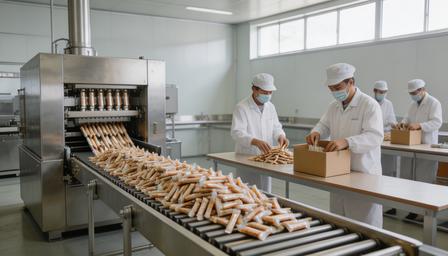
- Station 2: Workers positioned along the conveyor manually load products into each box as it arrives. No one is folding anymore—everyone is doing value-added work.
- Station 3: Sealed boxes move downstream to final packing or palletizing.
This is the setup our client uses for charger boxes and shaver packaging. One erector feeds the whole line. The workers who used to spend all day folding are now loading product, inspecting quality, or handling other tasks that actually need human judgment.
Click for UBL Lock-Bottom Folding Machine Customer Stories
If you want to go further—automating not just the folding but also the opening, loading, and closing—that’s where a cartoning machine comes in. The cartoner picks up where the erector leaves off: it opens the pre-formed box, inserts the product through its loading mechanism, and closes the top flaps. Together, the erector and the cartoner create a continuous flow from flat blank to sealed pack.

Key Specifications: What to Look For in a Snap Lock Bottom Carton Erector
Not all erectors are built the same. Here are the specifications that matter most for snap lock bottom applications:
Speed (Throughput)
UBL’s standard range for snap lock bottom machines: 2,400–3,600 pcs/hour.
| Production Need | Recommended Speed Tier |
|---|---|
| Small batch / startup (< 5,000/day) | 1,500 pcs/hour (single-shift sufficient) |
| Medium volume (5,000–15,000/day) | 1,800–2,000 pcs/hour |
| High volume (> 15,000/day) | 2,000–3,600 pcs/hour (multi-shift operation) |
Folding Accuracy
UBL machines use multi-axis servo motion control with ±0.1mm positioning precision. Why this matters: if the lock-bottom flaps are misaligned by even 0.5mm, the box won’t sit flat, the base will feel weak, and downstream filling operations slow down because operators have to re-form each box by hand before loading.
Size Changeover Time
If you produce multiple SKU sizes on the same line, changeover speed directly affects your effective output. UBL’s recipe-driven system stores size parameters in memory. Switching between different sizes within the same box type takes approximately 10 minutes—no tools required, just adjust the mechanical guides by hand.
Note: Changing between completely different box types—for example, switching from snap lock bottom to tuck-end—requires a dedicated machine. Each box type needs its own erector model matched to the folding pattern.
Durability and Maintenance
UBL’s snap lock bottom erectors feature stainless steel frames, high-strength alloy components, and servo drives with rated lifespans exceeding 10,000 hours for wear parts. Common issues—misfeeds, jammed blanks, or slightly off-spec material—can be diagnosed and cleared within minutes via the touchscreen control panel.
Cost Comparison: Manual Folding vs. Automatic Erector
The math isn’t complicated. Here’s what most manufacturers discover when they run the numbers:
| Factor | Manual (3 Workers) | Automatic (1 Machine + 1 Operator) |
|---|---|---|
| Output rate | ~300–500 boxes/shift (combined) | 1,500–2,400 boxes/shift |
| Consistency | Varies by person, time of day, fatigue level | Every box identical |
| Overtime / peak demand | Hire temps (slower, more expensive, higher error rate) | Run extra shifts at same speed |
| Absenteeism impact | Line slows or stops | Machine runs regardless |
| Labor dependency | High—every absent worker = lost capacity | Low—one operator monitors multiple stations |
The real cost of manual folding isn’t the hourly wage—it’s the opportunity cost of having skilled workers spend their day folding paper when they could be doing work that actually adds value to the product. And during peak seasons when you’re scrambling to hire temporary help, the gap gets even wider: temp workers are more expensive per unit produced, they make more mistakes, and they leave as soon as the rush ends.
Getting Started with Your Snap Lock Bottom Automation
You don’t need to replace your entire production line overnight. Most UBL customers start with one erector at the head of their existing line—the machine forms boxes and pushes them to the conveyor, and everything else stays the same until you’re ready to automate the next step.
To evaluate whether a snap lock bottom carton erector fits your operation:
- Tell us your current box dimensions (L × W × H) and material type (paperboard grade or flute)
- Share your daily or weekly volume target
- Send us a sample of your flat blank—we’ll test it on our floor and send you video of the actual folding result
That third step is what convinces most buyers. Seeing your own box being folded automatically on our machine removes any uncertainty about whether the technology works for your specific product.
Email: helen@huanlianauto.com
Summary
The snap lock bottom box is a proven, versatile package structure used across consumer electronics, cosmetics, food, home goods, and e-commerce. But its strength—the interlocking base—also makes it labor-intensive to fold by hand. An automatic snap lock bottom carton erector converts flat blanks into finished boxes at 2,400–3,600 per hour, freeing workers from repetitive folding and eliminating the variability that comes with manual labor, seasonal hiring, and absenteeism.
For manufacturers ready to move beyond hand-folding, UBL’s carton folding machines offer a tested solution backed by CE certification, 160+ patents, and deployment across 50+ countries. Send us your sample, and we’ll show you exactly how your box runs on our equipment.

4 responses