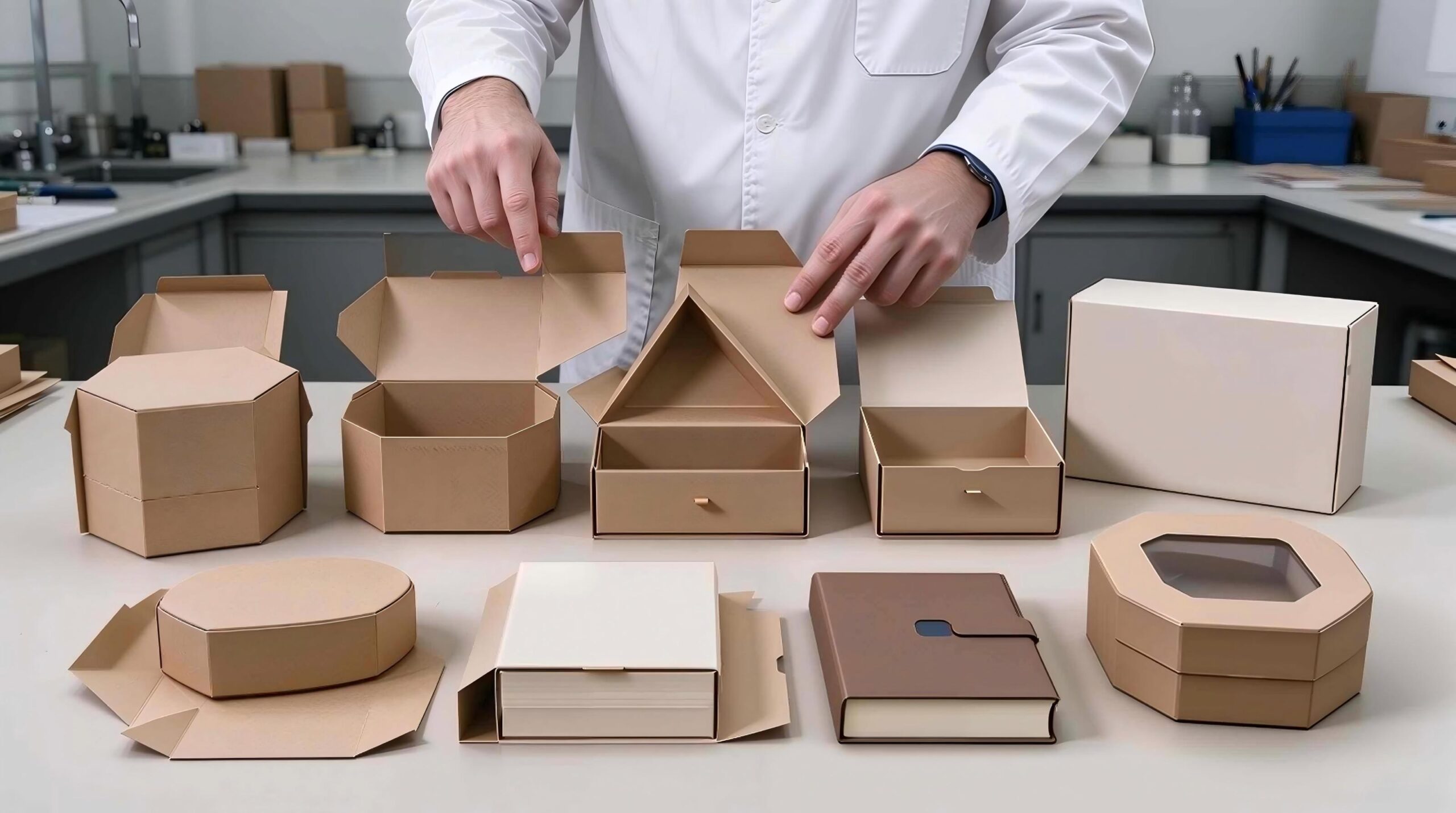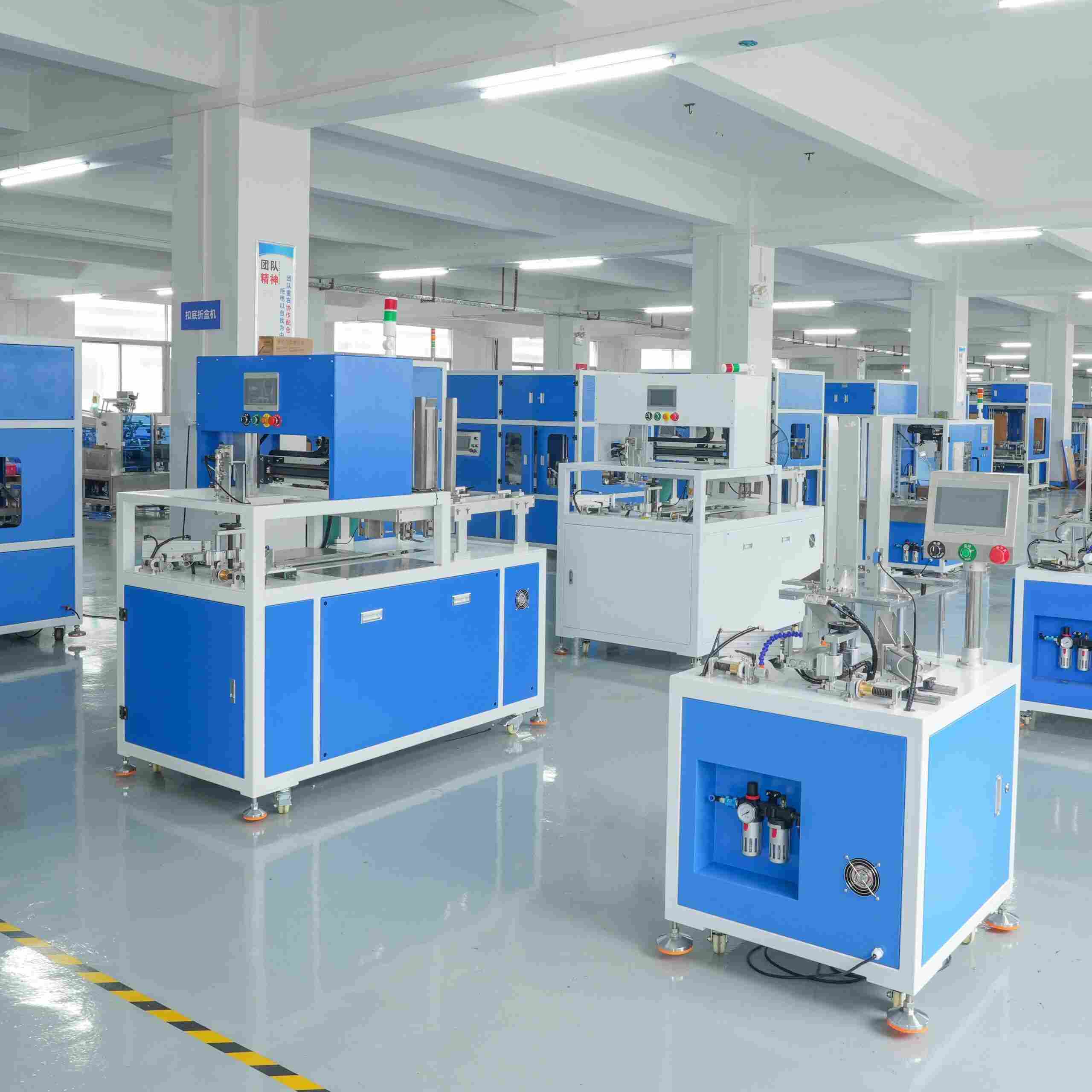
Quick answer: A blister card cartoning machine takes a card that is already made, whether that card is a blister card, a printed card or a flat insert, and loads it into a folding carton. It does not form the blister and it does not seal foil to board. The work is narrower than most buyers assume: feed the cards without doubling or scuffing them, count and orient the stack, then push or drop it into a carton that closes clean and scans clean.
Two machines get confused here, and the confusion starts before anyone sends a request. One machine makes the card, and it does the heavy work: cavity, fill, foil seal, print, die-cut. A different machine packs the finished card away, and that one is the cartoner. When buyers search for it, they use the phrase blister card cartoning machine. That cartoner is the subject here, because mixing the two is the single most expensive assumption in carded-pack projects.
That narrow scope is the point. Plenty of pages describe how a blister is formed and sealed to the card. Far fewer explain how a flat, thin, coated card survives the trip from a magazine into a retail carton. So stay with the cartoning step. Feed, singulate, count, orient, load, close, verify.
A carded pack looks effortless on a pharmacy shelf or a club-store end cap. Getting a clean stack of printed cards into a crisp carton at production speed is not effortless at all, and the reasons are mostly about the card itself.
What a blister card cartoning machine does, and what it does not
Start with the boundary, because carded-pack buyers routinely specify the wrong machine by assuming this one does more than it can.
What it does: singulate cards from a magazine, count and collate them, orient each one, load the group into an erected carton, add a leaflet where needed, close and seal, then print and verify the code. Some configurations also reject a bad carton before it leaves the line.
What it does not do: form the blister cavity, dispense product onto the card, run the foil seal, or die-cut the card. If your product still needs to be placed and sealed, that happens upstream on a separate line, and your cartons only ever meet cards that already exist. This is the line between carded-pack cartoning and blister forming, and it is not a blurry one once you name it.
There is a quiet upside to the narrower job. Built for cards, the machine is still a cartoner, and on many carded-pack lines the same platform also runs flat leaflets, folded inserts and small flat sachets. Those formats share the traits that matter here: thin, light, flat, and countable. It does not mind that the printed card came off a blister line. It cares about thickness, stiffness, coating and count.
Running cards, leaflets and flat inserts on one platform? Send us your card dimensions, grammage and count per carton, and our engineers will confirm the horizontal end-load cartoner build that fits your formats.
The three hard parts of carded-pack work
Almost every carded-pack headache traces back to one of three areas, and none of them is the carton. The carton is the easy part. The card is where projects stall.
Feeding and singulating thin cards
Thin stock is the enemy of a clean feed, and carded packs run thin by design. A card is stiff enough to hold a product but light enough that a magazine can double-feed it, scuff it, or let static glue two together.
Three things decide how clean that feed is. Surface is one: coated and varnished cards slip against each other, so friction between cards is low and friction against the feed belt has to do more work. Thickness tolerance is another. If a supplier ships one lot at 0.35 mm and the next at 0.42 mm, a magazine set for the first will miss the second. Then there is static, which catches the people who forget the season. In a dry plant in winter, static charge can lift a card and pull a second one with it, or make shingles cling.
Feed systems answer this in different ways: friction feed, suction cups, or a combination. Suction handles coated and irregular cards well because it grips rather than rubs, but it needs the card surface to be flat and consistent. If your card stock varies lot to lot, no feed system will fully hide it. That is why the card specification belongs in the conversation before a blister card cartoning machine is quoted.
Static is the seasonal trap. One carded-pack line in a heated warehouse sees double-feeds return every February as the air dries out, and a small humidifier near the infeed does more for it than any magazine adjustment. When the same job runs clean in July and doubles in winter, check the air before you touch the tooling.
Counting, stacking and orientation
Once a card feeds cleanly, the next question is what the carton should receive. One card or several? Stacked flat or shingled? Card face up, or facing the carton window?
Orientation is where carded packs differ most from other flat work. A card usually has a right way up: the printed face a shopper sees, the hang hole a pegboard uses, the barcode a scanner reads. On a blister card the product faces one way and the graphics face the other, so a pack that goes into the carton back-to-front shows the wrong side through a display window. The machine holds that orientation in the loading channel, which sets the facing by tooling rather than by the operator’s eye.
Counting matters just as much when a pack carries several cards. A two-pack or a club-store multi-pack has to hold the exact count, and an extra card is a giveaway while a missing card is a short-ship. Both are found late, which makes both expensive. Design the count check into the loading step rather than trusting a glance at speed.
Living with leaflets, barcodes and serialization
Carded packs rarely travel alone. A pharmacy carton usually carries a leaflet, and a regulated carton carries a code that has to be printed, read and, on some lines, serialized.
A leaflet insert adds a second thin item to the same carton, and it has its own feed and verification. If the leaflet is missing, the pack is defective even when the card is perfect. Treat the leaflet feeder as a real machine, not an afterthought.
For codes, the blister card cartoning machine must print, verify and reject. If a code is unreadable or mismatched, the carton should leave the line before it ships. Where a carded pack sits on a regulated line, the correct language is care, not overclaim: a machine can support compliance, and it can be built GMP-ready with controls that are 21 CFR Part 11-ready, but no cartoner is itself certified. We cover that distinction in detail in our guide to regulated carton inspection.
End-load or top-load: how cards go in
Loading style decides the machine, and for carded packs the answer is usually end-load.
An end-load cartoner erects a carton with an open end, pushes the card group in horizontally, then closes and seals the flaps. It suits flat, rigid-ish items because a straight push keeps a stack square. Most carded packs, blister cards included, run on a blister card cartoning machine built for end-load.
Top-load offers another option. The carton is erected open-top, product drops in from above, and the machine closes the top. Top-load can suit display cartons and heavier single items, but a loose stack of thin cards dropped from above tends to shift. A shifted stack produces a carton that will not close squarely.
So the first loading question is not which is faster. It is which keeps your card group in shape from magazine to seal. For a card that must present its printed face to a window, end-load with a controlled push is the safer default. If the carton has to double as a display and the cards must sit upright, that is a different brief, and it is worth walking through with the blister card cartoning machine supplier before tooling is cut.
Changeover when card size or count changes
Carded-pack programs rarely stay still. A brand adds a two-pack, switches a card from one size to another, or runs the same carton for two products on different days.
That variation lives in the format parts: the magazine, the feed and count tooling, the loading channel, and the carton-size guide. Changeover is the time to swap and re-dial those parts until the first good carton comes off, counted from the last good carton of the previous run.
The practical rule is to buy for the range you will run within a couple of years, not just today’s card. Sized for one card and one count, it is cheap to build and painful to grow. A machine with adjustable guides and quick-release format parts costs more up front and returns that cost the first time marketing adds a SKU. Ask a supplier to demonstrate changeover on your own card sizes, at your own count, before you accept a minute figure.
Handing off to case packing
A carded-pack cartoner is rarely the end of the line. Cartons usually move next into a case packer, and the join between the two is where good cartoning gets undone.
Three things have to line up at the handoff. The discharge orientation must match what the case packer expects, so cartons arrive in the right facing and grouping. The cadence must match, because a fast cartoner feeding a slow case packer simply backs up. And the control logic must agree on what happens when something stops. A cartoner that keeps pushing cartons into a stalled case packer turns a small stoppage into a jam.
This is the same handoff problem that runs up and down a packaging line, and it is worth settling on paper before either machine is ordered. We cover the interface and the handshake signals in our guide to the cartoner-to-case-packer handoff. For the stage after that, where cartons become shippers, see our overview of downstream case packing.
Quality checks that decide a blister card cartoning machine’s rejects
Every carded-pack line needs a short list of checks, and each one should remove the bad carton rather than flag it for a person to catch later.
The core four: present card, correct count, correct face, readable code. Miss any of them and the carton should not leave the line.
A missing card is a short pack, and a short pack that ships becomes a claim. A wrong count is a giveaway on one side and a stock-out on the other. Then there is the face. If it is mirrored, a shopper sees the wrong side of the pack through the window. An unreadable code fails at the register, or later, at an audit. The order is not the point; the removal is.
Reject design matters as much as detection. A passive reject that relies on gravity can leave a defective carton in the stream on a fast line. A positive reject, one that actively diverts and confirms the carton left, is what you want on anything regulated or high value.
Then test the reject with real defects. It is common to find a reject station that passes a factory test and then misses a genuine double-feed because the sensor was set for a clean gap. Ask for the reject logic on paper, and watch a blister card cartoning machine catch an actual bad card before you sign.
Common mistakes when buying carded-pack equipment
The same three or four errors show up again and again, and each one is avoidable with a question asked early.
The most expensive one is specifying a cartoner as if it were a blister machine. If you need the cavity formed and the foil sealed, that is upstream, and no blister card cartoning machine will do it.
Card tolerance is the next to bite. If the supplier never sees your real card, they will size the magazine to a nominal thickness that your next lot will miss. Send actual cards, from more than one lot and more than one supplier if you use several.
Leaflets get forgotten just as often. A carded pack with a leaflet is two feeds, two verifications and two reject paths, so pricing a line on cards alone undercounts the work.
Compliance is the one buyers treat as a sticker. If your carded packs sit on a regulated line, the machine and its documentation have to support your process: materials that clean down, records an auditor can follow, and controls built for electronic records where that applies. Frameworks such as ISO 9001:2015 for supplier quality, and 21 CFR Part 11 alongside EU Annex 11 for electronic records, describe the environment a machine has to fit. They certify a facility and a process, never a machine. Reference them, ask the supplier to support them, and do not let anyone sell you a “compliant” cartoner as if the word lived on the machine. The broader safety and integration expectations for packaging equipment are the territory of PMMI, the Association for Packaging and Processing Technologies.
Specifying a blister card cartoning machine for carded packs
When you write the brief, put numbers next to every claim a supplier makes. A carded-pack specification earns its keep when it is measurable.
Ask for these in writing:
- Card sample set: thickness range, grammage, coating, and cards from each of your lots.
- Count and orientation: cards per carton, stack or shingle, and the required facing.
- Infeed and load: feed type, end-load channel width, and how the stack is kept square.
- Leaflet handling, if used, with its own feed and verification described.
- Code and reject: print, verify, positive reject, and where the reject is logged.
- Changeover: format parts, range covered, and changeover timed on your cards.
- Handoff: discharge orientation, cadence and control interface for the case packer.
- Documentation: material certificates, drawings and control descriptions, agreed before the order.
Then run the machine on your cards, at your count, before you accept it. Speed on a spec sheet is a ceiling. Net output on your card, with your rejects, is the number that actually pays. A blister card cartoning machine earns its price on your card, not on a brochure.
Here is where carded packs surprise people. A card looks like the easiest thing on a packaging line, and it is the item least forgiving of a magazine set to a nominal size.
A pharmacy brand ran the same carton for two blister-card products and kept seeing wrong-face rejects on one of them. The blister card cartoning machine was fine. The card stock came from two suppliers, and the coated side ran the opposite way on one, so a stack that looked identical fed face-down. Matching the two lots, and marking the coated face on the incoming pallet, cleared the fault. A grammage check would not have caught it. A coated-face check did.
The part that actually decides the project
Carded-pack cartoning is not hard because the carton is complex. It is hard because thin, coated, graphically printed cards carry their own rules, and those rules live in the feed, the count, the orientation and the verification, not in the box.
Get the boundary right first: a blister card cartoning machine packs cards, it does not make them. Then treat the card as a real input, with a tolerance and a face and a count a supplier can size a machine around. Match the load style to the card group. Time the changeover on your own formats. And settle the handoff to the case packer before you buy, because a clean cartoner feeding a mismatched case packer still stops the line.
Ready to price a carded-pack line around your card, not a generic one? Send your card samples, count per carton and carton style, and our engineers will come back with a horizontal end-load cartoner configuration and the changeover range it covers, so the quote reflects what you actually run.
None of this needs a blister machine. It needs a cartoner sized to a card, and a buyer who knows the difference between a blister card cartoning machine and the line that makes the card.