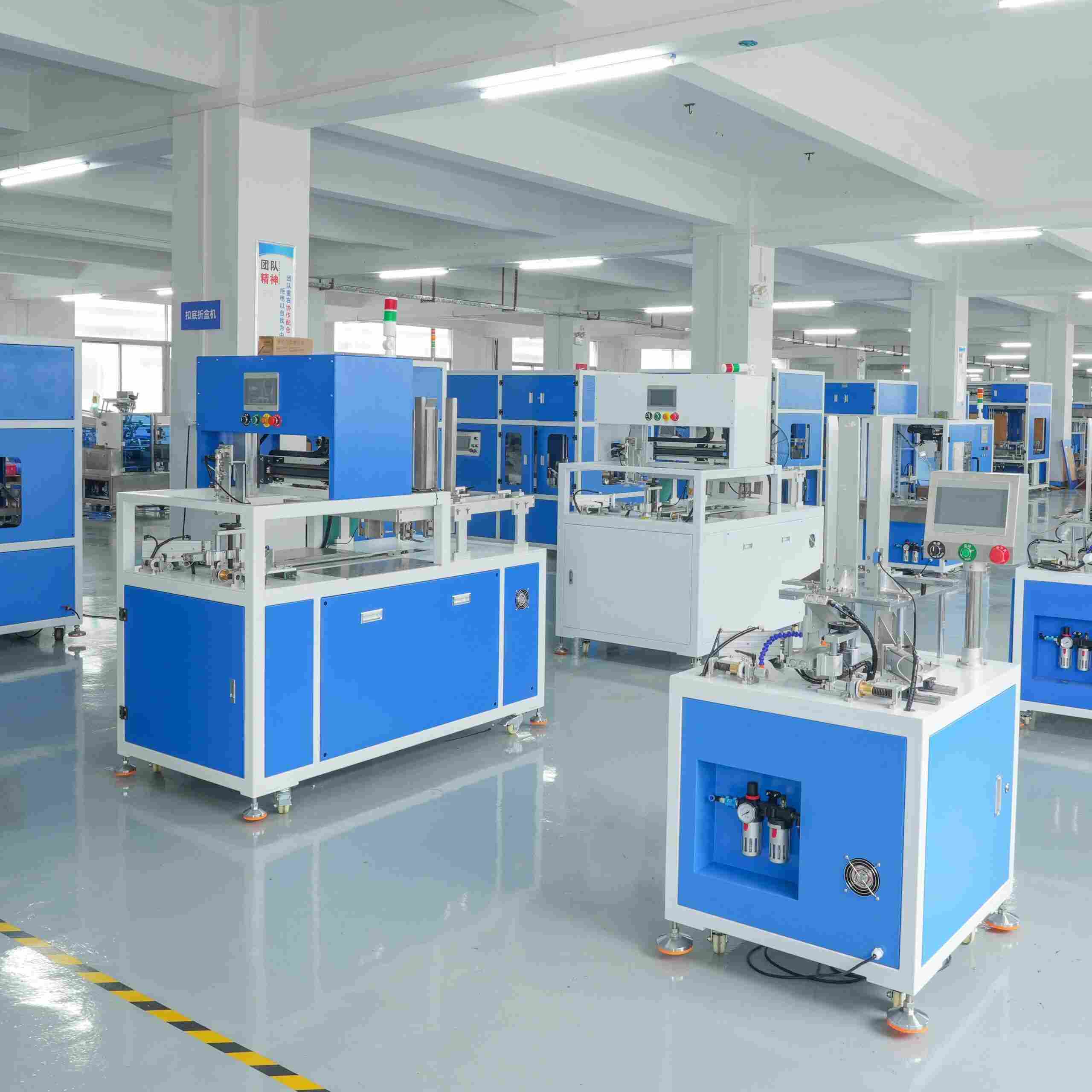
Carton erector cost is decided less by brand than by five structural choices: how the machine is driven, how wide a range of blanks it handles, how it seals the bottom, how its controls and safety systems are built, and how much compliance and structural margin you ask for. Paint, logo and color scheme barely move the number.
Two carton erectors can stand on the same packaging line, form the same box at the same rate, and still arrive with quotes that differ by two, three, or even four times. The reason is almost never the name welded onto the frame. It sits in the configuration behind the price, and that is something a buyer can learn to read.
No price table follows, and that is deliberate. A number without a configuration attached is close to meaningless. The same machine built for Ohio and for Guangdong can carry very different figures once compliance, voltage and support enter the room.
What follows instead is the structure behind the number: the levers that move carton erector cost, the upgrades that earn their money back, the ones that usually do not, and a simple way to line two quotes up so the cheaper one stops looking cheaper.
Why carton erector cost varies so wildly between look-alike machines
At any packaging exhibition the erectors start to blur together. Steel frame, a blank magazine, a forming section, a tape head. From ten feet away, a machine that forms 12 cases a minute looks a lot like one that forms 45.
The differences live inside. One unit might use mechanical cams driven by a single motor, so every motion is fixed by the shape of the cam. Another uses independent servo axes, so timing is set in software and can change whenever your box does. Both are honest machines, built to answer different questions.
This is where most carton erector cost confusion begins. A spec sheet that lists “speed” without saying how that speed is produced, or “size range” without saying how changeover happens, invites apples-to-oranges quotes. Two look-alike numbers can describe very different machines, and that gap is the number that matters.
One procurement lead gathered three quotes for the same 20-cases-per-minute job. The lowest bid looked like a gift, roughly a third under the next offer. What it left out was a manual changeover that took the crew the better part of an hour, and a fixed blank window that fit only two of the four SKUs. Within a year the machine was the bottleneck, and the “savings” had been eaten by overtime. The lead compared numbers when the real question was configurations.
Five structural switches that actually move carton erector cost
Understand a quote and you understand the machine. Almost every meaningful difference between two bids, and most of the spread in carton erector cost, traces back to one of these five levers.
Speed tier: servo axes versus mechanical cams
The first lever is how motion is produced. A cam-driven erector ties every action to a machined profile, which is durable, simple and cheap to build. A servo-driven erector gives each axis its own motor and its own motion profile, which adds cost at every joint but unlocks flexibility a fixed cam cannot offer.
More servos does not automatically mean a better machine. It means a more adaptable one. If your box never changes, a cam machine can be the smarter buy. If your box changes monthly, servos start to justify themselves. Ask any supplier to separate the two: how much of the quoted carton erector cost comes from mechanics, and how much from software.

Blank size range and the changeover system
Bigger costs more. A machine sized for a large blank needs a longer frame, longer strokes and heavier components, and each adds to the price. Range costs more than raw size too. A machine that must handle both a small retail carton and a large shipping case fights its own design, so it pays for extra travel and clearance everywhere.
The changeover system is often a bigger carton erector cost driver than top speed, and buyers underweight it most. A crank-and-scale setup saves money at purchase and spends it every week. Recipe-driven servo changeover costs more up front and returns it through shorter stops. Which one wins depends on how often you really switch, so be honest about your actual changeover frequency rather than the one on your wishlist. If your box sizes sit in a tight cluster, sanity-check the whole machine against the output you truly need; this guide on matching a machine to your volume walks through that sizing logic. And if your box range includes non-standard shapes, shaped carton tooling becomes its own cost line.
Bottom sealing: tape, hot melt, or cold glue
How the machine closes the bottom changes both the purchase price and the running cost. Tape sealing is the simplest and least expensive to build. It adds a tape head, and that is roughly it.
Hot melt is a different animal. You add a glue system, nozzles, a heated tank, temperature controls and a maintenance routine around all of it. Cold glue sits between the two in both cost and temperament. None is better on paper. The right choice follows your box, your climate and your customers’ expectations, and each option shifts carton erector cost in a different direction. A hot melt head that keeps clogging in a humid plant is an expensive upgrade, no matter how good it looked in a brochure.
Want to see how these options map to your own box? Review the carton erector configurations we build, then bring your blank samples to the conversation.
Controls and interlocks
Controls are where spec creep quietly raises the price. A basic PLC with a small HMI is enough for most single-box operations. Add a named-brand controller, Ethernet communication, a safety relay or safety PLC, recipe storage, data logging and remote diagnostics, and you have added real cost in components, engineering and future support.
None of that is waste. It is optional. The question is whether your plant will use it. A controls package that supports OEE reporting and remote support can pay for itself across several lines. The same package on a single standalone machine, watched by one operator, often just adds parts that can fail.
Frame, finish and compliance
The last lever is the least glamorous and one of the most expensive: steel. Heavier-gauge frames, stainless construction for wet environments, and UL or CE-rated electrical components all push the number up. If your plant runs dry goods in a controlled room, a painted mild-steel frame and standard components will serve you for years.
Compliance is its own line item, and it is drawing more attention. For machines placed on the EU market, the Machinery Regulation (EU) 2023/1230 is set to replace the current Machinery Directive 2006/42/EC, with mandatory application from January 2027. Buyers ordering today for European deployment should plan for that transition now rather than retrofit later. On the quality side, a supplier’s ISO 9001:2015 certification says something useful about how consistently the machine will be built, even though it is not a statement about the machine itself.
Upgrades that earn their money back
Not every expensive option is a luxury. Some quietly pay for themselves within a year or two, and a few are close to essential once you run the arithmetic. That is the payback test to apply to any carton erector cost line.
- Servo-driven changeover, if you run more than a handful of SKUs. The premium is real, but so is the labor it removes from every switch.
- Recipe storage and a clear HMI, because they turn changeover from a skill the whole crew must memorize into a task anyone can repeat.
- Interface readiness, meaning the I/O and communication hooks to connect with a downstream case packer or sealer later. Cheaper to add at the factory than to retrofit in the field.
- Wear-resistant forming components where the machine takes the most abuse. The parts you replace most often are the ones worth upgrading once.
- Basic monitoring, such as vacuum or jam sensing, that turns a surprise stoppage into a warning you can act on.
Each of these removes a recurring cost or a recurring headache. That is why they pay back.

Upgrades most factories can skip
Then there is the other list, the options that look impressive, inflate carton erector cost and rarely return anything.
A plant in the dry snacks business learned this the expensive way. They moved up to a machine rated near 40 cases a minute, only to find their upstream filler ran at barely half that. The erector spent its days waiting. The premium they paid for speed bought them a larger footprint, a pricier maintenance schedule and nothing else. Speed you cannot feed is not capacity. It is decoration.
The same logic applies to a few common extras:
- Top speed beyond your upstream feed rate. Match the erector to your slowest upstream stage, not to a number you admire.
- Full washdown stainless in a dry, controlled room. You are paying for water resistance you will never need.
- Vision inspection at the erector stage when your defects actually appear downstream. Put inspection where the problem is.
- Deep recipe libraries with dozens of slots when you run three boxes. You will use three.
- Automated magazine loading on a machine that one operator already keeps fed without strain.
None of these are bad engineering. They are answers to problems you may not have.
The lifecycle costs that live outside the quote
Purchase price is only the first carton erector cost you will meet. The figure that decides whether the machine was a good buy is the cost of running it, and that one is easy to underestimate.
Four categories do most of the damage. Consumables, which include tape and glue and rise with every case you seal. Wear parts, from suction cups to belts to cutters, which have a rhythm you can predict once you track it. Maintenance labor, scheduled and unplanned. And downtime, the quiet giant, because an hour of a stopped line usually costs far more than the parts behind the stop.
Spare parts availability belongs here too. A machine from a supplier with slow, expensive spares sits idle longer than it should, and no purchase discount survives that for long. This is the wider idea behind total landed cost beyond the quote, which we cover at full-line scale elsewhere; for a single erector, the same thinking applies at a smaller size. Analyses from organizations such as PMMI and Smithers reach a similar conclusion for packaging machinery generally: the acquisition price is a fraction of the lifetime figure, and buyers who ignore that fraction tend to overpay in the end.
Comparing two quotes with cost per carton
The cleanest way to compare the carton erector cost of two machines is to stop comparing their prices and start comparing their cost per carton. You do not need exact figures. You need a cost breakdown for both bids.
Add up these items, in whatever currency and units you prefer:
- The machine price, spread across the cases you expect to run through it.
- Annual consumables: tape, glue, or both.
- Annual wear parts, based on realistic replacement intervals.
- Annual maintenance labor, scheduled and unplanned.
- Changeover labor: how many switches per week, times the time each one takes.
- Downtime cost: your hourly line loss, times expected stopped hours.
Divide the total by annual cartons produced, and you have a number you can compare directly. Fill it in with both quotes and the picture usually shifts, often toward the machine that looked pricier at the start. Some of these terms are estimates, of course. That is exactly why you should nail them down before you pay, using a structured round of acceptance testing to confirm that speed, changeover and stability match what the quote implied.
Ready to run your own numbers? Send us your blank sizes, weekly output and box count, and we will help you compare two configurations line by line.
The low-price trap
When one quote comes in well under the others, the gap is rarely a gift. It is usually a set of costs left off the page.
One buyer signed for the lowest of four bids and thought the deal was behind him. Then came the air compressor upgrade, a retrofit to match his existing case packer, and a spare-parts quote that made his eyes water. The total crept past the second-lowest bid within months.
Watch for the same pattern. Interface modifications the supplier never scoped. Utilities such as compressed air and power your plant may need to upgrade. Spare parts priced at whatever the market will bear, plus commissioning and training if they are not in the number. Each one raises the true carton erector cost and can turn a bargain into an average deal. And if the machine crosses a border, duty classification is not universal; treat the tariff code as subject to destination customs ruling rather than a fixed constant.
A final test is simple. Ask the supplier what is not included, and listen carefully to the pause. The answer tells you more about carton erector cost than the headline figure ever will.
What actually deserves your money
Carton erector cost is not a single number. It is a set of tradeoffs, and the best buyers are the ones who know which tradeoffs belong to them.
Pay for the capabilities your production will use: the speed you can feed, the changeover you perform, the controls you will maintain, and the spare parts support you cannot do without. Skip the rest with a clear conscience. The most expensive machine is rarely the one with the longest option list. It is the one whose real running cost nobody added up before signing.
If you are weighing two configurations and want a straight conversation about which levers matter for your box mix, reach out to our team with your own samples in hand. A short discussion about your output target and SKU count will settle most of the guesswork before you commit a cent.