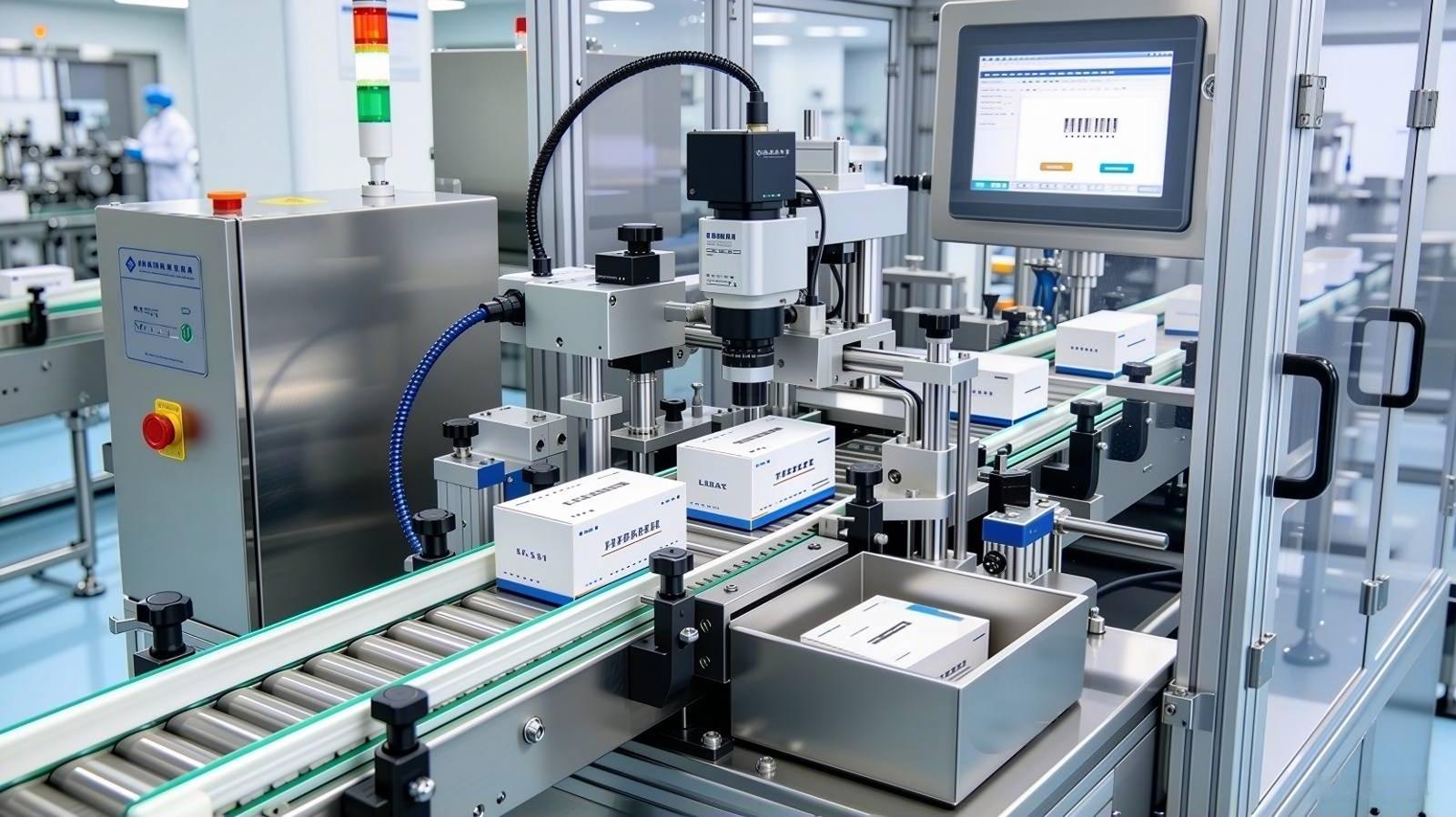
The most common cause of moisture-related filament failures is not the bag material, the seal quality, or the shipping route. It is a missing desiccant packet — one that was never placed, placed incorrectly, or placed at the wrong quantity for the spool weight and transit duration. Desiccant for filament packaging is the last active defense inside the sealed bag, and it is the variable most often treated as an afterthought. This article covers the three main desiccant types used in filament packaging, how to match desiccant quantity to filament material and transit time, and how automated desiccant dispensing on the bagging line eliminates the human-error failure modes that drive moisture-related returns.
Why the Desiccant Inside the Bag Is More Important Than You Think
What the Desiccant Is Actually Doing
A vacuum-sealed bag removes the bulk of the air — and with it, the bulk of the moisture — at the moment of sealing. But two residual moisture sources remain inside the sealed bag after evacuation: moisture already absorbed by the filament before it was packaged, and moisture that permeates slowly through the bag film over the weeks or months of transit and storage. The desiccant inside the bag addresses both. It absorbs residual moisture from the filament surface and the trapped air at seal time, and it continues absorbing permeation moisture throughout the product’s shelf life. A bag sealed at -0.08 MPa with no desiccant is a low-oxygen environment. A bag sealed at the same vacuum level with the correct desiccant is a low-oxygen, low-humidity environment — which is what actually protects hygroscopic filament materials.
The Hygroscopicity Ranking That Determines Your Desiccant Requirement
Not all filament materials require the same level of moisture protection, and the desiccant specification should reflect the material’s actual hygroscopic behavior:
| Filament Material | Moisture Absorption Rate | Risk Level | Desiccant Priority |
|---|---|---|---|
| PVA | Water-soluble, extreme | Critical | Maximum — molecular sieve required |
| Nylon (PA6, PA12) | 3–5% by weight | High | High — molecular sieve or high-grade silica gel |
| TPU / Flexible | Moderate, surface-sensitive | Medium-High | High — silica gel or molecular sieve |
| ABS / ASA | 1–2% by weight | Medium | Standard — silica gel sufficient |
| PETG | 0.1–0.5% by weight | Low-Medium | Standard — silica gel sufficient |
| PLA | 1.5–2.5% by weight | Low-Medium | Standard — silica gel sufficient for most routes |
The practical implication: a manufacturer producing PLA for domestic 3-day transit may ship confidently with standard silica gel packets. The same manufacturer producing nylon filament for 40-day ocean transit to Florida warehouses needs a different specification — both in desiccant type and in bag material. The desiccant does not compensate for a weak bag; the bag does not compensate for insufficient desiccant. They work as a system.
The Three Desiccant Types Used in Filament Packaging
Silica Gel — The Standard Choice
Silica gel is the most widely used desiccant in consumer and industrial packaging globally, and it is the default choice for most 3D printing filament manufacturers. It absorbs moisture through physical adsorption, is non-toxic, and is available in a wide range of packet sizes and formats compatible with automated dispensing equipment. Indicating silica gel — which changes color from orange to green (or blue to pink, depending on formulation) as it becomes saturated — is the preferred specification for filament packaging because it provides a visual confirmation of moisture exposure to the end customer when they open the bag. Standard silica gel is effective across a humidity range from roughly 20% to 90% RH and works well for PLA, PETG, and ABS packaging on transit routes up to approximately 30–40 days.
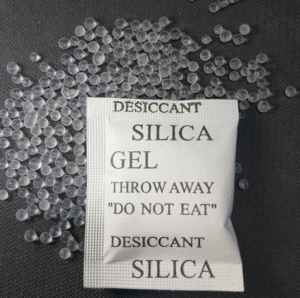
Molecular Sieve — The High-Performance Option
Molecular sieve (zeolite) operates at a fundamentally different mechanism from silica gel: it traps water molecules inside a crystalline lattice structure with pore sizes of 3–4 Angstroms, achieving moisture levels far below what silica gel can reach. Where silica gel equilibrates at roughly 20–30% relative humidity inside a sealed bag, molecular sieve can drive the internal environment below 10% RH — which is the target specification for nylon, PVA, and specialty composite filaments. Molecular sieve is significantly more expensive per gram than silica gel and is less commonly available in the small packet formats used in standard dispensing equipment. For most PLA and PETG manufacturers, it is unnecessary; for nylon and PVA producers targeting demanding markets, it is the correct specification.
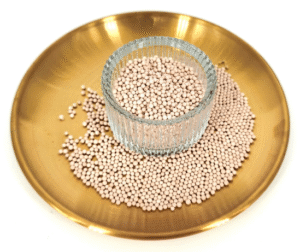
Clay Desiccant — The Cost-Optimized Alternative
Activated clay (montmorillonite) desiccant is widely used in lower-cost packaging applications and is sometimes specified by filament manufacturers on price-sensitive SKUs. Clay desiccant performs well in the 25–50°C temperature range but loses effectiveness above 50°C — which can be a concern for shipments routed through high-temperature transit environments such as Southeast Asian ports in summer. It is also less effective than silica gel at very low temperatures. For most Chinese manufacturers shipping to temperate markets via standard ocean freight, clay desiccant is acceptable for PLA and PETG; it is not recommended for high-hygroscopicity materials or for premium brand positioning where the end customer has quality expectations shaped by competitor packaging standards.
How Much Desiccant Per Spool — and How the Packaging Line Handles Variable Quantities
The Quantity Variables
Desiccant quantity for desiccant for filament packaging applications is not a fixed standard — it depends on four variables that each manufacturer must specify for their own product and route-to-market: spool weight (most commonly 0.5 kg, 1 kg, or 2 kg), filament material hygroscopicity, bag material moisture vapor transmission rate (MVTR), and expected transit and storage duration. As a general framework used across the industry: a standard 1 kg PLA spool shipped in a PA/PE bag on a 30-day ocean route is typically packaged with 2–5 grams of silica gel. A 1 kg nylon spool in a PET/AL/PE aluminum foil bag on the same route may require 5–10 grams of molecular sieve. A 2 kg specialty composite spool with a 60-day transit estimate may require significantly more. The specific quantity is always the customer’s specification — the packaging machine is configured to dispense whatever amount and packet format the customer requires, consistently, across every cycle.
Packet Format and Machine Compatibility
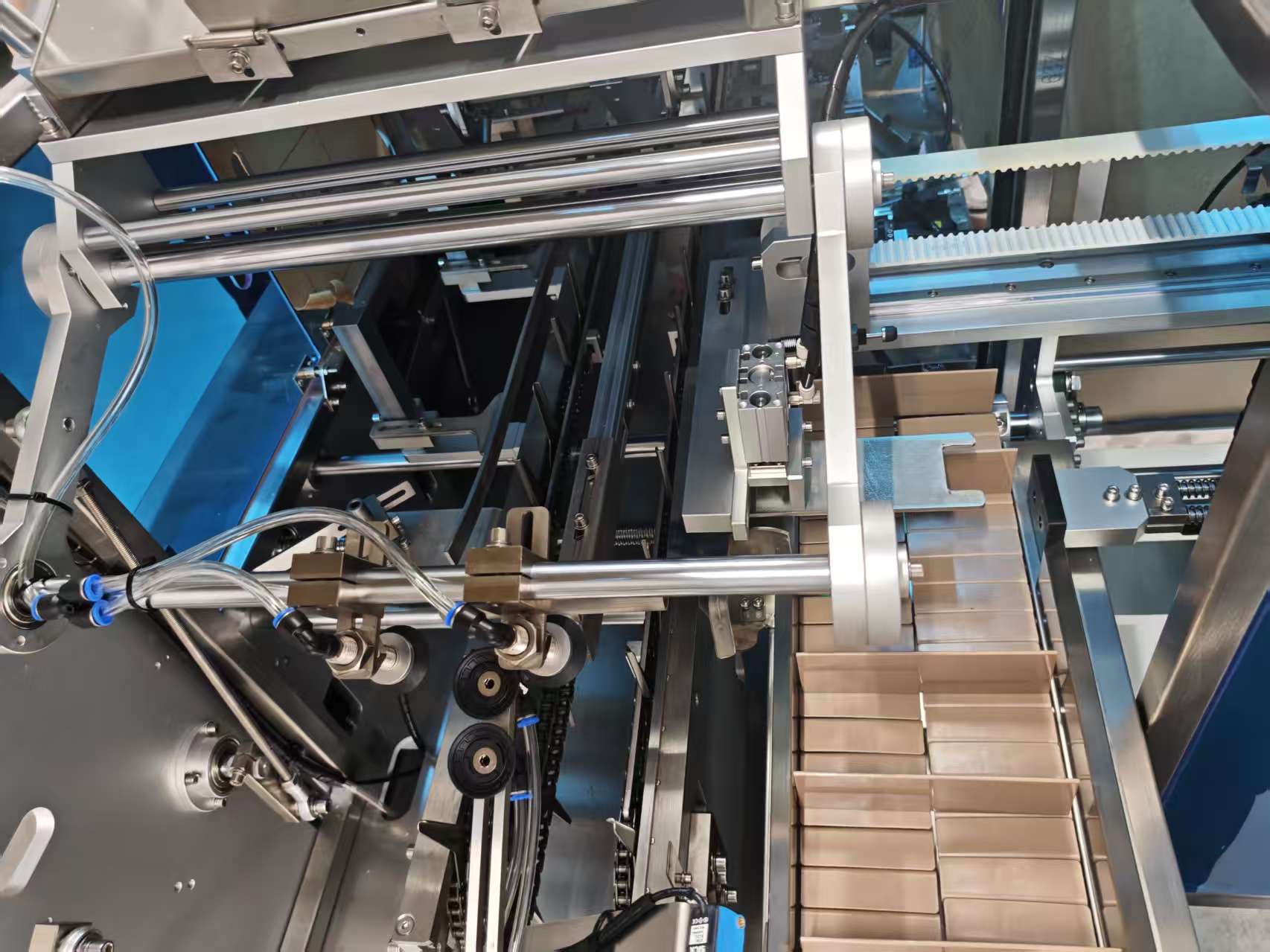
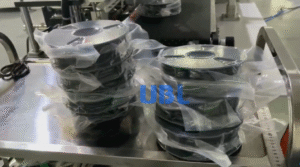
UBL’s filament bagging machines support an optional automatic desiccant dispensing module that works with standard pre-packaged desiccant formats — the card-style and pillow-pack formats in common commercial sizes. The dispensing mechanism detects each packet via electric-eye sensor and releases one unit per spool cycle. The format requirement is practical: the packets need to be stackable and feedable through the dispensing channel. Most standard silica gel and molecular sieve packet formats used in industrial packaging are compatible. Irregularly shaped or extremely small-format packets may require verification before deployment — but in practice, the formats used in filament packaging are well within the standard operating range. The operator loads the desiccant packets manually into the dispensing hopper, and the machine manages the per-unit deployment from there.
Manual vs. Automated Desiccant Insertion — What the Data Says
The Manual Insertion Failure Rate
On a high-volume filament packaging line running at 20–40 spools per minute, manual desiccant insertion is a sustained cognitive task performed repeatedly at production speed. Industry data from packaging quality audits consistently shows that manual insertion processes generate a missing-packet rate of 0.5–2% under normal production conditions — a rate that increases during shift changes, high-volume production periods, and when operators are managing multiple simultaneous tasks. For a manufacturer packaging 30,000 spools per month, a 1% miss rate means 300 spools shipped without desiccant. At a return rate amplified by ocean transit and Amazon buyer sensitivity, those 300 spools carry disproportionate downstream cost — each return triggers an FBA removal order, a review, and potential account health flags.
What Automated Dispensing Eliminates
UBL’s automatic desiccant dispensing module on the vacuum bagging line removes human insertion from the process entirely. The electric-eye sensor at the dispensing point verifies packet presence before each seal cycle. If no packet is detected — due to hopper depletion, packet misfeed, or any other cause — the machine triggers an alarm and halts the cycle. No spool moves to vacuum sealing without a confirmed desiccant packet. This is a hard interlock, not an advisory warning. The result is a verified zero-miss rate for desiccant insertion across the production run, which is a claim that manual processes cannot make regardless of operator training or supervision intensity.
Real-world reference: A filament manufacturer shipping predominantly nylon and composite filaments to North American and European distributors implemented automated desiccant dispensing as part of a broader packaging line upgrade. Prior to the upgrade, the production team estimated a missing-packet occurrence rate of approximately 1–2% based on customer return pattern analysis. Following the upgrade — which included automated desiccant dispensing, vacuum sealing at -0.08 MPa, and aluminum foil bag specification — moisture-related returns dropped by approximately 90% over the following two quarters. The desiccant automation alone was not the only contributing factor, but eliminating the missed-insertion failure mode removed one of the three root causes identified in the pre-upgrade analysis.
Desiccant Management on the Production Line
Hopper Loading and Replenishment
The desiccant dispensing hopper on UBL’s automatic filament packaging line is loaded manually by the operator — packets are poured or placed into the hopper in bulk, and the machine feeds them individually to the dispensing point. Replenishment frequency depends on two variables: the packet size specified by the customer and the production line speed. A high-speed line running 30 spools per minute will deplete a hopper of 200 packets in under seven minutes; a lower-speed line or larger-format packets will extend the replenishment interval. The practical approach is to establish a replenishment schedule based on production batch size so that the operator loads a full hopper at the start of each batch rather than responding to depletion alarms mid-run. The alarm system catches any gaps — but structured replenishment reduces interruptions.
Desiccant Freshness and Pre-packaging Storage
A detail that frequently causes quality problems on otherwise well-configured packaging lines: the desiccant packets themselves are hygroscopic and will begin absorbing ambient moisture the moment they are opened. A pallet of silica gel packets stored in an open warehouse in a humid summer environment for two weeks before use may arrive at the packaging line partially saturated — meaning the effective moisture absorption capacity inside each sealed spool bag is reduced from the outset. Desiccant should be stored in sealed containers or climate-controlled areas and should be used within the specified shelf life after the original packaging is opened. This is an operational discipline issue rather than a machine specification issue, but it directly affects the performance of the desiccant-machine combination.
Selecting the Right Desiccant Specification for Your Packaging Line
The practical selection framework for desiccant for filament packaging comes down to three questions:
- What material are you packaging? PLA and PETG support standard silica gel. Nylon, PVA, and composites require molecular sieve or premium-grade silica gel with a lower equilibrium humidity.
- What is your transit route and duration? Domestic 3-day routes allow cost optimization. 40-day ocean transit to high-humidity destinations (Florida, Southeast Asia, UK) require maximum-barrier bag + adequate desiccant specification — the desiccant has to perform for months, not days.
- What is your insertion method? Manual insertion is viable at low volumes with strict process controls. Automated dispensing with electric-eye verification is the correct specification for any line running above 10–15 spools per minute or for manufacturers where a single missed packet creates disproportionate brand or account risk.
UBL configures the desiccant dispensing module to the customer’s packet format and per-spool quantity specification. The machine does not determine the desiccant type or quantity — that decision belongs to the customer based on their material, route, and quality standard. The machine’s role is to execute that decision consistently across every cycle, with zero manual insertion errors, at production speed.
Build the Protection In Before the Container Closes
The desiccant inside a filament bag is invisible after sealing. Its absence is equally invisible — until the customer opens the package 40 days and 12,000 kilometers later. Choosing the right desiccant for filament packaging and deploying it with a verified automated system is not a detail optimization. It is the difference between a sealed bag that actively protects its contents and one that merely looks like it does. The quality of what the customer receives is determined by decisions made at the packaging line — not at the port.
UBL offers a full trial process: send your filament spool specifications, target desiccant format, and transit requirements, and UBL will configure a test run with video documentation of the dispensing and sealing cycle. For manufacturers upgrading from manual insertion to an automated filament packaging solution, standard configurations are available for next-business-day dispatch after contract signing. Contact UBL at helen@huanlianauto.com