
3D printing filament is a moisture-sensitive product. PLA, ABS, nylon, and PETG all absorb atmospheric humidity, degrading print quality and causing nozzle clogs. Once a spool is exposed to air, the clock starts ticking. This is why filament packing line design matters—not just for throughput, but for protecting product integrity from the moment the spool leaves the extruder.
This guide explains how a complete filament packaging line works, from the initial bagging station through vacuum sealing, desiccant insertion, and final carton packing. We’ll also cover a real-world semi-automatic configuration that balances automation with operator flexibility—an approach that works particularly well for manufacturers transitioning from manual packing.
Why Filament Packaging Requires a Dedicated Production Line
Standard packaging equipment isn’t designed for filament spools. The cylindrical shape, varying diameters (typically 160mm to 200mm for 1kg spools, larger for 2kg and 5kg), and the critical requirement for moisture barrier protection create unique constraints.
The Moisture Problem
Most engineering-grade filaments should maintain moisture content below 0.02% by weight. At 0.1% moisture, print defects become visible. At 0.5%, the filament is effectively unusable for precision applications. This means packaging can’t be an afterthought—it must be engineered into the production process.
Throughput Requirements
A small filament manufacturer might produce 500–1,000 spools per day. A mid-size operation runs 3,000–5,000. Large-scale producers exceed 10,000. Manual packing at these volumes becomes a bottleneck and a quality risk. Inconsistent vacuum levels, missed desiccant packets, and poorly sealed bags all increase return rates and damage brand reputation.
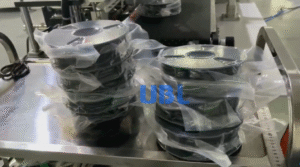
Standard Filament Packing Line Configuration
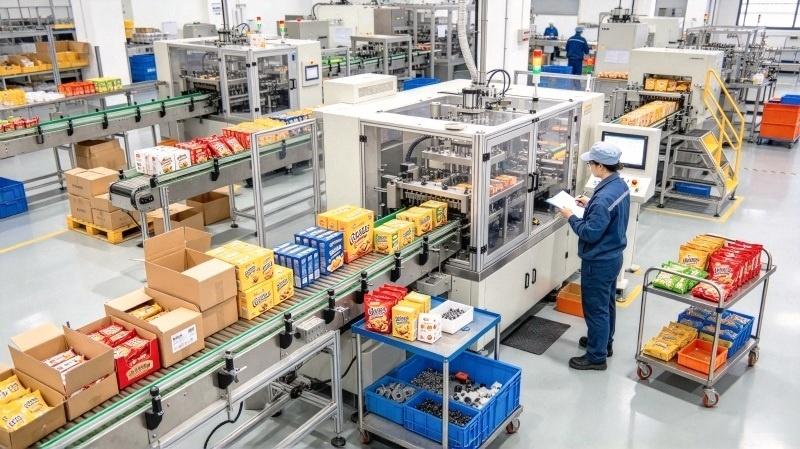
A complete filament packing line typically includes these stations in sequence:
Station 1: Spool Infeed
Spools arrive from the extrusion and winding process. In fully automatic configurations, a conveyor or robotic system feeds spools to the bagging station. In semi-automatic setups, an operator places each spool into the loading position—still far faster than manual bagging, but with lower capital investment.
Station 2: Bagging
The spool enters a pre-formed bag or the machine forms a bag from roll stock. For filament, multi-layer barrier film is standard—typically aluminum foil laminated with polyethylene or nylon/PE structures that provide both moisture and oxygen barriers. Learn more about bagging machine options.
Station 3: Desiccant Insertion
Silica gel or molecular sieve packets are automatically dispensed into each bag. The quantity depends on spool size and target shelf life—typically 5–10 grams for a 1kg spool, scaled up for larger formats. The desiccant must be inserted before vacuum sealing to ensure it can absorb residual moisture in the headspace.
Station 4: Vacuum Sealing
This is the critical station. The bagged spool enters a vacuum chamber where air is evacuated to a specified vacuum level, then the bag is heat-sealed while still under vacuum. Vacuum sealing specifications and moisture protection.
Station 5: Conveying and Inspection
Sealed spools exit on a conveyor for visual inspection and accumulation before secondary packaging. Some lines include automated leak detection—rejecting bags that fail to hold vacuum.
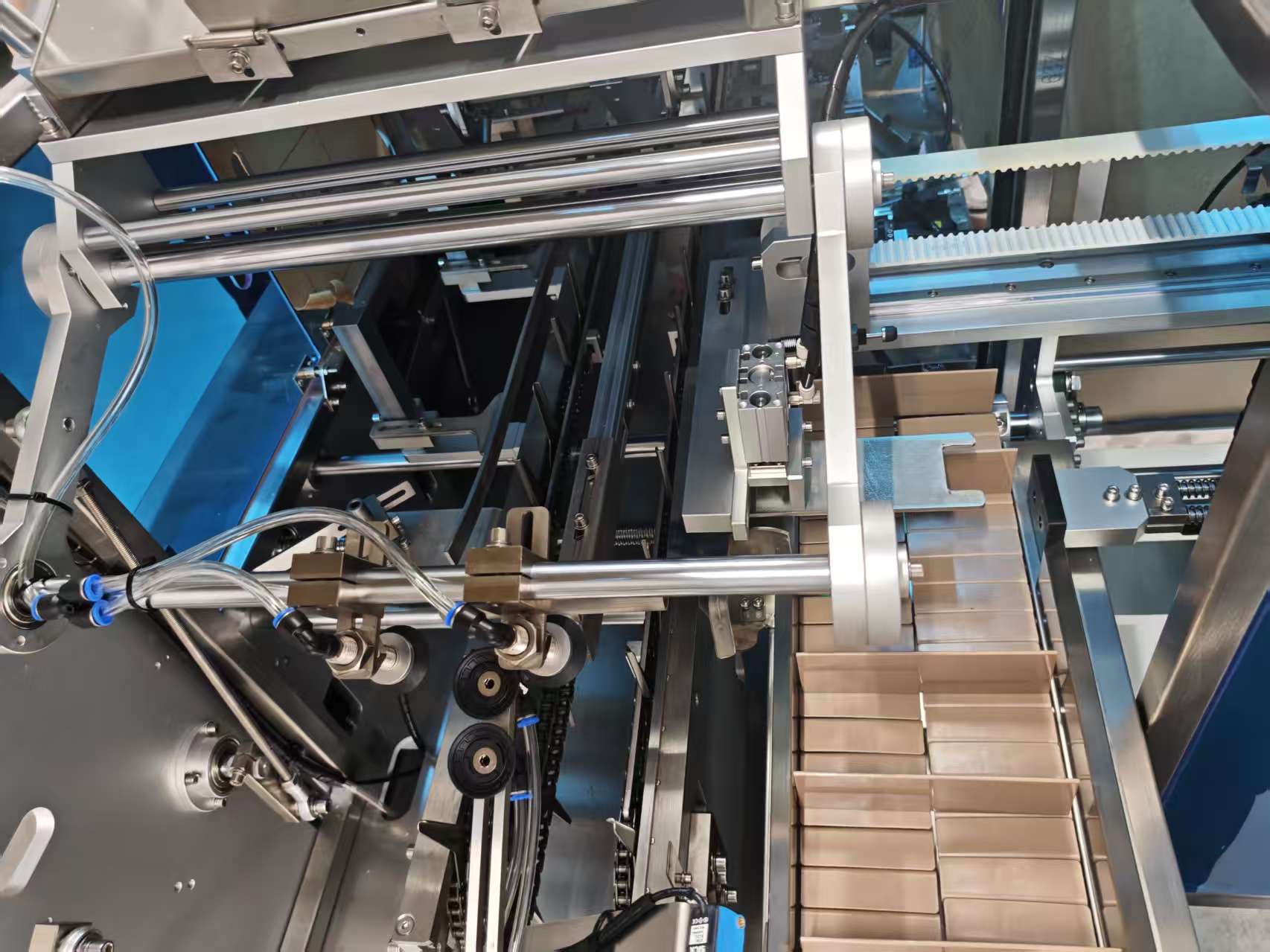
Station 6: Secondary Packaging (Cartoning/Case Packing)
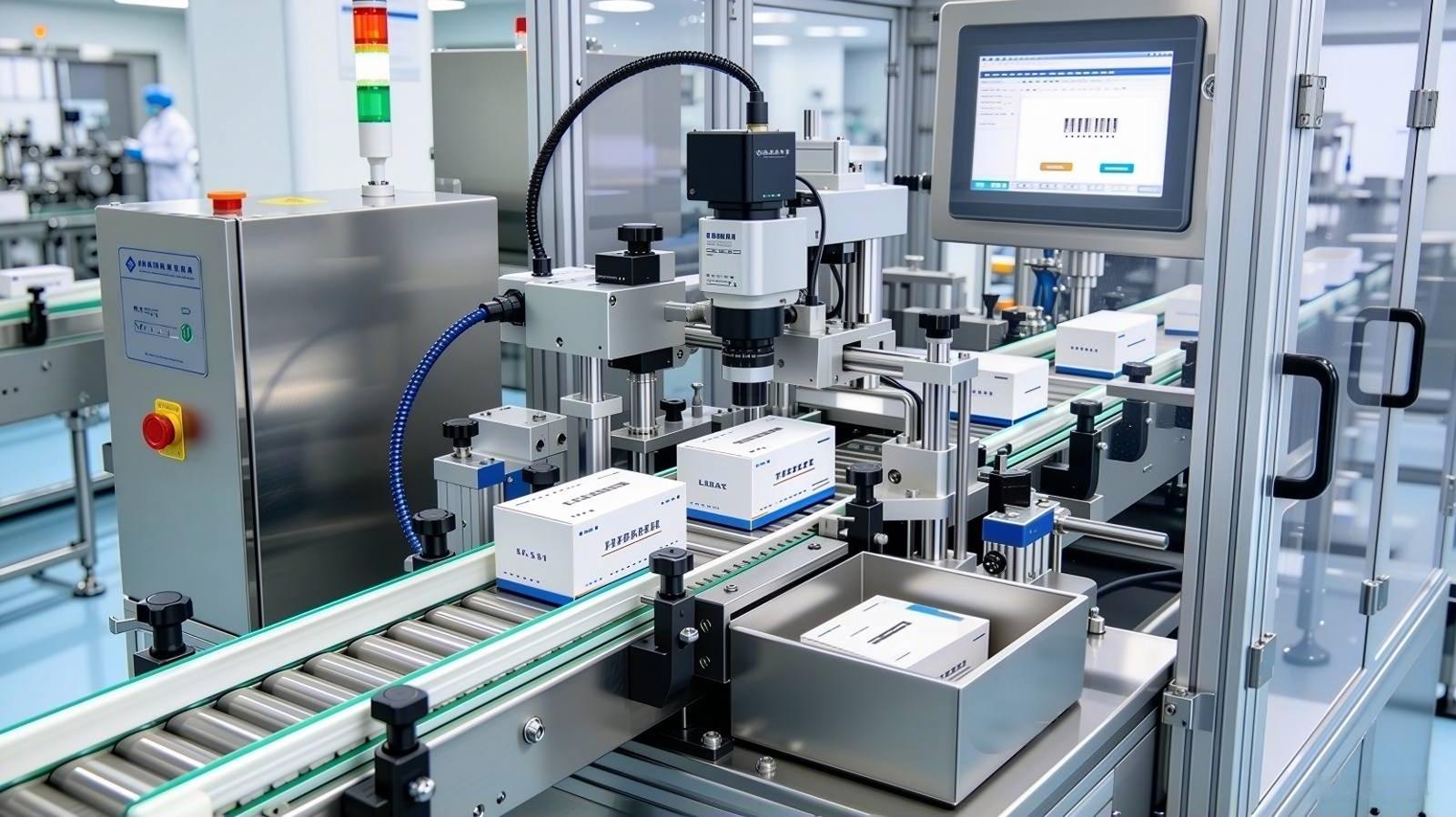
Vacuum-sealed spools are packed into retail cartons or shipping cases. This may involve a cartoning machine for individual retail boxes, or direct case packing for bulk shipment. Labeling with batch codes, barcodes, or QR codes typically happens at this stage.
Real-World Case: Semi-Automatic Filament Packing Line
Not every manufacturer needs—or can justify—full automation. One 3D printing filament producer we worked with faced a common situation: growing volume that overwhelmed manual packing, but not yet at the scale requiring a fully automatic line.
The Configuration
The solution was a semi-automatic filament packing line with this workflow:
- Operator loading: One operator places each spool into the bagging station—fast and intuitive, no complex loading mechanics required
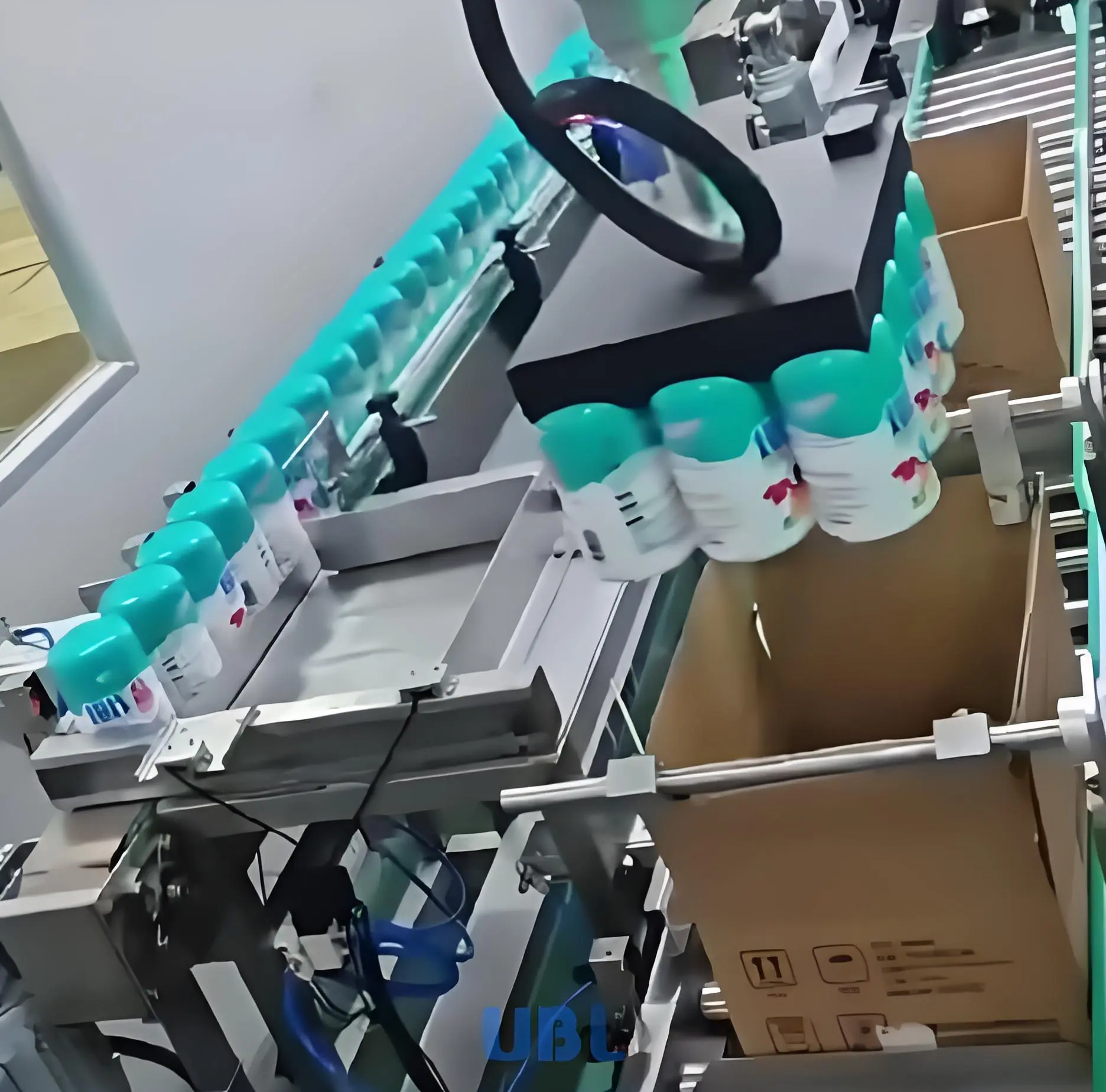
- Automatic bagging: The machine pulls a pre-formed bag from the magazine, opens it, and positions it around the spool
- Automatic desiccant insertion: A dispenser drops the correct silica gel packet count into each bag
- Automatic vacuum sealing: The bagged spool moves into the vacuum chamber, air is evacuated, and the bag is heat-sealed
- Automatic discharge: Sealed spools exit to a collection conveyor for manual packing into shipping cartons
The Results
This configuration achieved approximately 3× the throughput of the previous fully manual process, with consistent vacuum levels and zero missed desiccant packets. The operator’s role was simplified to loading and monitoring—no longer handling bags, desiccant, or sealing operations. Labor cost per spool dropped by roughly 60%, and customer complaints about moisture-damaged filament fell to near zero.
View the complete case study with production metrics.
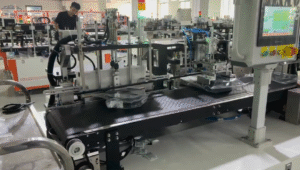
Modular Line Design: Adapting to Your Floor Space
One of the most common objections to automated packaging lines is floor space. Manufacturing facilities are rarely designed with empty expanses waiting for new equipment. This is where modular line architecture becomes essential.
Fixed Machine Footprints, Flexible Layouts
Individual machines in a filament packing line have fixed dimensions—bagging units, vacuum sealers, and conveyors each occupy a defined footprint. However, the line itself doesn’t need to be straight. Modular conveyors and transfer units allow the line to:
- Turn corners: Navigate around existing equipment or building columns
- Fold back: Run parallel to itself in tight spaces, with operators accessing both sides
- Expand incrementally: Start with core stations and add modules (labeling, weighing, cartoning) as volume grows
Planning Your Layout
When evaluating a filament packing line, provide your supplier with:
- Available floor dimensions (length × width × height)
- Location of power and compressed air connections
- Upstream process (where spools enter the packaging area)
- Downstream requirements (shipping dock, palletizing area, inventory storage)
- Any obstacles (columns, existing equipment, walkways)
A well-designed modular line can often fit into spaces that initially seemed too small for automation—sometimes by folding a 15-meter straight line into a compact U-shape or L-shape that occupies half the footprint.
Line Speed: Understanding the Bottleneck
Buyers often ask: “How many spools per hour can your line handle?” The answer depends on which station is the constraint.
The Bottleneck Principle
A packing line is only as fast as its slowest station. If your bagging machine cycles at 600 spools/hour but your vacuum sealer handles only 400 spools/hour, the line output is 400 spools/hour. The bagging machine will periodically stop and wait.
This is why integrated line design matters. Stations must be balanced—not just individually fast, but synchronized to the same effective cycle rate. Reputable suppliers engineer complete lines with this balance in mind, rather than simply connecting fast individual machines that create internal bottlenecks.
Typical Speed Ranges
| Configuration | Typical Output | Best For |
|---|---|---|
| Semi-automatic (operator loading) | 300–500 spools/hour | Small to mid-size producers, flexible operations |
| Fully automatic (robotic infeed) | 600–1,200 spools/hour | High-volume producers, continuous operation |
| High-speed integrated line | 1,500+ spools/hour | Large-scale manufacturing, minimal changeover |
Customization for Spool Specifications
Filament spools vary significantly. A 1kg PLA spool for desktop 3D printers has different dimensions and weight than a 5kg industrial spool. Packaging equipment must accommodate this range—or be configured for your specific requirements.
Adjustable vs. Dedicated Configurations
Most bagging and sealing stations offer adjustable ranges for spool diameter and width. However, the practical range has limits. If you produce both small 200g sample spools and large 10kg industrial spools, you may need different machine configurations—or a line designed with quick-change tooling to switch between formats.
Key parameters to specify when planning your line:
- Spool outer diameter range
- Spool width (flange-to-flange)
- Spool weight (affects handling and conveying)
- Bag size requirements
- Target vacuum level and seal specifications
For specific compatibility questions, contact our engineering team with your spool specifications.
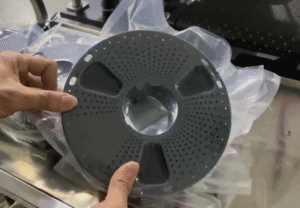
Integration with Upstream and Downstream Processes
A filament packing line doesn’t operate in isolation. It receives spools from extrusion/winding and delivers packaged product to inventory or shipping.
Upstream: Extrusion and Winding
Some manufacturers integrate directly—spools transfer automatically from winding stations to the packaging line. Others use buffer accumulation, where wound spools are staged in totes or on conveyors before packaging. The right approach depends on production scheduling, changeover frequency, and whether extrusion and packaging run on the same shifts.
Downstream: Labeling, Case Packing, and Palletizing
Vacuum-sealed spools need labeling before shipment—batch codes for traceability, barcodes for inventory management, or QR codes linking to material specifications and print settings. This can happen inline or as a separate station.
For bulk shipments, case packing and palletizing complete the process. Some manufacturers use manual case packing at lower volumes; others integrate automatic case erectors and robotic palletizers for high-volume operations.
Evaluating a Filament Packing Line for Your Operation
Before investing in a filament packing line, assess these factors:
Volume and Growth Trajectory
Calculate your current daily volume and projected growth over 3–5 years. A line that’s perfectly sized for today’s volume may be a constraint in 18 months. Modular designs that allow capacity expansion protect your investment.
Product Range
If you produce multiple spool sizes, materials, or bag specifications, changeover capability becomes critical. Ask about changeover time between configurations and whether the line stores recipes for quick recall.
Quality Requirements
What vacuum level does your product require? What seal integrity standards must you meet? Do you need automated leak detection? These specifications drive equipment selection and validation protocols.
Operator Resources
Fully automatic lines require less labor but more technical skill for operation and troubleshooting. Semi-automatic lines use more operators but with simpler training requirements. Match the automation level to your workforce capabilities.
Next Steps: Configuring Your Filament Packing Line
Every filament manufacturing operation has unique requirements—spool specifications, production volume, floor space constraints, and quality standards. UBL designs filament packing lines in modular configurations that adapt to your specific situation, from semi-automatic systems for growing manufacturers to fully integrated high-speed lines for large-scale production.
Our engineering process starts with understanding your requirements: spool dimensions, target throughput, available space, and integration points with your existing production. We then propose a configuration—often with multiple options—that balances automation level, investment, and operational flexibility.
We also offer product testing with your actual spools and bags, verifying vacuum levels, seal integrity, and handling before you commit to a full line purchase.


15 responses
Thanks for the detailed breakdown of how a filament packing line operates—especially the emphasis on moisture control from spool to shipment really highlights why automation is crucial for maintaining print quality. It’s fascinating to see how the process is designed to protect the product integrity from the moment it leaves the extruder. This level of attention to detail makes a big difference in end-user experience.
Thanks for the detailed breakdown of how a filament packing line works—especially the emphasis on moisture protection from spool to shipment. It’s a great reminder that automation isn’t just about speed, but also about preserving product quality. I’m curious about how the system handles different filament types, like nylon versus PLA, in terms of packaging requirements.
The emphasis on moisture-sensitive materials like nylon and PETG really highlights why automated sealing is critical right after extrusion. It’s a great reminder that the packing line’s speed is just as important as its ability to protect product integrity from the moment the spool leaves the machine. Thanks for breaking down this complex process.
The article does a great job explaining why moisture control is so critical for 3D printing filament from extrusion through to shipping. It is interesting to see how vacuum sealing, desiccant insertion, and proper barrier film all work together to keep PLA, ABS, and PETG in optimal condition. Thanks for breaking down the full process — really helpful for understanding the engineering behind automated packaging lines.
Really enjoyed this breakdown of moisture-controlled filament packing. The walkthrough of vacuum sealing plus desiccant insertion before cartoning makes a lot of sense for keeping PLA and nylon spools dry during shipping. It is also nice to see real throughput numbers from the semi-automatic case study rather than just marketing claims. Thanks for sharing the practical details.
Really useful walkthrough of how an automated filament packing line protects moisture-sensitive spools. The combination of vacuum sealing plus desiccant insertion before cartoning makes a lot of sense for keeping PLA, nylon and PETG dry through storage and shipping. The semi-automatic case study with real throughput numbers was a nice touch compared to pure marketing claims. Thanks for sharing the practical details.
Really interesting breakdown of how a full filament packing line protects PLA, ABS, nylon and PETG from moisture exposure all the way through to ship-out. The vacuum sealing and desiccant step is often the make-or-break for print quality, and pairing it with reliable cartoning and steady spool throughput is what makes the difference at scale. Thanks for sharing the semi-auto case study – it is a useful reference for anyone planning a similar line.
Really useful breakdown of how a filament packing line protects moisture-sensitive materials. The vacuum sealing plus desiccant insertion step is often the one that gets overlooked in DIY setups, so it’s great to see barrier film and spool throughput discussed together. Thanks for sharing the semi-automatic case study too, it gives a realistic sense of cycle times.
Really useful breakdown of how vacuum sealing and desiccant insertion keep PLA and nylon dry all the way from spool to shipper. We run a similar barrier film + cartoning setup for moisture-sensitive goods and the spool throughput numbers match what we see on our line.
Really helpful breakdown of the moisture-control side of filament packaging. The detail on vacuum sealing plus desiccant insertion for PLA and nylon spools is exactly the kind of practical insight we were looking into. It’s also interesting to see how the bagging and cartoning stages tie back to spool throughput.