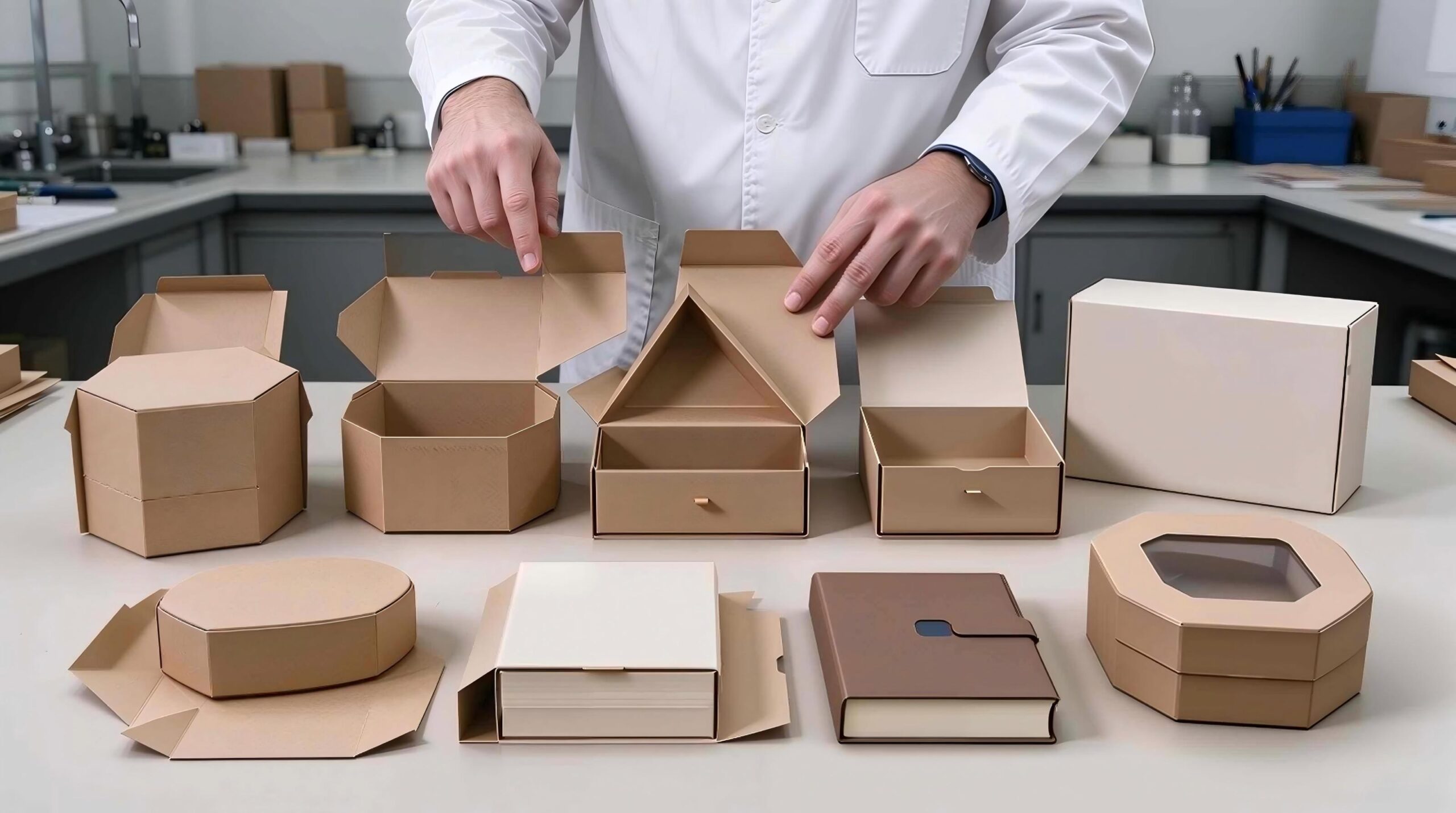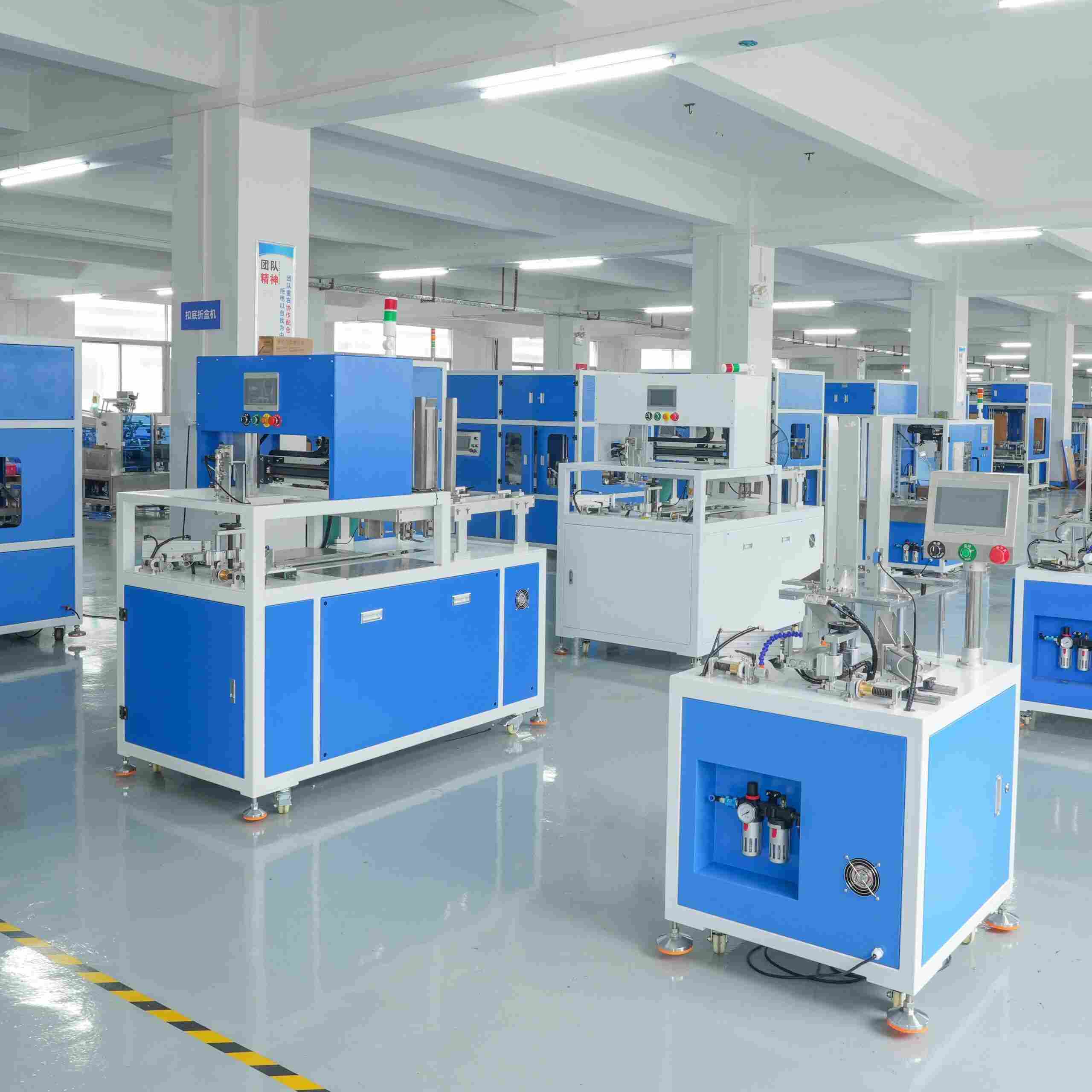
A hexagonal tea box that flies off the shelf can stop a cartoning line in under ten minutes. Nothing is broken. Nobody checked whether that shape could be fed, opened, filled and closed at line speed before the tooling was ordered.
That is the real question behind every non-standard carton cartoning machine project. Can the box run at all? How does it run? And is the volume high enough to pay for the tooling?
Shaped cartons that fail on a line usually fail for reasons that were visible on paper long before anyone cut steel. A servo-driven cartoner will not rescue a lid that cannot reach its closed position. A larger vacuum pump will not fix a blank whose score lines sit on the wrong side of the fold. The dimensions that make a carton non-standard, the constraints they create, and the speed and cost they add all point to one question: can your loader make the motion the box needs, and how fast?
If you already run standard reverse-tuck cartons and want the wider machine picture first, start with an overview of custom carton tooling.
The three dimensions of a non-standard carton
Standard cartoning rests on three quiet assumptions: a rectangular footprint, a simple tuck or crash-lock closure, and a blank that sits flat in a magazine. A carton becomes non-standard the moment it breaks one of them.
Break the footprint and the box stops being a rectangle: hexagons, octagons, triangles, ovals, pillow packs, tapered trays. The structure breaks next. Book-style cartons with hinged covers, drawer-and-sleeve designs, two-piece trays with inner fitments, multi-compartment boxes. Then there is the opening method, where you meet magnetic flaps, ribbon ties, window panels and glued automatic bottoms.
Any single break makes the carton non-standard. A rectangle with a magnetic book cover is standard in shape and awkward in closure. A plain hexagonal tray is the other way around. Shape alone decides nothing. The real test is whether your loader can perform the physical motion the carton needs, and how fast. That is the question a non-standard carton cartoning machine has to answer before tooling, cycle time or cost can be judged.
Structure and shape also carry their own vocabulary. The FEFCO and ICCA classifications group cartons and cases by construction, and knowing where your design sits helps a builder match it to tooling rather than guess. We cover the structure side in more detail in our guide to box structure families. Here the focus stays on the machine question, which is what has to change when the box stops being a rectangle.

Four engineering constraints a non-standard carton cartoning machine faces
Almost every non-standard carton cartoning machine job narrows to four points where shaped boxes behave differently from rectangular ones. Each is a place a standard cartoner runs into trouble, and each one carries a cost.
Magazine and forming
Shaped blanks will not stack like rectangles. A hexagonal blank leaves triangular gaps in the magazine, so the pile settles unevenly and the suction cup grabs air on one stroke and two blanks on the next. On a non-standard carton cartoning machine, feeders for shaped work need tighter side guides, low-friction liners and a follower that keeps steady pressure as the pile drains.
Some shapes also have to be partly erected before they can be loaded. A pre-forming station folds the blank into a stable tray or sleeve, which adds a mechanism and a set of adjustments. That extra station is often the first thing that pushes a shaped job above the price of a standard one.
Loading motion
Loading splits into two families. End-load cartoners push the product into a straight tunnel, and a straight tunnel demands a square box and a clear path. Top-load cartoners drop the product in from above.
Most shaped cartons steer toward top-load, because a hexagon or an oval has no clean tunnel for a pusher to travel through. Top-load suits them, but it asks more of the machine. The lid or cover must be opened and held clear, the product must be placed rather than pushed, and any inner fitment or divider has to be sitting in position first. Pick-and-place heads replace simple pushers, and cycle time rises with every added motion. This is where a non-standard carton cartoning machine spends most of its time budget.
Closing
This is where shaped cartons separate the practical from the pretty. A standard tuck flap closes with a single folding rail. A magnetic book cover, a die-cut insert, a ribbon tie or a window panel needs something else entirely. Magnetic flaps often close by hand at the packing station. Glued closures need careful glue placement so the bond lands on a shaped panel and not on the print. Sleeve wraps need a separate forming and sliding motion that a plain cartoner does not have.
Designers should flag the closing method early, because it drives both the machine cost and the manual content of the line. A closure that reads as a small detail on a mood board can decide whether the line runs with one operator or three. It is the constraint that most often judges whether a non-standard carton cartoning machine is worth building at all.
Vision registration
Print on a shaped carton is rarely square to the feed edge. Curved panels, off-centre artwork and die-cut windows all mean that a mechanical stop cannot guarantee the box enters the line the right way up. Camera systems read a registration mark and rotate or reject the carton, so the shelf-facing panel lands where the design intended.
Vision adds cost and complexity to a non-standard carton cartoning machine, and it needs its own lighting and calibration. It also removes the most common source of scrap on decorated shaped cartons, which is a box that is technically perfect but faces the wrong way.
Because these cartons often run through custom mechanisms and closer guarding, the safety design deserves the same attention as the mechanics. The applicable framework for packaging machinery is EN 415-1, and the risk assessment behind any custom guarding should follow EN ISO 12100. Neither replaces a proper risk assessment on your own line, but both set the baseline a shaped carton build should meet.
Modular machines versus dedicated ones
When a shaped carton needs tooling, buyers face a fork in the road.
A dedicated machine is built around one carton. Fixed stations, fixed motions, tuned for that box and little else. It is the most reliable option and often the fastest, and it makes no sense the moment the design changes.
A modular cartoner keeps a common frame and swaps format parts: guides, pockets, pushers, closing tools. It runs a family of shaped cartons, but each shape still needs its own part set, and changeover takes real time.
The honest answer is that a non-standard carton cartoning machine almost always runs on custom tooling, whether the frame is dedicated or modular. The choice is really about how many shapes you will run and how often they change. One design that sells for years points to a dedicated build. A family of shapes, or a design refreshed every season, points to a modular frame with several part sets.
Gift and display cartons show the modular case at its best, because those designs tend to change with the season. If shaped gift boxes are part of your range, our guide to gift and display cartons looks at how format variety and changeover drive the machine choice. The trade you are making here is straightforward: dedicated tooling is cheaper per shape and faster to run, while modular tooling costs more up front and asks for more changeover labour in exchange for covering a wider range.
The speed reality for a non-standard carton cartoning machine
A standard cartoner running a simple tuck carton can be quoted at several hundred cartons per minute. A shaped or irregular carton does not run anywhere near that.
For shaped and irregular cartons, reported industry ranges for real output sit roughly between 20 and 80 cartons per minute, depending on box complexity, loading motion and how many manual steps remain. These are reported industry ranges and benchmarks, not guaranteed figures for any specific machine, and the only number that matters is the one you measure on your own carton during a factory acceptance test.
Several things pull speed down on a non-standard carton cartoning machine:
- Top-load pick-and-place is slower per cycle than a straight end-load push.
- Pre-forming and inner fitments add stations and time to every cycle.
- Vision registration and reject logic take a slice of each cycle.
- Manual closing on magnetic or tied cartons caps the rate at whatever a person can manage.
- Shaped blanks misfeed more easily, so clean runs alternate with recovery.
A tea brand discovered this when it moved a premium loose-leaf line from a rectangular tin to a hexagonal carton. The box won shelf space and a design award. On the line, the new footprint meant a redesigned magazine, a top-load station and a hand-closed lid. Output landed well below the old rectangular pack, and the brand had to decide whether the shelf gain was worth the slower line. That is a normal outcome, and it is far cheaper to predict it in a trial than to discover it in production.
The practical lesson is to size the line on the slowest real step, not on the rated speed in the brochure. A shaped carton that runs 45 cartons per minute without a single manual touch can beat a “faster” machine that needs two operators feeding lids.
Prototyping and tooling: how a shaped job is quoted
Non-standard work is quoted differently from a standard machine, and it helps to know why. A non-standard carton cartoning machine is priced from the box and the product, not from a catalogue number.
A standard carton machine ships from a set design. A non-standard carton cartoning machine does not, which is why it is quoted in stages rather than at a fixed price. The shaped job starts with samples. The builder needs actual blanks and actual product, because a drawing rarely captures how a blank behaves when it is folded under vacuum and pushed into shape. From those samples come a feasibility check, then a tooling design, then a build. A builder working to ISO 9001:2015 will document those steps, which makes the sample-approval loop easier to audit and repeat.
The quote usually bundles four things:
- Tooling design and a drawing for your approval.
- The format parts: guides, pockets, pushers and closing tools.
- One or more sample cartons run on the machine to prove the motion.
- A factory acceptance test on your own blanks and product.
Lead time runs longer than a standard build because the tooling is new, and the schedule should include a sample-approval loop. The first tooling design often needs a small change once a real carton has been run, and planning for that change is cheaper than fighting it. The good news is that the tooling cost is mostly paid once. After the tooling exists, the machine runs your shaped carton like any other box in its range. We go deeper into where that money lands in our guide to how custom tooling changes cost.
Have a shaped carton that keeps failing trials? Send us the blanks and the product, and our engineers will tell you what the machine has to do before you spend anything on tooling.
When not to automate: a non-standard carton cartoning machine is not always the answer
Not every shaped carton belongs on a machine.
Automation pays back when volume is steady and the design is stable. It struggles when volume is low, the design changes often, or the carton needs a lot of hand-finishing.
Run the numbers before you commit to a non-standard carton cartoning machine. If a carton needs a magnet closed by hand, a ribbon tied by hand, or a foam insert placed by hand, the machine only automates the easy part. The labour you hoped to remove is still standing there, now next to a tooled machine.
Low-volume shaped cartons are often better packed by hand, or on a semi-automatic cartoner where the operator still loads and closes while the machine handles the forming. High-variety, low-volume runs, the kind that show up in limited editions and sample packs, rarely justify the tooling at all.
Put the box in by hand, close the sleeve by hand, and a machine that automates only the easy half will never pay for its tooling. A skincare brand found that out with a drawer-and-sleeve carton for a limited-edition set. The run was short, the sleeve needed a hand-fold at the end, and the machine never got close to paying for itself. The next limited edition went out packed by hand on a bench, and it cost less.
The clearest signal to automate is repetition. Same box, same count, same closure, week after week, at a volume that keeps an operator busy. When those four hold true, a non-standard carton cartoning machine can pay for itself. When they do not, wait.
What this means for your next shaped carton
A non-standard carton is not a problem to design around. It is a set of decisions you can make on purpose, and each one has a known cost.
Three questions decide the outcome. Can the box be fed, opened, filled and closed at a rate that fits your volume? The four engineering constraints above tell you where the difficulty sits, from the magazine to the closing method to the registration system. How will it run, in dedicated or modular form, and who will own the changeover? And is the volume steady enough, and the design stable enough, to justify the tooling at all?
Get those three answered before you order anything. When the answers line up, a shaped carton can run profitably on a non-standard carton cartoning machine built for it, and the shelf advantage it buys is real. When they do not, a hand bench and a semi-automatic cartoner will often serve you better and cost far less.
Start with your carton, not a catalogue. Send the blanks, the product and the volumes, and hold every quotation against the motion your box actually needs rather than the speed on a spec sheet.
[Talk to UBL about custom carton tooling for your shaped box. Send your blanks and volumes, and we will map the machine your design really needs.]