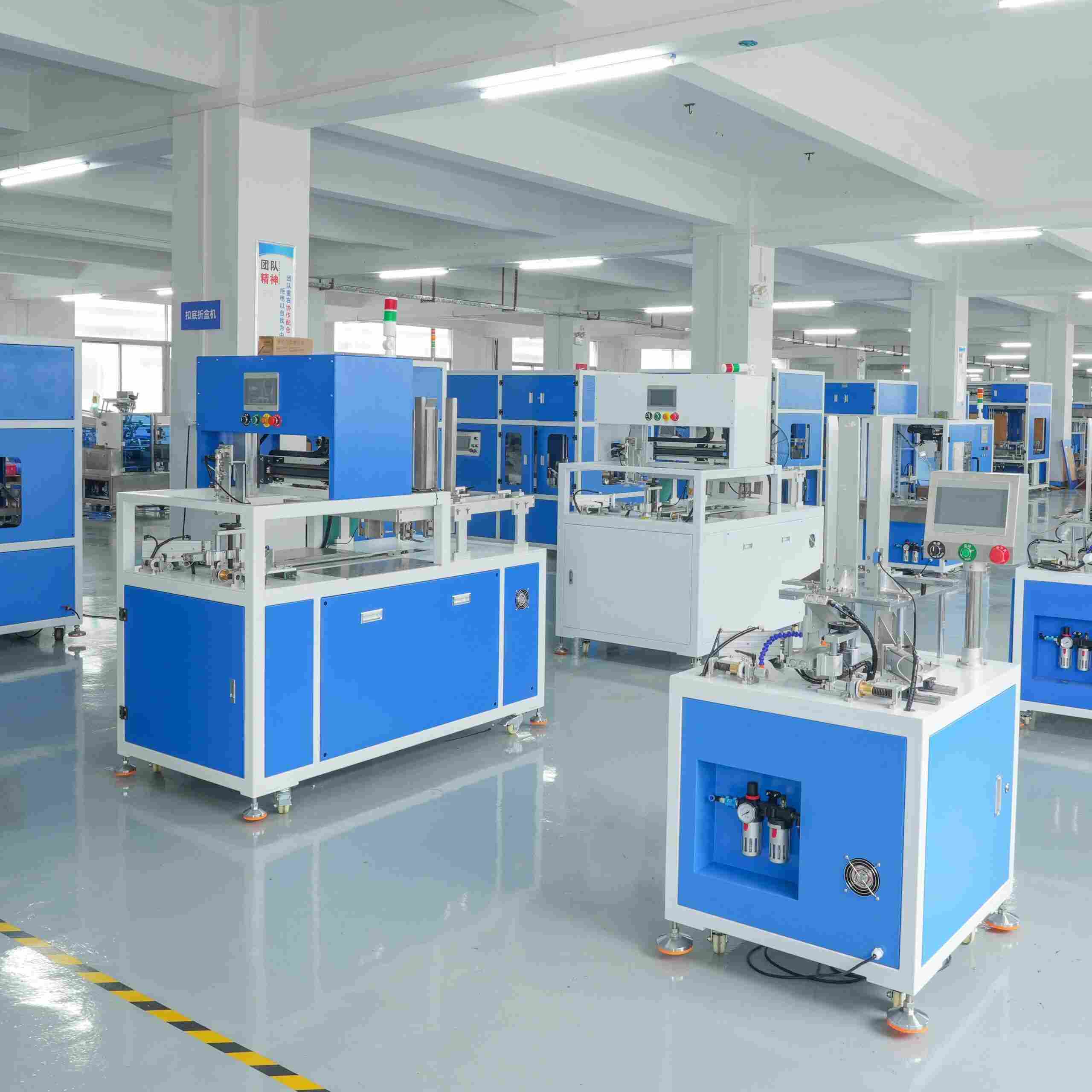
A passed acceptance test is not the same thing as a working machine. The carton erector cleared its test, then three weeks later it was idling between jams, and the plant manager was on the phone asking why a brand new machine could not do what the test report claimed. Nothing had been faked. The test had simply measured the wrong things, on the wrong board, under the wrong conditions.
That gap between a tidy sign-off sheet and a line that will not run is one of the costliest surprises in packaging equipment. It usually traces back to a carton erector acceptance test that was treated as a formality instead of a set of measurable claims.
A carton erector acceptance test is a documented set of checks that proves a machine forms your own blanks into square, sealed, production-ready boxes at the agreed rate, and that it will keep doing so after the invoice is settled. Run it on your corrugated board, with your operators, against numbers you wrote into the contract before the purchase order.
Start with the conclusion, because it matters more than the method. Run the machine on your own board, measure net output and changeover with your own operators, and tie every number to the contract before you pay. That single discipline is what the rest of this page is built around.
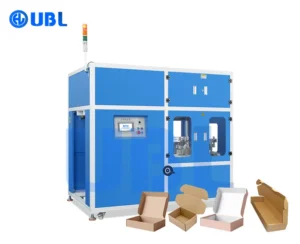
Why a carton erector acceptance test has to run on your own blanks
A carton erector is only as good as the board you feed it, and a carton erector acceptance test that runs on the vendor’s stock board proves almost nothing about your plant.
Vendors test on clean, flat, perfectly conditioned blanks. Your blanks arrive off a pallet that has spent six weeks in a container, a humid warehouse, or a truck in the rain. The board is the variable that moves most, and it is the one a demo usually removes.
Picture a converter who signs off after four flawless hours on the machine maker’s own blanks. The first pallet of its own board stalls the feeder twice in twenty minutes. The mechanism is fine. The board’s moisture and score depth are not, and the acceptance test never asked the machine to handle them. Two variables are worth separating before you buy, and the first is your board. The guide to selecting a machine by box type and board covers how box and board drive the choice; the second is the machine’s own setup. Acceptance is where you test both at once.
So the rule for any carton erector acceptance test is simple. Everything meaningful gets measured on your consignment of blanks, and on the worst batch in it, not on the pallet the technician brought.
If you want the checklist mapped to your own box size and board grade, send our engineers your blank spec and target output, and we will build the acceptance matrix with you before you commit.
Lock the boundaries before you test anything
Walk into a factory acceptance test with no fixed boundaries and you will argue about scope for a week. Pin these down in writing first.
The machine that ships is the machine you accept. Record the model and build revision, not “a unit like the demo”. Then list every format part, magazine, and size range the price covers. If a second size is “available”, it is not in the acceptance unless it is on the order and on the line.
Sealing method has to be explicit. Tape, hot melt, cold glue, and combinations each behave differently at speed, and each fails differently. Do not accept “tape or glue” on a spec sheet.
The downstream interface deserves the same treatment. Discharge height, discharge direction, and the pitch your next machine expects decide whether the erector actually hands off or just looks like it will. Get these wrong and you will discover it the day the line starts, not on the test day.
Utilities and footprint belong here too: air pressure and consumption, voltage, and floor space with service access. The vendor reference for all of this is the panel of carton erecting machine specifications for your chosen model, so keep that sheet beside the checklist and tick each line off against the physical machine.
The eight tests that make a carton erector acceptance test real
Eight checks carry most of the weight in a carton erector acceptance test. Run all of them on your board, and document each result with a number and a photo.
Test 1: Lowest, typical, and highest size, plus your worst board
Size range on a spec sheet is a promise, and proving it on your own stock is the first job of a carton erector acceptance test. Run the smallest box, a typical box, and the largest box the machine is sold to form, then repeat with the flattest, dampest, or most warped blanks in your delivery.
Machines are usually tuned around the middle of the range. The edges are where squareness drifts and the feeder hesitates. If the largest size only works when a technician holds the magazine open by hand, you have found a limit the brochure did not mention.
Test 2: Net output, not peak speed
Rated speed is a peak number under ideal conditions. Net output is what the machine sustains over a real shift, including the small stops, the minor adjustments, and the reload of the blank magazine. This is the number a carton erector acceptance test should be built around, because it is the number your production plan will live with.
Ask for a run long enough to expose drift. One clean minute proves nothing. Twenty or thirty minutes, with the count of good boxes divided by the elapsed time, gives you a rate you can plan around. Reported industry ranges for erectors vary widely by size and sealing type, and those figures are benchmarks rather than guarantees. Your real number is the one you measure, so write the acceptance line as “agreed net output, measured on buyer’s board”, subject to what your URS and the contract specify.
Test 3: Squareness and bottom closure
A box that is a few millimeters out of square will pass a casual look and then jam your case packer or hang in a chute. Squareness is easy to fudge in a demo and hard to hide in a proper acceptance run. Check it properly.
Measure the diagonals of a formed box and compare them. Watch the bottom closure run under glue or tape and confirm it holds through the loads the box will actually see. Do this on the smallest and largest sizes, because squareness is hardest to hold at the extremes.
Test 4: Changeover time, timed by your operator
Changeover is where the specification quietly evaporates, and it is the check that most carton erector acceptance test reports get wrong. Do not let the vendor’s engineer demonstrate the format change while you watch.
Hand the job to your own operator, with the machine’s manual and change parts as delivered. Start the clock at the last good box of the first size. Stop it at the first good box of the next. Whatever sits in between is your changeover time, and it belongs in the acceptance record.
This is one check where a demonstration and a real number differ by a wide margin. If the operator needs the technician’s help to hit the target, the target is not real yet.
Test 5: Suction pick stability on real board
The suction cups and vacuum circuit are the heart of any erector. They are also the first thing to struggle when the board changes, which is why the test has to load your board and not a friendly one.
Run the vacuum test on your blanks and watch for a consistent single pick. Double feeds, missed picks, and intermittent stalls point to a leak, a clogged filter, a worn cup, or a blank stack that is not sitting square. Any of these will show up in production even if a clean demo hid them. Note the vacuum level and the pick rate so you have a baseline for later.
Test 6: Sensors, nuisance stops, and interlocks
A machine that stops for no reason is worse than one that stops for a real one, because it trains operators to ignore alarms. Count the nuisance stops during the acceptance run, and treat a high number as a fail rather than a quirk.
Run the line and count nuisance stops over a long enough sample to mean something. Then test every interlock deliberately. Open the safety guard and confirm the machine stops. Press the emergency stop and confirm it latches and requires a deliberate reset. These functions sit inside the safety envelope set by standards such as EN 415-1 and EN ISO 12100, and ANSI/PMMI B155.1-2023 frames the same duties for machinery in North America. A guard that opens without stopping the machine is a fail, not a note.
Test 7: Downstream handoff
The erector is one machine in a chain, so a carton erector acceptance test has to look past its own discharge. A cleanly formed box stack helps nothing if it arrives at the next station at the wrong height, in the wrong direction, or at a pitch the next machine cannot take.
Test the handoff with the conveyor or next machine in place, or with a gauge that reproduces its infeed. Confirm the box leaves the erector the right way up and lands where the next stage expects it. This is the check people most often skip and most often regret.
Test 8: Documents and spares
The paperwork is part of the machine. Without it, the first breakdown becomes a guessing game and the next part order becomes a shipping delay.
Collect the general arrangement drawing, the pneumatic and electrical diagrams, the PLC backup, the changeover procedure, and the wear part list with lead times. Confirm the spares kit matches that list. A supplier working to ISO 9001:2015 should hand these over as routine, and the acceptance run is your moment to insist on it.
FAT and SAT: two stages of one carton erector acceptance test
Buyers tend to treat the two halves of a carton erector acceptance test as one event with two names. They are not.
The factory acceptance test, or FAT, is the factory half of a carton erector acceptance test. It happens at the maker’s plant before shipment. It is your best chance to run the eight checks on your board, with your operators, while the engineers who built the machine are standing next to it. Fixes cost hours here. The same fix at your site costs weeks.
The site acceptance test, or SAT, happens after installation in your plant. It repeats the core checks under your air pressure, your voltage, your floor, and your real upstream supply. It exists because a machine that passed in the factory can still fail on site, and it is where you confirm that the machine performs in the environment it will actually live in.
Plan for both, and make the FAT binding rather than polite. Keep the FAT checklist and the SAT checklist as separate documents with separate sign-offs, because they answer different questions. If you already run other equipment, treat this as part of a wider habit of acceptance testing across the line so every machine is judged by the same discipline.
Do not let the FAT be a photo opportunity. Book real hours, bring your own blanks, and bring the operator who will run the machine. Ask us what to prepare and we will send a sample agenda.
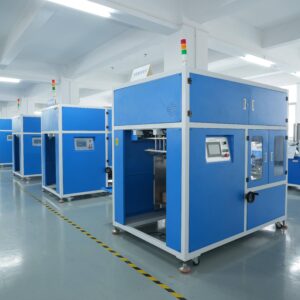
Write the criteria into the contract
A carton erector acceptance test is only worth what the contract is willing to enforce. Put the numbers in writing, and make them measurable and repeatable.
Define each criterion as a number, not an adjective. “Square and well formed” is not a criterion. “Diagonal difference within the agreed tolerance at the smallest and largest sizes” is. State the sample size, the run length, and the board to be used.
Then make the criteria repeatable. Whoever measures at the FAT should be able to reproduce the same result at the SAT with the same method. If a number cannot be measured twice, it cannot be accepted.
Handle deviation honestly. Real tests produce out-of-tolerance findings. The contract should say how each one is recorded, who decides whether it is acceptable, and what happens if it is not. A signed deviation log is normal on a serious project. No findings at all is more often a sign of a shallow test than a perfect machine. Treat the commissioning checklist the same way: completed, signed and filed, not filled in after the fact.
Finally, connect acceptance to payment. When a meaningful slice of the balance sits behind a passed SAT, the checklist stops being paperwork and starts being leverage. It also links cleanly to the wider question of what the machine really costs you over its life, which is where the cost drivers to weigh against the spec come into play.
“Acceptance passed but the line still won’t run”
This phrase comes up so often that it deserves its own section, because the cause is rarely the machine.
Upstream is where most of these stories begin. The acceptance ran on a tidy sample of blanks. Production feeds the machine from a pallet that has been handled badly, and the board no longer behaves. If your machine is stalling after handover, this is the first thing to check before you blame the equipment, and our guide to field troubleshooting after handover walks through the separation between a machine fault and a board fault.
Utilities trip up plenty of lines too. The factory test ran on clean, steady compressed air. Your plant’s air pressure dips when another machine cycles. The erector notices before anyone else does, and the symptom is a nuisance stop that looks like a sensor fault.
And sometimes it is simply the site. A machine that passed on a level factory floor can struggle on a floor that is not, or in a space with no service access for the change parts and the blank magazine. None of these are machine defects. All of them are reasons a carton erector acceptance test has to reflect the plant, not just the product.
Where the sign-off actually happens
A carton erector acceptance test is not a box to tick on the way to delivery. It is the moment you convert a claim into evidence.
Measure on your own board. Verify net output over a real run, not a peak minute. Check squareness at the size extremes. Time the changeover with your own operator. Test the picks, the stops, and the interlocks. Confirm the handoff and the documents. Then write every one of those numbers into the contract so they can be checked again after installation.
Do that, and the machine you accept is the machine you run. Skip it, and you will be the one on the phone three weeks later.
Ready to build the acceptance matrix for your box? Send us your blank spec, your target net output, and your size range. Our engineers will turn them into an acceptance checklist you can hold a supplier to, and a quote that stands behind it.