This is one of the most frustrating questions export food manufacturers ask.
At the factory, everything looks fine.
Boxes are square. Seals are clean. QC signs off.
But once products reach distributors—or worse, individual customers—the story changes.
Suddenly:
-
Boxes look soft
-
Edges are crushed
-
Stacks aren’t uniform
-
The product feels lower quality than it actually is
The food inside is exactly the same.
So what went wrong?
The short answer: distance exposes packaging inconsistency.

The Packaging Challenge Export Food Brands Don’t See Coming
When you sell food internationally, your product journey doesn’t end at the factory door.
A single carton may go through:
-
Container loading and unloading
-
Ocean or land transport
-
Warehouse stacking
-
Re-palletizing
-
Distributor handling
-
Last-mile delivery
Each step adds stress.
And while food products like biscuits, snacks, or baked goods are usually well protected internally, outer cartons are not immune to cumulative pressure.
What looks “acceptable” at origin may look “damaged” at destination.
Why Long-Distance Transport Amplifies Small Packaging Differences
Food Is Protected — Cartons Are Not
Most export food products already solve safety at the primary packaging level:
-
Inner bags are sealed
-
Moisture barriers are in place
-
Product breakage is minimized
But the outer paperboard carton is doing much heavier work than people realize:
-
Holding shape under stacking pressure
-
Absorbing vibration
-
Maintaining appearance for shelf display
Paperboard is unforgiving.
Even small inconsistencies become visible over time.

Transport Turns “Minor” Variations into Obvious Defects
At the factory, these differences barely stand out:
-
One box is slightly looser
-
Another is filled more tightly
-
A third has a minor fold-angle deviation
After weeks of transport and handling, those differences don’t stay minor.
They turn into:
-
Uneven box heights
-
Soft or collapsed corners
-
Visibly inconsistent pallets
That’s when distributors and customers start asking questions.
The Hidden Risk of Manual Cartoning in Export Scenarios
Why Manual Cartoning Creates Natural Variability
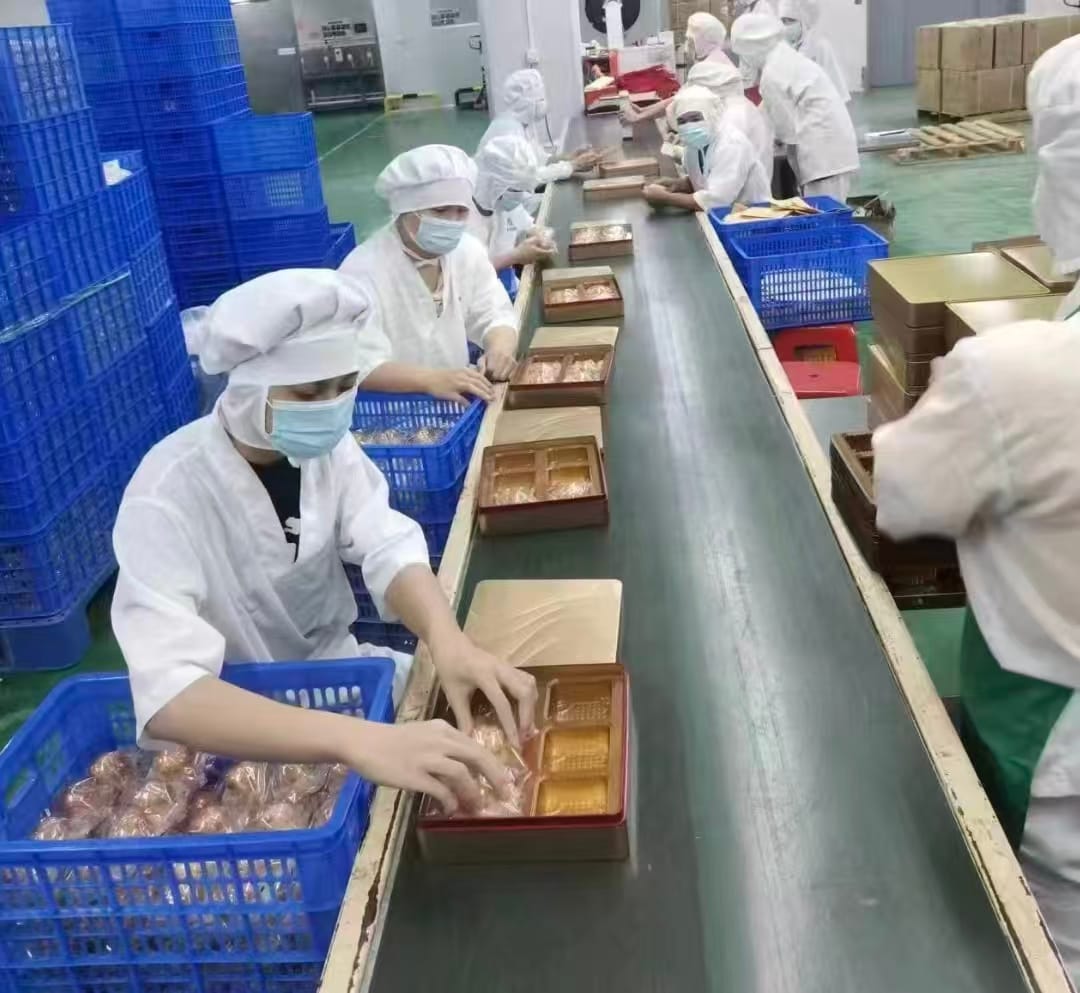
Manual cartoning relies on human judgment for:
-
Product placement
-
Box loading pressure
-
Fold consistency
Even with training, results vary:
-
Between workers
-
Between shifts
-
Between busy and slow days
In local markets, this might be tolerable.
In export markets, it’s risky.
Because distance magnifies inconsistency.
Why Distributors Notice It First
Distributors don’t receive products one box at a time.
They receive:
-
Multiple pallets
-
Mixed production dates
-
Large quantities side by side
When packaging varies, it becomes obvious immediately.
And once that happens, doubts creep in:
-
“Is this the same product?”
-
“Did something change at the factory?”
-
“Is quality control stable?”
Nothing may actually be wrong — but trust starts to weaken.
Why Packaging Consistency Shapes Overseas Brand Perception
In export markets, brands don’t get the benefit of familiarity.
Distributors and consumers:
-
Can’t visit your factory
-
Don’t see your process
-
Don’t know your QC system
So they judge reliability visually.
That makes packaging more than protection.
It becomes proof of control.
If boxes look uneven or poorly formed, the brand feels:
-
Less professional
-
Less reliable
-
Less scalable
And once that impression forms, it’s hard to reverse.
Why Manual Fixes Can’t Solve the Root Problem
Most factories try to compensate by:
-
Tightening work instructions
-
Adding inspections
-
Rejecting “bad-looking” cartons
These steps help — but only temporarily.
The root issue remains:
Manual cartoning always produces small variations,
and long-distance logistics always magnify them.
You can reduce the gap, but you can’t eliminate it.
Cartoning Machines as Brand Protection for Export Food
Where Cartoning Machines Fit Best
This applies to secondary packaging only:
-
Food is already sealed
-
No direct food contact
-
Focus is on structure and consistency
That’s exactly where export packaging usually fails.
What a Cartoning Machine Actually Fixes
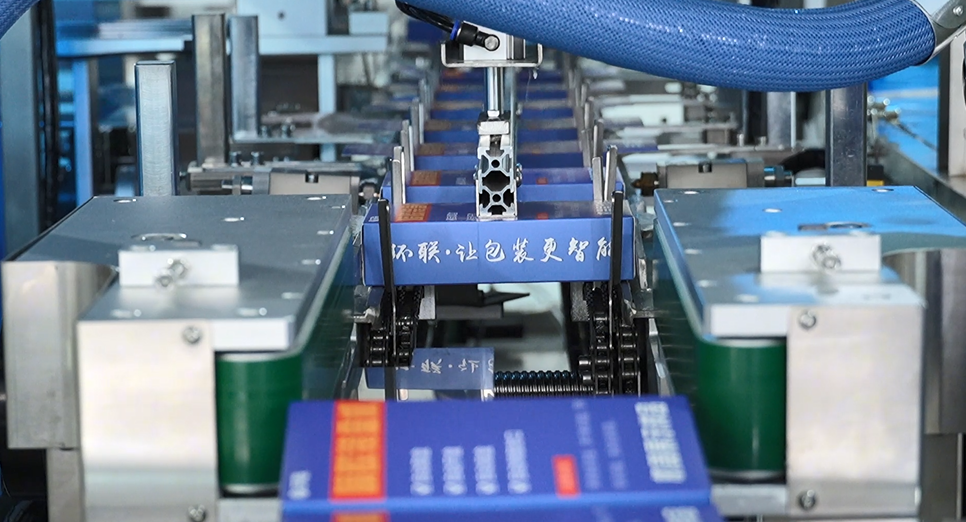
A cartoning machine standardizes what humans can’t:
-
Identical carton forming
-
Fixed product positioning
-
Uniform box pressure
-
Consistent shape across batches
The result isn’t just stronger packaging — it’s predictable appearance.
| Aspect | Manual Cartoning | Cartoning Machine |
|---|---|---|
| Box shape | Varies by worker | Identical every time |
| Product position | Inconsistent | Fixed and repeatable |
| Transport stability | Uneven | Stable |
| Cross-batch appearance | Noticeable differences | Visually uniform |
| Distributor confidence | Lower | Higher |
Why This Matters to Brand Relationships
When packaging looks consistent:
-
Distributors stop questioning batches
-
Sales teams stop explaining
-
Shelf presentation improves
The biggest difference isn’t logistics —
it’s how professional and reliable the brand feels after arrival.
Final Question Export Brands Should Ask
When your product reaches another country…
Does it still look the way you intended it to look?
Or has distance quietly exposed differences you never noticed at the factory?
For export food brands, standardized cartoning isn’t about machines.
It’s about making sure your brand image arrives intact, not just your product.