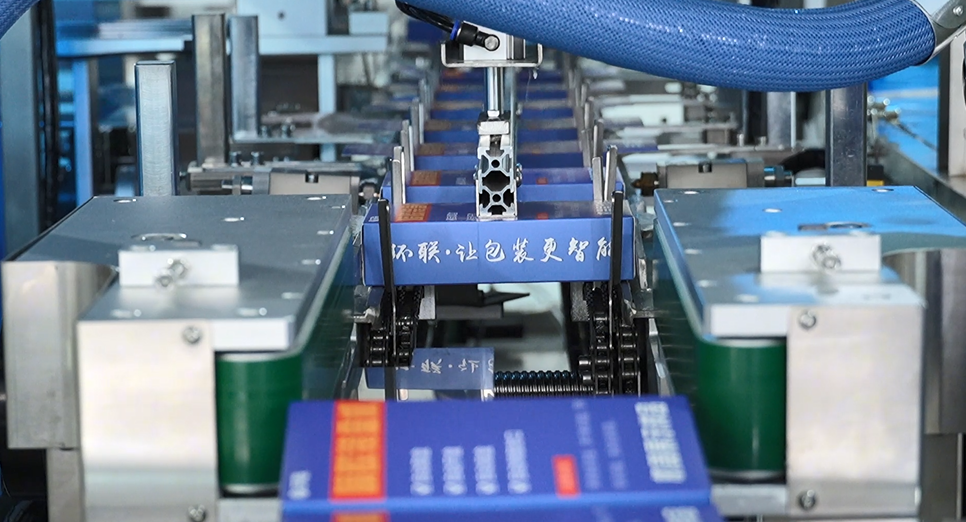
A cartoning machine may not be the loudest piece of equipment on a food packaging line, but it is often the one that decides whether a factory can truly scale.
Most food factories don’t struggle with demand. Orders are steady. Retail customers are asking for higher volumes. Private label opportunities keep coming. On paper, growth looks achievable.
What keeps managers awake at night is something else:
Will the packaging line stay stable when output increases?
And in many cases, the answer depends on the stability of the cartoning machine.
Expansion Is Where Small Cartoning Problems Become Big Risks
At low production volumes, cartoning instability hides well.
A short stop here.
A quick adjustment there.
An operator steps in and keeps things moving.
As long as volume stays limited, the system survives.
But expansion removes that buffer. Once production ramps up, minor cartoning issues begin to stack:
-
Short stops disrupt the entire line
-
Small jams delay downstream packing
-
Output plans lose accuracy
Expansion doesn’t create new problems.
It exposes existing ones — especially in cartoning.
Why Cartoning Machine Stability Matters More Than Speed
When factories plan growth, many focus on speed first.
Higher cartons per minute.
Bigger capacity numbers.
Tighter production schedules.
But a faster cartoning machine does not solve instability. It amplifies it.
If carton forming, opening, or insertion is inconsistent, higher speed only leads to:
-
More frequent jams
-
Higher operator pressure
-
Increased labor involvement
-
Unpredictable output
For food factories, successful expansion depends on predictability, not peak speed. The key question is simple:
Can the cartoning machine run steadily, shift after shift, without constant human intervention?
For reference: Machine Uptime Vs Speed
How Unstable Cartoning Quietly Eats Profit
Unstable cartoning rarely causes dramatic failures. Instead, it creates continuous friction.
Factories begin to notice:
-
Supervisors staying close to the cartoner all day
-
Operators constantly adjusting cartons
-
Overtime becoming routine
-
Labor increasing instead of efficiency
The line looks busy, but control is slipping.
This is especially damaging in food secondary packaging, where products are already sealed and quality issues often appear only after cartoning.
Why Labor Can’t Fix a Cartoning Problem
When instability shows up, people step in because they’re flexible.
They clear jams.
They straighten cartons.
They correct errors manually.
In the short term, this works.
In the long term, it becomes expensive.
Relying on labor to stabilize an unstable cartoning machine increases cost, creates dependency, and makes expansion fragile. The root problem remains untouched.

Cartoning Stability Is the Foundation of Scalable Food Packaging
For food factories handling secondary packaging — boxed snacks, frozen food cartons, ready-meal multipacks — cartoning stability determines whether growth feels controlled or chaotic.
A stable cartoning machine delivers:
-
Consistent carton opening and forming
-
Predictable output rates
-
Reduced manual intervention
-
Easier production planning
This is why many food manufacturers upgrade cartoning before expanding other parts of the line.
Stability Also Supports Food Packaging Compliance
Stable packaging equipment supports compliance by reducing handling errors, damaged cartons, and rework — all critical in food environments.
According to FDA guidance on food packaging operations, consistent secondary packaging helps reduce contamination risks and improves traceability during inspections【1】.
Expansion Should Feel Calm — Not Exhausting
When cartoning is stable:
-
Production schedules hold
-
Operators stop firefighting
-
Managers regain control
Growth stops feeling risky and starts becoming sustainable.
If expansion feels stressful, the issue may not be demand, labor, or planning.
It may simply be that your cartoning machine isn’t stable enough for where your factory is going next.
If you’re planning to scale food production and cartoning is the stage that worries you most, it’s time to address it before expansion exposes the risk.
Contact us – we solve all your food packaging challenges.