Hardware packaging costs typically represent 8–12% of product revenue for fastener manufacturers. In an industry with thin margins and intense competition, reducing this expense directly improves profitability. The good news: modern automation technologies make it possible to reduce hardware packaging costs by 30–50% while improving quality and throughput.
This article breaks down where packaging costs originate in hardware operations, which cost reduction strategies deliver the fastest ROI, and how to implement them without disrupting production.
Understanding Hardware Packaging Cost Structure
Before cutting costs, understand where money goes. A typical hardware packaging operation spends across five categories:
Labor (35–45% of total cost)
Manual packaging stations require 3–4 operators per shift for feeding, forming, filling, sealing, and labeling. In markets with labor shortages, wages rise and retention becomes expensive. Training new operators for seasonal demand spikes adds further cost.
Material (25–30% of total cost)
Carton blanks, tape, glue, labels, and protective packaging. Waste from over-taping, wrong-size cartons, and damaged materials adds 5–10% to material costs.
Equipment and Maintenance (10–15% of total cost)
Depreciation, spare parts, and preventive maintenance for packaging equipment. Older machines require more maintenance and produce more downtime.
Quality and Rework (5–10% of total cost)
Miscounted cartons, labeling errors, and damaged packaging require rework or trigger customer complaints. Each error costs $15–$50 in labor, materials, and shipping.
Facility and Overhead (10–15% of total cost)
Floor space, utilities, and management overhead allocated to packaging operations.

Strategy 1: Automate Labor-Intensive Processes
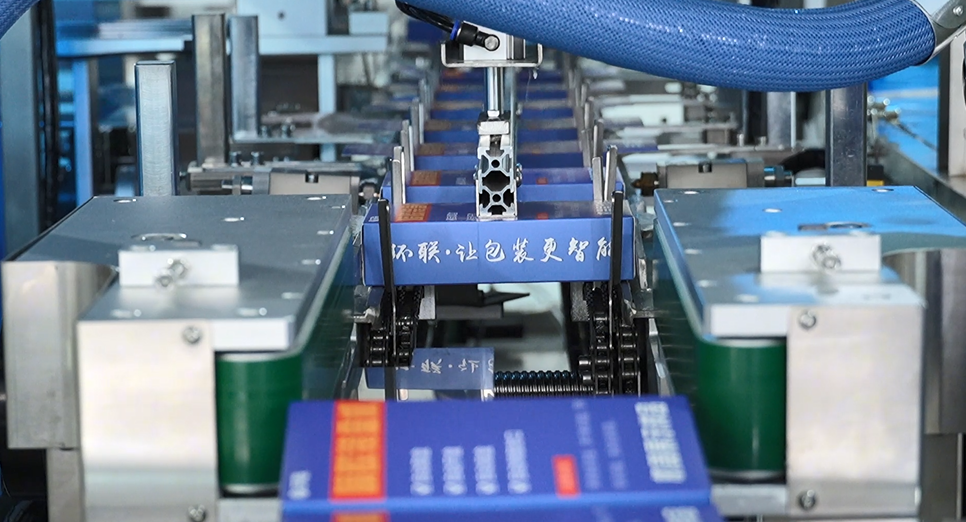
Labor is the largest cost component—and the most addressable through automation. An automatic cartoning system typically reduces hardware packaging costs by eliminating 60–70% of packaging labor.
The Labor Reduction Math
A manual packaging line with 4 operators per shift (2 shifts = 8 operators) costs approximately $320,000 annually in wages and benefits (assuming $40,000/operator). An automated line requires 1–2 operators per shift (2–4 total), reducing labor cost to $80,000–$160,000.
Net savings: $160,000–$240,000 annually. Against a typical cartoning system investment of $150,000–$250,000, payback occurs in 12–18 months.
Beyond Headcount Reduction
Automation also reduces hidden labor costs:
- Recruiting and training: High-turnover packaging positions require constant hiring
- Overtime: Manual lines need overtime for demand spikes; automated lines scale by running more hours at standard cost
- Supervision: Fewer operators means less management overhead
- Safety: Reduced repetitive motion injuries and workers’ compensation claims
Strategy 2: Right-Size Your Packaging
Many hardware manufacturers use standard carton sizes across all SKUs to simplify inventory. This convenience carries hidden costs:
Material Waste
An oversized carton uses 20–40% more corrugated board than a right-sized alternative. For a manufacturer using 500,000 cartons annually, this waste adds $15,000–$30,000 in unnecessary material cost.
Shipping Cost Penalties
Carriers charge by dimensional weight for lightweight, bulky packages. A carton that’s 30% larger than necessary triggers dimensional weight pricing—often increasing shipping costs by 15–25%.
Void Fill Costs
Oversized cartons require more void fill (air pillows, paper, foam) to protect contents. This adds material cost and environmental impact that increasingly matters to B2B customers.
The Right-Sizing Solution
Modern cartoning systems produce cartons matched to product dimensions. For hardware manufacturers with 20+ SKUs, implementing size-optimized cartoning typically reduces hardware packaging costs by 10–15% through material and shipping savings alone.
Strategy 3: Reduce Error Rates and Rework
Manual packaging error rates typically run 2–3% in hardware operations. Each error creates costs:
- Miscounts: Short counts trigger customer complaints and chargebacks; overcounts give away free product
- Labeling errors: Wrong labels require relabeling or reshipment
- Damaged cartons: Poor forming or sealing leads to transit damage and returns
At 2% error rate and $25 average cost per error, a manufacturer producing 1 million cartons annually spends $500,000 on errors.
Automation’s Impact
Automatic cartoners with integrated counting reduce error rates to under 0.5%. The same manufacturer now spends $125,000 on errors—a $375,000 annual saving. Combined with labor reduction, this typically delivers 40%+ total cost reduction.
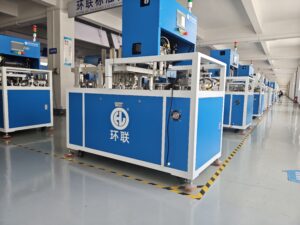
Strategy 4: Optimize Changeover Efficiency
Hardware manufacturers running multiple SKUs lose significant production time to changeovers. A manual changeover taking 45 minutes, performed 10 times daily, consumes 7.5 hours of potential production time.
The Cost of Changeover
At $200/hour production value, 7.5 hours of lost time costs $1,500 daily—$375,000 annually. Reducing changeover time to 15 minutes through servo-driven format adjustment recovers $250,000 of this value.
Additional Benefits
Faster changeovers enable smaller batch sizes, which:
- Reduce finished goods inventory and carrying costs
- Improve responsiveness to demand changes
- Reduce obsolescence risk for slow-moving SKUs
Strategy 5: Consolidate Packaging Steps
Many hardware operations handle packaging as separate steps: forming, filling, sealing, labeling—each performed by different operators or equipment. Each handoff adds time, labor, and error opportunity.
Integrated Line Benefits
An integrated cartoning line that forms, fills, seals, and labels in one continuous process:
- Eliminates 2–3 handoffs and associated labor
- Reduces work-in-process inventory between stations
- Improves quality through consistent mechanical processing
- Reduces floor space requirements
Space savings matter—especially in facilities where packaging competes with production for floor space.
Calculating Your Cost Reduction Potential
To estimate how much you can reduce hardware packaging costs, audit your current operation:
Step 1: Baseline Current Costs
| Cost Category | Annual Cost | % of Total |
|---|---|---|
| Labor (operators, supervision, training) | $________ | ____% |
| Materials (cartons, tape, labels, void fill) | $________ | ____% |
| Errors and rework | $________ | ____% |
| Equipment and maintenance | $________ | ____% |
| Facility and overhead | $________ | ____% |
| Total Packaging Cost | $________ | 100% |
Step 2: Estimate Automation Impact
| Improvement Area | Current | With Automation | Savings |
|---|---|---|---|
| Labor cost | $________ | -$________ (60–70%) | $________ |
| Error rate | ____% | 0.5% | $________ |
| Material waste | ____% | 2% | $________ |
| Changeover time | ____ hrs/day | ____ hrs/day | $________ |
Step 3: Calculate ROI
Total annual savings ÷ Equipment investment = Payback period (months)
Most hardware manufacturers achieve 40%+ cost reduction with 12–24 month payback.
Implementation Roadmap
Cost reduction through automation requires planning:
Phase 1: Assessment (2–4 weeks)
- Audit current packaging costs and pain points
- Define target metrics and success criteria
- Evaluate equipment options and suppliers
Phase 2: Design and Planning (4–6 weeks)
- Specify equipment requirements
- Plan integration with existing systems
- Develop training and change management plans
Phase 3: Installation and Commissioning (6–8 weeks)
- Install and test equipment
- Train operators and maintenance staff
- Run trial production and refine settings
Phase 4: Optimization (Ongoing)
- Monitor performance against targets
- Continuously improve changeover procedures
- Expand automation to additional lines

Common Pitfalls to Avoid
Hardware manufacturers seeking to reduce hardware packaging costs sometimes make mistakes that undermine results:
Over-Automation
Buying equipment with capacity far exceeding demand wastes capital and creates inefficiency. Match equipment speed to actual production requirements with 20–30% headroom for growth.
Ignoring Integration
The cartoning machine must work with counting, labeling, and conveying equipment. Poor integration creates bottlenecks that offset labor savings.
Neglecting Training
Automation changes operator roles from manual tasks to machine supervision. Without proper training, operators struggle and productivity suffers.
Short-Term Focus
Cost reduction is important, but not at the expense of quality or flexibility. The best solutions reduce costs while improving both.
Next Steps
UBL Packaging helps hardware manufacturers assess cost reduction opportunities and implement automation solutions that deliver measurable ROI. Our process includes:
- Cost audit: Quantify your current packaging expenses
- Opportunity analysis: Identify the highest-impact improvement areas
- Solution design: Specify equipment and integration requirements
- ROI projection: Calculate payback period and ongoing savings
Contact UBL Packaging to schedule a cost reduction assessment and discover how to reduce your hardware packaging costs by 40% or more.