
For many B2B companies, especially in fast-growing e-commerce operations, packaging is often treated as a cost center rather than a strategic investment. Procurement decisions are frequently driven by one simple metric: unit price. On paper, cheaper packaging — or lower-cost equipment — seems like an easy win.
In reality, this short-term thinking is one of the most expensive mistakes an e-commerce business can make.
In today’s high-volume, high-expectation market, packaging performance directly affects fulfillment speed, labor costs, brand reputation, and customer retention. This is why more e-commerce leaders are rethinking their approach to packaging—and investing in the right e-commerce packaging machine rather than the lowest-priced option.

The Global Packaging Automation Market: A Rapidly Expanding Industry
Packaging automation is experiencing steady global growth as manufacturers seek higher throughput, consistent quality, and reduced labor dependence.
According to Transparency Market Research, the global packaging automation market was valued at approximately USD 37.5 billion in 2023 and is projected to reach USD 52.2 billion by 2032, growing at a CAGR of 3.7%【1】. This growth is fueled by increasing demand for standardized packaging, regulatory compliance, and cost control across multiple industries.
Meanwhile, Grand View Research estimates the broader automated packaging solutions market will reach USD 140.82 billion by 2033, driven by advances in robotics, servo-driven machinery, and intelligent control systems【2】.
The E-Commerce Reality: Packaging Is No Longer “Just Packaging”
Unlike traditional manufacturing, e-commerce packaging operates under extreme pressure:
-
Daily order fluctuations
-
Peak-season surges (Black Friday, Christmas, Prime Day)
-
Tight delivery promises
-
Rising labor costs
-
Increasing return rates due to damaged packaging
In this environment, packaging failures are amplified. A weak carton, inconsistent folding, or slow manual process doesn’t just delay shipping—it disrupts the entire fulfillment operation.
For e-commerce businesses, packaging is no longer a background process. It is a core operational system.

Labor Shortages: The Hidden Cost Behind “Cheap” Packaging Equipment
One of the biggest drivers behind packaging automation adoption is the ongoing labor shortage.
In the United States, manufacturing continues to face persistent workforce gaps. According to the U.S. Bureau of Labor Statistics, the manufacturing sector consistently reports hundreds of thousands of unfilled positions, while wage pressure continues to rise year over year【3】.
Low-cost, labor-intensive packaging solutions may appear economical upfront—but they increase long-term exposure to:
-
High turnover and training costs
-
Inconsistent output quality
-
Production instability during peak seasons
Automation reduces labor dependency while improving repeatability and operational resilience.
Downtime Is More Expensive Than Equipment
Low-cost packaging equipment often lacks:
-
Servo control
-
Intelligent fault detection
-
Stable carton forming accuracy
The result? Frequent jams, misfolded cartons, and unplanned downtime.
In e-commerce fulfillment, even 10 minutes of downtime can delay thousands of orders. The financial impact of downtime often exceeds the initial savings from purchasing cheaper machines.
This is why experienced operators evaluate total cost of ownership (TCO) rather than purchase price alone when selecting an e-commerce packaging machine.
Brand Damage Happens at the Doorstep
In e-commerce, the package is the brand.
Poor carton integrity leads to:
-
Crushed boxes
-
Open flaps
-
Returns and refunds
-
Negative customer reviews
Consumers don’t blame logistics—they blame the brand. Consistent, well-formed cartons produced by a reliable e-commerce packaging machine directly protect brand perception and customer trust.
Automation Changes the Cost Equation
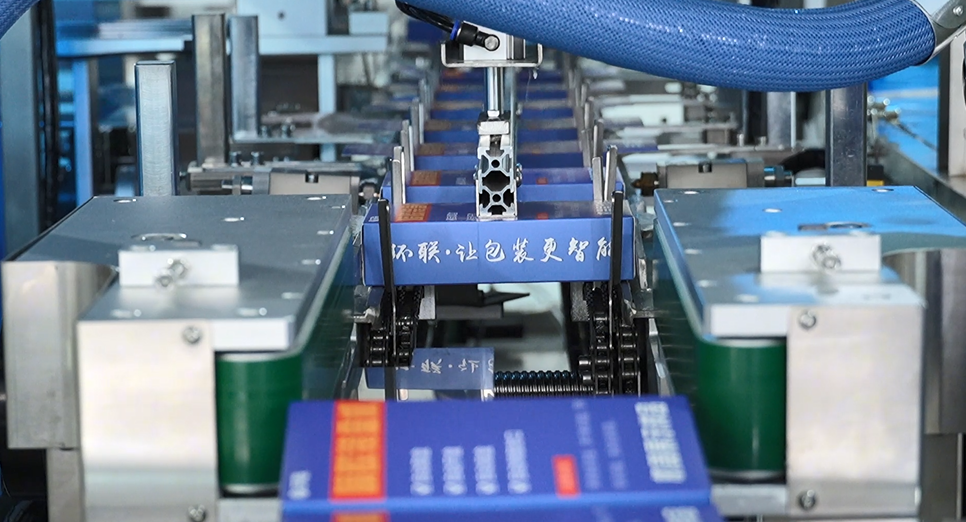
Modern e-commerce packaging machines are designed not just for speed, but for process stability and consistency.
Key advantages include:
-
Automated carton forming and sealing
-
Consistent folding accuracy
-
Reduced reliance on manual labor
-
Faster order throughput
-
Easier integration with sorting, labeling, and weighing systems
When evaluated over 2–3 years, automation typically results in:
-
Lower labor cost per order
-
Fewer packaging-related errors
-
Higher peak-season readiness
This is why leading fulfillment centers treat packaging machines as productivity assets—not expenses.
A Common E-Commerce Scenario
Consider a mid-sized e-commerce brand shipping 8,000–12,000 orders per day during peak season.
Manual or low-end setup:
-
15–20 packing workers per shift
-
Inconsistent box quality
-
High overtime cost
-
Bottlenecks during order spikes
Automated setup with a proper e-commerce packaging machine:
-
4–6 operators per shift
-
Stable output regardless of order mix
-
Consistent carton appearance
-
Faster order cutoff times
The difference is not just efficiency—it’s operational control.
What Smart B2B Buyers Evaluate Instead of Price
Forward-thinking procurement managers and owners ask better questions:
-
Can this e-commerce packaging machine scale with our growth?
-
How does it perform during peak demand?
-
What is the real labor reduction?
-
How stable is carton forming at high speed?
-
What is the ROI over 12–36 months?
Price still matters—but only after performance, reliability, and scalability are confirmed.
Final Thought: Packaging Is a Competitive Advantage
In e-commerce, speed and consistency win markets. Companies that invest in the right e-commerce packaging machine gain:
-
Faster fulfillment
-
Lower operational risk
-
Better customer experience
-
Stronger long-term profitability
Choosing packaging based on price alone may save money today—but it almost always costs more tomorrow.
Ready to Rethink Your E-Commerce Packaging Strategy?
If you’re evaluating an e-commerce packaging machine or wondering whether automation makes sense for your operation:
-
Leave a comment below to share your challenges
-
Or click “Contact Us” to request a packaging line assessment and ROI analysis
The right packaging decision starts with the right conversation.
Data Sources
【1】 Transparency Market Research – Global Packaging Automation Market
【2】 Grand View Research – Automated Packaging Solutions Market
【3】U.S. Bureau of Labor Statistics – Manufacturing Employment Data




One Response
It’s easy to assume cheaper packaging will always save money, but as this post explains, the hidden costs—like slower fulfillment or increased labor—can really add up. Investing in quality machinery upfront seems like the smart way to go.